
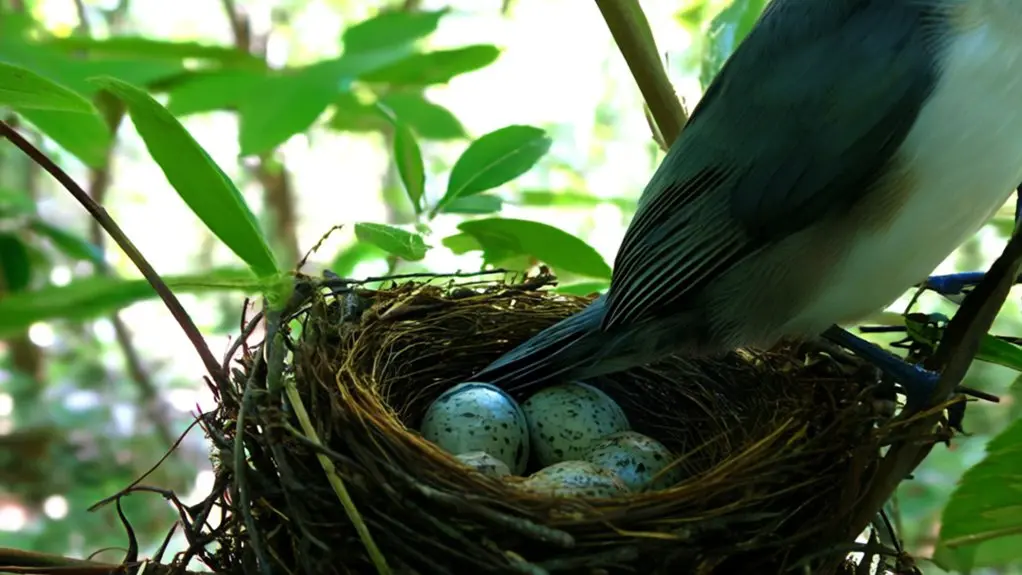
You can trust that birds do lay eggs naturally, driven by complex hormonal changes triggered after mating and influenced by environmental cues like daylight and temperature. These hormones regulate egg development in ovaries, ensuring reproductive success across species.
Birds also use diverse nesting strategies to protect their eggs and recognize parasitic threats. In captivity, egg-laying patterns differ due to controlled conditions.
Explore further to understand these fascinating reproductive behaviors and their adaptations.
How And Why Birds Lay Eggs Naturally
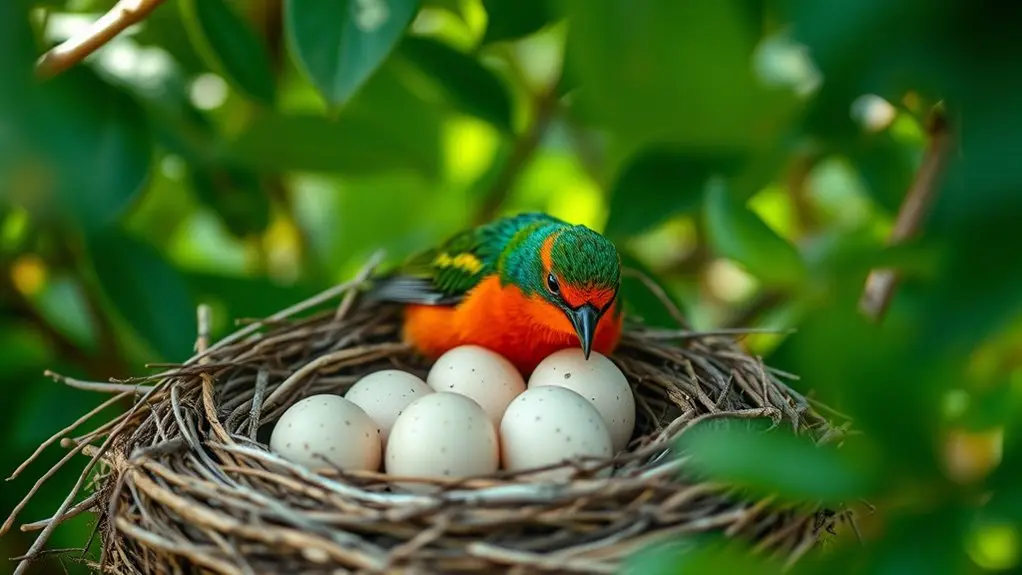
Although it may seem straightforward, the natural process by which birds lay eggs involves complex hormonal changes triggered after mating. You witness egg development begin in the female’s ovaries, where follicle growth occurs under precise hormonal regulation, mainly involving estrogen and progesterone. These hormones coordinate the maturation and release of eggs.
Bird egg laying is a complex hormonal process beginning with follicle growth in the ovaries.
Environmental cues, such as daylight length and temperature, also influence hormonal cycles, signaling when egg production should commence. Once eggs mature, they pass through the oviduct and are laid through the cloaca.
You’ll find clutch sizes vary among species, reflecting evolutionary adaptation for reproductive success. This tightly regulated process guarantees that eggs are produced at ideal times, facilitating incubation and chick rearing necessary for species survival.
It’s pretty amazing how everything works together to make sure the next generation gets a good start.
How Birds Use Different Nesting Strategies
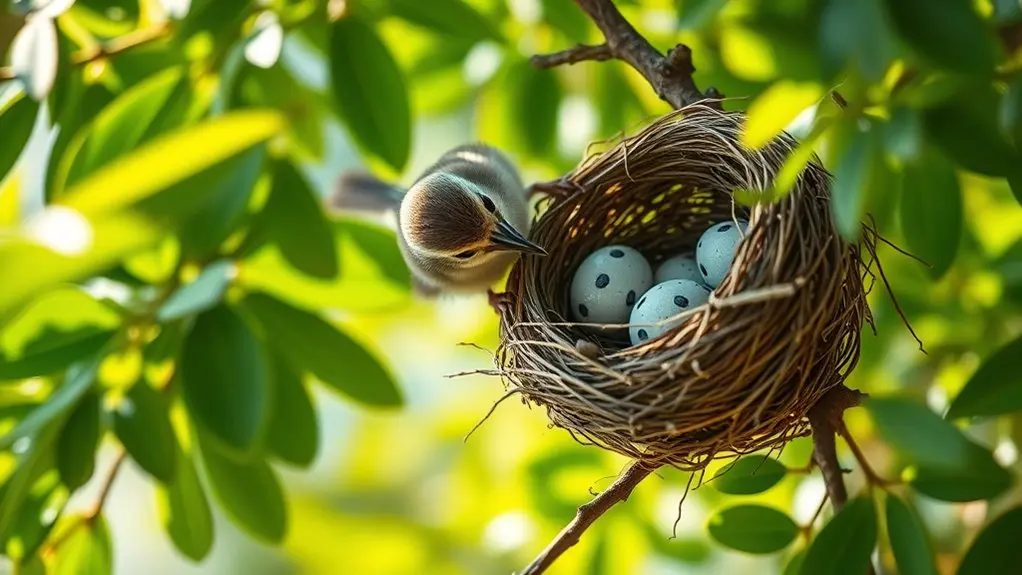
You’ll notice that birds use all sorts of interesting ways to incubate their eggs. For example, emperor penguins don’t build nests at all—they actually keep their eggs on their feet to keep them warm.
Birds also often rely on camouflage and carefully choose their nesting spots to keep their eggs safe from predators.
And then there are some species that nest in colonies. In these cases, they coordinate their strategies to boost the chances of survival when they’re living close together.
It’s pretty fascinating how adaptable they are!
Unique Egg Incubation Methods
When birds incubate their eggs, they use a wide range of nesting strategies adapted to their specific environments and survival needs. You’ll find some species, like Emperor Penguins, uniquely incubating eggs on their feet beneath abdominal pouches. This helps them keep the eggs at the ideal temperature despite extreme cold. It’s pretty amazing how they manage effective heat transfer throughout the long incubation period required in polar climates.
Other birds, such as Common Murres, lay eggs on rocky ledges and rely on the egg shape to prevent rolling. Meanwhile, species like White Terns place eggs in natural tree branch depressions without building traditional nests. Each strategy carefully balances egg temperature regulation and protection during incubation.
These behaviors show how evolution has helped birds adapt to diverse habitats and environmental pressures. When you understand these methods, it’s clear how birds maximize reproductive success through specialized incubation behaviors. It’s a fascinating glimpse into nature’s creativity.
Camouflage And Nesting Sites
Because predation and environmental exposure pose constant threats, birds use all kinds of nesting strategies to help their eggs survive. They rely on camouflage and smart site choices to keep those eggs safe.
You’ll notice species like White Terns and Common Potoos laying eggs on hidden tree branches, counting on the nests being out of sight to keep predators away.
Egg camouflage is a big deal too. Take Chuck-will’s-widow eggs, for example—they have patterns that look just like leaf litter, so they blend right into their surroundings.
Some seabirds, like Common Murres, don’t even build typical nests. Instead, they lay eggs on rocky ledges where the egg shape and being in a big group help protect them.
Every nesting strategy shows how birds adapt to their environment. They figure out the best way to balance hiding their eggs and dealing with the risks of exposure.
You can see that picking the right spot and using camouflage are key to cutting down dangers and making sure their babies have a good chance.
Colony Nesting Adaptations
Beyond individual camouflage and site selection, many bird species rely on colony nesting to improve egg survival. By breeding in large groups, you benefit from increased protection against predators through collective vigilance.
In dense colonies, limited space often forces you to adopt no-nest or minimal-nest strategies, like seabirds such as common murres, which lay eggs directly on rocky ledges. Your egg shape prevents rolling off cliffs, compensating for the absence of nests.
Species like the white tern exploit natural tree forks or branches to support eggs without building nests.
Colony nesting also fosters social interactions and cooperative behaviors that boost reproductive success.
Additionally, your feather coloration and migration patterns influence colony site choice, ensuring synchronized breeding and enhanced protection during vulnerable nesting periods. It’s a smart way to make sure everyone’s on the same page when it comes to raising the next generation.
How Pet Birds’ Egg Laying Differs From Wild Birds
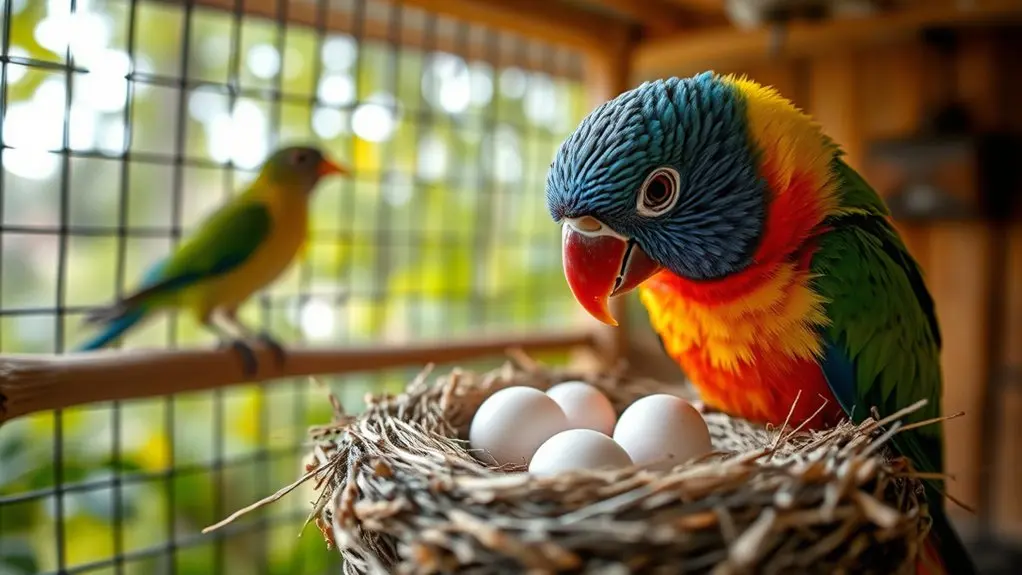
You’ll probably notice that pet birds lay eggs more often and pretty much all year round. That’s because their owners provide steady food, light, and a stable environment.
In contrast, wild birds’ reproductive cycles depend a lot on natural seasonal changes and finding the right nesting spots. So, the egg laying in pet birds can be influenced quite a bit by these controlled conditions.
Understanding and managing these factors is really important if you want to keep an eye on your pet bird’s reproductive behavior.
Controlled Egg Laying
Although wild birds rely on natural environmental cues like seasonal changes to regulate egg laying, pet birds often lay eggs more frequently due to consistent indoor lighting and constant access to nesting materials. You’ll notice pet birds may lay eggs every 1-2 weeks, independent of fertilization or mating success. This is unlike wild birds whose reproduction often aligns with feather coloration changes and beak shape adaptations signaling breeding readiness.
| Factor | Wild Birds | Pet Birds |
|---|---|---|
| Egg Laying Frequency | Seasonal, less frequent | Frequent, sometimes continuous |
| Environmental Cues | Seasonal daylight, weather | Artificial light, stable temp. |
| Mating Requirement | Required for egg laying | Not always required |
Understanding controlled egg laying helps you manage pet bird reproduction effectively. It’s important to recognize these differences so you can provide the best care and prevent unwanted eggs.
Environmental Influences
How do environmental factors influence egg laying in pet birds compared to their wild counterparts?
In captivity, pet birds often lay eggs more frequently due to consistent light exposure, high-protein diets, and access to nesting materials. This is unlike wild birds whose egg production depends on natural cycles.
You’ll notice pet birds may lay eggs without a mate or a suitable nest. This happens because they’re triggered by artificial cues rather than natural ones like song signaling or feather maintenance behaviors. Those natural cues usually indicate reproductive readiness in the wild.
The absence of predators in captivity removes stressors that typically regulate egg-laying frequency. However, environmental stressors such as noise or disturbances can still change egg production.
By adjusting environmental factors like light or removing nesting materials, you can influence or suppress egg-laying.
This really shows how much the environment plays a role in the differences in reproductive behavior between pet and wild birds.
Managing Reproductive Behavior
Why do pet birds lay eggs more frequently and in unusual places compared to their wild counterparts? In captivity, things like artificial lighting, high-protein diets, and the lack of natural pressures keep their bodies in a state that encourages continuous egg production. Pet birds often lay eggs every 1-2 weeks, which is quite different from wild birds that follow seasonal breeding cycles.
Also, without the natural cues for nest building, pet birds might end up laying eggs in strange or artificial spots around your home. Managing their reproductive behavior means keeping an eye on environmental factors and sometimes removing nesting materials or artificial eggs to help control the situation.
| Feature | Wild Birds |
|---|---|
| Egg coloration | Species-specific camouflage |
| Nest construction | Selected natural sites |
| Egg-laying frequency | Seasonal |
| Egg placement | Secure, species-typical |
| Environmental cues | Natural light and seasons |
Knowing these differences makes it easier to understand and manage your pet birds’ reproductive habits effectively.
What Triggers Egg Production In Pet Birds?
When pet birds experience hormonal changes triggered by mating behaviors and environmental factors, they start producing eggs. These hormonal shifts happen because of cues like increased daylight and specific lighting conditions. These cues stimulate reproductive hormones.
You might notice that physical traits such as feather coloration and beak shape play a role in signaling reproductive readiness to potential mates.
Giving your bird access to nesting sites or materials encourages egg-laying cycles. Plus, having a mate or forming a breeding pair can directly trigger egg production.
Nutrition is important too. A high-protein diet with millet, eggs, or germ feed helps prepare birds physiologically.
Knowing these triggers can help you recognize when your pet bird is entering its reproductive phase without mixing up natural behaviors with health issues.
Practical Tips To Manage Or Prevent Egg Laying In Pet Birds
Although egg laying is a natural process, you can take specific measures to manage or prevent it in pet birds effectively. Keeping birds in same-sex groups eliminates reproductive cues, which helps reduce egg production. Removing nesting materials also discourages nesting behaviors linked to egg laying.
Using artificial eggs that match real ones and replacing them right after laying interrupts the bird’s motivation to produce more eggs. Adjusting their diet by limiting high-protein intake can be helpful, since excess protein stimulates laying. Also, stopping incubation by promptly removing fake eggs further prevents continued egg production.
It’s good to know that birdsong functions and feather coloration often relate to reproductive status. So, changes in these traits may show hormonal shifts but don’t directly trigger egg laying.
How Birds Recognize And Defend Against Parasitic Eggs
Since parasitic eggs pose a significant threat to reproductive success, birds have developed sophisticated recognition and defense mechanisms. Coots are a great example of this through their ability to recognize eggs. They can tell parasitic eggs apart by differences in background color and appearance.
When coots detect an intruder egg, they often reject it by moving it to the nest’s outer rim. This might delay hatching or make it harder for the parasitic egg to survive. So, this spatial repositioning works as a defensive strategy.
Interestingly, coots also seem to keep track of egg numbers. They tend to lay fewer eggs than the number of parasitic eggs present. Both coots that accept and those that reject parasitic eggs experience similar rates of parasitism.
This suggests that egg recognition goes hand in hand with numerical assessment.
All of this shows just how complex and advanced their behavior is when it comes to defending against parasitic eggs. It also highlights how rare and precise these egg recognition and defense strategies are among wild birds.
Did You Know Some Birds Can Count Their Eggs?
Egg recognition in birds like coots goes beyond simply identifying foreign eggs; it involves a remarkable ability to monitor the number of eggs present in their nests. This nesting intelligence enables coots to detect parasitic eggs by counting how many eggs they have.
Research shows they often lay one less egg than the number of parasitic eggs observed, suggesting precise egg recognition and counting skills.
Research reveals coots lay fewer eggs than parasitic ones, showcasing sharp counting and egg recognition abilities.
Both wild and captive coots demonstrate this cognitive ability in experimental settings, indicating that tracking egg quantity is essential to their reproductive defense.
This rare example of animal cognition highlights how some birds actively use numerical assessment to protect their nests.
It’s pretty fascinating, right? These birds don’t just rely on what they see—they actually keep track of their eggs to safeguard their offspring. You can really appreciate how important egg recognition is for them in making sure their babies stay safe.
Frequently Asked Questions
Can Male Birds Produce Eggs?
No, male birds can’t produce eggs because their reproductive systems don’t have ovaries, which are necessary for egg development. Even in rare cases where males have ovotestis conditions, they still don’t develop functional eggs.
That’s because egg formation requires female-specific anatomy and physiology. So, simply put, male birds just aren’t built for making eggs.
Do All Bird Species Lay Eggs?
Yes, you’ll find that all bird species exhibit egg laying behavior as a fundamental part of their bird reproductive cycles. This ensures offspring development externally through eggs rather than live birth.
This is consistent across avian species worldwide. So, no matter the bird, laying eggs is just how they do it!
How Long Do Bird Eggs Take to Hatch?
You’ll find avian incubation ranges widely, with eggshell development influencing timing. Small birds hatch in 11–14 days, while larger species need up to 30 days.
Temperature consistency and species traits determine precise hatching duration. So, it really depends on the bird and the conditions it’s in.
Can Birds Lay Eggs Without a Mate?
Yes, birds can lay eggs without a mate because of their reproductive behavior. But here’s the thing—without fertilization, those eggs won’t develop into chicks.
Fertilized eggs are necessary for the embryo to grow and eventually hatch. So, while a bird can lay eggs on its own, they won’t turn into baby birds without a male involved.
It’s kind of like the bird is laying the groundwork, but the real magic happens only when the egg is fertilized.
Are Bird Eggs Edible for Humans?
When it comes to bird eggs, you shouldn’t count your chickens before they hatch. They offer high nutritional value and have versatile culinary uses.
Just make sure you source them legally. And cook them thoroughly to avoid health risks effectively.
Conclusion
You might think of a bird’s egg-laying like a finely tuned clock, each tick driven by hormones and environmental cues. Just as a watch’s gears turn precisely, birds lay eggs following natural rhythms shaped by evolution.
Whether wild or pet, understanding these triggers helps you manage or appreciate this complex behavior. Remember, some species even count their eggs, highlighting the remarkable precision in their reproductive strategies. It’s proof of nature’s intricate design.