
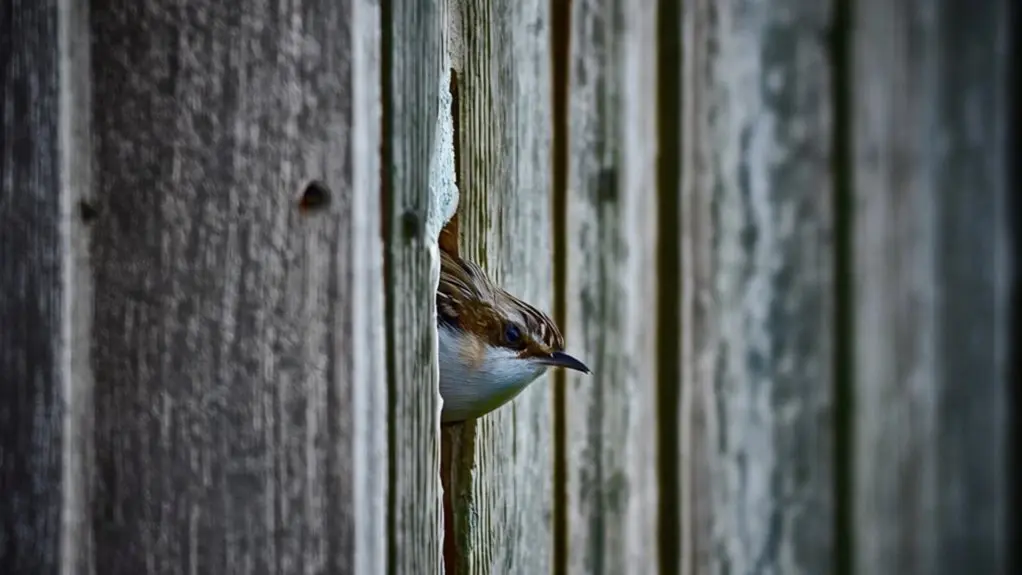
Yes, birds can and do enter wall cavities through tiny gaps or damaged vents. They use these spaces to build sheltered nests similar to natural hollows. While it’s not common for them to live permanently inside walls, they take advantage of these areas for protection, insulation, and safety.
You might notice signs like scratching noises, droppings, and nesting materials near entry points. This behavior can cause problems such as structural damage, health hazards, and unpleasant odors.
Don’t worry, you’ll find detailed prevention and removal methods ahead for effective control.
Do Birds Really Live Inside Walls?
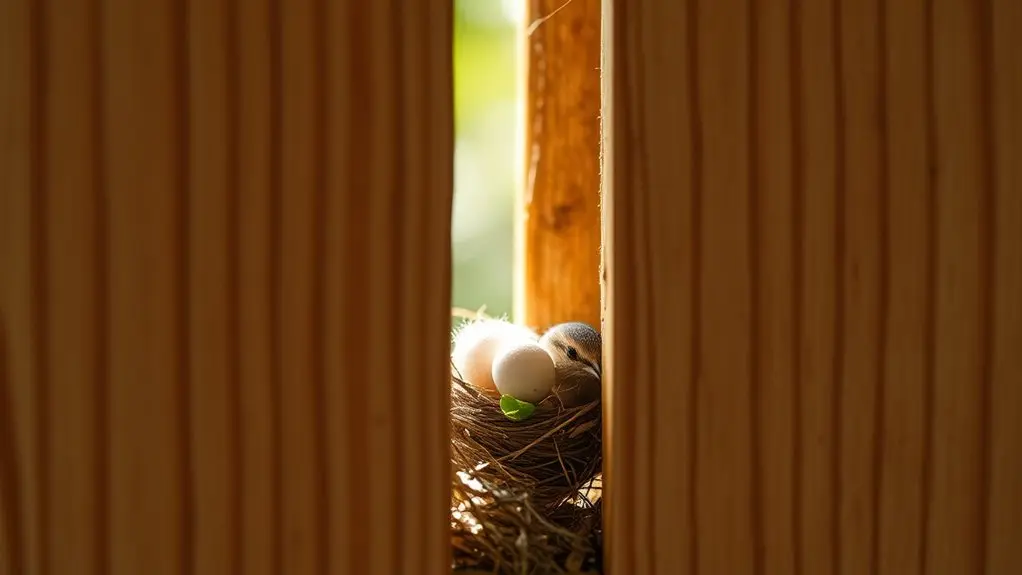
Although it’s uncommon for birds to live permanently inside walls, they can inhabit wall cavities if gaps, vents, or damaged areas provide access. You’ll find that species like starlings and sparrows often exploit these entry points, utilizing the enclosed space for shelter and warmth.
Inside, birds employ natural bird camouflage, blending their nests with the surrounding materials to avoid detection. Nest acoustics also play a significant role. The cavity’s structure influences sound transmission, which affects communication and predator awareness.
You might notice scratching sounds or foul odors near vents, indicating their presence. While these birds don’t typically establish permanent residency, they can temporarily occupy hidden wall spaces when conditions allow.
How Birds Enter Wall Cavities and Why They Nest There
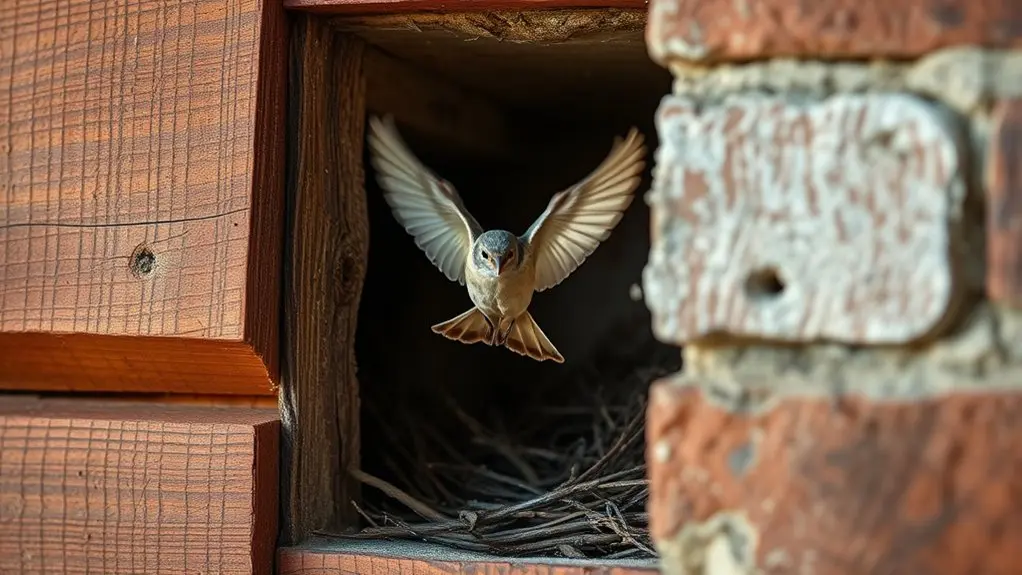
You’ll notice that birds often get into wall cavities through tiny gaps, cracks, or damaged spots around vents, siding, and rooflines. These little openings give them easy access.
Plus, these spaces provide shelter, protection from predators, and good insulation. That’s why birds like swallows and sparrows find them perfect for nesting.
Knowing how and why they choose these entry points really helps explain why birds decide to make their homes inside walls. It’s all about safety and comfort for them.
Common Wall Entry Points
When birds look for nesting sites, they take advantage of small gaps around vents, exhaust pipes, damaged siding, and open attic spaces to get into wall cavities. These common entry points include unsealed gaps in soffits, eaves, and around utility penetrations like electrical or plumbing lines.
Birds such as house sparrows and starlings use these access spots along their usual flight paths.
They pick sheltered voids that feel like natural hollows. Once inside, they gather nesting materials to build nests within these enclosed spaces.
These cavities offer protection and privacy, which is why birds are often drawn to damaged or poorly maintained parts of buildings.
Knowing about these entry points helps us figure out how birds get into wall structures and why they choose those spots to nest.
This understanding makes it easier to come up with targeted prevention and management strategies.
Benefits of Wall Cavities
Since birds seek secure and sheltered environments for nesting, wall cavities offer an ideal habitat by mimicking natural hollows found in trees or rock crevices. You’ll find that bird species behavior drives them to exploit small openings such as damaged vents or loose siding to enter these insulated voids.
Wall cavity insulation creates a stable microenvironment, protecting nests from temperature fluctuations and harsh weather, which enhances survival rates. Inside, birds benefit from safety against predators and environmental stressors, making these cavities highly attractive for nesting.
Understanding the role of wall cavities as undetected nesting sites is essential, as their presence can lead to structural damage, odors, and health risks if left unmanaged. Recognizing these benefits helps you address potential issues early and mitigate negative impacts.
Bird Species Preference
Recognizing the benefits that wall cavities offer helps explain why certain bird species actively seek out these spaces for nesting. Bird species like house sparrows, starlings, and woodpeckers display specific nesting preferences, choosing wall cavities that mimic natural sites such as tree hollows.
You’ll notice they enter through small gaps, cracks, or damage in siding, vents, or near utility penetrations.
Wall cavities provide a stable, sheltered microenvironment that protects nests from predators and extreme weather.
Plus, their proximity to food sources makes these spots even more attractive to birds.
Key factors influencing bird species nesting preferences include:
- Structural similarities to natural nesting habitats
- Accessibility via small exterior openings
- Protection from environmental stressors and predators
- Nearby availability of food and nesting materials
Signs of Birds Nesting in Walls
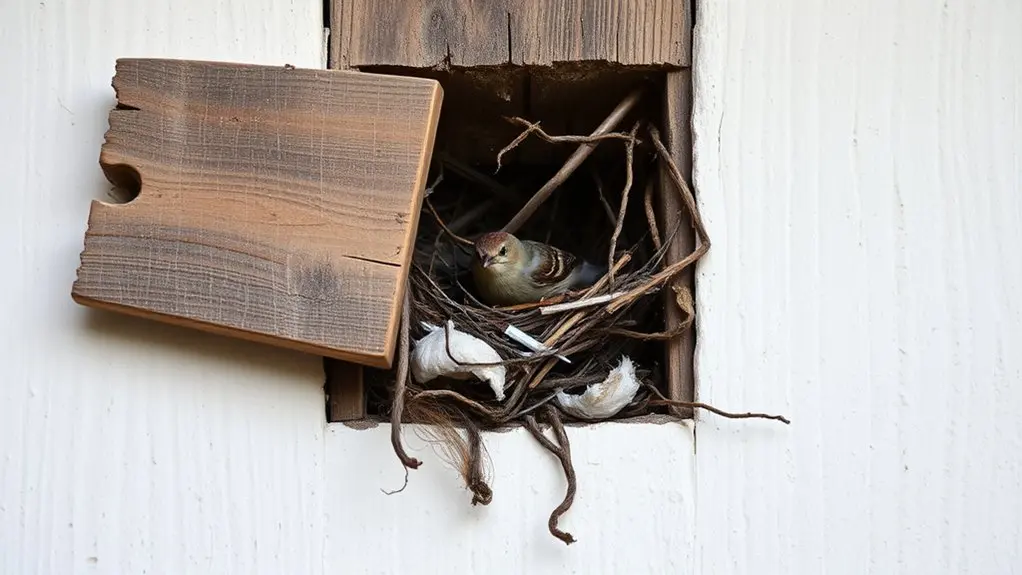
Although birds nesting inside walls can be hard to detect at first, you can identify several clear signs indicating their presence. Listen for scratching or chirping sounds within walls, especially during early morning or late evening.
Birds nesting inside walls are hard to detect but make scratching or chirping sounds early morning or late evening.
You might also observe nesting materials, like twigs, leaves, or feathers, near vents, soffits, or other entry points.
Bird diet remnants, such as seeds or insect parts, may accumulate nearby, providing indirect evidence. Additionally, spotting droppings or unexplained odors suggests active nests inside wall cavities.
An increase in insects like flies and mites often comes with these conditions.
Small holes, cracks near vents, or loosened siding indicate birds trying to get in. You might also notice birds repeatedly trying to enter through damaged vents, which confirms nesting activity within the walls.
These objective signs together help you detect wall-nesting birds.
Risks and Damage From Birds in Walls
When birds nest inside your walls, they can cause significant structural and health problems. Their pecking damages wood and insulation. Plus, feather shedding and nesting materials accumulate, which blocks ventilation.
This blockage raises moisture levels, promoting mold growth and increasing fire risk. Bird droppings can be a real issue too because they carry pathogens like histoplasmosis and salmonella. These pose a threat to your health.
You might also notice unpleasant odors and persistent noise from chirping and scratching.
Here are some key risks to keep in mind:
- Structural damage from pecking and torn insulation
- Feather shedding and nesting materials blocking airflow
- Health risks due to disease-laden droppings
- Mold growth and fire hazards from trapped moisture
Knowing these risks shows why it’s important to deal with bird infestations quickly. That way, you protect both your home’s integrity and your well-being.
Why Professional Bird Removal and Prevention Matter
You need professional bird removal experts because they use humane techniques that protect both the birds and your property.
Plus, they don’t just get rid of the problem temporarily—they put long-term prevention strategies in place, like installing exclusion barriers, to keep birds from coming back.
On top of that, their services boost safety and health by thoroughly cleaning and disinfecting affected areas.
This helps reduce risks from droppings and parasites, making your space much safer and healthier overall.
Humane Removal Techniques
Since birds nesting within walls can cause structural damage and pose health risks, engaging professional removal specialists guarantees a humane and effective resolution. Experts use feather patterns and bird songs to accurately identify species, which means the removal is targeted and safe.
They also employ one-way doors that let birds exit but not re-enter, minimizing stress and injury.
Additionally, trained technicians seal entry points to prevent the birds from coming back without harming them.
Professionals disinfect nesting sites to reduce health hazards from droppings and debris.
- Use of one-way doors for safe bird exit
- Identification through feather patterns and bird songs
- Sealing entry points to block re-entry
- Disinfection to reduce health risks
Relying on professionals ensures humane treatment and protects your property efficiently. It’s really the best way to handle the problem without causing harm.
Long-Term Prevention Strategies
Although it might seem manageable to handle bird removal on your own, professional specialists have the expertise to identify and seal hidden entry points within walls that homeowners often overlook.
They use humane bird deterrents like one-way doors and custom barriers, making sure birds exit safely without coming back in.
Experts also remove all nesting materials, droppings, and parasites thoroughly. This prevents health risks and discourages future nesting.
Long-term prevention strategies include installing durable, weatherproof vent covers and bird-proofing structural gaps to effectively block access points.
Regular inspections and maintenance by wildlife control professionals help detect early signs of nesting, so they can act quickly.
Safety And Health Benefits
Beyond preventing structural damage, professional bird removal plays a key role in safeguarding your health and safety. When birds settle in walls during migration or nesting behavior, they can introduce pathogens and parasites. Certified wildlife control specialists ensure safe, humane eviction and seal entry points, minimizing health risks.
Proper removal reduces exposure to diseases like histoplasmosis, salmonella, and avian flu linked to bird droppings. Early intervention prevents long-term contamination and structural compromise.
Key benefits include:
- Reducing airborne bacteria and allergens from nesting materials
- Preventing parasite infestations such as mites and ticks
- Improving indoor air quality by eliminating droppings accumulation
- Minimizing disease transmission risks associated with bird migration and nesting behavior
Hiring professionals guarantees effective, science-based control, protecting both your health and property. It’s definitely worth it to get the job done right.
How to Prevent Birds From Nesting in Your Home
When birds find small gaps or damaged vent covers on your home, they quickly exploit these entry points to access wall cavities for nesting. Understanding wild bird behavior helps you prevent this by installing bird-proof barriers like wire mesh or specialized vent covers.
Decorative birdhouses placed strategically can also attract birds away from your walls. Conduct regular inspections and seal cracks early to minimize risk. Humane deterrents, such as reflective objects or bird spikes near entry points, discourage nesting attempts effectively.
| Prevention Method | Description |
|---|---|
| Seal Entry Points | Close gaps, cracks, and damaged vents |
| Bird-Proof Barriers | Install wire mesh or specialized vent covers |
| Decorative Birdhouses | Provide alternative nesting sites |
| Regular Inspections | Identify and fix vulnerabilities early |
| Humane Deterrents | Use reflective objects and bird spikes |
Frequently Asked Questions
What Types of Birds Are Most Likely to Live in Walls?
You’ll find birds like chimney swifts, house sparrows, starlings, and pigeons nesting in wall cavities. These species prefer bird nesting in tight, sheltered spaces. They exploit wall cavities for shelter and reproduction with remarkable adaptability.
It’s pretty interesting how these birds make use of such small, hidden spots. Walls provide them with protection from predators and harsh weather. So, it’s no surprise they’re drawn to these cozy little spaces.
Can Birds Cause Structural Damage to Electrical Wiring Inside Walls?
Yes, birds can cause structural damage to electrical wiring inside walls by chewing and nesting. This can lead to serious problems like fire hazards, insulation damage, and corrosion of electrical components.
Because of this, you should prioritize nest removal and bird exclusion. Taking these steps helps keep your home safe and protects the wiring’s integrity.
It’s definitely worth addressing the issue early before it gets worse. Staying on top of bird-related damage can save you time and money in the long run.
Are There Any Health Risks to Pets From Birds in Walls?
Yes, bird nesting in walls poses health risks to pets. They can be exposed to parasites, bacterial infections, and fungal spores.
It’s really important to have effective pest control to prevent contamination. Droppings and nesting materials often harbor harmful pathogens. Keeping these in check helps protect your pets from getting sick.
How Long Can Birds Live Inside Wall Cavities?
You might think birds survive briefly, but bird nesting habits allow them to live weeks inside wall cavity insulation.
They can survive 2-4 weeks during nesting or even longer if there’s enough food, water, and shelter to keep them going inside the cavity.
What Are Humane Methods to Deter Birds Without Harming Them?
You can prevent bird nesting humanely by installing physical barriers like spikes or netting. Using visual repellents and sound deterrents also helps keep birds away.
Don’t forget to seal wall entry points to block their access. These methods guarantee humane removal and discourage birds without causing harm.
It’s all about being kind while keeping your space bird-free!
Conclusion
Just like discovering a hidden chamber in an ancient castle, finding birds living inside your walls reveals a surprising reality. You now know how they enter, nest, and the damage they can cause. Taking swift, professional action to remove and prevent these avian intruders safeguards your home’s structure and your peace of mind.
Remember, like any ecosystem, your walls need balance. Don’t let unwelcome guests disrupt it.