
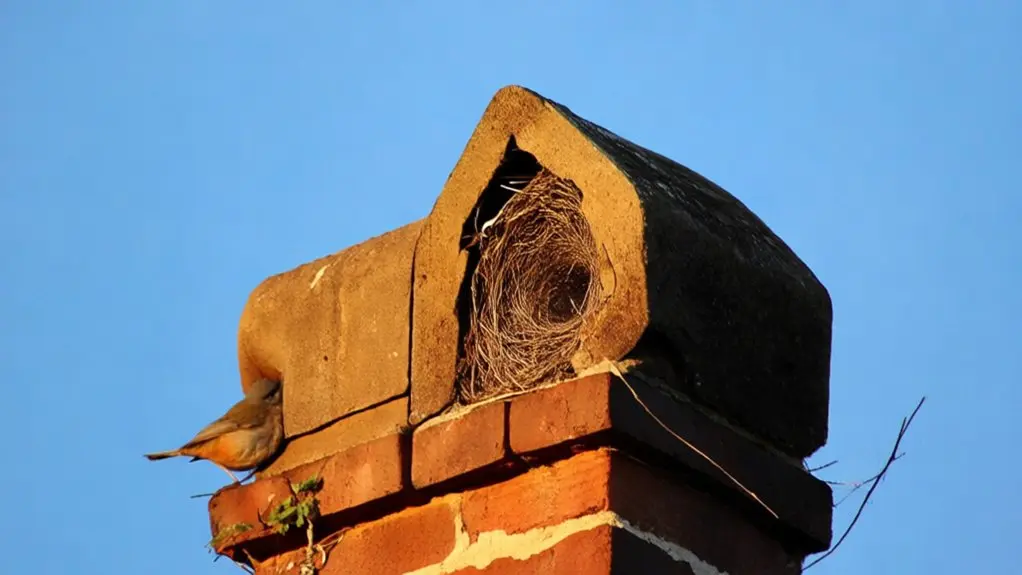
Yes, birds like jackdaws, pigeons, and chimney swifts often nest in chimneys because these spaces provide warmth, elevation, and shelter from predators and weather. You’ll notice nesting material debris, noises, or smoke blockage as signs.
However, nests pose fire and carbon monoxide risks and are protected by law, prohibiting removal while active. Proper timing and professional checks are essential for safe nest removal.
Explore further to understand identification, hazards, and prevention measures.
Types of Birds That Nest in Chimneys
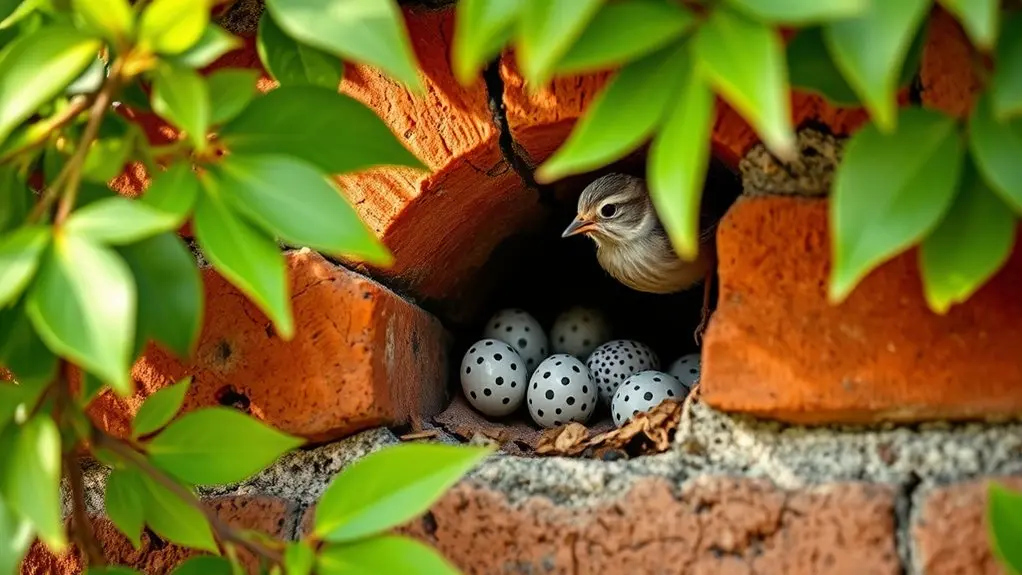
Although chimneys might seem unlikely nesting sites, several bird species have adapted to use them for shelter and reproduction. Bird species such as jackdaws, pigeons, chimney swifts, and sparrows exhibit distinct nesting behaviors within chimneys.
Chimneys serve as unexpected yet vital nesting sites for birds like jackdaws, pigeons, and chimney swifts.
Jackdaws construct large, stacked nests that can exceed a meter in length, utilizing the vertical space effectively.
Pigeons select chimneys for their sheltered, elevated environment, which provides protection from predators and weather.
Chimney swifts, aerial insectivores, have adapted to the dark, enclosed spaces, demonstrating specialized nesting behavior suited to these conditions.
Additionally, certain protected species like swallows and some vultures may also nest in chimneys, though their presence is regulated by wildlife laws.
Understanding these nesting behaviors highlights the ecological adaptability of various bird species in urban environments.
Why Birds Choose Chimneys for Nesting
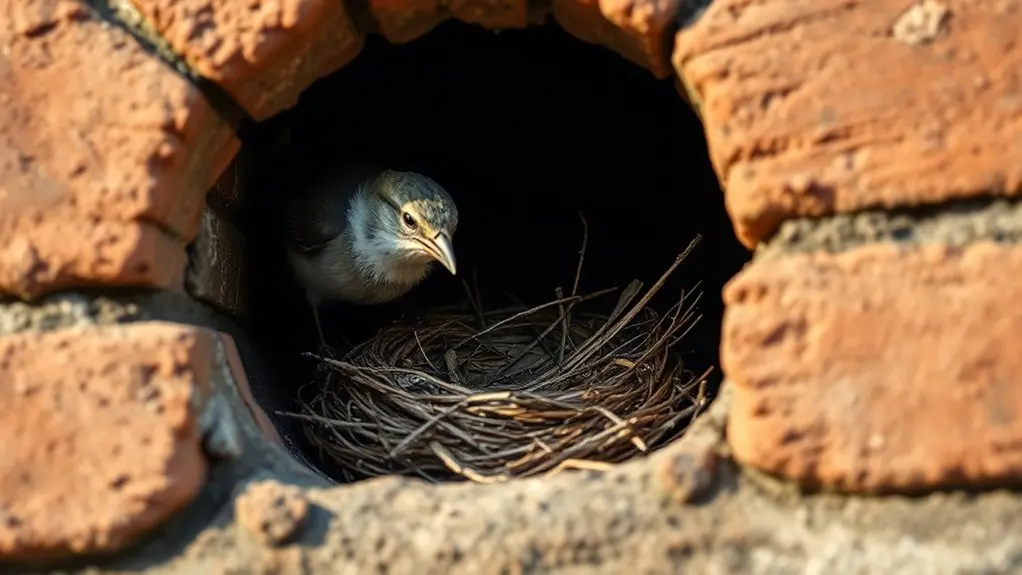
Because chimneys offer a warm, dark, and elevated environment, birds often select them as ideal nesting sites. During bird migration, many species seek secure locations to build nests, and chimneys mimic natural cavities like tree hollows or cliff crevices. This shelter provides protection from predators and harsh weather.
The stable, elevated platform inside a chimney reduces accessibility to ground-based threats, increasing offspring survival. Plus, chimneys often have nearby nesting materials, which makes nest building easier.
The quiet, undisturbed conditions inside chimneys create a safe space for raising young.
By choosing chimneys, birds take advantage of a niche that supports their reproductive success. This is especially important during the critical nesting season when secure environments are essential for development.
Signs of Bird Nests in Your Chimney
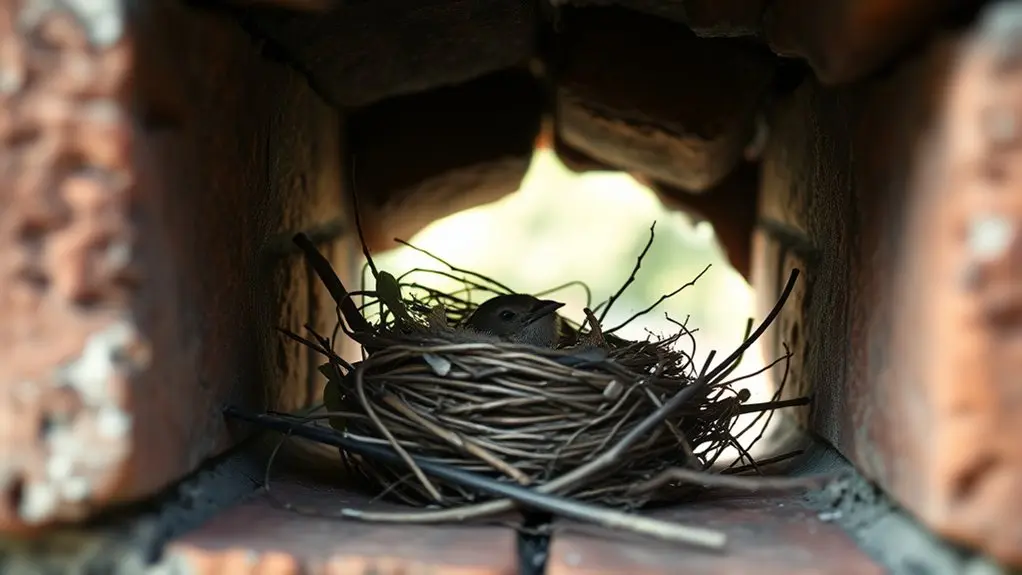
When birds nest inside your chimney, certain signs can alert you to their presence before serious blockages develop. Different bird species have unique nesting habits, so the signs you notice might vary.
You might see debris like twigs, straw, or droppings building up in the hearth or on the baffle plate. This usually indicates nesting activity.
If you start to notice smoke backing up or stove spills after your chimney hasn’t been used for a while, that can also suggest a blockage caused by nests. Larger birds like jackdaws are especially likely to cause this since their nests can extend over a meter.
Video inspections that show visible eggs or nesting materials stuck to the flue’s sidewall give you clear proof of a nest inside.
You can also listen for sounds like scratching, chirping, or calling inside the chimney during early mornings. These noises are a strong hint that birds are nesting there.
Hear Birds in Your Chimney? Here’s What to Do
Noticing birds inside your chimney often signals an active nest, especially during nesting season. You’ll likely hear chirping, scratching, or fluttering sounds. These are common indicators that birds like jackdaws, swallows, or sparrows have used specific nest-building techniques to establish shelter.
These species take advantage of the chimney’s structure during bird migration periods when they’re looking for secure sites. Since disturbing active nests is illegal, you shouldn’t try to remove them yourself. Instead, it’s best to contact a professional chimney or wildlife removal service.
Experts safely remove nests after the nesting period and recommend preventive measures to avoid the problem from happening again. By understanding bird migration patterns and nest-building strategies, these professionals effectively handle the issue.
They also make sure to respect wildlife regulations and minimize harm to both the birds and your chimney system.
Safety Hazards of Bird Nests in Chimneys
You should know that bird nests in your chimney can catch fire, leading to serious fire hazards and damage to your home’s structure.
Plus, these nests can block the chimney, stopping toxic smoke and carbon monoxide from escaping properly.
This blockage is a big deal because it puts your family’s health at risk. Smoke and carbon monoxide could build up inside your house, which is very dangerous.
Fire Risks From Nests
How do bird nests in chimneys create fire hazards? During bird migration and nesting behavior, birds often use chimneys to build nests with highly flammable materials like twigs, straw, and paper. These materials can easily ignite from heat or sparks within the chimney.
You should understand the specific risks involved. Nest fires can ignite creosote buildup, causing dangerous chimney fires. The combination of nesting materials and heat sources really elevates the fire risk.
Fires can damage chimney structures, leading to costly repairs. Because of bird migration patterns and nesting tendencies, chimneys are vulnerable during certain seasons.
Regular inspections and timely nest removal are essential to minimize these fire hazards and keep your chimney safe. It’s a good idea to stay on top of this, especially during peak nesting times.
Smoke Blockage Dangers
Why do bird nests in chimneys pose significant smoke blockage dangers? During bird migration, many species pick chimneys to build their nests, which can cause serious ventilation problems. Nests block the smoke pathways, stopping proper venting and forcing smoke back into your home.
This backflow raises carbon monoxide levels. Carbon monoxide is a colorless, odorless gas that can be deadly if there isn’t enough airflow.
Plus, nests can catch fire from hot embers, starting chimney fires.
Obstructions also lead to creosote and soot buildup, making fire risks even higher. On top of fire dangers, smoke blockage hurts indoor air quality and exposes people to harmful pollutants.
Knowing these risks shows why chimney inspections are so important, especially during and after bird migration seasons. It’s the best way to make sure nests don’t put your safety or air quality at risk.
Legal Protections for Nesting Birds
Although chimneys can provide appealing nesting sites for birds, legal protections strictly regulate how these nests can be managed. Bird migration and nesting behavior are critical factors because disturbing nests during breeding season disrupts reproductive success.
Under the Wildlife and Countryside Act 1981, you must avoid intentionally damaging or disturbing wild bird nests or eggs. Here are some key legal points to keep in mind:
Under the Wildlife and Countryside Act 1981, intentionally disturbing wild bird nests or eggs is strictly prohibited.
Most wild bird species are protected, so nest removal requires special licenses. Disturbing active nests can result in fines up to £5,000 per bird or nest. You may only remove or block nests once they’re abandoned and no longer in use.
These laws especially safeguard Schedule 1 species, which are vulnerable during nesting. This ensures that bird populations can sustain their natural cycles without human interference.
When Can You Remove Bird Nests From Chimneys?
You can remove bird nests from chimneys, but only once the nesting season is over and the nest is definitely inactive. To be sure, check for signs like no eggs, chicks, or adult birds around.
It’s really important to get professionals involved, too. They can make sure everything’s done legally and safely, so no harm comes to the wildlife.
Legal Nest Removal Timing
Because bird nests in chimneys are protected by wildlife laws during the nesting season, you can’t remove them from March to August. This restriction supports bird conservation by respecting natural nesting habits and ensuring young birds fledge safely.
You must wait until the breeding season ends and the nest is abandoned to comply with legal requirements. To figure out the safest time for removal, keep these guidelines in mind:
- Confirm no signs of bird activity or nest maintenance are present.
- Understand that disturbing active nests is illegal and can harm local bird populations.
- Use professional inspections to verify nests are inactive before removal.
Following these scientifically grounded steps helps you stay in line with conservation efforts and legal protections for birds nesting in chimneys. It’s all about doing the right thing for our feathered friends.
Signs Nest Is Vacant
Determining when a bird nest is vacant is key to knowing the appropriate time for removal. You can safely remove nests once there are no eggs or active bird activity present.
Signs that the nest is vacant include absence of birds, eggs, and nesting materials, as well as no noise or movement nearby.
Typically, nests of various bird species become vacant after the breeding season, once fledglings have left and the birds abandon the nest.
To confirm vacancy, you should perform a visual inspection or use professional camera scans to verify no activity remains.
Removing nests before confirming vacancy risks disturbing active nests, which is illegal.
Professional Removal Importance
When can bird nests in chimneys be safely and legally removed? You can only remove nests after they’re abandoned, making sure no active birds or eggs remain. Different bird species have varied nesting habits, so timing removal correctly is super important to follow wildlife protection laws.
Professionals use specialized tools like video cameras to check if nests are abandoned before they take them down. Handling nests the wrong way can damage your chimney and disturb protected birds, so it’s best to let experts handle it.
Here are some key points to keep in mind:
- Removing nests during nesting season when they’re active is illegal.
- Professionals carefully take nests apart to avoid any structural damage.
- The best time to remove nests is after breeding season, usually late summer or early autumn.
Following these tips helps respect bird species’ natural cycles and makes sure nest removal is safe and legal.
Professional Bird Nest Removal From Chimneys
Although bird nests can pose serious risks when located inside chimneys, professional removal services use specialized tools and camera inspections to safely extract nests from deep within the flue.
Experts consider the nesting behavior of different bird species to identify active nests, eggs, or young birds. This helps ensure compliance with wildlife protection laws that prohibit disturbing protected species.
Understanding bird nesting behaviors ensures safe removal while respecting protected wildlife and complying with legal regulations.
Removal specialists carefully plan procedures to avoid harm while preventing damage to the chimney structure. After extraction, they disinfect the area to eliminate potential health hazards caused by droppings and debris.
Hiring trained professionals reduces fire risks and legal penalties associated with illegal nest destruction.
This precise approach guarantees chimney safety while respecting avian life. It allows you to maintain a secure environment without compromising ecological responsibilities.
Chimney Caps: How They Keep Birds Out
You’ll find chimney caps made from different materials like copper, stainless steel, and durable black-coated metals. Each one is designed to keep birds out while still letting air flow through.
It’s important to pick the right size so the cap fits snugly—this way, there aren’t any gaps where birds could sneak in or start nesting.
Putting these caps on and keeping them in good shape really cuts down the chances of birds getting inside.
Plus, it helps protect how well your chimney works.
Types Of Chimney Caps
Since chimney caps serve as the primary barrier against birds entering your chimney, understanding the different types available is essential for effective prevention. Chimney cap materials vary, with durable options like copper, stainless steel, and black-coated metal providing long-lasting protection.
Caps often incorporate ventilation mesh, which lets smoke escape while blocking birds and debris. You’ll find three main types of chimney caps:
- Mesh caps: Feature small openings for ventilation mesh that prevent bird entry without restricting airflow.
- Solid caps: Completely cover the flue, providing maximum bird exclusion but limited ventilation.
- Combination caps: Integrate solid tops with mesh sides, balancing ventilation and bird prevention.
Custom-sized caps make sure you get a snug fit on irregular flues, which helps keep birds from nesting inside your chimney.
Benefits Of Proper Caps
When you install a properly fitted chimney cap made of durable materials like copper or stainless steel, you considerably reduce the risk of birds entering and nesting inside your chimney. These caps feature small mesh or perforations that block birds and other critters while maintaining ventilation efficiency, which is essential for safe chimney operation.
Custom-fit caps create a snug seal, preventing gaps that could compromise chimney insulation and allow debris or nests to form. By protecting your chimney from blockages, proper caps decrease fire hazards and maintain ideal airflow.
Regular inspection and maintenance ensure the cap continues to function effectively, preserving both chimney insulation and ventilation efficiency over time. This proactive approach safeguards your chimney from structural damage and unwanted wildlife intrusions.
It’s a simple step that makes a big difference in keeping your chimney safe and efficient.
Regular Chimney Inspections to Prevent Bird Nests
How can regular chimney inspections help prevent birds from nesting inside your flue? By identifying early signs like debris buildup or unusual noises, inspections enable timely interventions before nests form.
Using video cameras, professionals detect hidden nests or eggs without invasive methods. Scheduling inspections before nesting season maximizes prevention, reducing blockages and fire hazards linked to nesting materials and creosote buildup.
Key benefits include:
- Thorough chimney cleaning removes nesting debris and potential fire risks.
- Early detection allows installation of bird deterrents to block access.
- Compliance with wildlife protection laws ensures nests are handled safely.
Regular inspections optimize flue safety and function while preventing bird-related issues effectively. You maintain a clean, secure chimney environment, reducing risks from nests and associated hazards.
Frequently Asked Questions
How Do Birds Find Chimneys to Nest in Initially?
You’ll find birds locate chimneys during bird migration by relying on nesting habits, visual cues, and previous success.
They assess chimneys’ sheltered, elevated spots, often revisiting familiar sites for safe, concealed nesting opportunities. It’s like they remember what worked before and look for similar places again.
Can Bird Nests in Chimneys Affect Indoor Air Quality?
Yes, bird nests in chimneys can degrade indoor air quality by trapping moisture and debris. This can foster mold growth and release allergens.
Making sure nests are safe helps protect the birds while also preventing harmful indoor air contamination. Plus, it keeps your ventilation working efficiently. It’s a win-win for both your home and the birds!
What Materials Do Birds Use to Build Chimney Nests?
You’ll find birds crafting nest materials like twigs, grasses, mud, feathers, and even hair, creating a cozy bird habitat. These elements guarantee durability and insulation, securely glued with saliva, adapting expertly to chimney environments.
Birds really know how to make the most of what’s around them. They pick out the best bits to keep their nests safe and warm inside chimneys. It’s pretty clever how they put it all together!
Do Birds Return to the Same Chimney Every Year?
Yes, birds often return to the same chimney every year. This behavior is guided by their nesting habits and migration patterns. They tend to recognize previous sites visually, which helps them find their way back.
Birds usually reuse nests when the environment and site conditions stay suitable. It makes sense—they already know the spot works well for raising their young. So, if the chimney remains safe and undisturbed, you can expect the birds to come back.
Are Certain Chimney Designs More Attractive to Nesting Birds?
Yes, certain chimney designs attract specific bird species because of their nesting preferences. Wide, open tops, rough flue surfaces, and accessible ledges create ideal conditions. This makes it more likely for birds to choose those chimneys for nesting.
Conclusion
Now that you know birds can nest in chimneys, it’s clear prevention and timely action are key. Remember, “a stitch in time saves nine.” Addressing nests early prevents blockages and hazards.
Regular inspections, chimney caps, and professional removal keep your chimney safe and functional while protecting wildlife. Stay vigilant for signs like noises or debris. Act promptly to maintain both your home’s safety and the birds’ well-being.