
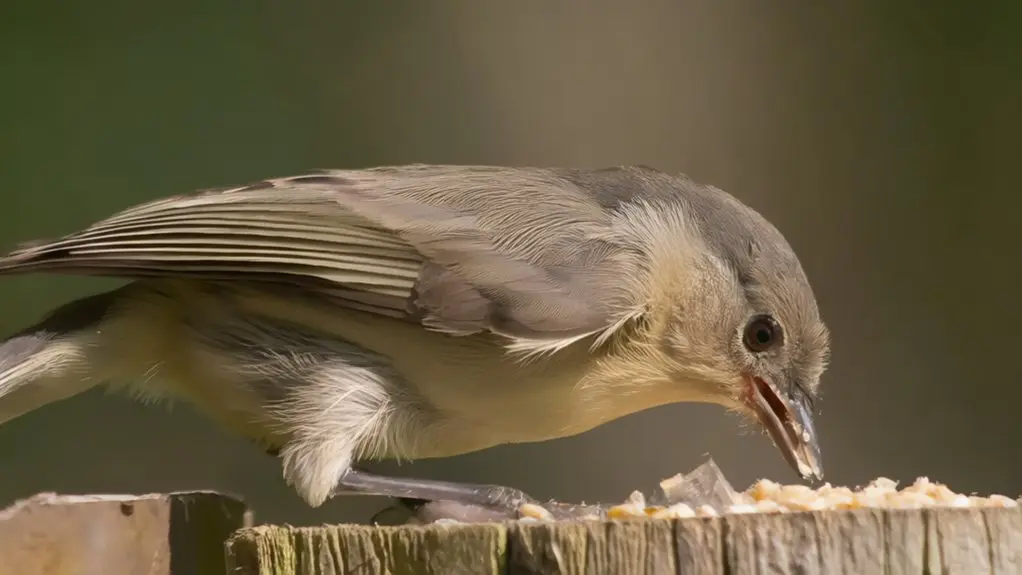
Yes, birds can overeat, especially in captivity where natural feeding cues and challenges are absent. Overeating disrupts their metabolism and strains organs like the liver and heart. It can also cause digestive blockages, immune suppression, or even fatal organ failure.
Species such as parrots and finches are particularly vulnerable because of their dietary and behavioral traits. If left unchecked, overeating seriously endangers their health and lifespan. Understanding these risks helps you better manage and protect your bird’s well-being.
Defining Overeating in Birds: What It Means
What exactly happens when birds overeat? You need to understand that birds have a limited stomach capacity, so eating more than they can handle puts a strain on their digestive system.
Overeating usually happens when they’re fed too often or when their diet isn’t balanced properly.
Overeating in birds often occurs from feeding too frequently or providing an unbalanced diet.
Unlike humans, birds can’t just eat large amounts without consequences. This can lead to digestive problems or even organ failure.
When food is easy to come by, some birds might eat too much, especially if people feed them too frequently or give them the wrong kinds of food.
Eating too much increases the risk of obesity and serious health issues.
So, when we talk about overeating in birds, it means they’re eating more than their bodies can manage.
This messes up their digestion and nutritional balance, and if it’s not addressed, it could even be fatal.
How Do Birds Normally Regulate Their Food Intake?
You can learn a lot about how birds regulate their food intake by paying attention to their natural eating habits. Basically, it all comes down to a mix of hormonal signals and environmental cues.
Their energy needs aren’t constant—they change throughout the day and across different seasons. Because of this, birds adjust their feeding behavior to keep up with their activity levels.
This kind of fine-tuned regulation usually stops them from eating too much and helps keep their metabolism balanced. It’s pretty impressive how they manage it so smoothly!
Natural Eating Patterns
Although birds face varying environmental challenges, they generally regulate their food intake through internal hunger and fullness signals, much like other animals. Their natural eating patterns are shaped by both physiological cues and ecological factors.
You’ll notice birds maintain feather hygiene and nesting behavior, which indirectly influence their energy demands and feeding frequency.
Consider these key aspects:
- Birds eat intermittently throughout the day, avoiding large meals in one sitting to prevent overconsumption.
- Species like pigeons and parrots can recognize satiety and stop eating when satisfied.
- Environmental pressures such as food availability and predation risk modulate how much and when birds feed.
These mechanisms guarantee birds consume just enough to sustain crucial activities without risking energy imbalance or harm.
Energy Needs Regulation
How do birds finely tune their food intake to meet energy demands without risking imbalance? Birds regulate feeding through hormonal signals like leptin and ghrelin, which monitor energy reserves and hunger. They adjust intake based on environmental factors, seasonal shifts, and food availability.
The crop stores food, allowing controlled consumption at one time. Neural feedback from the gastrointestinal tract signals when they reach satiation, prompting them to stop eating. Bird social behaviors, such as communal foraging or competition, also influence feeding.
During nesting, instincts drive increased intake to support reproduction, yet mechanisms prevent overeating. While some species may overconsume if food is abundant, these evolved controls generally maintain energy balance. This way, they meet metabolic needs without risking harm from excessive intake.
Can Birds Overeat in Captivity or the Wild?
While birds in the wild usually regulate their food intake based on availability and energy demands, captive birds can overeat when given unlimited access to food. During bird migration, wild birds adjust their feeding to fuel long flights, balancing energy without overeating. Feather coloration, linked to health and diet, can also indicate nutritional status.
Wild birds naturally balance energy needs and diet, while captive birds risk overeating without natural food limits.
In captivity, lack of natural cues may lead to excessive intake, causing obesity and health risks. So, it’s important to think about these points:
- Wild birds limit eating to meet energy demands, reducing overeating risk.
- Captive birds, especially on high-fat diets, are prone to excessive feeding.
- Overeating in captivity can disrupt natural behaviors like migration preparation and affect feather quality.
Understanding these differences helps manage captive bird health effectively.
What Immediate Health Problems Can Overeating Cause in Birds?
When birds consume excessive amounts of food, they can experience immediate health problems that need urgent attention. Overeating messes with their diet diversity and can lead to acute digestive issues like impaction or bloating. These problems can be fatal if not treated quickly.
Eating too fast also raises the risk of choking or aspiration. Plus, sudden changes in blood sugar levels might cause hypoglycemia or hyperglycemia, which seriously affect their health.
Overeating can also cause stress and fatigue, which weakens the immune system and makes birds more vulnerable to illness.
On top of that, these conditions might interfere with feather grooming, an important behavior for keeping warm and flying efficiently.
How Does Overeating Affect a Bird’s Metabolism and Organs?
When you overfeed a bird, its metabolism kicks into overdrive for a while to process all those extra nutrients. This sudden boost can really stress the bird’s system.
Because of this, organs like the liver and heart have to work extra hard, and they might start building up fatty deposits.
Over time, this can mess with how well those organs function.
If the strain continues, it can lead to actual damage to the organs and throw off the bird’s hormonal balance, which just makes their overall health worse.
Metabolic Stress Effects
Because birds’ metabolic rates speed up a lot during overeating, their organs go through a lot of stress that can cause serious health problems. When you watch a bird eat too much, it throws off their nutritional balance and makes their metabolism work overtime.
Here are three main metabolic stress effects from overeating:
- The liver and kidneys work harder to process extra nutrients, which can overload these organs.
- Fat builds up in organs, messing with their normal functions and making metabolism less efficient.
- A faster metabolism creates harmful byproducts that put pressure on the immune system and mess with hormone levels.
All these effects together put a big strain on the bird’s metabolism, making them more likely to get sick.
Organ Strain Consequences
Although birds naturally regulate their food intake, overeating forces their digestive organs, especially the liver and stomach, to handle too many nutrients. This overload makes them less efficient.
When feeding behavior gets disrupted, it overwhelms the hormonal systems that usually balance appetite and metabolism.
This extra load causes fat to build up around vital organs, which messes with how they work and raises the chance of organ failure.
Metabolic stress goes up as the bird’s body works harder to process all the excess nutrients. That can lead to issues like fatty liver disease.
Over time, constant strain on organs weakens the immune system, making birds more likely to get sick.
In the end, eating too much throws off the balance between feeding habits and hormonal control. This results in poorer organ health and shorter lifespans.
Knowing all this shows why it’s so important to keep nutrition balanced for birds.
Which Bird Species Are Most Prone to Overeating?
Certain bird species show a higher tendency to overeat, especially under conditions of captivity or abundant food supply. You’ll notice that birds with vivid feather coloration and complex nesting behaviors, like parrots, often overconsume when kept in environments that lack natural foraging challenges.
Birds with vibrant colors and intricate behaviors tend to overeat without natural foraging challenges.
This disrupts their energy balance and leads to obesity.
Here are the top three species prone to overeating:
- Parrots and budgerigars. Captive conditions encourage excessive eating, which risks fatty liver disease.
- Pigeons. They overconsume grains and seeds when food is plentiful, affecting metabolic health.
- Finches. Limited natural foraging in captivity causes reliance on processed foods, increasing obesity risk.
Understanding these tendencies helps you manage feeding practices and prevent health complications linked to overeating. It’s all about creating a balance that keeps your birds healthy and happy.
What Are the Long-Term Risks of Overeating for Birds?
When birds consistently consume more food than their bodies require, they face significant long-term health risks that can compromise their survival. Chronic overeating often leads to obesity, which elevates the risk of heart disease and respiratory problems.
You should understand that excessive food intake also strains essential organs like the liver and kidneys, potentially causing organ failure over time.
Moreover, overeating can disrupt the digestive system, resulting in nutritional deficiencies despite ample consumption. Behavioral triggers may drive this overeating, which makes managing their diet even more challenging.
Over time, these factors weaken the immune system, increasing vulnerability to illnesses and shortening lifespan.
Recognizing the physiological consequences and behavioral triggers behind overeating is really important. It helps us understand how sustained overfeeding can negatively impact a bird’s health and longevity.
How Can Bird Owners Prevent Overeating and Related Issues?
To prevent overeating and related health issues in birds, you need to provide a balanced diet with carefully controlled portion sizes tailored to their species and activity level. Proper feeding habits are essential to avoid obesity and metabolic complications. You should also incorporate dietary supplements when necessary to meet nutritional requirements without excess calories.
Providing balanced diets with controlled portions and supplements is key to preventing bird obesity and health issues.
Here are key strategies:
- Monitor your bird’s weight regularly to detect early signs of overeating and adjust feeding accordingly.
- Offer a variety of foods, avoiding high-fat and processed treats, and remove leftovers promptly to limit overconsumption.
- Provide sufficient space and mental stimulation to reduce boredom-driven feeding behaviors.
These measures collectively help maintain ideal health by preventing excessive calorie intake and promoting balanced nutrition. It’s all about finding the right balance to keep your bird healthy and happy.
When Should You Seek Veterinary Help for an Overeating Bird?
If your bird shows signs like lethargy, abnormal droppings, or difficulty breathing, you should seek veterinary care right away. Overeating can lead to serious health problems like fatty liver disease, which needs prompt attention.
If your bird keeps overeating or suddenly changes its eating habits, it’s a good idea to have a vet check them out. This helps rule out any underlying issues that might be causing the behavior.
You should also get urgent care if you notice bloating or vomiting. To help prevent overeating, try to keep feeding schedules consistent and provide plenty of enrichment in the cage.
That said, regular vet check-ups are still really important for catching any problems early.
| Symptom | Recommended Action |
|---|---|
| Lethargy | Immediate veterinary care |
| Abnormal droppings | Veterinary evaluation |
| Difficulty breathing | Emergency care |
| Persistent overeating | Schedule vet consultation |
Frequently Asked Questions
Can Stress Cause Birds to Overeat?
Yes, stress can cause birds to overeat by disrupting their nutrition and metabolism. When birds get stressed, it can throw off how their bodies process food and energy. This often leads them to eat more than they usually would.
Does Overeating Affect a Bird’s Behavior or Mood?
When you observe a bird’s diet shift, you’ll notice its feeding habits affect mood and behavior. Overeating often leads to lethargy, irritability, and decreased activity. This usually happens because of discomfort and potential obesity-related health complications.
Are There Specific Foods That Trigger Overeating in Birds?
Yes, certain high-fat or sugary foods trigger overeating in birds. If you increase feeding frequency with these, you risk nutritional deficiencies and digestive issues. Birds end up consuming excess calories but miss out on the balanced nutrients essential for their health.
Can Baby Birds Overeat Differently Than Adult Birds?
You’ll notice baby birds’ feeding habits differ from adults, as they lack dietary balance control. This makes them prone to overfeeding, which can lead to digestive stress and developmental harm.
Adults, on the other hand, tend to self-regulate their intake more effectively. So, they’re less likely to overeat and face those kinds of issues. It’s interesting how their feeding behaviors change as they grow!
How Does Overeating Impact a Bird’s Lifespan?
Coincidentally, your bird’s genetic predispositions and environmental influences interact. So, overeating accelerates health issues like fatty liver disease and immune suppression.
This ultimately shortens its lifespan by increasing risks of organ failure, infections, and chronic illness.
It’s important to keep an eye on their diet to help them live a longer, healthier life.
Conclusion
You need to monitor your bird’s eating habits closely to prevent overeating. This can lead to serious health issues like fatty liver disease.
For example, a cockatiel named Charlie developed obesity and liver problems after having free access to high-fat seeds. By controlling portions and offering a balanced diet, you can help your bird stay healthy.
If you notice rapid weight gain or lethargy, it’s important to seek veterinary advice quickly. This can help avoid long-term complications and keep your bird in good shape.