
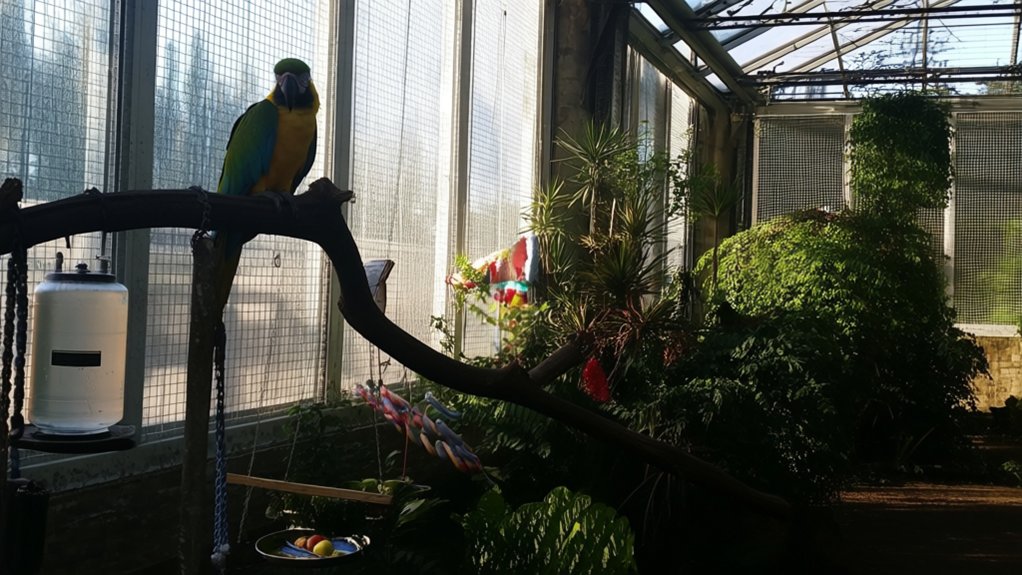
You can leave your bird alone for up to a week if you arrange twice-daily visits to check food, water, and cage cleanliness. Keep their environment safe and comfortable by maintaining proper lighting and stable temperatures. Watch for signs of stress or illness, like changes in behavior or feather condition.
Hiring a professional sitter can ease worries and ensure consistent care. With thoughtful planning, your bird stays healthy and happy while you’re away. There’s more to take into account for complete care, so it’s good to be prepared.
Safe Duration to Leave Birds Alone
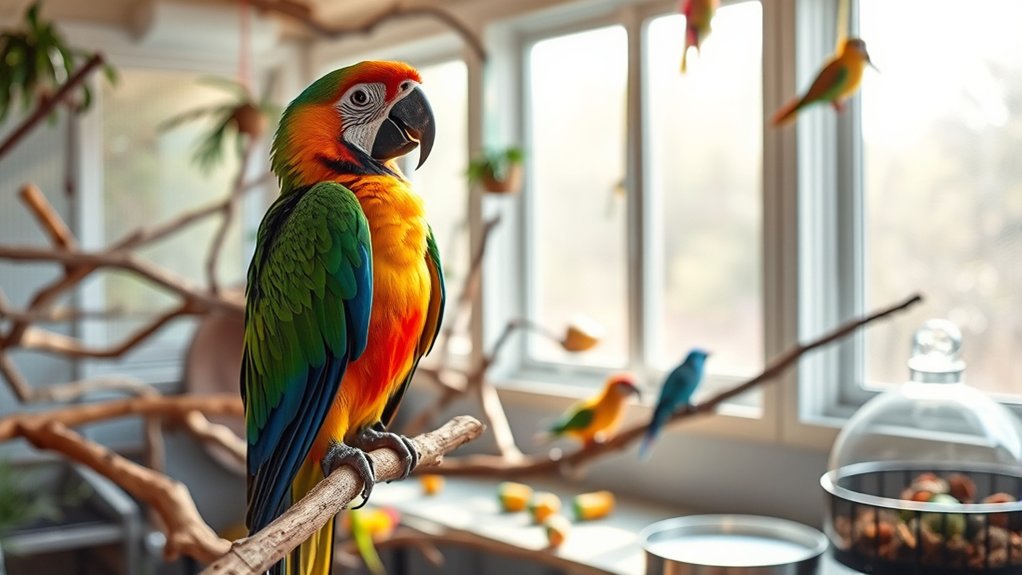
Although birds require daily attention, you can leave them alone for up to a week if someone checks on them twice daily to provide fresh food, water, and a safe environment.
You’ll want to guarantee water containers are cleaned regularly to prevent bacterial infections.
Maintaining proper lighting and temperature is vital, so setting up a consistent light cycle and using air conditioning will help keep your bird comfortable and calm.
With careful planning and reliable care, a one-week absence is manageable without compromising your bird’s well-being.
Remember, continuous and consistent care greatly reduces health risks and stress.
Signs of Stress and Health Issues to Watch For
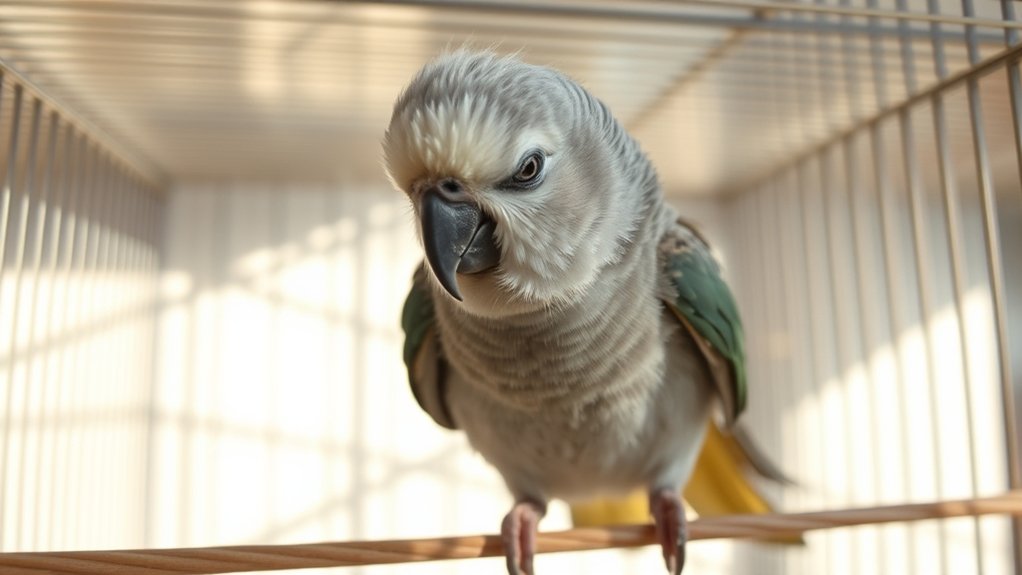
You’ll want to keep an eye out for behavioral changes, like if your bird suddenly becomes more aggressive or starts vocalizing a lot more than usual. These can be signs that your feathered friend is feeling stressed.
Also, watch for physical changes. Things like feather plucking, dull or ruffled feathers, or labored breathing can point to health problems.
Catching these signs early by paying close attention really helps protect your bird’s well-being, especially when you’re not around.
Behavioral Changes
When birds experience stress or health issues, they often show noticeable behavioral changes that you should watch for closely. These signs usually appear within days to a week of your absence or environmental changes. Paying attention to these behaviors can help you intervene promptly and maintain your bird’s well-being.
Key behavioral changes include feather plucking, excessive screaming, or unusual vocalizations indicating distress. You might also notice increased aggression or withdrawal caused by a lack of social interaction.
Lethargy, loss of appetite, or abnormal droppings can signal possible health concerns.
If you notice any of these behaviors, it’s essential to address the situation quickly. Prolonged stress can definitely worsen your bird’s condition. Monitoring your bird carefully will help ensure they stay healthy and emotionally balanced, even when you’re not around.
Physical Health Indicators
Because birds can’t verbally communicate discomfort, you need to rely on physical health indicators to recognize signs of stress or illness early. Watch for feather plucking, excessive vocalizing, or repetitive actions. These often signal stress.
Pay close attention to lethargy, loss of appetite, or abnormal droppings. These can indicate health issues. Rapid weight changes or decreased activity are warning signs you shouldn’t overlook.
Also, look for visible symptoms like swollen eyes, nasal discharge, or labored breathing. These require immediate veterinary care.
Regularly monitoring your bird’s behavior and condition, especially when you’re away, helps catch problems before they worsen.
Staying attentive to these indicators ensures you can act promptly and protect your bird’s well-being during extended absences.
Importance of Daily Visits for Bird Care
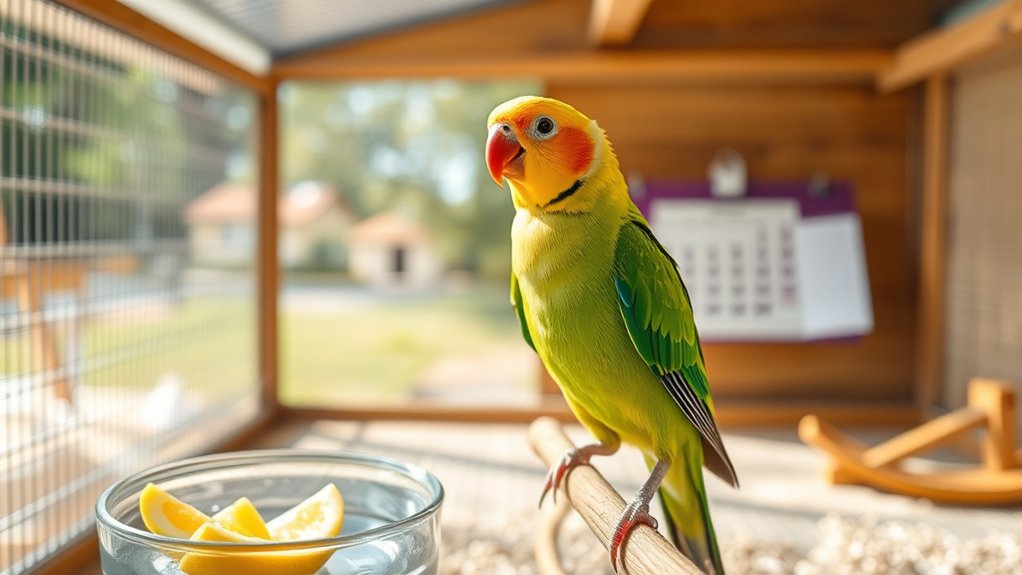
Although it might seem manageable to check on your bird only occasionally, daily visits are essential for their health and happiness. Birds rely on consistent care to thrive, and skipping daily check-ins can quickly lead to serious issues.
When you visit daily, you guarantee fresh food and clean water, which helps reduce risks like dehydration and infections. You also spot early signs of illness or distress, so you can take prompt action.
Plus, maintaining a daily routine supports your bird’s mental and physical well-being.
Here’s why daily visits matter most:
- Prevent hunger, dehydration, and bacterial infections with fresh food and water.
- Detect health problems early through close observation.
- Support your bird’s routine to reduce stress and promote comfort.
Arranging Feeding and Watering When Away
When you’re away, it’s really important to make sure your bird has a steady supply of food and constant access to clean water.
You’ll want to arrange for someone to feed your bird daily and refresh the water containers regularly. This helps prevent any bacterial growth.
Taking these simple steps will keep your bird healthy and hydrated while you’re gone.
Ensuring Daily Food Supply
If you plan to leave your bird alone for a week, arranging a reliable feeding and watering routine is essential to keep them healthy. Birds, especially those with high metabolisms, need frequent access to food to avoid starvation.
To guarantee your bird’s daily food supply while you’re away, here’s what you can do:
First, arrange for someone to check and refill food at least twice daily. Place food where your bird can easily reach it. Avoid scattering or tossing food inside the cage.
Also, use appropriate portions to prevent spoilage and waste. This routine helps maintain your bird’s energy and well-being throughout your absence.
Maintaining Clean Water Access
How can you guarantee your bird stays hydrated and healthy while you’re away for a week? The key is maintaining clean water access at all times. Dirty water can harbor bacteria that cause infections within hours, posing serious health risks.
You should clean and refill water containers daily to prevent contamination. If you’re away, consider using automated water dispensers to provide a continuous supply of fresh water.
Make sure to check that no spilled or stagnant water remains, as this can lead to dehydration or worse.
If someone is caring for your bird, emphasize the importance of monitoring water cleanliness and refilling schedules. By prioritizing clean water access, you help keep your bird safe, healthy, and hydrated during your absence.
Keeping Your Bird’s Cage Clean
Because your bird’s health depends heavily on its environment, keeping the cage clean is essential. A dirty cage can harbor bacteria and mold, which can lead to infections, respiratory issues, and even feather plucking.
A clean cage is vital to prevent harmful bacteria, mold, and health problems in your bird.
To keep your bird healthy and stress-free, focus on these key cleaning habits:
- Clean food and water dishes daily to prevent bacterial growth.
- Remove waste and uneaten food every day to reduce contamination.
- Perform a deep clean of the entire cage, including perches and toys, at least once a week.
Maintaining Proper Lighting for Bird Health
Although you might focus on diet and cleanliness, maintaining proper lighting plays a crucial role in your bird’s health. Proper lighting helps regulate their sleep-wake cycles and supports overall well-being. Your bird benefits from exposure to natural or full-spectrum lighting, which boosts appetite and activity levels.
It’s important to ensure lights are off at night, allowing your bird to rest and maintain healthy circadian rhythms. Continuous or harsh artificial lighting can cause stress and disrupt sleep, leading to health problems related to sleep deprivation.
When you’re away, arranging a balanced light-dark schedule is essential to keep your bird healthy and comfortable. Setting up timers on lights can help maintain this balance in your absence. It’s a simple step that makes a big difference!
Maintaining Temperature and Comfort
When you’re away, keeping your bird’s environment at a stable temperature is essential to prevent stress and health problems. Birds are sensitive to sudden fluctuations, which can lead to discomfort or illness. So, it’s really important to keep things steady.
Keeping your bird’s environment stable when you’re away prevents stress and health issues caused by sudden temperature changes.
To maintain comfort, focus on these key points: Use air conditioning or heaters to regulate temperature during extreme weather. Try to mimic your bird’s usual habitat as much as possible.
Also, guarantee proper insulation and set up temperature monitoring devices to keep conditions consistent. Avoid rapid temperature changes because stability supports your bird’s immune system and overall well-being.
It’s all about creating a cozy, safe space for your feathered friend.
When to Use Professional Bird Sitting Services
If you plan to be away for more than a few days, using professional bird sitting services can make a big difference in your bird’s health and happiness. These pros provide essential care like feeding, water changes, and monitoring. This helps prevent dehydration and illness.
They also keep your bird’s routine and environment stable, which lowers stress and helps spot early signs of trouble.
| Service Aspect | Benefit | Why It Matters |
|---|---|---|
| Twice-daily visits | Consistent feeding and care | Prevents starvation and dehydration |
| Environmental checks | Maintains lighting and comfort | Reduces stress and promotes well-being |
| Health monitoring | Early illness detection | Enables prompt intervention |
| Routine maintenance | Keeps your bird’s schedule intact | Supports mental and physical health |
Hiring professional sitters means your bird stays safe and well cared for while you’re away. It’s peace of mind for you and comfort for your feathered friend.
Top Resources for Bird Care Planning
Ensuring your bird’s well-being during your absence means tapping into a variety of reliable resources for care planning. You’ll want to combine expert advice, professional services, and community support to cover all bases.
Combining expert advice, professional help, and community support ensures your bird’s well-being while you’re away.
Here are three top resources to consider:
1. Avian Avenue Forum
Access specialized care tips, rehoming options, and rescue information from experienced bird owners and experts.
2. Professional Pet Sitters
Hire sitters who provide twice-daily visits to maintain your bird’s health and routine while you’re away.
3. Rehome Highway & Emergency Support
Use these platforms to connect with trusted caregivers and prepare for extended time away.
Staying informed through newsletters and care guides also helps you anticipate needs. That way, you can make sure your bird stays safe and happy while you’re gone.
Frequently Asked Questions
Can Birds Adapt to New Toys or Perches During My Absence?
Yes, your bird can adapt to new toys or perches if you introduce them gradually before you leave.
Make sure to include familiar items to ease stress. It helps keep their environment safe and comfortable.
This way, your bird feels more at home even when you’re not around.
How Do I Prepare My Bird Emotionally Before Leaving?
Like a captain steadying their ship before a storm, you should spend quality time with your bird. Introduce calming scents or sounds, and keep routines consistent to emotionally prepare them.
This helps ease their anxiety during your absence. Birds really pick up on your energy, so staying calm yourself makes a big difference.
Try to keep things familiar and soothing for your feathered friend—it’s all about making them feel safe and loved while you’re away.
Are Certain Bird Species More Independent Than Others?
Yes, some bird species like finches and canaries are more independent and tolerate alone time better.
You’ll find larger parrots need daily interaction, so consider your bird’s species and temperament before leaving them alone.
What Emergency Supplies Should Be Left for Caregivers?
You’ll want to leave caregivers a little peace of mind: fresh water, easy-to-grab food, medications, and first aid supplies.
Make sure to include clear feeding instructions and emergency contacts.
It’s also a good idea to provide backup power sources to keep your bird safe and comfortable in any unexpected situation.
Can Background Noise or Music Benefit a Lonely Bird?
Yes, background noise or soft music can soothe your lonely bird, reducing stress and providing comfort. Just keep the volume low and choose calming sounds to mimic natural environments.
Avoid loud or sudden noises that might upset them. It’s all about creating a peaceful vibe that feels safe for your feathered friend.
Conclusion
Leaving your bird alone for a week isn’t a small task. It’s like trusting a tiny feathered friend with a whole world of needs. You’ve got to guarantee they have fresh food, water, clean surroundings, and proper lighting every day.
Watching for signs of stress and arranging care can make all the difference. When in doubt, professional sitters are lifesavers. With thoughtful planning, you’ll keep your bird safe, happy, and healthy while you’re away.