
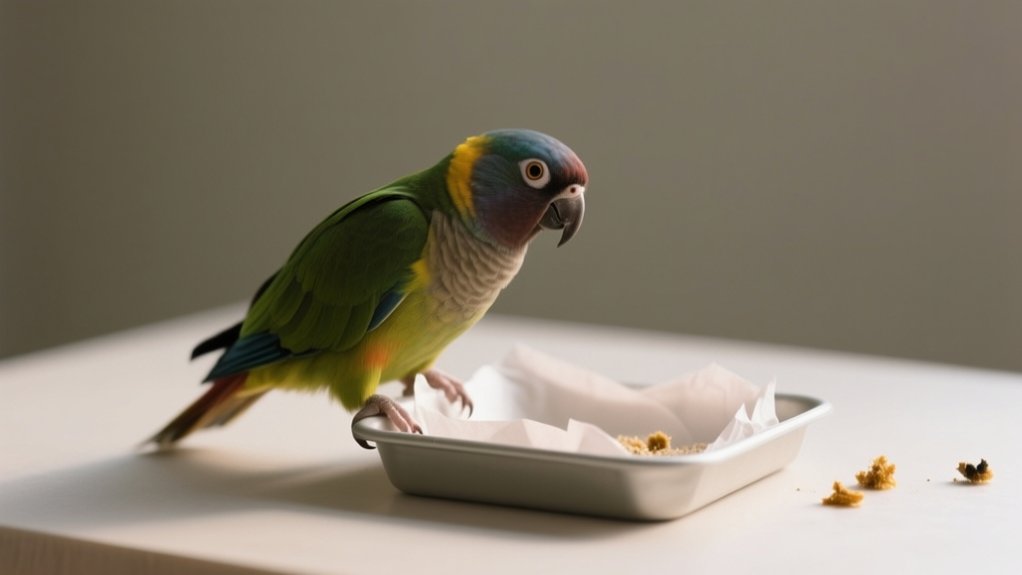
You can train birds to poop in one spot by watching for their natural elimination cues like tail flicking or crouching. Use consistent commands paired with positive reinforcement to help them learn.
Set up a specific area with absorbent materials to contain messes and keep things clean. This also helps reduce stress for your bird.
But remember, their instinctive behaviors and health risks, like stress and potential prolapse, mean training needs to be done carefully. Understanding these factors along with practical methods will help you manage both training and hygiene effectively.
Why Birds Resist Toilet Training
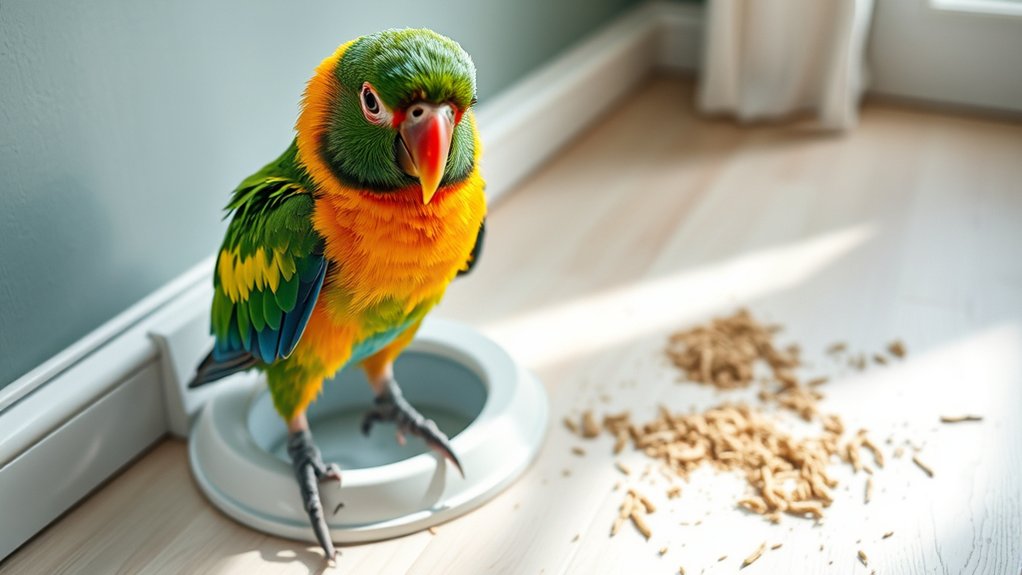
Although you might expect birds to adapt quickly, many resist toilet training because their instincts drive them to relieve themselves in specific, familiar locations rather than on command. You’ll notice that birds find it stressful to hold their waste, as their natural behavior promotes frequent, spontaneous elimination.
Species like lovebirds further complicate training since they instinctively avoid pooping on humans, making it harder to redirect them. When you repeatedly force a bird to use one spot, it can cause frustration and stress, potentially harming its health.
This resistance stems from deeply ingrained pooping habits that conflict with imposed training routines. Understanding these instinctual behaviors helps explain why toilet training birds is a challenge and requires patience and careful observation on your part.
Recognizing Pre-Poop Body Language for Potty Training
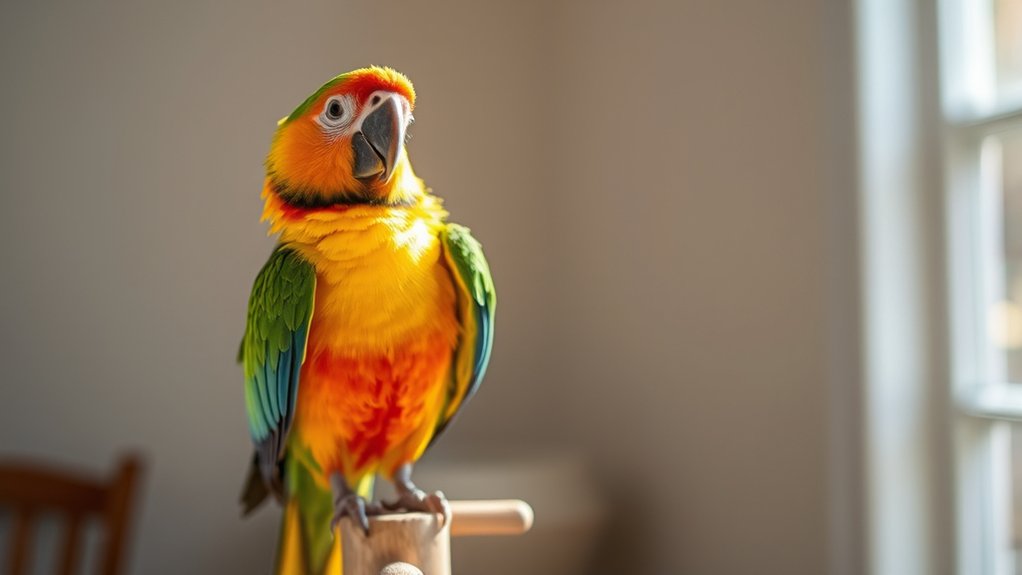
You’ll often see your bird flick its tail, crouch down, or ruffle its feathers right before it poops.
Keep an eye out for subtle signs too, like when it cranes its head or focuses its gaze on the vent. These little signals are pretty reliable for predicting when your bird needs to go.
If you learn to read these behaviors consistently, you can quickly guide your bird to the potty area and help reinforce the training.
Key Pre-Poop Signals
When you observe your bird closely, you’ll notice distinct pre-poop signals such as squatting, tail flicking, or feather ruffling that consistently come before defecation. These behaviors are pretty reliable indicators that your bird is about to go.
You might also see subtle cues like tail lowering, head craning, or the bird nudging its vent area. These often mean poop time is just around the corner. By watching for these actions carefully, you can predict when to move your bird to its designated toilet spot, which really helps with training.
The more you observe, the sharper your ability to catch these signals early becomes. That way, you can step in at just the right moment. Understanding and responding to these key pre-poop signs is super important for effective potty training.
It syncs your actions with your bird’s natural behaviors, making things smoother and cutting down on accidents.
Reading Bird Body Language
Observing your bird’s body language closely allows you to anticipate its need to poop with greater accuracy. Birds show distinct pre-poop signals that you can learn to recognize. This makes potty training a lot easier.
Key indicators include tail flicking or feathers ruffling, which usually means defecation is imminent. You might also notice a crouching posture combined with the bird craning its head or focusing on the vent area.
Smaller birds tend to show these behaviors more frequently, which helps with predictability.
When you spot these signs, moving your bird immediately to a designated toilet spot can really boost training success. It’s all about timing and paying attention to what your bird is telling you.
Choosing Commands and Toilet Spots for Training
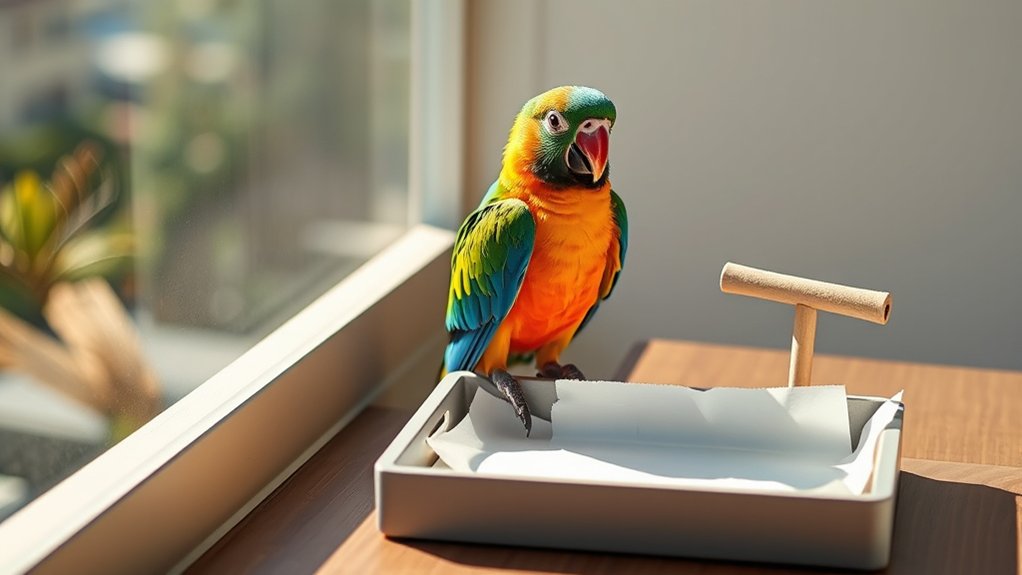
Although training a bird to poop in one place requires patience, selecting the right commands and toilet spots forms the foundation of successful behavior shaping. Choose a short, simple phrase like “Poop time!” and make sure everyone says it the same way to avoid confusing your bird.
Pick a designated toilet spot, like a specific perch or container, that your bird can easily get to during training sessions. Use the chosen command right away when you see signs your bird is about to poop. This helps create a clear connection.
When your bird poops in the designated spot, praise them and give treats to reinforce the behavior. Every bird is different, so stay flexible and watch which commands and spots work best. Adjust your approach as needed to get the best results.
Step-by-Step Guide to Toilet Training Your Bird
You’ll start by closely observing your bird for subtle pre-poop signals like tail flicking or crouching. This helps you anticipate when they need to go.
When you notice these cues, gently position your bird over the chosen spot and use a consistent command.
Then, immediately praise them and offer treats to reinforce the behavior.
This precise timing, combined with positive reinforcement, helps your bird connect the spot with the action, speeding up the training process.
Recognizing Pre-Poop Signals
When your bird starts flicking its tail, crouching, or ruffling its feathers, it’s signaling an imminent bowel movement. You can use these pre-poop signals to anticipate and manage your bird’s toilet habits effectively.
To recognize these cues precisely, observe your bird’s behavior closely and note subtle changes in posture or movement.
Follow these steps:
- Identify consistent pre-poop behaviors such as tail flicking, crouching, or feather ruffling.
- Monitor these signals during various daily activities to understand timing patterns.
- Position your bird over the designated toilet area immediately upon noticing these cues.
- Record observations regularly to refine your recognition accuracy and timing.
Mastering these signals enhances your ability to time interventions, reducing mess and improving training success. It might take a little patience, but once you get the hang of it, things get a lot easier!
Reinforcing Desired Behavior
Recognizing your bird’s pre-poop signals sets the stage for reinforcing the desired behavior effectively. Use a short, distinct command like “Poop time!” as your cue. When you observe tail flicking or crouching, guide your bird promptly to the designated spot.
Immediately after successful pooping, offer enthusiastic verbal praise and gentle petting. Consistent repetition of commands paired with positive feedback strengthens this habit. Patience is essential; expect gradual progress over weeks.
| Step | Action | Purpose |
|---|---|---|
| 1 | Use command “Poop time!” | Create association |
| 2 | Watch for signals | Identify readiness |
| 3 | Guide bird to spot | Direct behavior |
| 4 | Praise immediately | Reinforce success |
| 5 | Repeat consistently | Establish habit |
Troubleshooting Training Mistakes and Challenges
Although bird training aims for consistent results, mistakes and challenges frequently arise from missed pre-poop cues and inconsistent routines. To troubleshoot effectively, you need to watch your bird closely and adjust your approach based on its unique behavior patterns.
Keep an eye out for those subtle pre-poop signals so you don’t miss the timing. Also, stick to consistent commands and training routines to avoid confusing your bird.
Watch for subtle pre-poop signals and maintain consistent commands to keep your training clear and effective.
And remember, never force or punish your bird after accidents. That just raises stress and slows down progress.
Some birds might even fake pooping cues or hold it longer than usual, so be patient and ready to adapt your training accordingly.
Health Risks to Consider Before Potty Training
Because birds naturally avoid holding their droppings for long periods, attempting to train them to do so can introduce serious health risks such as prolapsing, infections, and gastrointestinal complications.
When you force a bird to hold its waste, you risk dangerous heat and bacterial buildup in the cloaca, which can compromise tissue integrity and lead to prolapse. This unnatural retention also disrupts normal digestive rhythms, increasing the likelihood of severe gastrointestinal issues.
Additionally, restricting elimination to specific areas conflicts with birds’ instinctual behaviors, causing stress that weakens their immune response. You should carefully weigh these risks before starting potty training.
The discomfort and immune suppression might outweigh the benefits, potentially resulting in long-term health challenges rather than improved hygiene. So, it’s really important to think it through before you begin.
How to Manage Bird Messes Without Stress
While birds naturally produce waste frequently, you can reduce cleanup time by using absorbent materials like paper or specialized pads on the floor.
To manage bird messes without stress, focus on practical strategies that limit contamination and simplify maintenance.
Cover furniture with blankets, towels, or specialized covers to protect surfaces from droppings.
Wear bird shirts or protective clothing when handling birds or cleaning to reduce stress and exposure.
Regularly change covers and clean designated areas to prevent odor buildup and maintain hygiene.
Create designated safe zones or perches to encourage birds to poop in specific spots, minimizing scattered messes. It really helps keep things manageable!
Frequently Asked Questions
Do Certain Bird Species Learn Potty Training Faster Than Others?
Yes, you’ll find larger parrots like African Greys learn potty training faster due to predictable routines and attention spans.
Smaller, more active birds like budgerigars take longer because of frequent pooping and higher energy levels. It’s really about their natural behavior and how focused they can be during training.
Can Diet Affect a Bird’s Bathroom Habits?
Yes, diet directly affects your bird’s bathroom habits. High-water-content foods like fruits increase frequency, while fiber-rich diets promote regularity.
Sudden dietary changes can disrupt patterns, so you should maintain consistent nutrition for predictable droppings. It really helps to keep things steady for your bird’s digestive system.
Is It Safe to Use Training Pads or Liners for Birds?
Imagine a bird chewing its liner like a toddler tearing paper. It’s risky.
You shouldn’t use regular training pads. Instead, opt for bird-safe, non-toxic liners.
Make sure to replace them often to avoid ingestion hazards and bacterial growth.
How Long Does It Typically Take to See Training Progress?
You typically see training progress within 3 to 7 days, depending on your bird’s personality and consistency. Full mastery usually takes 4 to 6 weeks, but regular observation and reinforcement can speed this up considerably.
It really depends on how often you work with your bird and how well you stick to the routine. The more consistent you are, the quicker you’ll notice improvements. Just keep at it, and you’ll get there!
Can Stress or Changes in Environment Affect Potty Training Success?
Stress hits your bird like a storm, disrupting potty training. You’ll notice anxiety alters body language and causes accidents.
Keep their environment stable and adjust gradually to maintain consistent bathroom habits and reduce health risks. It really helps to make changes slowly so your bird doesn’t get overwhelmed. That way, potty training can stay on track without extra stress.
Conclusion
Training your bird to poop in one place takes patience and keen observation, much like “watching a pot that never boils.” By recognizing their pre-poop signals and consistently using clear commands, you can shape this behavior scientifically.
Remember, setbacks are part of the process, so troubleshoot calmly and consider health risks carefully. Managing messes without stress keeps both you and your bird comfortable, turning a challenging task into a manageable routine.