
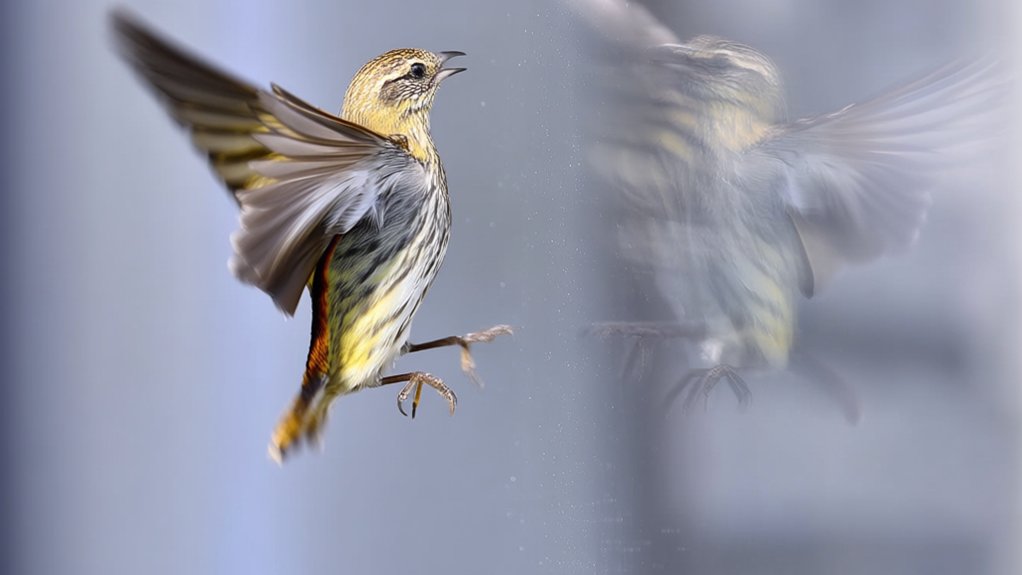
You might wonder if birds can break windows, but collisions usually don’t shatter glass. Instead, the problem is serious injuries and fatalities. Birds often mistake reflections of sky or trees for open flight paths.
They strike windows hard and suffer trauma like fractures, concussions, or eye damage. These impacts cause disorientation and often lead to death. It’s a sad reality for many birds.
Understanding how glass design and environmental factors increase risks will help us find effective prevention methods. Plus, it shows the proper steps to help injured birds when collisions happen.
Why Birds Collide With Windows
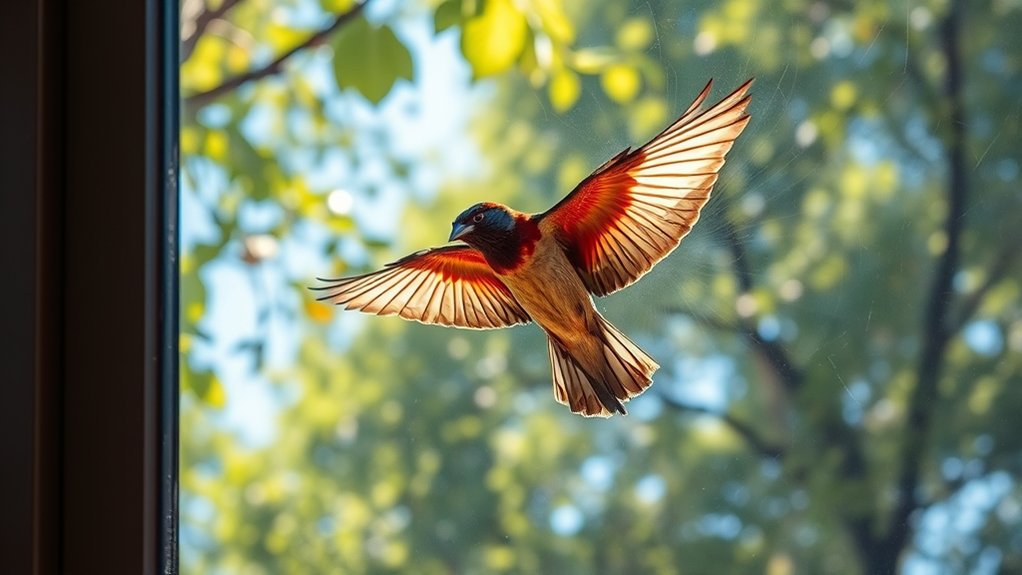
Why do birds often collide with windows despite their keen vision? You might assume their sharp eyesight prevents accidents, but reflections in glass create illusions of open sky, trees, or water. These reflections fool birds into thinking the surface is a clear flight path or habitat.
When greenery or water reflects in windows, birds are misled into approaching or landing.
At night, migrating birds get drawn to artificial lights. This disorients them and raises the chance of hitting reflective glass.
Weather conditions such as fog, rain, or snow reduce visibility. This makes it tough for birds to distinguish windows from genuine sky or landscape.
During dawn and dusk, low light and reflections further impair their ability to detect glass. This increases collision risks despite their natural visual acuity.
How Glass Causes Bird-Window Collisions
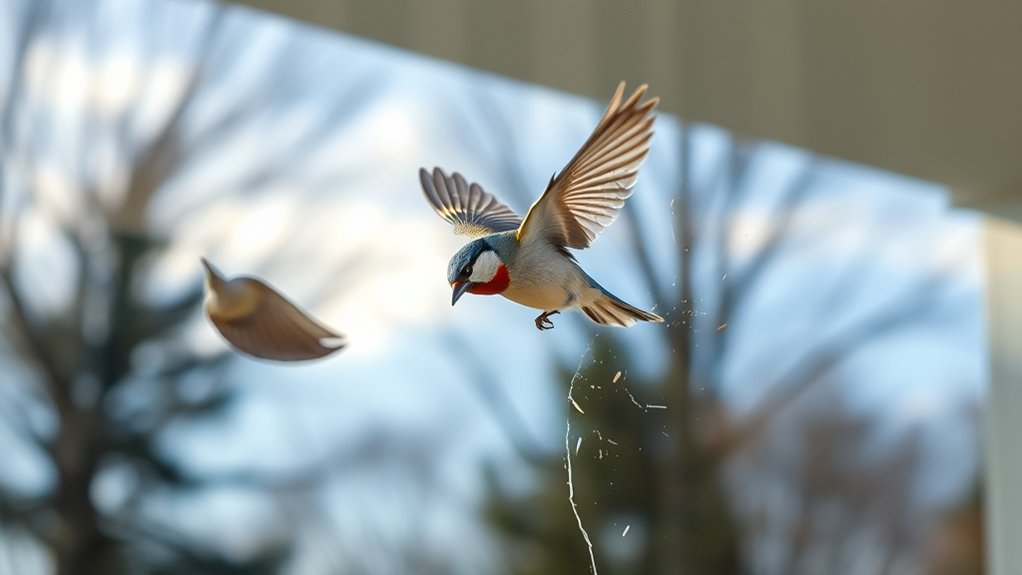
Although glass windows serve as transparent barriers, their reflective and see-through properties often confuse birds, leading to collisions. You should understand that birds frequently fail to recognize glass as a solid obstacle because it reflects surrounding trees, sky, or water, creating illusions of open space or habitat.
When birds fly toward these reflections, they perceive them as accessible flight paths, causing impacts. Additionally, large uninterrupted glass panes make this problem worse by presenting expansive reflective surfaces.
Environmental factors like artificial lighting, fog, or rain also impair bird visibility, increasing the risk of collisions.
Which Birds Are Most at Risk of Window Collisions
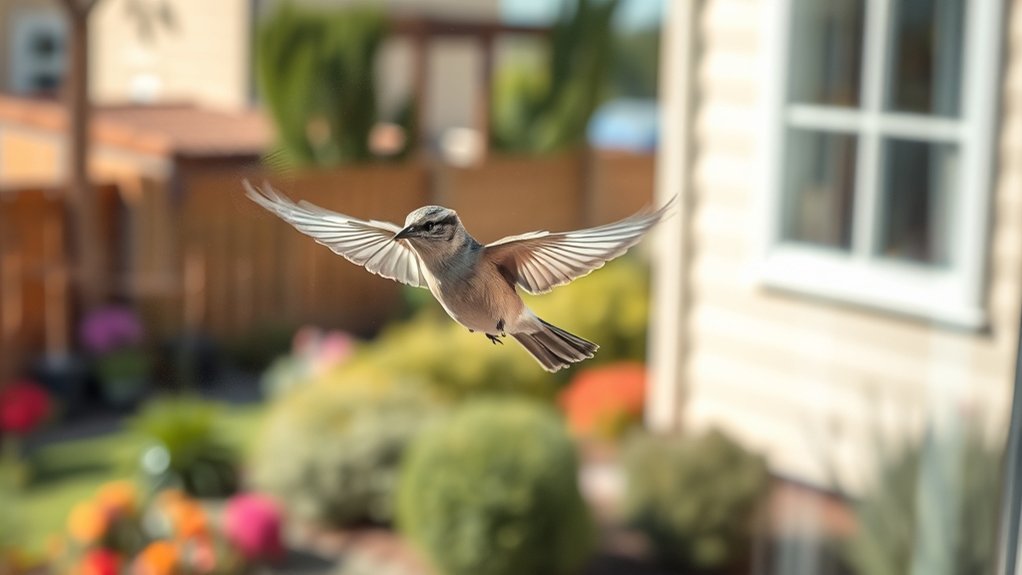
Because certain bird species exhibit specific behaviors and physical traits, they face higher risks of window collisions. You’ll find warblers, thrushes, sparrows, hummingbirds, and vireos among the most vulnerable due to their size, activity level, and coloration.
Flocking species like waxwings increase risk, especially in fall and winter, as large group movements magnify collision chances.
You should also consider migratory birds flying at night. Artificial lights disorient them, leading to more impacts.
Additionally, smaller birds with poor depth perception or limited vision, common in many songbirds, misinterpret reflective glass as open space.
Understanding these species-specific vulnerabilities helps you identify which birds need greater protection measures to reduce window collisions effectively. It’s all about knowing who’s at risk so you can take action to keep them safe.
How Building Features and Environment Increase Bird-Window Collisions
When buildings feature large expanses of glass, especially near natural habitats, they markedly increase the risk of bird collisions.
You’ll find that larger structures with extensive window surfaces, particularly in urban areas adjacent to green spaces or water bodies, experience higher collision rates.
Reflections of sky, trees, and water in glass create visual illusions, misleading birds into perceiving safe flight paths or habitat.
Architectural factors such as reflective glass, high-rise height, and window orientation also play critical roles in collision frequency.
If a building’s glass mirrors vegetation, it can deceive birds into thinking they’re flying into open space, resulting in dangerous mid-flight impacts.
Understanding these environmental and structural influences helps you appreciate why certain buildings pose greater threats to birds during flight.
Common Injuries From Bird-Window Collisions
When birds crash into windows, they often end up with head injuries, broken jaws, or eye damage that can really affect how they function.
It’s important to know that some injuries, like air trapped under the skin (called subcutaneous emphysema) or broken coracoid bones, can seriously mess with their ability to fly and find food.
These problems mightn’t be easy to spot right away, but they often lead to serious health issues that need a vet’s attention.
Typical Collision Injuries
How do bird-window collisions typically affect avian health? Birds often suffer head trauma, fractures, and internal injuries from impacts. You might see jaw fractures, eye injuries, or subcutaneous emphysema caused by respiratory damage.
Fractures to the coracoid or clavicle bones can cripple a bird’s flight ability. Head trauma may cause disorientation, loss of balance, or unconsciousness. Sometimes these symptoms appear minor at first.
Many injuries seem subtle but can be life-threatening. So, getting a professional evaluation is really important.
| Injury Type | Description | Potential Effects |
|---|---|---|
| Head Trauma | Brain injury or concussion | Disorientation, unconsciousness |
| Bone Fractures | Jaw, coracoid, clavicle breaks | Impaired feeding, flight |
| Eye Injuries | Blunt trauma to eyes | Vision loss, blindness |
| Respiratory Damage | Subcutaneous emphysema | Breathing difficulties |
| Internal Injuries | Organ damage | Shock, death |
Injury Impact On Birds
Why do bird-window collisions cause such severe injuries? When birds strike windows, they often sustain critical trauma like head injuries, jaw fractures, and eye damage. These injuries can be life-threatening.
You mightn’t immediately notice internal harm such as subcutaneous emphysema or respiratory injuries, but these can seriously compromise a bird’s survival. Fractures to bones like the coracoid or clavicle can make flying, hunting, and feeding really difficult for them.
Although some injuries seem subtle at first, they can get worse over hours or days and increase health risks. Because these injuries are complex and severe, birds need professional evaluation and treatment at wildlife rehabilitation centers.
Prompt care is essential to reduce lasting damage and help birds recover.
Simple Ways to Prevent Bird-Window Collisions
You can reduce bird-window collisions by using effective window treatments that help break up reflections and make the glass more visible.
For example, applying decals, UV-reflective films, or impact-resistant screens can really help. These options disrupt the reflective surfaces that usually confuse birds.
Effective Window Treatments
Although bird-window collisions pose a significant threat to avian populations, effective window treatments can drastically reduce these incidents. You can apply window decals or stickers spaced one foot apart to break up reflections that attract birds. Using impact-absorbing window screens or netting cushions the impact, preventing direct glass strikes.
Commercial UV-reflective decals are less visible to humans but highly visible to birds, improving collision prevention. Covering windows with outdoor string curtains or patterned films creates a visual barrier that deters birds from flying into glass.
Simple DIY methods, such as polka-dot decals or fritted glass, have demonstrated reductions in bird strikes by up to 95%. By implementing these scientifically supported treatments, you notably lower the risk of fatal bird-window collisions.
It’s a smart way to protect birds while keeping your windows functional and stylish. Plus, many of these solutions are easy to install and maintain. So, why not give them a try?
Reducing Reflective Surfaces
When windows reflect the surrounding environment, birds often mistake these surfaces for open space or habitat, leading to collisions. To reduce this risk, you can apply decals or stickers spaced about one foot apart. These break up reflections and noticeably lower collision rates.
Installing impact-absorbing screens or films cushions impacts and reduces reflective glare. Using UV-reflective decals makes glass visible to birds without impairing your view.
Exterior treatments like string curtains or patterned films disrupt reflections of natural surroundings, further deterring birds.
For new constructions or renovations, consider designing buildings with fewer large, reflective glass surfaces. You might also want to opt for non-reflective or matte finishes.
These strategies collectively minimize the visual confusion birds experience, effectively preventing collisions and protecting avian life.
What To Do If You Find an Injured Bird
If you discover an injured bird, handle it as little as possible to prevent additional stress or injury. Gently place the bird in a secure, enclosed container such as a cardboard box or colander to limit movement and protect it from predators.
Don’t attempt to feed or give water immediately; wait until swelling or injuries stabilize.
Observe the bird from a distance to assess recovery before considering release. Promptly contact a wildlife rehabilitator or veterinarian experienced in avian care for accurate diagnosis and treatment.
Protecting the bird from potential threats during recovery increases survival chances.
These steps guarantee the bird receives appropriate care and minimize further harm, helping it recover more effectively. Taking quick and careful action can really make a difference for the bird’s chance at survival.
Frequently Asked Questions
Can Birds Intentionally Peck or Scratch Glass Surfaces?
No, birds can’t intentionally peck or scratch glass surfaces to damage them. When they do interact, it’s usually accidental or exploratory, not purposeful.
Any marks caused are rare and unintentional rather than deliberate. So, if you see scratches or peck marks on glass, it’s probably not from birds trying to cause harm. They’re just curious or maybe confused by their reflection.
Do Window Collisions Affect Bird Migration Patterns?
Yes, window collisions disrupt your migration patterns by causing disorientation and delays. Repeated injuries reduce your survival rates, and light pollution misleads your flight paths.
But don’t worry, mitigation efforts can help minimize these negative effects. Taking some simple steps can really make a difference for migrating birds.
How Do Different Glass Types Vary in Bird Safety?
You probably think all glass is bird-friendly. Spoiler: it’s not. Wired, laminated, fritted, and UV-reflective glass help reduce collisions by making the glass more visible to birds.
On the other hand, clear low-iron glass sadly invites more strikes because it’s so transparently deceptive. Birds just don’t see it coming, which leads to more accidents. So, not all glass is created equal when it comes to bird safety.
Are Certain Times of Day Riskier for Bird-Window Strikes?
Yes, you’ll find bird-window strikes peak during dawn and dusk when low light impairs birds’ glass perception, especially during migration seasons.
Overcast or foggy conditions and urban artificial lighting further increase the risk during these times. It’s kind of like how we sometimes struggle to see clearly in dim light or bad weather. Birds face similar challenges, making these periods riskier for them.
Can Pets Inside Homes Trigger Bird Collisions With Windows?
You might not realize that up to 30% of bird-window collisions involve startled birds. When your pets move suddenly or bark near windows, they can indirectly trigger these collisions by causing birds to panic and fly unpredictably into glass.
It’s kind of surprising, right? Pets inside your home can have an unexpected effect on birds outside. So, keeping an eye on how your pets behave near windows might actually help reduce these collisions.
Conclusion
You might not realize it, but when a hummingbird strikes a clear window, it can suffer severe injuries or even die. Studies show that reflective glass confuses birds, leading to thousands of collisions every year.
By applying simple solutions like window decals or films, you can really reduce these incidents. Protecting birds means understanding how glass misleads them.
Then, you can take proactive steps to minimize the risks around your home or workplace. It’s easier than you might think!