
You shouldn’t expect birds to breathe safely through their mouths because their respiratory system is built for nasal airflow that supports efficient oxygen exchange and flight. Mouth breathing bypasses critical air sacs and nasal filters, increasing infection risks and reducing oxygen delivery. It usually signals distress or illness and can impair their ability to fly.
Birds use specialized cooling behaviors instead. Understanding these breathing mechanics and warning signs can help you recognize when a bird may be struggling with respiratory issues.
How Do Birds Normally Breathe Through Their Noses?
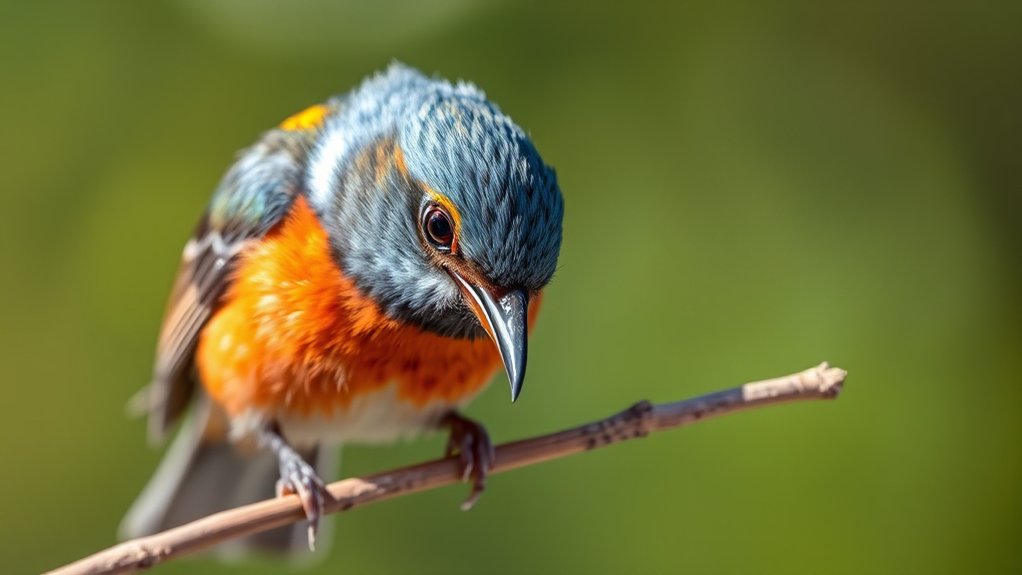
Although you mightn’t notice it, birds primarily breathe through their nares, which are small openings located on their beaks or around the nostrils. These nares serve as the entry point for air to enter the respiratory system.
Birds mainly breathe through their nares, small openings on their beaks that lead air into their respiratory system.
When a bird inhales, air passes through the nares into the trachea, then moves into the lungs and posterior air sacs. This pathway supports unidirectional airflow, which maximizes oxygen exchange efficiency.
That’s really important for meeting the high metabolic demands of flight. The nares often have a keratinous covering or bristles that filter out debris, protecting the respiratory tract.
This structural adaptation guarantees clean, efficient air intake. Understanding how birds breathe through their nares highlights the specialized nature of their respiratory system.
It’s optimized for their active lifestyles and oxygen needs.
Why Birds Avoid Mouth Breathing
You might wonder why birds rarely breathe through their mouths, even though they can open them. Birds mainly rely on their nares for breathing because their respiratory system is specially designed for nasal airflow. The nasal passages and air sacs create a unidirectional airflow that helps them take in oxygen really efficiently.
Breathing through the mouth skips these important parts, so it makes breathing less efficient. Plus, the beak and nares are built to support nasal breathing, so birds don’t really need to breathe through their mouths during normal activities.
When birds do open their mouths to breathe, it usually means they’re having trouble or might be sick. If you see a bird with its mouth open a lot, whether it’s flying or resting, that could be a sign of a problem.
How Air Sacs Help Birds Breathe
Because birds rely on an exceptionally efficient respiratory system, their nine air sacs play a crucial role in maintaining unidirectional airflow through the lungs. These air sacs act like bellows, surrounding the lungs and storing air during both inhalation and exhalation. This setup guarantees a continuous flow of oxygen-rich air through the respiratory surfaces.
When you watch a bird breathe, fresh air first fills the posterior air sacs. Then it moves through the lungs where gas exchange happens, before entering the anterior air sacs and finally being expelled. This system really maximizes oxygen extraction, which supports their high metabolic demands.
On top of that, the air sacs help reduce skeletal weight, making flight more efficient. They also contribute to temperature regulation and buoyancy control in certain species. So, their importance goes well beyond just helping birds breathe.
What Happens When Birds Breathe Through Their Mouths
When you see a bird breathing through its mouth, it’s usually a sign that something’s different with how it’s taking in air. Normally, birds breathe through their nose, which helps filter and humidify the air.
But when they switch to mouth breathing, this natural filtration gets bypassed. This can lead to a few issues, like the bird losing more moisture and becoming dehydrated.
Plus, since the air isn’t getting humidified properly, the bird might overheat more easily. On top of that, mouth breathing is often a red flag for respiratory problems, meaning the bird might be struggling to get enough oxygen, which isn’t good for its health overall.
Mouth Breathing Mechanics
Although birds primarily rely on their nares for respiration, they can switch to mouth breathing during intense activity or respiratory distress. When you observe a bird breathing through its mouth, it’s typically compensating for reduced nasal airflow or increased oxygen demand.
Unlike mammals, birds don’t have a muscular diaphragm, so mouth breathing doesn’t considerably alter their respiratory mechanics. Instead, this method temporarily increases the volume of air intake, allowing more oxygen to reach the lungs and air sacs.
However, by bypassing the nasal passages, the air isn’t filtered, warmed, or humidified as effectively. While this adaptation can be beneficial in short bursts, it’s important to recognize that sustained mouth breathing often signals underlying issues requiring attention.
Understanding these mechanics helps you better interpret avian respiratory behaviors. It’s pretty fascinating how birds manage their breathing, especially when they switch things up to meet their needs.
Respiratory Impact Risks
How does breathing through the mouth affect a bird’s respiratory health? When birds breathe through their mouths, they bypass their nares, which normally filter airborne particles like dust and pollen. This bypass increases exposure to irritants and pathogens, raising the risk of infections.
Mouth breathing also compromises the efficiency of gas exchange. It can potentially cause hypoxia or respiratory failure if it goes on for too long. Usually, birds mouth-breathe during stress or illness. So, it’s more of a sign of respiratory distress than normal function.
This abnormal breathing pattern reduces the protective benefits of nasal filtration and can make respiratory irritation worse. If you notice a bird consistently breathing through its mouth, it probably means there’s an underlying health problem. You should get it checked by a vet quickly to prevent further respiratory issues.
Is Mouth Breathing a Sign of Stress or Illness?
Because birds rely on rapid breathing to meet oxygen demands during stress or exertion, you may notice them opening their mouths frequently in such situations. This mouth opening helps increase airflow and is a normal, temporary response.
However, if you see persistent or excessive mouth breathing, it could mean respiratory distress, infection, or airway obstruction. Stress from handling or changes in the environment might also cause brief mouth opening as birds try to get more oxygen.
Chronic mouth breathing along with symptoms like nasal discharge, lethargy, or reduced activity usually points to health problems that need a vet’s attention.
In healthy birds, mouth breathing goes away once they relax or recover.
When Is Mouth Breathing Safe or Necessary?
You may notice birds breathing through their mouths during stressful or illness-related episodes, but there are specific situations when this behavior is both safe and necessary.
Mouth breathing can temporarily support oxygen intake when nasal passages are obstructed or during acute respiratory distress.
Mouth breathing helps birds get enough oxygen when their nasal passages are blocked or during respiratory distress.
It can also help with thermoregulation when nasal cooling isn’t enough. Just keep in mind, this should be a short-term adjustment, not how they normally breathe.
Here are some situations where mouth breathing is safe or necessary:
- Blocked or congested nasal passages
- Acute respiratory distress requiring rapid oxygenation
- Thermoregulation during overheating
- Short-term response to environmental stressors
- Temporary adjustment during illness recovery
If you see mouth breathing happening for a long time, it usually means there’s an underlying health issue that needs a vet’s attention.
How Mouth Breathing Hurts Oxygen Flow and Flight
Although mouth breathing may seem like a simple adaptation, it actually disrupts the bird’s highly efficient unidirectional airflow system, reducing oxygen exchange in the lungs. Birds rely on continuous airflow through parabronchi for ideal oxygen uptake.
When you breathe through the mouth, this system can stagnate, decreasing oxygen intake especially during intense activity like flight.
Additionally, mouth breathing interferes with the function of specialized air sacs that regulate the respiratory cycle, impairing sustained oxygen delivery.
Opening the beak excessively also increases the risk of inhaling unfiltered debris, which can lead to respiratory infections.
If you’re a bird under stress or with compromised respiration, mouth breathing accelerates oxygen depletion, limiting your ability to perform demanding tasks such as flying efficiently or for extended periods.
Bird Cooling Methods Besides Mouth Breathing
While birds sometimes open their mouths to cool down, they mainly rely on specialized methods like gular flutter to regulate their body temperature without messing with their breathing efficiency. Gular flutter means rapid vibrations of the throat skin, which boosts evaporative cooling without heavy breathing.
Besides this, birds use several other cooling tricks. They pant to increase moisture evaporation from their mouth and respiratory surfaces. They also pump more blood to the oral cavity to carry heat away from their core.
Birds have a super-efficient respiratory system that helps minimize overheating during flight.
Plus, they use behavioral moves like finding shade or slowing down when it’s hot out. They also adjust their feather positions to help heat escape through convection.
All these methods work together to keep birds cool without cutting into their oxygen intake.
How to Tell If a Bird Is Struggling to Breathe
You can tell if a bird is having trouble breathing by watching for a few key signs. For example, open-mouth breathing is a big one. You might also notice the bird’s tail bobbing up and down as it tries to catch its breath. Changes in breathing patterns, like breathing really fast or with extra effort, are important clues too.
It’s also helpful to listen closely. Sometimes you can hear wheezing or gasping sounds when a bird is struggling.
Take a look for physical signs as well, such as nasal discharge, flared nostrils, or swelling around the face.
When you put all these signs together, along with a faster breathing rate and changes in how the bird holds itself, you can get a good idea if it’s having trouble breathing.
Signs Of Respiratory Distress
How can you tell if a bird is struggling to breathe? Recognizing respiratory distress means looking out for certain signs that show the bird isn’t getting enough oxygen. You should watch for things like open-mouth breathing and labored, rapid breaths.
Also, notice if the bird’s tail is bobbing in sync with each breath. Check for nasal discharge or any swelling around the face and nares. You might hear wheezing, squeaking, or gasping sounds too.
Fluffed feathers along with lethargy or less activity are other red flags. These symptoms usually mean there’s some airway blockage, infection, or strain on the respiratory system.
Catching these signs early is really important so you can get help fast.
Normally, birds breathe quietly and smoothly through their nostrils, so if you see anything different, pay close attention. Keeping an eye on these signs helps you understand how your bird’s breathing is doing and lets you act quickly to avoid serious problems.
Breathing Pattern Changes
When birds experience respiratory distress, their breathing patterns change noticeably, providing critical clues to their condition. You may observe rapid breathing combined with consistent open-mouth breathing and flared nares. This usually means the bird is trying to get more oxygen because it isn’t getting enough.
Tail bobbing, where the tail moves rhythmically with each breath, signals increased respiratory effort. Also, listen for unusual sounds like gasping or squeaking. These noises suggest there might be some kind of airflow obstruction in the respiratory system.
Postural changes can give you important signs too. For example, if a bird is stretching its neck forward or sitting with its wings held away from its body, it’s probably struggling to breathe efficiently.
Keeping an eye on these specific breathing changes helps you spot respiratory distress early. That way, you can step in before things get worse.
Physical Examination Indicators
Although birds naturally breathe through their mouths to some extent, distinct physical signs can reveal when they’re struggling to breathe. When examining your bird, observe closely for:
- Open-mouth breathing combined with tail bobbing or fluffed feathers
- Rapid or labored respiratory effort, nasal discharge, or facial swelling
- Asymmetry in the beak or nares, which may indicate airway obstruction or infection
Abnormal respiratory sounds like wheezes or gurgles heard via auscultation can also be a warning sign.
Postural changes such as sitting with wings held away from the body or consistently holding the beak open are important to note.
These indicators provide objective evidence of respiratory distress and warrant prompt veterinary evaluation to address potential underlying causes.
Monitoring these signs helps guarantee your bird’s respiratory health remains stable and prevents progression of respiratory compromise.
Tips for Supporting Healthy Bird Breathing
Maintaining healthy bird breathing requires careful attention to environmental conditions and timely intervention. You should maintain relative humidity near 70% to reduce respiratory effort. Guarantee good ventilation while avoiding exposure to fumes, mold, and household chemicals that can irritate the respiratory tract.
Proper humidity and clean air are key to supporting your bird’s healthy breathing.
Monitor your bird regularly for signs of distress, as early detection allows prompt treatment. If your bird shows respiratory difficulty, supplemental oxygen can improve airflow and stabilize breathing. Remember, birds primarily breathe through their nares but may open their mouths when struggling, signaling distress.
Regular veterinary health checks are essential to assess respiratory status and intervene early if problems arise. By controlling the environment and responding swiftly to respiratory changes, you support excellent respiratory function and overall health in your bird.
It’s all about staying proactive and attentive to keep your feathered friend breathing easy.
Frequently Asked Questions
Can Baby Birds Breathe Through Their Mouths?
Baby birds can breathe through their mouths, but it’s not their primary method.
If you see them doing this, it often signals respiratory distress. So, you should seek veterinary care promptly to guarantee their health.
Do Waterfowl Breathe Differently Than Songbirds?
You’ll find waterfowl have up to 20% larger air sacs than songbirds, which helps them stay underwater longer during dives. Both types of birds breathe in similar ways, but waterfowl have a neat trick.
They close their nares when they’re underwater. This means they don’t take in water through their nostrils. Instead, they rely on their specialized air sacs to get oxygen efficiently while swimming and diving.
How Does Altitude Affect Bird Breathing?
At higher altitudes, you’ll notice birds increase hemoglobin and blood volume to enhance oxygen transport. Their unidirectional airflow and air sacs optimize oxygen extraction, allowing them to maintain efficient respiration despite lower atmospheric oxygen levels.
Pretty clever, right? These adaptations help birds keep up their energy even when the air is thin and oxygen is scarce.
Can Mouth Breathing Cause Long-Term Damage in Birds?
Ever wondered if mouth breathing harms birds long-term? Yes, it can cause tissue irritation, dehydration, and reduced oxygen delivery. This can potentially lead to respiratory distress, infections, and chronic health issues.
But here’s the thing—if you don’t address the underlying causes promptly, these problems might get worse. So, keeping an eye on your bird’s breathing habits is really important.
Are Certain Bird Species More Prone to Mouth Breathing?
Yes, you’ll find species like raptors, waterfowl, and parrots more prone to mouth breathing due to nasal passage restrictions or sinus issues. This happens especially during respiratory distress or heat stress. They adapt their breathing to maintain oxygen flow effectively.
It’s pretty interesting how these birds adjust, right? Mouth breathing helps them get enough air when their usual nasal routes aren’t working well. So, it’s a smart way to cope with challenging conditions.
Conclusion
You might think birds can breathe through their mouths like humans, but their respiratory system relies heavily on nasal breathing and air sacs for efficient oxygen flow.
Mouth breathing, often a sign of stress or illness, disrupts this balance and hampers flight performance. While birds have other cooling methods, mouth breathing signals trouble.
Paying attention to these subtle signs helps you support their delicate respiratory health, ensuring they stay vibrant and airborne.