
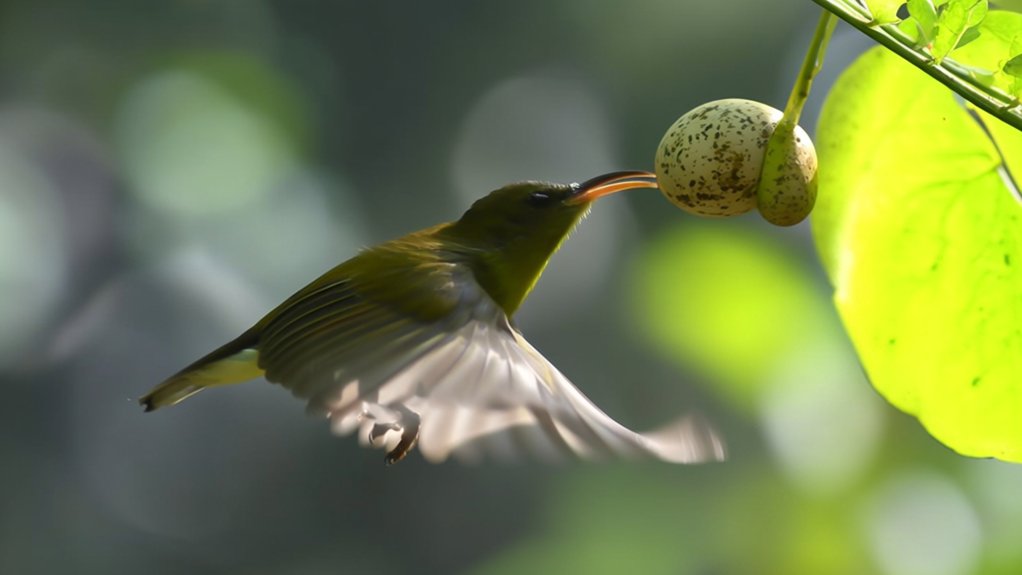
You can’t expect birds to carry their eggs during flight because their anatomy isn’t designed for it. Fragile eggs would easily break, and carrying them would disrupt flight balance and increase energy use. Most birds rely on secure nests for egg safety rather than transportation.
Only a few species, like some waterbirds, carry chicks on their backs for protection. Understanding these behaviors and risks helps explain why birds prioritize nesting over carrying offspring midair. It’s just not practical or safe for them to try moving eggs around while flying.
Why Don’t Birds Carry Their Eggs in Flight?
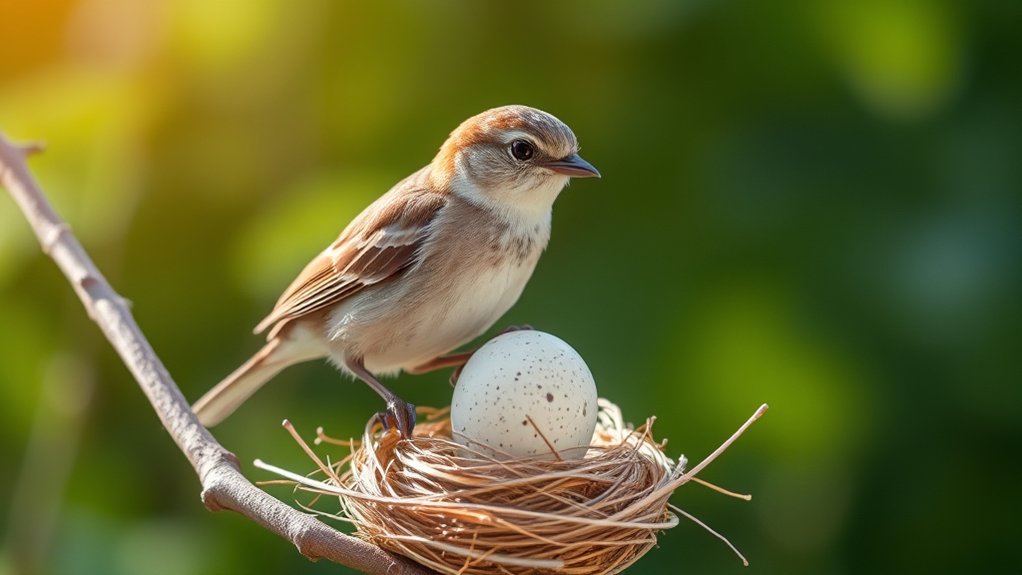
Although it might seem practical for birds to carry their eggs during flight, their anatomy and physiology make this impossible. Birds have lightweight bones and streamlined bodies optimized for efficient flight, making it unfeasible to carry heavy or fragile objects like eggs.
Birds’ lightweight, streamlined bodies prevent them from carrying heavy or fragile eggs during flight.
Their limbs lack grasping appendages capable of securely holding eggs, preventing any safe transport during flight.
Plus, eggs are fragile, which raises the risk of breakage amid turbulence or sudden movements. Evolutionarily, birds rely on nesting in secure locations to protect their eggs, so they don’t need to carry them while flying.
While some waterbird species transport hatchlings after they emerge, no bird species carries eggs in flight. This really highlights how important nest security is compared to trying to transport eggs on the wing.
Why Carrying Eggs or Chicks Can Be Dangerous for Birds
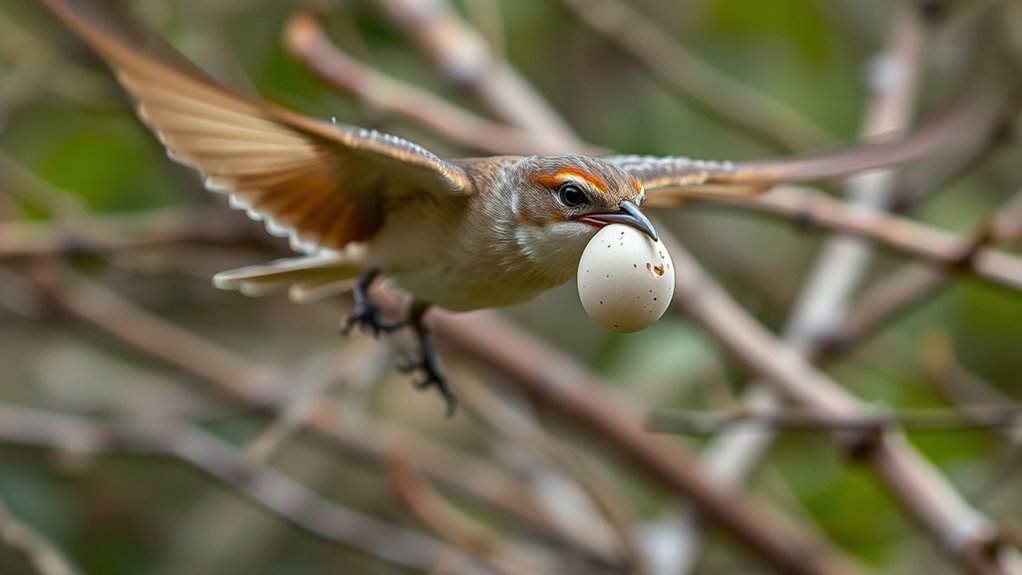
While birds don’t carry eggs during flight because of their physical and anatomical limits, trying to transport eggs or chicks in any way can be really dangerous. When you try to carry eggs or young, you might throw off your balance and make flying way harder. That can lead to getting tired fast or even getting hurt.
Plus, carrying your babies makes you an easier target for predators, which means you might lose them. Birds have figured out it’s better to leave eggs and chicks safely in nests. They rely on camouflage and taking good care of their young instead of trying to move them around.
If you try to carry eggs or chicks, you could stress or hurt them, and that might make you abandon them. These risks make it harder for the babies to survive, so birds just avoid carrying their vulnerable young altogether.
Which Birds Actually Carry Their Chicks: And How They Do It
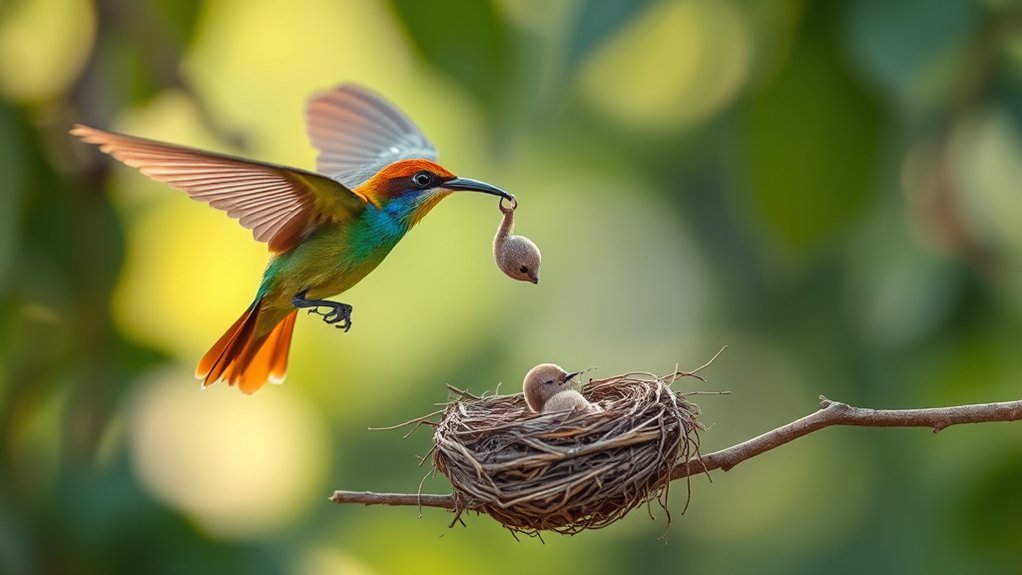
You’ll find that only a few bird species actually carry their chicks, and they often have some pretty specialized ways to make sure their little ones survive.
For example, waterbirds like swans, grebes, and loons carry their young right on their backs. This helps keep the chicks warm and protected while they’re still vulnerable.
Then there’s the African Jacana, which does something a bit different. It lifts its chicks onto its wings, showing just how diverse bird parenting can be.
These unique methods have all evolved to help the birds deal with the challenges of their environments.
Unique Chick Transport Methods
Because transporting chicks offers significant survival advantages, certain bird species have developed unique methods to carry their young. Waterbirds like grebes, loons, and swans transport their chicks on their backs, providing warmth, protection, and safety from predators.
African Jacanas carry their chicks on their wings, with fathers often involved in incubation and care.
Similarly, ducks and some geese allow fledglings to ride on their backs or under their wings during early development stages. These species exhibit specific behavioral and physical adaptations enabling chick transport while moving or flying. It’s pretty fascinating how these birds manage this.
Importantly, this chick-carrying behavior is absent in most land birds and raptors, suggesting an evolutionary link to aquatic environments.
Understanding these methods highlights how chick transport enhances offspring survival in water-associated bird species. It really shows how evolution finds clever solutions depending on the environment.
Waterbird Brooding Behaviors
Although many bird species provide extensive parental care, only certain waterbirds have evolved specialized brooding behaviors that involve physically carrying their chicks. For example, grebes and loons carry their young on their backs, providing warmth and protection from predators. Similarly, swans allow cygnets to climb onto their backs to rest and stay safe during early development.
The African Jacana exhibits a unique behavior where the father lifts and transports chicks on its wings across land and water. These methods, known as back-brooding behaviors, help chicks remain dry and warm in cold or aquatic environments.
Unlike many land birds, waterbirds have adapted these direct carrying strategies to enhance offspring survival in challenging habitats.
Debunking Common Myths About Birds Carrying Eggs or Chicks
You might think that birds carry their eggs or chicks while flying, right? But actually, most birds don’t have the right anatomy to hold onto or lift their little ones safely in the air. Scientists have observed that it’s really rare for birds to transport their young by flying.
Instead, birds usually keep their eggs and chicks safe in nests or use other methods, like back-brooding, to protect them. So, learning about these behaviors can clear up some common misunderstandings about how birds handle their babies and move them around.
It’s pretty interesting once you dig into the details!
Birds And Chick Transport
When examining bird behavior, you might assume that parents commonly carry their eggs or chicks during flight. But scientific evidence shows this is rarely the case. Most birds simply don’t have the anatomical adaptations to transport fragile offspring midair.
There are exceptions like grebes and loons that carry chicks on their backs, but this is very species-specific and not widespread. The belief that birds such as woodcocks carry chicks while flying lacks scientific support. It likely comes from misinterpretations.
| Bird Species | Transport Method | Commonality |
|---|---|---|
| Grebes | Chicks on back | Specialized |
| Loons | Chicks nestled in wings | Specialized |
| Woodcocks | No evidence of transport | Myth debunked |
Most birds actually leave helpless chicks in nests. They rely on other parental care strategies instead.
Flying With Chicks?
Despite popular belief, no scientific evidence supports the idea that birds carry their eggs or chicks while flying. This behavior is actually a myth that isn’t backed by observation or research. When you think about bird physiology and behavior, several facts become clear.
Most birds don’t have the strength to lift fragile eggs or hatchlings during flight. Plus, eggs and chicks are way too delicate to survive being carried mid-air. Sometimes, reports of birds flying with chicks come from misreading distraction or protective displays.
Birds usually rely on nests or safe spots on the ground to protect their young instead of trying to carry them around. Also, there are no verified photos or scientific studies showing birds carrying offspring while flying.
Knowing these points helps you bust the common misconception. It’s pretty amazing how birds care for their young through stationary parental care, rather than airborne transport.
Nestling Handling Myths
How do common myths about birds carrying eggs or nestlings persist despite clear biological evidence? Most bird species aren’t anatomically designed to lift or transport fragile offspring while flying. Scientific studies show no evidence supporting the idea that birds carry their eggs or chicks during flight, which is biologically implausible.
You should know that handling nestlings or eggs can disrupt parental care and potentially harm the young or their nests. Contrary to popular belief, parent birds usually don’t recognize their offspring by scent and rarely abandon nestlings if humans touch them.
The reality is that birds leave their young in nests or on the ground until they mature naturally.
Understanding these facts helps dispel misconceptions and promotes safer practices around wild birds. It’s really important to respect wildlife and avoid unnecessary interference. That way, we can all help keep bird populations healthy and thriving.
What Happens When a Baby Bird Falls From the Nest?
Although it may seem alarming to find a baby bird on the ground, such occurrences are often a natural phase in the development of fledglings learning to fly. When a baby bird falls from the nest, here’s what typically happens:
Parents often remain nearby, continuing to feed and protect the chick on the ground. Healthy, uninjured chicks are best left alone, as parental care usually persists.
Injured or immobile birds may require gentle rescue and placement in a safe environment.
Fully feathered fledglings generally possess the ability to survive independently on the ground. This stage reflects normal fledgling behavior as they gain flight skills and independence.
Understanding these points helps clarify that a fallen bird isn’t necessarily abandoned or in immediate danger. So, if you see one on the ground, it’s usually best to observe quietly and let nature take its course.
How Can You Safely Help Baby Birds?
When you find a baby bird that has fallen from its nest, carefully returning it to its original location can really improve its chances of survival. Parent birds usually recognize their young by sight rather than smell, so they’ll keep taking care of them.
Gently place the chick back inside the nest if you can reach it. Try to minimize disturbance because you don’t want the parents to abandon it. Also, limit how much you handle the bird to reduce stress and avoid it getting used to humans.
Make sure the area around the nest stays quiet and free of pets or predators. These can threaten the chicks or scare the parents away.
Keeping the environment safe near the nest helps the parents care for their babies naturally and boosts the chances the little birds will survive.
How Birds Protect Eggs With Nesting and Incubation
Ensuring the safety of baby birds begins well before they hatch, with the protection of their eggs during nesting and incubation. You’ll find birds rely on specific behaviors and adaptations to maximize egg survival. Key strategies include sitting on eggs to maintain a constant, warm temperature crucial for embryo development.
They also select concealed or protected nesting sites to reduce predation and environmental risks.
Incubation periods can vary depending on the species, from about 10 days to over a month. It really depends on the bird.
Both parents often share incubation duties to make sure the eggs stay warm without either getting too tired.
Some birds, like megapodes, even use environmental heat sources, such as sun-warmed soil or decaying vegetation, to keep their eggs cozy. It’s pretty clever how nature works!
Frequently Asked Questions
How Do Birds Recognize Their Own Eggs?
You recognize that birds identify their own eggs through subtle visual cues like size, shape, color patterns, and texture. This precise recognition helps them distinguish their eggs from parasitic ones.
Can Environmental Changes Affect Bird Nesting Behavior?
You’ll see environmental changes shake birds’ nesting routines like a storm rattling branches. Shifts in temperature, habitat loss, and extreme weather alter breeding timing, nest safety, and resource availability. These changes directly impact bird nesting behavior and success.
It’s pretty clear that when the environment shifts, birds have to adapt quickly. Sometimes that means starting their nests earlier or later than usual. Other times, they might have to find new spots to build because their old habitats aren’t safe anymore.
Do All Bird Species Build Nests the Same Way?
You’ll find that bird species don’t build nests the same way; they use diverse materials and structures. These range from simple ground scrapes to elaborate woven or cavity nests.
Each nest type is adapted to their specific environmental needs and predator risks. So, birds get pretty creative depending on where they live and what threats they face.
How Long Does It Take for Bird Eggs to Hatch?
Bird eggs typically hatch between 10 to 21 days. You’ll find small songbirds hatch around 12 to 14 days. Larger species like swans may take more than 30 days to hatch.
This timing can be influenced by a bunch of factors like temperature, humidity, and how healthy the parents are. So, it’s not always exact, but those are the general time frames you can expect.
What Materials Do Birds Use to Build Their Nests?
You’ll find birds using twigs, grass, leaves, feathers, and mud to build nests. Some even add human-made items like string or plastic. They pick materials that provide insulation, camouflage, and structural support specific to their species.
It’s pretty neat how each bird’s choice depends on what works best for them. They’re kind of like little architects, using whatever’s around to make a safe, comfy home.
Conclusion
You’ve learned that birds don’t carry their eggs during flight because it risks damage and endangers both parent and offspring. Instead, they rely on secure nests and incubation to protect their young.
While some birds carry chicks in specialized ways, egg transport is rare and unsafe. Remember, “a bird in the hand is worth two in the bush.” Nature’s strategies prioritize survival through stability, not risky transport.
Understanding this helps you appreciate avian care more deeply.