
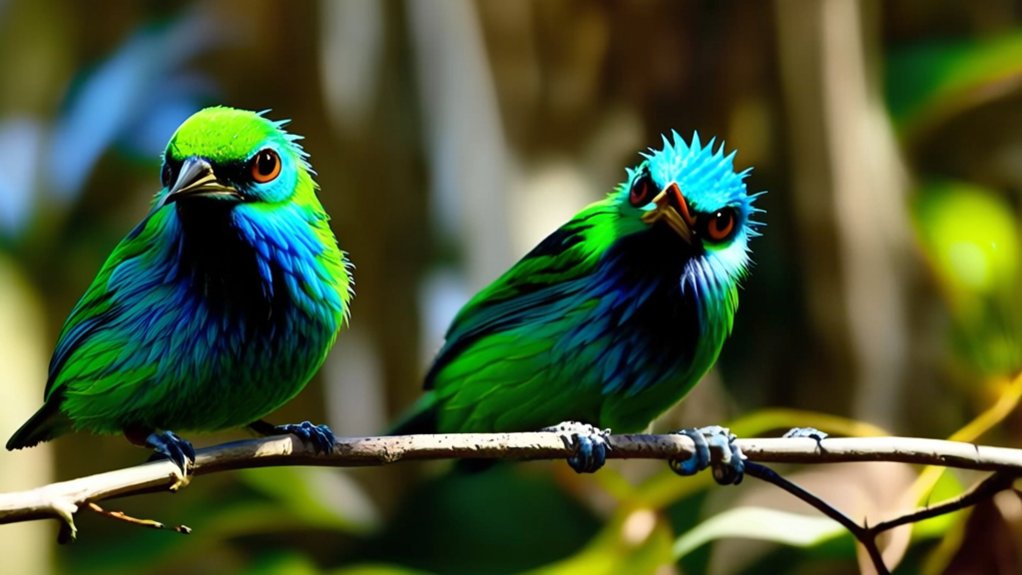
Yes, you can find many bird species that cross breed, with about 16% hybridizing naturally in the wild and up to 22% under captivity conditions where barriers are reduced. Hybridization often occurs among closely related families like ducks, gulls, and hummingbirds.
These hybrids can show mixed traits, vary in fertility, and impact ecosystems or species boundaries. Understanding these interactions reveals complex effects on bird evolution, ecology, and conservation efforts. You might want to explore this topic further to see how fascinating it really is.
How Common Is Bird Hybridization in the Wild and Captivity?
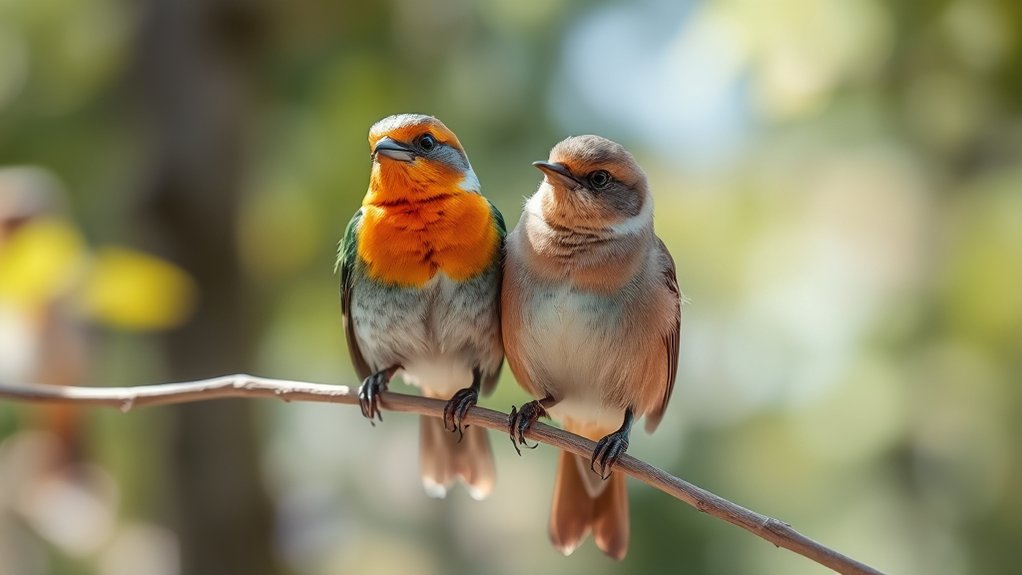
Although hybridization among birds is relatively uncommon in the wild, it still occurs in about 16% of species, increasing to 22% when captive populations are included. You’ll find that this phenomenon mostly happens among closely related species within the same family, such as ducks, gulls, and warblers.
In wild settings, successful hybridization remains rare but has been documented in groups like waterfowl and hummingbirds.
Captivity changes the dynamics, though. You’ll notice hybrid birds are more common because controlled environments reduce natural breeding barriers.
Species like finches and parrots, kept in close proximity, often crossbreed, leading to a higher incidence of hybrids.
Understanding these differences highlights how environment and species relatedness influence hybridization rates in birds.
Bird Families Most Likely to Hybridize
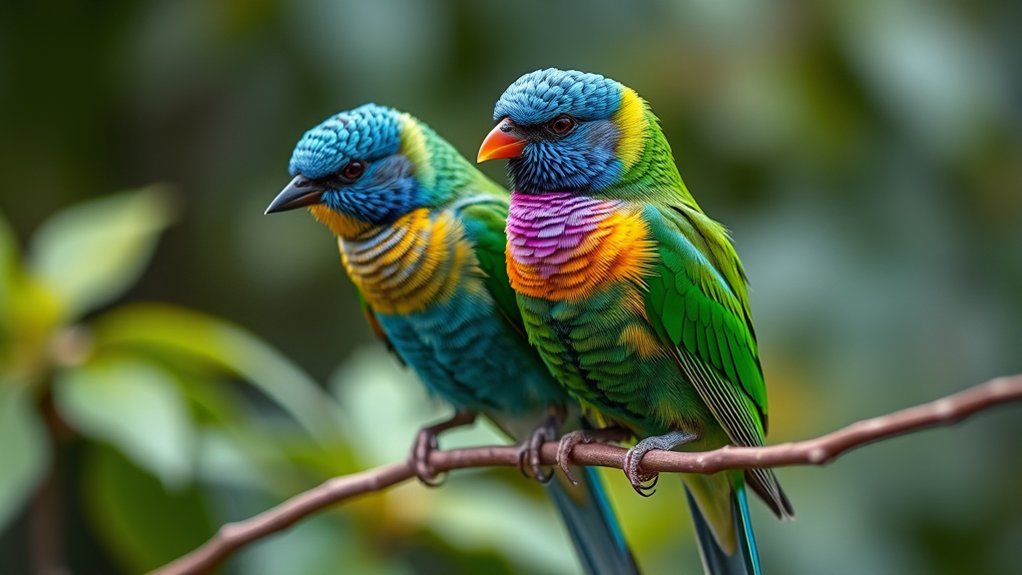
You’ll notice that some bird families, like waterfowl and gulls, tend to hybridize more often. This usually happens because they’re closely related and share similar habitats.
Things like genetic compatibility, how they choose mates, and where they live all play a big part in encouraging hybridization in these groups.
It’s pretty interesting because understanding these patterns helps explain why hybrids show up more frequently in certain families, like hummingbirds and warblers.
Common Hybridizing Families
When exploring bird hybridization, certain families stand out for their frequent crossbreeding occurrences. Waterfowl (Anatidae), including ducks and geese, commonly hybridize both in the wild and captivity, producing viable offspring.
Gulls (Laridae) also hybridize particularly, with Western and Glaucous-winged Gulls forming fertile hybrids in overlapping habitats.
Hummingbirds (Trochilidae) show remarkable hybridization potential, including intergeneric crosses, highlighting their genetic compatibility.
Birds-of-paradise (Paradisaeidae) hybridize primarily where species ranges intersect, generating unique hybrid phenotypes.
Conversely, shorebirds (Scolopacidae) exhibit rare hybridization, though select species can produce hybrids under specific ecological conditions.
Recognizing these families helps you understand hybridization patterns and the evolutionary implications of gene flow between closely related bird species. It’s pretty fascinating how gene flow shapes the diversity we see in birds today.
Factors Influencing Hybridization
Understanding which bird families are most likely to hybridize builds on recognizing common hybridizing groups like waterfowl and gulls. You’ll find that hybridization primarily occurs within the same family due to genetic compatibility and similar reproductive behaviors.
Overlapping habitats and scarcity of mates further increase hybridization chances. Closely related species with analogous physical traits hybridize more readily than distant species. Cross-family hybridization remains exceptionally rare.
| Bird Family | Hybridization Frequency | Key Factors |
|---|---|---|
| Ducks | High | Overlapping habitats, mate scarcity |
| Gulls | Moderate | Similar behaviors, genetic closeness |
| Warblers | Moderate | Physical similarity, habitat overlap |
| Others | Low | Genetic divergence, reproductive barriers |
This framework helps you understand why hybridization is more prevalent within specific bird families. Makes it easier to see where and why these birds mix.
What Traits Help Identify Bird Hybrids?
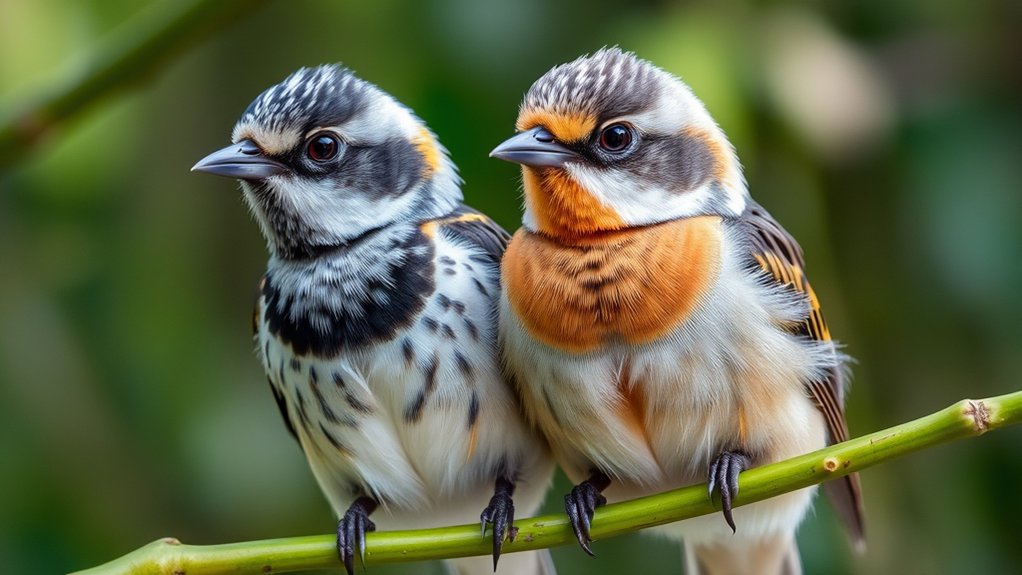
Although identifying bird hybrids can be challenging, certain physical and behavioral traits offer clear indicators. You can recognize hybrids by closely examining these key features:
Recognizing bird hybrids requires careful observation of distinct physical and behavioral traits.
- Mixed Physical Traits: Look for a combination of plumage coloration or patterning inherited from both parent species. Also, check for intermediate beak shapes or sizes that don’t fully match either parent.
- Unique Markings: Hybrids sometimes exhibit anomalous or unexpected markings not typical of either species. This can signal genetic blending.
- Behavioral Variations: Pay attention to differences in song patterns or courtship displays. These may diverge noticeably from pure species norms.
Males with vibrant plumage often play a significant role in hybridization. So, observing these traits helps you accurately identify hybrids in the field.
How Fertile Are Bird Hybrids?
You’ll find that bird hybrid fertility can vary quite a bit—from completely sterile to fully able to reproduce. It really depends on how genetically compatible the parent species are.
For example, some hybrids, like certain ducks and gulls, can actually have fertile offspring. In some cases, these hybrids can even backcross with one of the parent species.
This ability to reproduce plays a big role in gene flow between species. When hybrids are fertile and breed successfully, it can blur the boundaries that usually separate different bird species.
Sometimes, these hybrids even form their own breeding populations, which makes things even more interesting.
Hybrid Fertility Variability
When bird species cross breed, the fertility of their hybrid offspring can vary dramatically. You’ll find that some hybrids are completely sterile, similar to mules, while others are fully fertile and capable of reproduction. This variability hinges largely on the genetic distance between parent species.
Consider these key points:
- Hybrids from closely related species, like certain mallard crosses, often retain fertility and can reproduce, enabling gene flow between species.
- Sterility is common in hybrids from distantly related species, preventing genetic mixing.
- Fertile hybrids sometimes lead to new hybrid species, challenging traditional species definitions and influencing evolutionary trajectories.
Understanding this variability is *paramount* because it determines the ecological impact and evolutionary potential of bird hybrids in natural populations.
It’s pretty fascinating how genetics really shapes what’s possible in the wild.
Fertile Hybrid Examples
Because fertility in bird hybrids varies widely, examining specific examples helps clarify how often these hybrids can reproduce successfully. For instance, certain mallard crosses produce fertile offspring, showing that some hybrids retain reproductive capabilities.
Hybrid hummingbirds also demonstrate fertility, facilitating gene flow between species and occasionally forming new hybrid lineages.
Fertility generally correlates with genetic proximity. Hybrids within the same genus tend to be fertile, while those from more distantly related species are often sterile or have reduced fertility.
Eudyptes penguin hybrids provide another example of fertile hybrids, though fertility rates differ among individuals.
Understanding these cases highlights how fertility in bird hybrids depends on genetic compatibility. This, in turn, influences their ability to contribute viable genes to subsequent generations.
Impact On Species
Although bird hybrids exhibit a wide range of fertility levels, their ability to reproduce considerably affects the genetic landscape of parent species. When hybrids are fertile, gene flow occurs between species, potentially altering genetic diversity and evolutionary trajectories.
You should consider these key points: Fertile hybrids, common among closely related species like ducks, enable genetic mixing, influencing adaptation and survival. Sterile hybrids, typical between distantly related species, prevent gene flow, maintaining species boundaries.
The reproductive capacity of hybrids impacts conservation strategies, as fertile hybrids may complicate efforts to preserve genetic purity.
Understanding hybrid fertility helps you grasp how hybridization shapes species evolution, survival, and biodiversity. Your recognition of these dynamics informs ecological management and conservation priorities.
Ecological Effects of Bird Hybrids
Since hybridization among bird species facilitates gene flow, it directly influences the genetic diversity and evolutionary pathways of populations. You’ll find that hybrid birds can alter local ecosystems by competing with purebred species for resources, potentially shifting species balances.
Hybridization in birds drives gene flow, influencing genetic diversity and reshaping ecosystem dynamics through species competition.
Some hybrids display increased fitness, which may affect species dominance or elevate extinction risks.
Hybrid zones act as natural laboratories where you can observe speciation, adaptation, and ecological interactions influenced by hybridization.
Additionally, hybrids may change habitat use, feeding behaviors, and migration patterns within bird communities, further impacting ecological dynamics.
Understanding these effects allows you to grasp how bird hybrids shape biodiversity and ecosystem functions. It really highlights the complexity of natural selection and evolutionary processes in avian populations.
Notable Documented Bird Hybrids
When you examine notable documented bird hybrids, you’ll find a diverse array of examples that reveal the complexities of avian hybridization. These hybrids demonstrate varying degrees of genetic compatibility and ecological impact. Consider these three notable cases:
First, Brewster’s and Lawrence’s warblers result from hybridization between golden-winged and blue-winged warblers. This illustrates hybrid zones within closely related species.
Then, there’s the Swoose, a rare swan-goose hybrid that often faces low survival rates past fledging. This highlights the reproductive challenges that can happen between different species.
Finally, hybrid penguins such as Eudyptes chrysolophus × E. chrysocome show intergeneric hybridization. They give us insight into evolutionary relationships within the penguin family.
These documented hybrids show how avian hybridization can occur across different taxonomic levels, from species to genera. It really enriches our understanding of bird genetics and evolution.
How Hybridization Challenges Species Definitions
How exactly does hybridization challenge the way we define bird species? When you observe hybrids with intermediate traits, you see how traditional species boundaries based on clear physical and genetic differences become blurred.
Fertile hybrids, like some gulls and warblers, complicate species classification because they reproduce and pass on traits. This undermines the concept of reproductive isolation that’s central to many species definitions.
Hybrid zones show that gene flow crosses supposed species barriers, which weakens strict delineations.
As you study ongoing research, new hybrid species such as Burket’s warbler reveal how fluid species concepts are when natural hybridization occurs.
Hybridization forces you to reconsider rigid species categories. It makes you realize that species boundaries may be more dynamic and porous than we previously thought.
Resources to Learn More About Bird Hybrids
Although understanding bird hybrids can be complex, numerous resources exist to help you explore this fascinating subject. To deepen your knowledge, consider these indispensable tools:
- The Avian Hybrids Project compiles scientific literature and images worldwide, aiding identification and study of hybrid species.
- McCarthy’s *Handbook of Avian Hybrids of the World* offers detailed taxonomic accounts and descriptions of documented hybrids.
- Peer-reviewed journals and conservation groups publish ongoing research and case studies on hybridization’s genetic and ecological impacts.
Additionally, online platforms like Flickr host specialized groups that showcase hybrid photographs, providing visual and descriptive data vital for researchers and birders alike.
Utilizing these resources allows you to approach bird hybridization with scientific rigor, enhancing both species identification and conservation efforts.
Frequently Asked Questions
How Does Bird Hybridization Affect Birdwatching and Identification?
Bird hybridization complicates your birdwatching by blending traits from two species, making identification tricky. You’ll need keen observation of behavior, song, and habitat, plus sometimes genetic tests, to accurately distinguish hybrids from pure species.
It really keeps you on your toes! Sometimes, what looks like a familiar bird might actually be a mix, so paying attention to the little details is key. And if you’re really stuck, science can lend a hand with genetic testing.
Can Hybrid Birds Survive and Thrive in Urban Environments?
You’ll find that around 60% of urban hybrid birds thrive due to adaptable traits like human tolerance and diverse diets. They successfully compete, reproduce, and navigate pollution, making them resilient in complex city ecosystems.
It’s pretty impressive how these birds manage to survive and even do well despite all the challenges cities throw at them. Their ability to adjust to different environments really gives them an edge. So, yeah, they’re quite the survivors in the urban jungle.
What Role Do Bird Calls Play in Hybridization Chances?
Bird calls play a vital role in hybridization by signaling species identity. When calls overlap or change, you’ll see increased cross-species attraction. This disrupts mate selection and raises hybridization chances, especially in altered environments.
It’s pretty interesting how something as simple as a call can influence who birds choose as partners. Changes in their environment can really shake things up for them. So, paying attention to these calls helps us understand hybridization better.
Are There Ethical Concerns With Breeding Hybrid Birds in Captivity?
Imagine fragile feathers tangled by unnatural pairings; yes, you should worry about ethical concerns. Captive hybrid birds often face health risks, sterility, and genetic loss.
This means you really need to prioritize their welfare over novelty or profit in breeding programs. It’s not just about creating something new—it’s about ensuring these birds live healthy, happy lives.
How Do Climate Changes Influence Bird Hybridization Patterns?
You’ll see climate change shifts bird ranges and breeding seasons, increasing species overlap. This overlap boosts hybridization chances as altered habitats and mate availability force birds to interact and reproduce with different species more frequently.
It’s kind of like when birds find themselves in new neighborhoods or the timing of their breeding gets out of sync. They end up meeting new potential mates they wouldn’t have encountered before. So, climate change is stirring the pot, making bird relationships more mixed and complex.
Conclusion
You might be surprised to learn that around 10% of bird species are known to hybridize in the wild. This shows just how common and complex crossbreeding really is. It also challenges the traditional boundaries we think about when it comes to species.
This highlights how fluid avian genetics can be. Understanding these hybrids not only sharpens your identification skills but also deepens your grasp of evolutionary processes.
By exploring hybridization, you uncover important insights into ecology, fertility, and the ever-changing nature of bird populations. It’s pretty fascinating once you dive into it!