
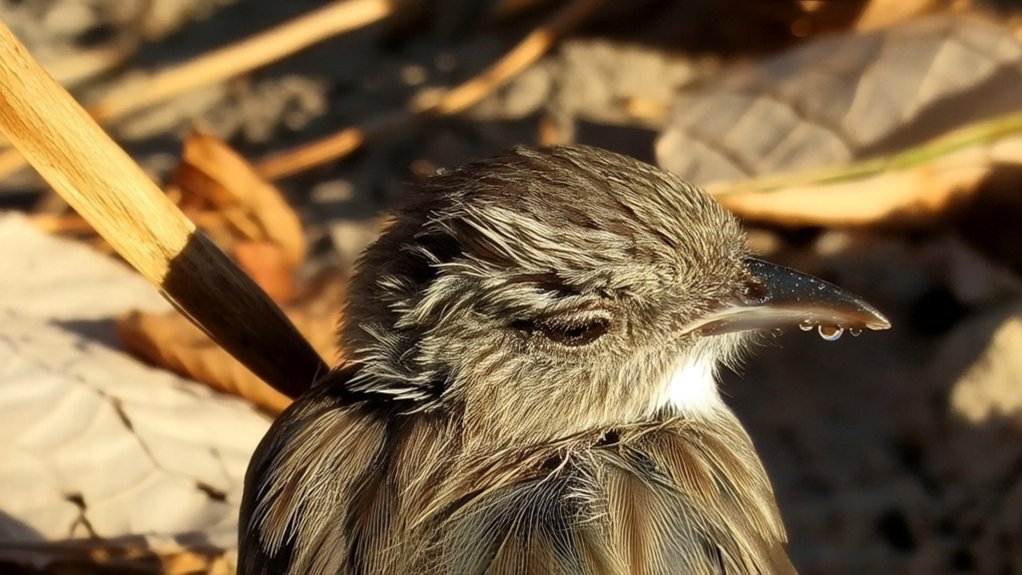
Yes, birds can die from excessive heat because their bodies struggle to regulate temperature well under extreme conditions. You’ll notice signs like rapid panting, fluffed feathers, weakness, or lethargy. Prompt action is essential to prevent heat stroke and organ damage.
Providing shade, cool water, and misting can really help. Small or pet birds are especially vulnerable, so watch them closely. Understanding how to spot and respond to heat stress can greatly improve a bird’s chances of survival during hot weather.
Why Heat Is Dangerous for Birds
Although birds have some ways to regulate their body temperature, too much heat can quickly overwhelm them. This can lead to serious health problems. When their body temperature gets too high, it can cause organ failure or damage to the brain very fast.
Overheating also leads to quick dehydration, which messes with important body functions and raises the chances of death. Heat stroke is really dangerous—it can cause a bird to pass out and even die within minutes if nothing is done.
Overheating causes rapid dehydration and heat stroke, which can quickly lead to a bird passing out or dying.
It’s important to know that small or pet birds are even more at risk because they don’t regulate heat as well. Being in the heat for a long time, especially without shade or water, makes it much more likely a bird will die.
Knowing these risks helps you understand why it’s so important to prevent heat stress in birds. Taking action can protect their health and keep them safe.
How Birds Cool Off Naturally in Hot Weather
You’ll notice birds use several natural strategies to cool off. For example, they pant and do something called gular fluttering to release excess heat.
They also rely on water—bathing or drinking helps lower their body temperature through evaporation.
Plus, birds often seek out shade and shelter to avoid direct sunlight and keep their internal temperature safer.
It’s pretty clever how they manage to stay cool naturally!
Bird Cooling Behaviors
When temperatures rise, birds rely on specialized cooling behaviors to regulate their body heat efficiently. You’ll notice many birds panting, which evaporates moisture from their respiratory surfaces to lower body temperature.
Some species, like cormorants and herons, use gular fluttering, a rapid throat muscle movement, to boost evaporation and dissipate heat effectively.
Additionally, certain birds employ urohidrosis, urinating or defecating on their legs to enhance cooling through evaporation.
To avoid heat stress, birds often seek shaded or concealed nesting sites, reducing direct solar exposure and maintaining thermal comfort.
Understanding these natural behaviors helps you appreciate how birds adapt to extreme heat. It also shows how they promote their survival without relying on water and highlights their remarkable physiological strategies for maintaining homeostasis in challenging environments.
Water-Based Cooling Methods
How do birds effectively reduce their body temperature during intense heat? They instinctively seek out water sources like lakes, rivers, or bird baths to bathe or swim. Submerging in cooler water transfers excess heat from their bodies to the environment. This is essential for preventing overheating and dehydration.
After bathing, birds fluff their feathers and spread their wings to maximize evaporative cooling by catching breezes. This combination of conductive and evaporative cooling helps maintain their internal temperature within safe limits.
If you provide shallow, clean water, you enable birds to use these natural cooling methods efficiently during heatwaves. Understanding these behaviors allows you to support bird health and safety in hot weather by ensuring accessible water for their critical thermoregulation needs.
Shade And Shelter
Although birds rely on water-based cooling methods, they also depend heavily on shade and shelter to regulate their body temperature during hot weather. You’ll notice birds naturally seek dense foliage, hedgerows, and leafy canopies to minimize direct sunlight exposure and prevent overheating.
Nesting in shaded, concealed spots helps keep chicks cool, lowering heat stress risks. By providing native trees and shrubs, you create shaded microclimates that stabilize temperatures around nests and roosting sites. This offers essential relief during extreme heat.
When selecting locations for birdhouses or nesting sites, prioritize shaded areas to enhance survival rates during heatwaves. This natural behavior shows just how critical shade and shelter are for birds’ thermoregulation and overall heat safety.
Signs of Overheating in Birds to Watch For
You need to watch for rapid panting, open-mouth breathing, and fluffed feathers—these are clear signs your bird is overheating. Also, keep an eye out for behavioral changes like drooping wings, lethargy, or loss of coordination. These indicate that the heat stress is getting worse.
If you notice any of these emergency signs, don’t wait. Act quickly to cool and hydrate your bird to help prevent heat stroke.
Overheating Symptoms
When birds overheat, they show several clear signs that you need to recognize quickly to act. You’ll notice rapid panting and open-mouth breathing as their primary cooling efforts. Feathers may fluff up, and wings droop noticeably.
They might become weak or lethargic and lose their appetite, signaling distress. Increased vocalization often accompanies these physical symptoms.
In severe cases, watch for neurological signs like head tilts, loss of flight ability, or collapse. These indicate critical heat stress requiring immediate intervention.
These signs are crucial to identify early to prevent heat stroke and potential death.
Behavioral Changes
How can you tell if your bird is struggling with heat beyond obvious physical symptoms? Watch for behavioral changes like heavy panting, open-mouth breathing, and fluffed feathers. These indicate your bird is trying to cool down.
Rapid breathing and drooping wings often signal rising body temperature. Neurological signs such as head tilts, difficulty perching, or loss of coordination suggest heat stress affecting the nervous system.
You might notice your bird becoming lethargic, seeking shade, or reducing activity to manage excessive heat. In severe cases, birds may “go to ground” or collapse. This points to critical heat exhaustion or heat stroke.
Recognizing these subtle behavioral cues early lets you act quickly to protect your bird’s health and prevent dangerous overheating. It’s all about catching the signs before things get serious.
Emergency Signs
Recognizing the early behavioral signs of heat stress in birds is essential, but knowing the emergency signs can make the difference between life and death. When a bird shows severe heat distress, you must act immediately to prevent fatal outcomes.
Watch closely for these critical signs:
- Heavy panting, open-mouth breathing, and fluffed-up feathers indicating extreme overheating.
- Neurological symptoms like head tilts or inability to perch or fly, signaling severe heat impact on the brain.
- Excessive drooping wings and weakness, showing the bird is struggling to regulate body temperature.
- Rapid deterioration such as “going to ground,” slipping into coma, or unconsciousness, requiring urgent intervention.
Move the bird to a cooler area and mist with room temperature water right away to stabilize its condition. It’s important to act fast because every second counts when a bird is in this state.
Keep a close eye on the bird as you help it cool down.
Treating Heat Stress and Heat Stroke in Birds
Because heat stress and heat stroke can quickly lead to organ failure or even death, you need to act fast to cool and hydrate your bird. First, gently mist your bird with room-temperature water. This helps lower its body temperature without causing shock.
Act quickly to cool and hydrate your bird with gentle misting to prevent heat stroke complications.
Next, move your bird to a cool, shaded area right away to stop any more heat exposure. Keep an eye out for signs like fluffed feathers, open-mouth breathing, weakness, or neurological symptoms such as head tilts. These signs mean your bird is in serious distress.
Make sure your bird has access to fresh, cool water to encourage drinking, but don’t force it. Quick action is really important because waiting too long can make organ damage worse.
Finally, get your bird to a vet as soon as possible for professional care and monitoring. Heat stroke can have delayed effects, and your bird might need medical support to fully recover.
Hydrating and Cooling Birds During Heat Stress
Taking immediate steps to cool and hydrate your bird during heat stress can really improve its chances of recovery. You want to focus on replenishing fluids and lowering its body temperature carefully.
First, make sure to provide fresh, clean water all the time. Offering shallow baths can also help your bird stay hydrated and cool.
Adding foods with lots of water, like fruits and vegetables, is a great way to boost hydration and help regulate temperature.
Remember to change and clean water sources often. This prevents disease and makes sure your bird drinks safely.
You can also try frozen treats or gently mist your bird with room temperature water. This helps cool your bird down through evaporation and keeps it hydrated.
Taking these simple steps creates a supportive environment. It lowers the risk of dangerous heat problems and helps your bird stay well during extreme heat.
Creating Outdoor Spaces That Protect Birds From Heat
When designing outdoor spaces for your birds, providing ample shade and ventilation is crucial to minimize heat exposure and prevent heat stress. Incorporate native trees and shrubs to create cooler microclimates while supplying natural shade.
Position bird baths in shaded areas so birds can hydrate and cool without overheating.
Place bird baths in shaded spots to help birds stay cool and hydrated safely.
Use shade cloths or umbrellas over enclosures to considerably reduce ambient temperatures. Adding brush piles and ground cover offers birds refuge from direct sunlight, enhancing their comfort and safety.
Ensure your space encourages airflow to dissipate accumulated heat effectively.
These steps create an environment that protects birds from excessive heat, supporting their well-being during hot weather. By thoughtfully combining natural and artificial elements, you can design outdoor areas that prioritize your birds’ health and resilience against heat-related risks.
Community Actions to Protect Birds in Heatwaves
Protecting birds from extreme heat extends beyond individual outdoor spaces and requires coordinated community efforts. You can play a crucial role in reducing heat stress and preventing bird fatalities during heatwaves by fostering collective actions. Consider these impactful steps:
Establish shaded areas and provide clean water sources to help birds cool down and stay hydrated. Promote native plant landscaping to offer natural shade and sustainable food resources. Organize neighborhood water stations with shallow dishes and safe escape routes for wild birds.
Support local policies that protect and restore native habitats, enhancing birds’ long-term resilience. Together, these efforts can make a real difference in keeping our feathered friends safe when the temperatures rise.
Frequently Asked Questions
Can Indoor Pet Birds Suffer From Heat Stress?
Yes, your indoor pet birds can suffer heat stress if temperatures exceed their comfort zone.
You’ll need to guarantee proper ventilation, shade, and fresh water to prevent lethargy, panting, or more severe heat-related health risks.
It’s important to keep an eye on them during hot days to make sure they stay comfortable and safe.
Are Certain Bird Species More Heat Tolerant Than Others?
Yes, you’ll find that desert-adapted birds, cavity-nesters, and larger species like ravens tolerate heat better due to physiological and behavioral adaptations.
On the other hand, small temperate songbirds remain more vulnerable to heat stress and overheating risks. It’s interesting how these differences come down to their environments and biology.
Does Heat Stress Affect Bird Migration Patterns?
You’d think birds would fly through heat stress like it’s a walk in the park, but it drastically alters migration patterns.
It forces them to delay, reroute, or even abandon journeys to conserve energy and avoid deadly dehydration.
Can Heat Stress Impact Bird Breeding Success?
Yes, heat stress can reduce bird breeding success by disrupting hormonal cycles, lowering fertility, increasing embryo mortality, and causing nest abandonment.
You’ll see fewer hatchlings and weakened offspring during prolonged heat exposure. It’s a tough situation for birds trying to raise their young in hot conditions.
Are Bird Feeders Safe to Use During Heatwaves?
Feeding birds during heatwaves can be a double-edged sword. You have to clean feeders often and provide fresh water to prevent mold and dehydration. Otherwise, you risk harming the birds instead of helping them thrive.
It might seem like a simple way to help, but if you’re not careful, it could do more harm than good. So, keeping things clean and fresh is really important during those hot days.
Conclusion
When heat wraps around birds like a suffocating blanket, their delicate systems struggle to breathe. You can be their cool breeze. Watch for signs of overheating, act swiftly to hydrate and cool them, and create shaded sanctuaries.
Protecting birds from heat stress isn’t just caring; it’s a lifeline. Your vigilance and action guarantee their wings keep beating strong, even under the sun’s fiercest glare. Don’t let the heat silence their song.