
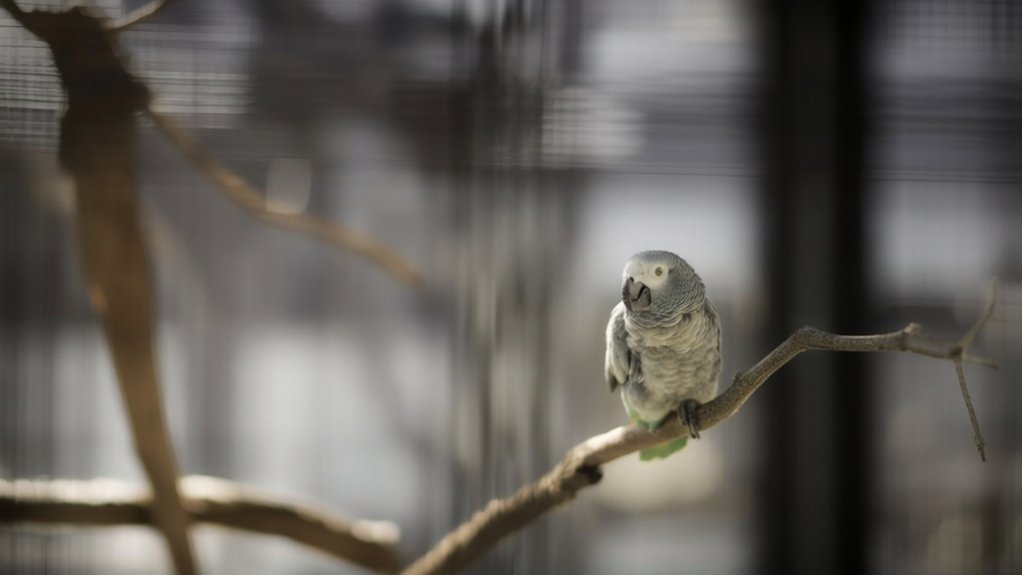
Yes, birds can die from loneliness if left isolated for long periods. Loneliness triggers chronic stress that elevates corticosterone levels, weakens immune function, and leads to damaging behaviors like feather plucking and poor grooming.
This emotional distress seriously affects their physical health. It makes them more vulnerable to infections and can even cause cardiac failure. Social species like parakeets are especially at risk because they rely on interaction to thrive.
So, it’s really important to recognize and address these signs early. Doing so can help prevent severe health problems down the line.
How Loneliness Impacts Bird Health
Although birds are often admired for their vibrant plumage and songs, their health depends heavily on social interaction. When you isolate a bird, its emotional distress triggers physiological changes, like elevated heart rate and increased stress hormones, which compromise immune function.
You’ll notice behaviors such as feather plucking, excessive vocalizing, and self-harm emerging as manifestations of prolonged loneliness. Cognitive functions decline, making it harder for the bird to engage with its environment or solve problems.
Studies reveal solitary birds typically have shorter lifespans than those with companions or adequate enrichment. By depriving a bird of social contact, you not only impair its mental well-being but also increase its vulnerability to illness. It really shows how critical social bonds are to maintaining avian health.
Why Social Birds Like Parakeets Are Vulnerable to Loneliness
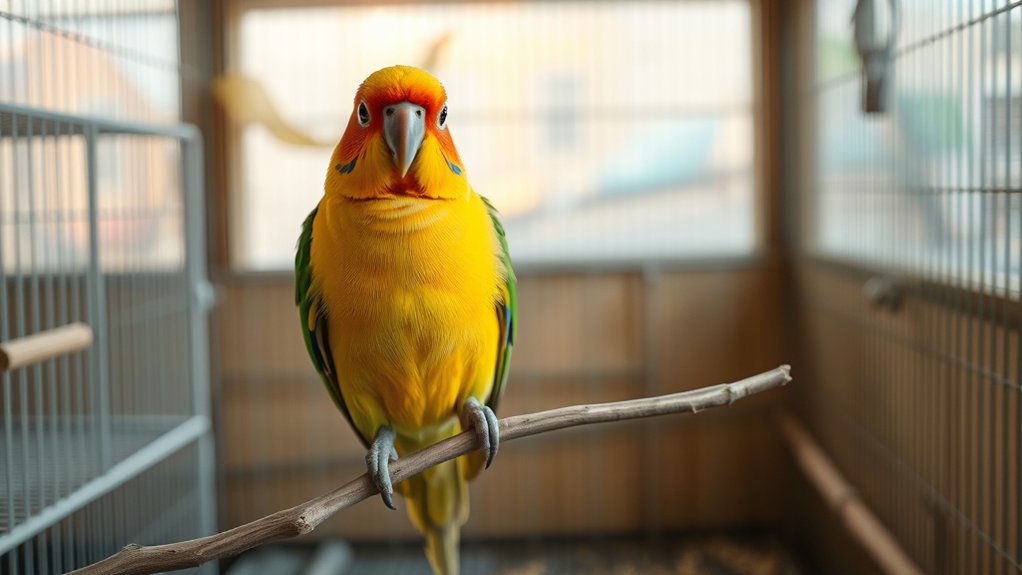
Because parakeets evolved as highly social creatures, their well-being depends on continuous interaction with flock members or attentive owners. When isolated, you’ll notice signs of emotional distress, such as feather plucking and reduced activity.
Parakeets thrive on social interaction, showing distress like feather plucking when isolated from flock or attentive owners.
Studies reveal that solitary parakeets exhibit heightened anxiety and a compromised immune response, indicating that social deprivation triggers physiological stress.
Without companions or adequate social stimulation, these birds face increased risk of stress-related health problems. If you keep a single parakeet without regular interaction, you inadvertently put its mental and physical health at risk.
To mitigate vulnerability, providing a second bird or engaging consistently with your parakeet is essential.
This social support maintains their natural behaviors, reduces stress markers, and promotes overall resilience. Understanding their social needs helps you prevent loneliness and sustain their health.
Can Loneliness and Emotional Stress Cause Bird Death?
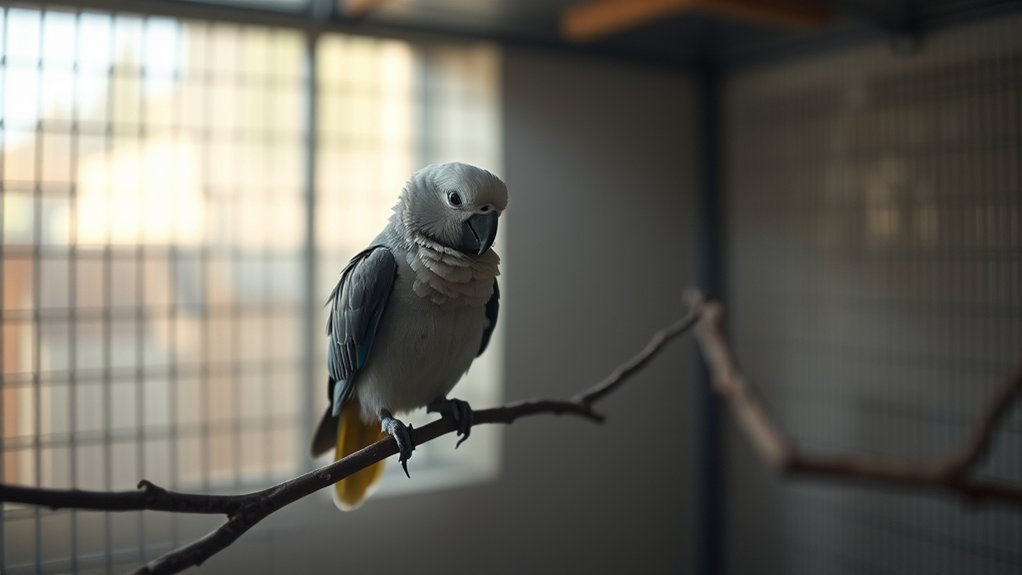
When birds endure prolonged loneliness and emotional stress, their immune systems weaken, making them more vulnerable to illness and even death. You’ll notice that chronic stress elevates heart rate and stress hormone levels, which can trigger fatal physiological changes.
Losing a close companion or social interaction can cause extreme emotional distress, sometimes leading to sudden cardiac failure. Birds suffering from loneliness often display behaviors like feather plucking, depression, and appetite loss, which accelerate their decline.
Scientific studies and observations show that birds with strong social bonds thrive physically and emotionally, while isolation compromises their health. If you neglect a social bird’s need for companionship, you risk serious health consequences that, over time, may result in death.
How to Spot If Your Bird Is Lonely
You’ll notice loneliness in your bird through some pretty clear behavioral changes. For example, they might start vocalizing more than usual, or they could withdraw and seem less interested in interacting. Sometimes, birds even develop repetitive habits like feather plucking when they’re feeling lonely.
It’s not just about behavior, though. Keep an eye on physical signs as well. Poor feather condition and a drop in appetite can also be clues that your bird isn’t feeling great emotionally.
Behavioral Changes To Watch
Although birds can be subtle in expressing loneliness, you can still spot behavioral changes that signal emotional distress. You might notice your bird becoming withdrawn or avoiding interaction. Sometimes, they vocalize loudly to get your attention.
Excessive feather plucking or over-grooming often points to emotional turmoil. Also, a drop in interest toward toys, food, or activities is a red flag. Changes in posture, like sitting fluffed up or isolating in corners, can reveal emotional suffering.
| Behavioral Change | Description | What It Indicates |
|---|---|---|
| Withdrawal | Hiding or avoiding interaction | Emotional distress |
| Increased vocalization | Loud calling or screaming | Seeking companionship |
| Feather plucking | Excessive self-grooming | Anxiety or loneliness |
| Loss of interest | Ignoring toys or food | Depression-like state |
| Posture change | Sitting fluffed up or isolated | Emotional discomfort |
Physical Signs Of Loneliness
Recognizing changes in your bird’s physical condition can provide clear evidence of loneliness. You may notice lethargy and decreased activity as your bird spends more time sitting quietly. Look for excessive feather plucking or self-mutilation, which are significant physical signs of emotional distress.
A reduced appetite is another indicator; your bird might ignore favorite foods or treats. Observe for ruffled feathers, a fluffed-up appearance, or trembling. These are all signs of stress linked to loneliness.
Additionally, increased vocalization, such as constant calling or screaming, signals your bird’s attempt to seek social connection. Monitoring these precise physical symptoms allows you to assess your bird’s emotional well-being accurately.
This way, you can respond to loneliness with appropriate social engagement or environmental enrichment.
Physical Signs of Loneliness and Stress in Birds
You might start to see your bird acting a bit differently when it’s feeling lonely or stressed. Things like feather plucking, grooming way too much, or sitting in a hunched posture are common clues.
Along with these behaviors, your bird’s feathers might look fluffed up, and it could seem more tired than usual or breathe faster.
These physical signs usually go hand in hand with a loss of appetite and less activity overall. If this keeps up, it can cause your bird to lose weight and even weaken its immune system.
Behavioral Changes Indicating Stress
How can you tell if a bird is experiencing loneliness through its behavior? You might notice changes like feather plucking, which birds use as a coping mechanism for stress. Rapid breathing and trembling also signal emotional distress.
Birds often reduce their vocalizations, showing longer silent periods or less talking, which indicates discomfort or loneliness. You may observe excessive sleeping or lethargy, reflecting their attempt to conserve energy and self-soothe.
Fluffed feathers and a tucked head are subtle but clear signs of a bird trying to comfort itself during emotional turmoil. Additionally, a loss of appetite or sudden weight loss can accompany these behavioral shifts.
Monitoring these changes closely helps you identify stress caused by social isolation before physical symptoms worsen.
Physical Symptoms of Loneliness
Behavioral signs like feather plucking and reduced vocalizations often come along with physical symptoms that reveal a bird’s emotional state. When loneliness sticks around, you might notice trembling, rapid breathing, or lethargy. These are clear signs your bird is feeling distressed.
Chronic isolation can weaken the immune system, making your bird more prone to getting sick. You may also see visible signs like skin ruffling or patchy feather loss, which usually reflect prolonged stress.
Keeping an eye on these symptoms helps you spot emotional struggles early on.
Some key physical signs to watch for include disheveled feathers, patchy feather loss, trembling or rapid breathing, and general lethargy with weakened immunity. Recognizing these signs means you can step in and help your bird feel better.
It’s all about improving their well-being and preventing serious health problems linked to emotional distress.
Impact on Appetite and Activity
Why does loneliness often cause birds to lose interest in food and lower their activity levels? When a bird feels emotional distress from being alone, its appetite often drops. It might even refuse foods or treats it usually enjoys. This decrease in eating is a sign that the bird is stressed.
At the same time, you’ll probably notice your bird becoming less active. It might spend a lot of time sitting quietly or look fluffed up, which shows it has low energy and feels uncomfortable. Stress can also show up physically, like through rapid or shallow breathing, and the bird might make fewer sounds than usual.
If loneliness goes on for a long time, it can lead to harmful behaviors such as feather plucking and poor grooming. This makes the bird look ruffled and unhealthy. When a bird is in this weakened state, its immune system suffers, making it more likely to get sick.
Watching for these signs can help you spot loneliness-related stress before it seriously affects your bird’s health.
How Loneliness Hurts Your Bird’s Immune System
Although birds may seem tough, loneliness can seriously hurt their immune system and make them more prone to illnesses and infections. When your bird feels socially isolated, its body pumps out higher levels of corticosterone, which is a stress hormone that weakens the immune system.
This hormonal shift lowers antibody production, so your bird has a harder time fighting off germs.
Studies show that birds kept alone display more stress-related behaviors and physical changes that mess with their natural defenses.
Here are some key ways loneliness affects your bird’s immune system:
- Increased corticosterone levels mess with immune response
- Lower antibody production means less resistance to disease
- Long-term isolation can cause lasting immune system changes
Knowing this helps you see why social interaction is super important for keeping your bird healthy.
Preventing Loneliness: Care Tips for Pet Birds
To keep your pet bird from feeling lonely, it’s important to give them plenty of social interaction and fun activities.
Talking to them regularly, playing together, and offering foraging toys can really help keep their minds sharp and meet their need for companionship.
If they don’t get this kind of attention, birds might start showing signs of stress or emotional upset.
Enrichment Activities Importance
When you provide your pet bird with a variety of enrichment activities, you actively prevent loneliness and support its mental stimulation. Birds are highly intelligent and require consistent engagement to avoid emotional distress caused by boredom.
Introducing diverse textures, colors, and sounds through toys and environmental changes enhances their cognitive and emotional well-being.
Enrichment encourages natural behaviors, reducing isolation and promoting happiness. It’s really about keeping your bird’s world interesting and fun.
When they stay engaged, they’re much healthier and happier overall.
Consider these enrichment strategies to maintain your bird’s mental health:
- Puzzle feeders that challenge problem-solving skills
- A rotating selection of toys with varied textures and sounds
- Safe opportunities for outdoor flights to stimulate natural instincts
Social Interaction Benefits
How often do you interact with your pet bird each day? Birds are highly social creatures that need regular engagement to maintain emotional health. If you don’t provide daily interaction, your bird may experience depression, feather plucking, or a weakened immune system.
Studies reveal parrots and similar species thrive when you offer conversation, playtime, and mental challenges. By consistently engaging with your bird or providing companionship through additional birds or interactive toys, you reduce stress-related behaviors and enhance their overall well-being.
This interaction isn’t just beneficial; it’s vital. Without it, your bird risks serious health complications or premature death linked to loneliness.
Prioritizing social interaction ensures your feathered friend remains mentally stimulated, emotionally balanced, and physically healthy.
Enrichment Ideas to Prevent Loneliness in Birds
Although birds are naturally social creatures, they can experience significant loneliness without proper environmental enrichment. To prevent this, you need to create a stimulating, dynamic environment that meets their cognitive and social needs.
Providing a variety of toys and foraging challenges encourages natural behaviors and mental engagement.
Regular social interaction with you or other birds helps fulfill their inherent social drive.
Rotating toys and rearranging the cage prevents habituation and keeps their environment novel.
Incorporating natural elements like textured perches and live plants mimics their natural habitat and promotes well-being.
Consistent daily routines also reduce stress and foster security.
So, it’s really about keeping things interesting and comfortable for them every day.
- Offer diverse toys, mirrors, and foraging puzzles
- Rotate cage items periodically to maintain interest
- Include natural perches and live plants for sensory enrichment
When to Call the Vet for a Lonely or Stressed Bird
If you notice your bird displaying signs like feather plucking, withdrawal, or a sudden loss of appetite, you should consult an avian veterinarian without delay. These symptoms often indicate stress or loneliness but can also signal underlying health issues.
Sudden behavioral changes such as excessive aggression or lethargy require prompt veterinary evaluation to rule out illness.
Persistent vocalization or self-harm behaviors also warrant professional assessment, as they may stem from emotional or medical causes.
Additionally, if your bird exhibits physical symptoms like labored breathing or abnormal posture alongside behavioral changes, immediate veterinary attention is critical.
After social disruptions or loss of a companion, schedule regular check-ups to monitor your bird’s emotional and physical health. This helps prevent deterioration linked to loneliness or stress.
It’s always better to be safe and keep a close eye on your bird’s well-being.
Supporting Your Bird’s Emotional Well-Being Every Day
Every bird benefits from consistent daily interaction to maintain emotional balance and prevent stress-induced behaviors. You should engage your bird in activities that offer mental stimulation.
Social isolation often leads to depression and feather plucking.
Monitoring behavioral changes allows you to detect early signs of emotional distress. This way, you can adjust care accordingly.
To support your bird’s emotional well-being, consider these key practices:
- Provide regular playtime and gentle handling to reinforce social bonds.
- Introduce enrichment tools like foraging toys to stimulate natural behaviors.
- Facilitate social interactions with other birds or yourself to reduce loneliness.
These scientifically grounded strategies help you maintain a stable environment that meets your bird’s social and psychological needs.
They effectively prevent the onset of stress-related conditions.
Frequently Asked Questions
Can Wild Birds Experience Loneliness Like Pet Birds?
Yes, wild birds can experience loneliness, but you’ll find it’s less common since they live in flocks and dynamic habitats. When isolated, their stress levels rise, potentially harming health.
That said, natural social behaviors usually prevent prolonged loneliness. So, while it can happen, wild birds tend to keep each other company most of the time.
Do Different Bird Species Require Different Social Interaction Levels?
Yes, you’ll find bird species vary widely in social needs. Parrots crave daily interaction, and lovebirds form strong pair bonds. On the other hand, solitary species like woodpeckers prefer minimal contact.
You must tailor socialization to their natural behaviors. It really helps to pay attention to what each species naturally enjoys and expects from their social environment. That way, your bird stays happy and healthy.
How Does a Bird’s Age Affect Its Loneliness Risk?
Your bird’s age directly affects loneliness risk. Younger birds crave constant social interaction, making them vulnerable. Older birds need companionship for mental stimulation.
Both ages face heightened stress and health decline without proper social engagement. So, whether your bird is young or old, keeping them company is super important.
Can Loneliness in Birds Affect Their Breeding Behavior?
Lonely birds lose libido, leading to lowered laying and lackluster love rituals. You’ll notice stressed, silent signals suppressing their natural nesting needs.
Are There Specific Toys That Reduce Bird Loneliness Better Than Others?
You’ll find that social interaction toys, like mirrors or companion plushes, reduce loneliness more effectively than others. Foraging toys also engage your bird mentally, while swings and bells promote physical activity.
All of these are essential for emotional balance. It’s pretty interesting how different toys serve different needs, right? Keeping your bird happy often means mixing these types up.
Conclusion
You can’t underestimate how loneliness affects your bird’s health. Take Luna, a parakeet who grew lethargic and lost weight after her companion passed. Birds like Luna are highly social by nature and suffer emotionally and physically without interaction, sometimes fatally.
By observing behavioral changes and providing social enrichment or companionship, you can prevent this decline. Supporting your bird’s emotional well-being daily isn’t just kindness—it’s essential to their survival.