
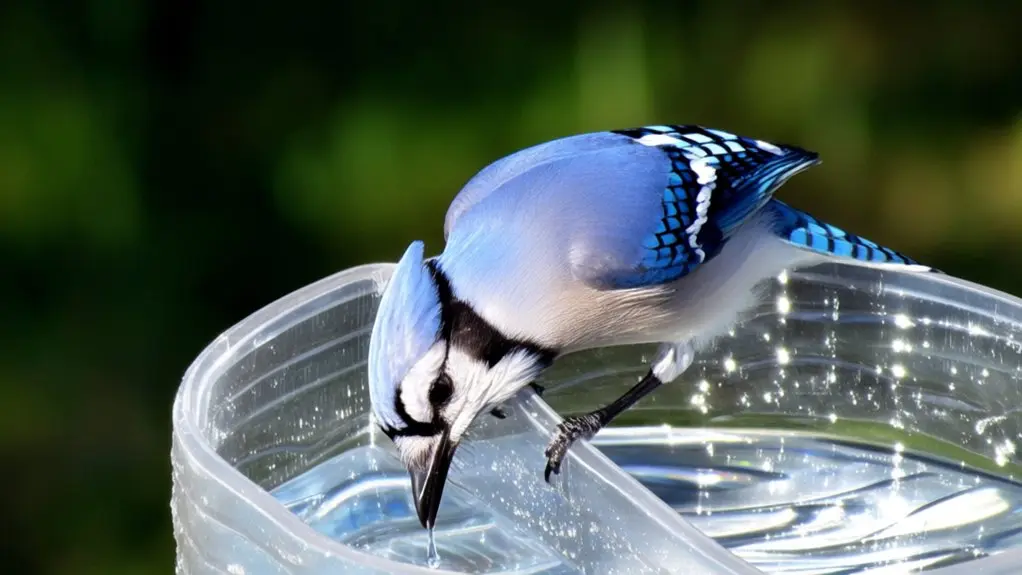
You can safely give your bird bottled spring water if you pick brands without additives like fluoride, chlorine, or minerals. Bottled spring water generally has fewer contaminants than tap water, but watch out for hidden chemicals or preservatives.
Always use clean, dedicated containers and change the water daily to avoid bacterial growth. Keep an eye on your bird for any unusual behavior or droppings that might signal problems.
Taking these precautions will help make sure your bird stays healthy and hydrated. It’s all about giving them the best care possible!
Is Bottled Water Safe for Your Bird?
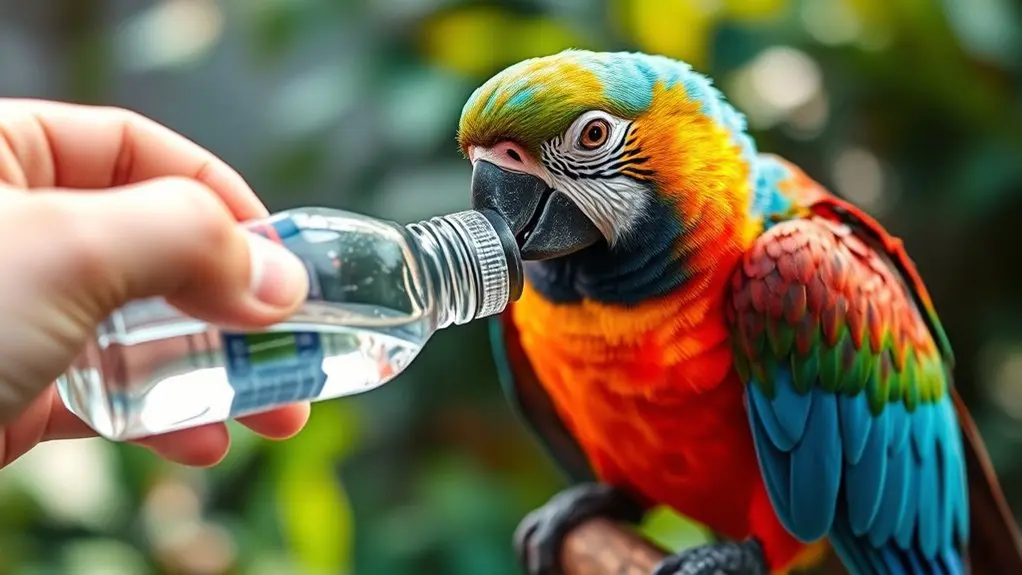
Although tap water can contain chemicals like chlorine and chloramine that may harm birds, bottled spring water is generally safe because it typically lacks these additives.
Tap water may contain harmful chemicals, but bottled spring water is usually safe for birds due to fewer additives.
When selecting bottled water, you should choose products labeled additive-free and without added minerals or fluoride. These substances might negatively affect your bird’s health.
Bottled water often provides a more reliable source in regions where tap water is heavily chlorinated or contaminated. However, it’s essential to regularly replace the water and keep containers clean to prevent bacterial growth, which poses a health risk.
Always check the label to confirm the absence of harmful additives.
How Bottled Spring Water Differs From Tap Water for Birds
When you choose bottled spring water over tap water for your bird, you reduce exposure to chemicals like chlorine, chloramine, fluoride, and heavy metals commonly found in municipal water supplies.
Bottled spring water often comes from natural sources and usually has fewer contaminants, making it a safer hydration option for birds.
Its balanced mineral content can support your bird’s health, as long as you pick products without added minerals or additives that aren’t good for birds.
On the other hand, tap water goes through treatment processes that add chemicals which might be harmful to your feathered friend.
Using high-quality bottled spring water helps prevent health issues related to chemical exposure and ensures better hydration.
Just be sure to check the labels carefully to confirm the water’s purity and mineral content before giving it to your bird.
Risks of Bottled Water for Birds You Should Know
Choosing bottled spring water can reduce exposure to certain chemicals found in tap water, but it’s important to recognize that bottled water carries its own set of risks for birds.
Bottled water may contain additives such as minerals, flavorings, or preservatives, which can be harmful to avian health.
Additionally, spring waters can have elevated levels of naturally occurring minerals or contaminants unsuitable for birds.
The bottling process and packaging may introduce bacteria or trace chemicals that pose health risks if consumed regularly.
Importantly, labels like “spring water” or “natural” don’t guarantee safety or freedom from contaminants.
Furthermore, relying on bottled water can become costly and doesn’t ensure removal of all toxins compared to properly filtered or treated water sources.
So, careful consideration is essential when selecting water for your bird.
It’s always best to weigh the pros and cons before making a choice.
Choosing the Right Bottled Water for Your Bird
To guarantee your bird’s safety, you need to pick bottled water that’s free from additives like fluoride, minerals, flavorings, or preservatives. These can negatively impact your bird’s health. So, look for bottled spring water that’s explicitly labeled as additive-free and without fluoride or other chemicals.
Choose bottled water free from fluoride, minerals, and additives to ensure your bird’s health and safety.
Avoid products with added minerals or flavorings because they can mess with your bird’s delicate balance. Also, make sure to check labels carefully for leftover chemicals like chlorine or chloramine. These need to be filtered out before using the water.
It’s best to choose reputable brands that test for contaminants to lower the risk of toxins. Just keep in mind, bottled water should only be an occasional supplement, not the main source.
For your bird’s everyday drinking, filtered or natural spring water is the way to go to keep them healthy and avoid any potential problems from the wrong type of water.
How to Give Your Bird Bottled Water Safely
Although bottled water can be a convenient option, you must assure it’s given safely to protect your bird’s health. Start by selecting spring or purified water without additives like fluoride or flavorings. Avoid any bottled water containing chemicals or preservatives.
Use a clean, dedicated container for serving, and wash it regularly to prevent bacterial growth. Store the bottled water in a cool, dark place to preserve its quality before offering it to your bird.
After introducing bottled water, carefully observe your bird for any signs of illness or discomfort to ensure it tolerates the water well.
By following these practices, you’ll reduce health risks and provide a safe hydration source.
- Choose spring or purified water without additives
- Verify no chemicals or preservatives are present
- Serve water in a clean, dedicated container
- Store water in a cool, dark environment
- Monitor your bird’s health after introduction
Daily Tips to Keep Your Bird’s Bottled Water Fresh
Maintaining your bird’s bottled water freshness requires daily attention to prevent bacterial growth and contamination. Change the water every day, using bottled water free from additives like fluoride, minerals, or preservatives to guarantee safety.
Daily fresh water changes using additive-free bottled water prevent bacterial growth and ensure your bird’s safety.
Store unopened bottles in a cool, dark place to preserve quality and reduce the risk of spoilage.
Before refilling, rinse and clean your bird’s water container thoroughly to remove biofilm and residues that encourage microbial growth.
Each day, inspect the bottled water for any changes in smell, clarity, or color, which can indicate contamination.
By sticking to these steps, you minimize health risks and provide consistently fresh water. This supports your bird’s hydration and well-being with scientifically sound practices.
It’s a simple routine that makes a big difference!
Warning Signs Your Bird Has Water-Related Health Problems
You should keep a close eye on any changes in your bird’s drinking habits. Drinking too little or too much water could be a sign that something isn’t quite right health-wise.
Also, watch out for lethargy. If your bird seems unusually tired or sluggish, it might be struggling because of poor water quality or hydration issues.
Another thing to pay attention to is your bird’s droppings. If you notice changes in color, consistency, or how often they go, these could be important early warning signs of water-related health problems.
Changes In Drinking Habits
How can you tell if your bird is experiencing water-related health problems? Changes in drinking habits often serve as early indicators. Birds may reduce water intake or show disinterest in drinking, signaling hydration issues or illness.
Since birds tend to mask symptoms, closely monitoring their behavior is essential. Observe for sudden drops in drinking, especially during hot weather or molting. These can point to dehydration or underlying conditions.
Regular observation helps you detect subtle shifts and seek timely veterinary care.
- Decreased water consumption over several days
- Refusal to drink despite accessible water sources
- Prolonged fluffiness indicating potential illness
- Abnormal droppings linked to hydration status
- Sudden reduction in drinking during environmental stress
Keeping track of these signs helps maintain your bird’s health and wellbeing.
Signs Of Lethargy
Changes in drinking habits often come before more serious symptoms like lethargy. This can be a sign of major water-related health problems in birds.
If your bird seems less active, is reluctant to move, or looks unusually tired—especially after drinking questionable water—these could be signs of dehydration or waterborne infections. You really want to watch out for sluggish behavior that sticks around because it usually points to toxicity or illness.
Keeping an eye on your bird’s normal energy levels helps you spot early lethargy. This is super important for getting help quickly.
Lethargy alone is definitely a concern, but it’s even more serious if your bird also has other symptoms, like labored breathing. Acting fast gives your bird the best chance to recover from water-related health issues.
Abnormal Droppings Appearance
Why does the appearance of your bird’s droppings matter? It provides critical insight into their hydration and overall health, especially related to water quality. Abnormal droppings can signal water-related health issues requiring prompt attention.
You should watch for overly watery or colorless feces, which might indicate water intoxication or a hydration imbalance. The presence of mucus or a frothy texture could suggest gastrointestinal irritation from contaminated water. Changes in consistency, like increased moisture or looseness, often reflect infections or parasites.
Also, keep an eye out for pale or discolored urates. This can be a sign of kidney stress caused by toxins or heavy metals in the water. Sudden shifts in your bird’s droppings’ appearance are important too—they help detect early water-related health problems.
Careful monitoring really helps you catch and address issues before they get worse. So, paying attention to these details can make a big difference in your bird’s well-being.
Frequently Asked Questions
Can Birds Drink Flavored or Sparkling Bottled Water?
You shouldn’t give birds flavored or sparkling bottled water. Additives, sugars, and carbonation can irritate their digestive and respiratory systems. This might cause them discomfort or even health issues.
Is Bottled Water Better Than Filtered Tap Water for Birds?
Choosing between bottled and filtered tap water for your birds isn’t black and white. Both can be safe if free from toxins.
You should weigh purity, cost, and environmental impact before deciding which hydration source suits your feathered friends best.
How Much Bottled Water Should I Give My Bird Daily?
You should give your bird 1 to 2 ounces of bottled water daily, adjusting for size and activity.
Be sure to substitute the water twice daily. Use high-quality purified water to keep it safe and fresh.
Keep an eye on how much your bird drinks to make sure it’s staying properly hydrated and healthy.
Can Bottled Water Help Birds During Travel or Emergencies?
Yes, bottled water can help birds during travel or emergencies by providing a safe, contaminant-free hydration source. It’s really important to choose additive-free or spring water to avoid any harmful chemicals. This way, you can make sure your bird stays healthy and hydrated when it matters most.
Keeping your bird well-hydrated is key during those critical situations. So, having a reliable water option on hand can make a big difference.
Are There Specific Bottled Water Brands Recommended for Birds?
You should choose bottled water labeled as additive-free spring or purified water, preferably processed by reverse osmosis. Avoid brands with minerals, fluoride, or flavorings, and verify purification details to guarantee it’s safe for your bird’s health.
It’s really about keeping things simple and pure. Birds are sensitive, so the cleaner the water, the better they’ll feel. Just check the label carefully before you buy.
Conclusion
You can give your bird bottled water, but it’s crucial to choose carefully. Opt for natural spring water without additives. Imagine the clear, mineral-balanced liquid flowing smoothly, supporting your bird’s hydration while avoiding contaminants found in tap water.
Always store and refresh the water daily to prevent bacterial growth. By observing your bird closely for any signs of illness, you guarantee its health thrives. This way, each sip becomes a safe, life-sustaining ritual.