
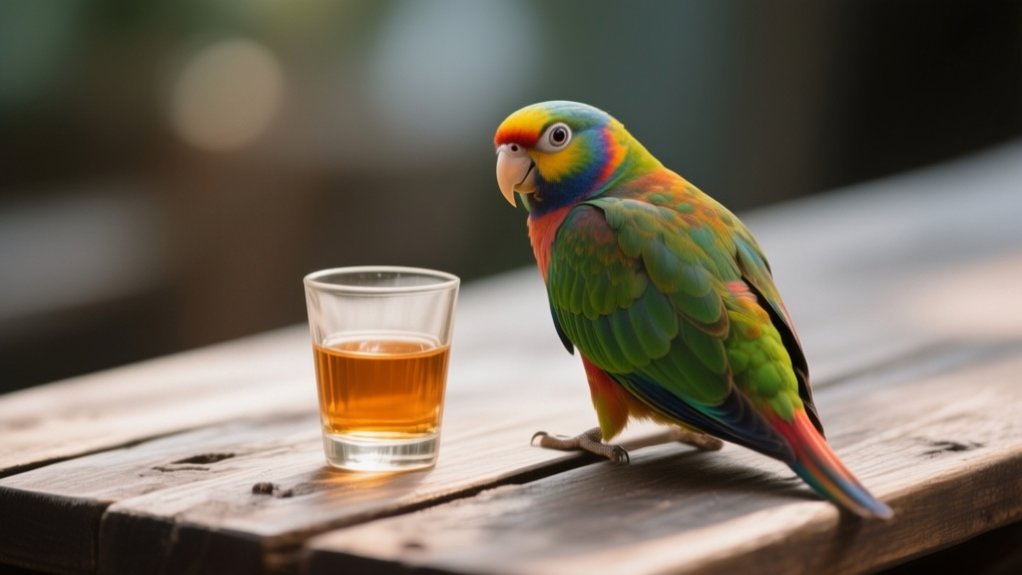
You’ll find birds naturally ingesting alcohol by eating fermenting fruits and berries, but this isn’t safe for them. Many species, especially intelligent ones like parrots and corvids, may consume alcohol out of curiosity or opportunity. Even small amounts can impair coordination, cause disorientation, or lead to severe health risks, including death.
Human habits often increase their exposure, making these dangers even worse. Understanding their behavior and the risks involved helps us see how to better protect these birds.
How Do Birds Naturally Encounter Alcohol in the Wild?
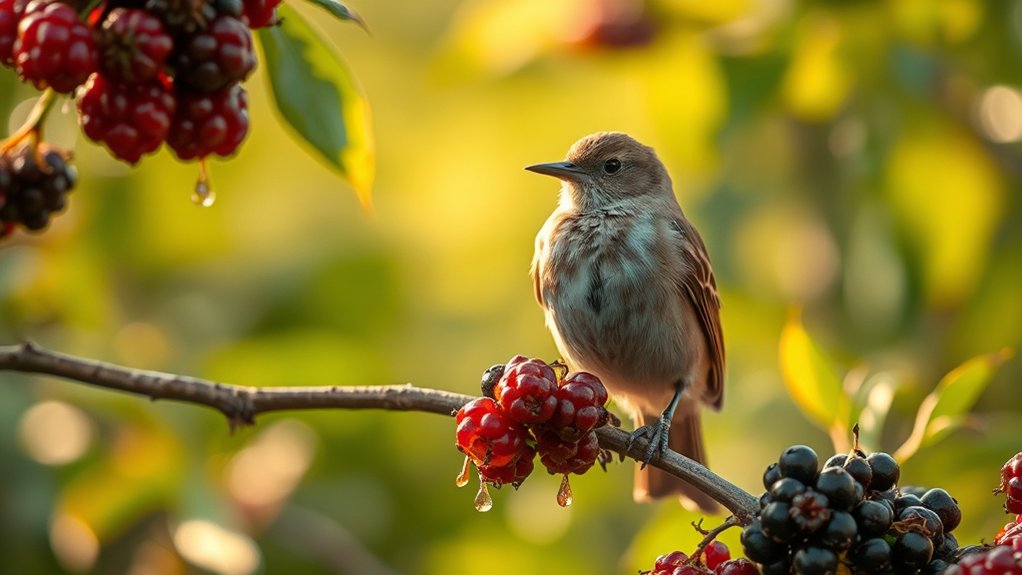
Although you mightn’t realize it, birds naturally encounter alcohol in the wild primarily by consuming fermenting berries, fruits, or tree sap containing ethanol. Fermentation happens when microorganisms like yeast convert sugars in overripe or rotting fruits into alcohol.
Birds naturally ingest alcohol by eating fermenting fruits and sap containing ethanol.
Environmental factors such as first frosts, spring thaws, and increasing sugar concentrations in ripening berries help boost this natural ethanol production.
Certain plants, including holly and dogwood, produce berries that ferment more readily, giving birds access to alcohol-rich food sources.
You should understand that wild birds may inadvertently ingest alcohol, especially during seasons when fruits become overripe or decayed.
Which Bird Species Are Known to Drink Alcohol?
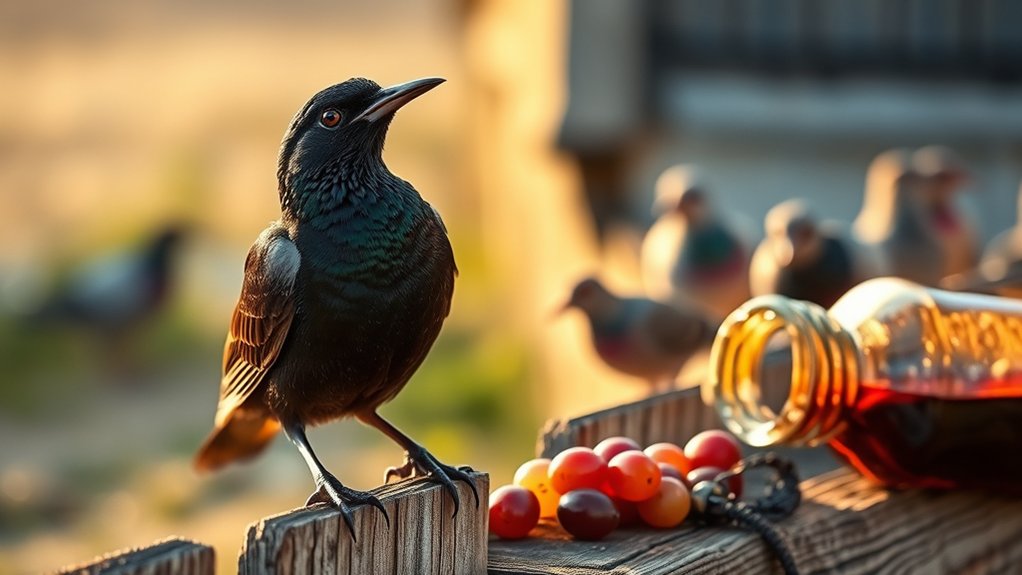
You’ll find that species like cedar waxwings, hooded crows, and certain parrots are commonly documented consuming alcohol. Wild birds usually get their buzz from fermented fruit or sap they find in nature.
On the other hand, pet birds often come across alcohol through drinks their humans leave around.
Interestingly, intelligence seems to play a role here. More adaptable and curious birds are the ones that tend to try alcohol more often. So, it’s not just about availability but also about how willing a bird is to experiment.
Common Alcohol-Consuming Birds
When you observe birds consuming alcohol, you’ll find that species like parrots and corvids, including ravens and crows, are the most frequently documented. This is mainly because of their interactions with human-provided beverages and naturally fermented fruit.
Cedar waxwings also commonly ingest alcohol by eating fermented berries. This can sometimes lead to intoxication and even death from overconsumption.
In urban environments, wild species such as hooded crows and rose-ringed parakeets often show up in cases involving alcohol. Domestic poultry, like chickens, occasionally consume alcohol too, mostly when they come across spilled drinks or fermented feed.
Scientific observations and social media evidence show that at least 55 bird species, both wild and captive, have been recorded consuming alcohol. This behavior is largely influenced by human activity, either indirectly through environmental exposure or directly by providing alcoholic substances.
Wild Versus Pet Species
While both wild and pet bird species have been observed consuming alcohol, the contexts and frequencies differ markedly between them. Wild birds like cedar waxwings consume naturally fermented berries, sometimes leading to intoxication. Corvids and parakeets often interact with human environments, resulting in accidental alcohol ingestion.
Pet birds, such as parrots and finches, encounter alcohol primarily through human-provided beverages.
| Bird Type | Alcohol Source |
|---|---|
| Cedar Waxwing | Fermented berries |
| Corvids (e.g., ravens, crows) | Human-related environments |
| Pet Parrots and Finches | Accidental ingestion of human beverages |
| Domesticated Poultry | Contaminated feed or environment |
Understanding these differences helps clarify how and why various species encounter alcohol in their habitats. It’s pretty interesting to see how their surroundings shape these experiences.
Intelligence and Drinking Behavior
Which bird species are most commonly observed consuming alcohol, and what role does intelligence play in this behavior? Parrots and corvids, including ravens and crows, top the list because of their advanced cognitive abilities. Their curiosity and problem-solving skills drive them to explore and consume alcohol, often from human sources.
Video footage shows Amazons and cockatoos deliberately drinking beer or wine, engaging with these substances on purpose rather than by chance. Hooded crows and other corvids also consume fermented berries, using their smarts to find these alcohol-rich food sources.
Research and videos highlight that cedar waxwings, Bohemian waxwings, and European starlings also show alcohol consumption behaviors. The connection between high intelligence and drinking suggests these birds actively seek out new substances.
It shows they’ve a complex way of interacting with their environment.
Behavioral and Physiological Effects of Alcohol on Birds
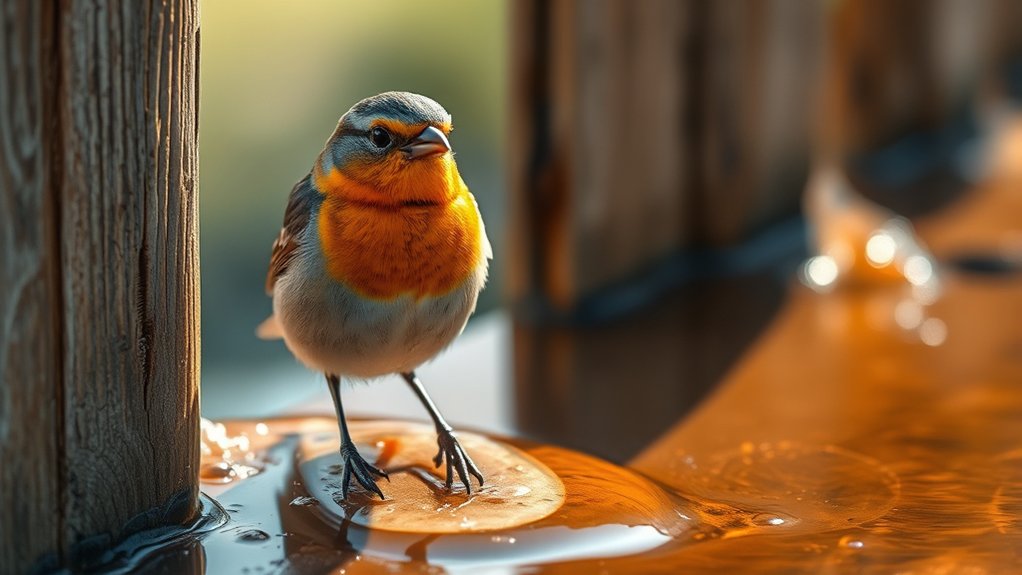
Although birds may unintentionally consume alcohol, its effects on their behavior and physiology are significant and often detrimental. When birds ingest alcohol, you’ll notice unsteady flight, wobbliness, and impaired coordination. These issues heighten their risk of collisions and accidents.
Behaviorally, they may stagger, fall, or fly erratically. This increases their vulnerability to predators or environmental hazards.
Physiologically, even small amounts can cause noticeable disorientation, unsteady posture, and balancing difficulties.
Overconsumption can lead to severe liver damage or rupture. While signs of intoxication are typically temporary, the impairment disrupts normal functions essential for survival.
The extent of these effects depends primarily on the quantity ingested. So, alcohol consumption poses substantial challenges to birds’ behavioral and physiological integrity.
Can Alcohol Be Dangerous or Fatal for Birds?
Because birds often lack the metabolic capacity to process alcohol efficiently, consuming fermented fruits or other sources can quickly become dangerous or even fatal. Overconsumption may cause ruptured livers, disorientation, and impaired coordination. This increases the risks of accidents or predation.
For example, cedar waxwings have died after ingesting berries with high alcohol content. You should understand that even small amounts can temporarily impair birds. But excessive intake poses serious health threats.
| Effect on Birds | Description |
|---|---|
| Intoxication | Unsteady flight, falling |
| Disorientation | Difficulty avoiding obstacles |
| Increased vulnerability | Predation risk, accidents |
| Liver damage | Rupture, fatal injury |
| Mortality | Death from excessive consumption |
How Does Human Behavior Affect Birds’ Alcohol Use?
When humans provide or inadvertently leave behind alcoholic beverages, birds often take advantage of these sources, increasing their alcohol consumption. Human activities, especially in urban and domestic settings, expose birds to beer, wine, and spirits.
Beer accounts for 70.4% of documented cases.
Species like parrots and corvids, known for their intelligence and frequent interaction with human environments, are more likely to consume these beverages.
You’ll notice that most reports and videos show birds ingesting alcohol primarily from human-supplied containers.
Human reactions vary. Accidental ingestion often elicits humor or positive responses, whereas intentional provision draws negative feedback.
How Does Human Interaction Shape Bird Alcohol Consumption?
You’ll notice that birds in urban areas tend to have more access to alcohol. This often happens because people either accidentally or intentionally leave alcoholic drinks where birds can get to them.
The way the media talks about these interactions also plays a big role. It shapes how the public sees the situation and can even affect how often people decide to offer alcohol to birds.
Urban Influence On Drinking
How does human presence influence bird alcohol consumption in urban environments? You’ll find that human activity and waste considerably increase birds’ exposure to alcohol.
Urban birds, especially intelligent species like crows and parrots, often interact with discarded or accessible alcoholic beverages such as beer, wine, and spirits. These encounters mainly occur in residential and outdoor settings where humans serve or discard drinks.
You might notice that many such interactions have been captured on social media, reflecting human fascination and generally positive reactions, especially when ingestion is accidental or humorous. This cultural response likely contributes to the frequency of recorded incidents.
Intentional Versus Accidental Provision
Although birds often encounter alcohol unintentionally, human actions sometimes lead to deliberate provision, which substantially influences their drinking behavior. You’ll notice that most alcohol consumption by birds happens around spilled beer or wine, left unattended or discarded by people. These accidental exposures increase birds’ chances of ingesting alcohol without intention.
But when you intentionally offer alcohol to birds, often for entertainment or humor, you directly impact their behavior and increase the likelihood they’ll drink more. Human reactions vary: accidental consumption usually gets a neutral or positive response. On the other hand, deliberate feeding, especially with stronger spirits, often draws negative attention.
The way alcohol sources are spread out and the context they’re in really shows your role in shaping how much alcohol birds consume. Understanding this difference helps clarify how your interactions either accidentally or purposely affect bird drinking patterns.
Media Impact On Behavior
Why do birds frequently appear drinking alcohol in online videos? Human interaction plays a key role. When people provide alcohol, often unintentionally or just for entertainment, birds get curious and may end up consuming it.
These videos are widely shared on social media and shape how people see birds. They often make it look like birds can safely drink alcohol. Positive reactions from viewers make drinking alcohol seem normal or even funny when it comes to wildlife.
This can mess with how people think about conservation and animal welfare. Most of these videos come from personal channels, showing how human behavior is behind both the visibility and the actual instances of birds drinking alcohol.
But the focus on humor means viewers mightn’t realize how risky alcohol really is for birds. This makes it harder to see the scientific facts about how harmful alcohol can be to their health and behavior.
How Can We Protect Birds From Alcohol Risks?
Since alcohol consumption can impair birds’ navigation and behavior, you can take several targeted steps to reduce their exposure and associated risks. Reducing access to fermented food sources and minimizing environmental hazards helps protect avian health.
You should focus on habitat management and public awareness to mitigate alcohol-related dangers.
For example, install window decals or bird-safe glass to prevent collisions that can be worse if birds are intoxicated. Also, remove or avoid planting fermentable berries and high-sugar fruits like Nandina in your yard.
Providing clean water and natural food encourages birds to avoid fermented substances.
It’s also important to educate the public about the signs of bird intoxication and promote quick rescue efforts.
Frequently Asked Questions
Can Alcohol Consumption Affect Bird Migration Patterns?
Yes, alcohol consumption can disrupt bird migration patterns by impairing navigation and flight coordination. You’ll see increased disorientation and sluggishness, which raises risks of straying, accidents, and predation.
All of this ultimately reduces migration success and survival rates. So, you can imagine how important it is for birds to stay clear-headed during these long journeys.
Do Baby Birds React Differently to Alcohol Than Adults?
Like fragile fledglings testing fragile wings, baby birds react more severely to alcohol than adults. They experience heightened impairment and vulnerability because their nervous systems are still developing. This makes them more at risk when exposed to alcohol.
Is There a Difference in Alcohol Tolerance Between Wild and Captive Birds?
You’ll find wild birds often have greater alcohol tolerance due to exposure to fermented foods and evolved metabolic mechanisms.
On the other hand, captive birds usually have less tolerance, making them more susceptible to alcohol’s toxic effects and intoxication risks.
How Do Birds Metabolize Alcohol Compared to Mammals?
You metabolize alcohol differently in birds because their faster metabolic rates and specialized liver enzymes break down alcohol more rapidly than in mammals. But this efficiency varies by species and doesn’t eliminate risks from excessive consumption.
Can Alcohol Exposure Influence Bird Mating Behaviors?
Sure, you might think birds throw wild parties after sipping alcohol. But actually, alcohol dulls their courtship songs and dances. It also weakens aggression and disrupts mating signals.
This ends up hurting their chances to impress and reproduce effectively. So, it’s not really a party for the birds after all.
Conclusion
You shouldn’t let birds consume alcohol, as it affects their behavior and physiology much like a storm disrupts a calm sea. While some species may naturally encounter fermented fruit, human-provided alcohol poses significant risks. This includes toxicity and impaired survival skills.
By understanding these dangers and reducing human-related exposure, you can help protect birds from harmful effects. Responsible interaction guarantees their health and maintains ecological balance. So, it’s really about keeping our feathered friends safe and sound.