
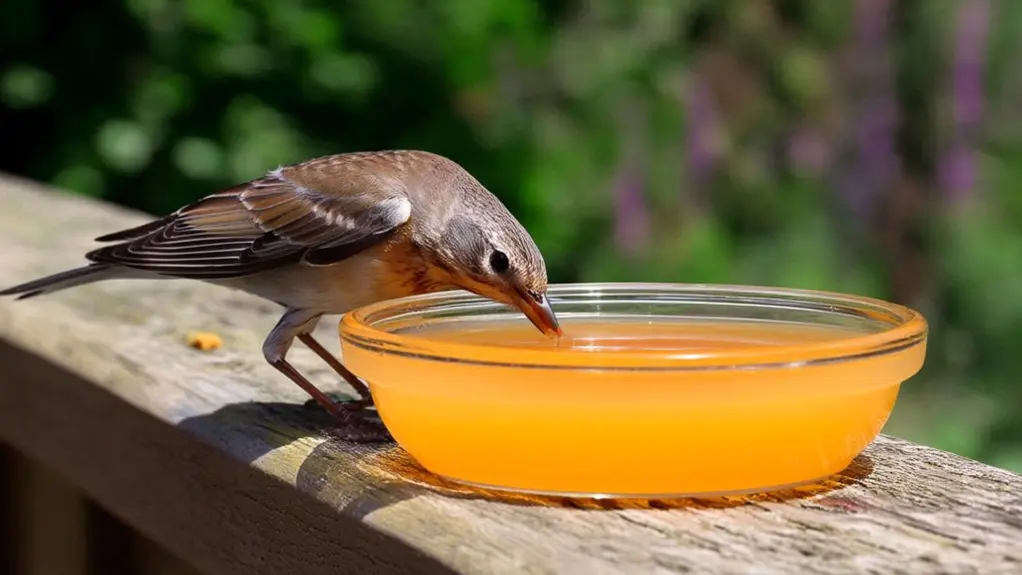
You shouldn’t give birds Gatorade because it contains artificial sweeteners, dyes, preservatives, and high salt levels that can harm their health. These ingredients may cause digestive issues, dehydration, immune reactions, and long-term damage like liver problems or tumors.
While some think electrolytes help birds stay hydrated, natural water or homemade nectar is safer and better. If your bird consumes Gatorade, taking quick steps is vital to avoid serious risks.
More details explain why and what to do next.
Is Gatorade Safe for Birds Like Conures and Hummingbirds?
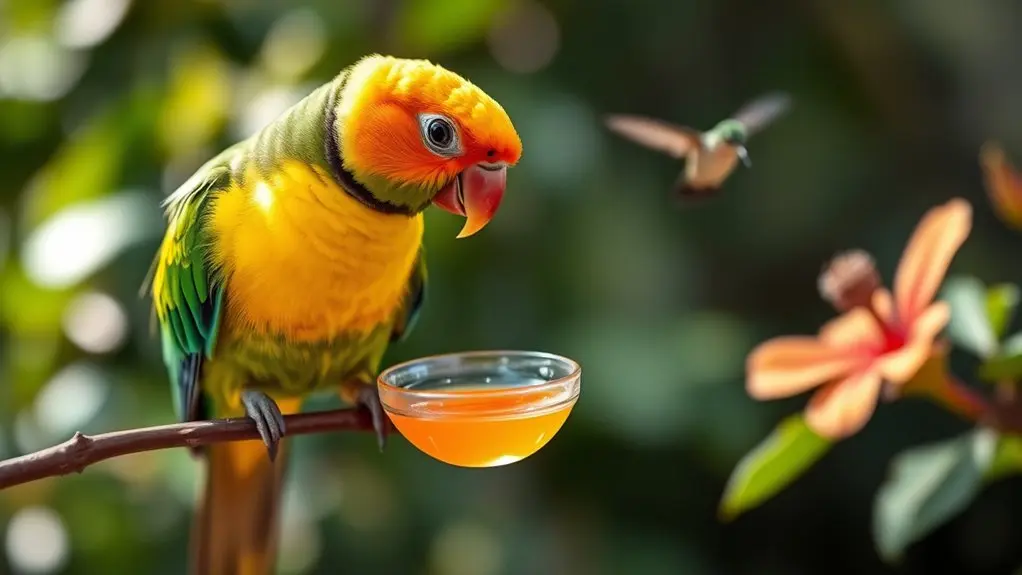
Although it might be tempting to offer Gatorade to birds like conures and hummingbirds, you should avoid doing so because the drink contains artificial sweeteners, dyes, and high sugar levels that can harm their digestive systems and overall health.
While occasional licking of Gatorade caps may not cause immediate harm, regular consumption poses significant risks due to these components. Birds have sensitive digestive tracts adapted to natural diets.
Regular Gatorade intake risks bird health due to their sensitive, natural diet-adapted digestive systems.
Introducing processed beverages can disrupt normal gut flora and metabolism.
Experts recommend providing birds with natural water or specially prepared nectar instead, ensuring their nutritional needs align with their physiology.
Given the artificial additives and excessive sugars in Gatorade, it remains unsuitable for avian consumption and may lead to long-term health complications if offered frequently.
What Ingredients in Gatorade Could Harm Birds?
You should know that some ingredients in Gatorade, like artificial sweeteners such as sucralose and acesulfame potassium, can be toxic to birds. These substances might cause serious health problems for them.
On top of that, there are additives like synthetic dyes and preservatives that could mess with their metabolism and lead to digestive issues.
Artificial Sweeteners Risks
When birds consume Gatorade Zero, they ingest artificial sweeteners like sucralose and acesulfame potassium. These compounds have been linked to several health risks in avian species.
They can trigger inflammation, disrupt immune responses, and potentially cause liver damage.
You should understand that artificial sweeteners have been associated with adverse reactions such as vomiting and respiratory issues like asthma in birds. Unlike natural sugars, these chemical additives interfere with avian metabolism and can weaken their natural defenses.
Research in animals indicates that these substances are unsafe for birds and put their overall health at risk.
Harmful Additives Effects
Because Gatorade contains several artificial additives, it poses multiple risks to bird health. Ingredients like Red 40 dye have been linked to tumors and cancer in animal studies, raising concerns about long-term exposure.
The electrolyte salts, particularly sodium and potassium, can disrupt small birds’ electrolyte balance if ingested excessively. This can potentially cause dehydration or kidney stress.
Artificial sweeteners, such as sucralose in Gatorade Zero, may provoke inflammation or liver damage in avian species. Additionally, preservatives and other chemical additives can accelerate nectar spoilage. This increases the risk of bacterial growth harmful to birds.
This overall, these artificial components are considered unsafe and potentially toxic. So, you should avoid offering Gatorade to birds to prevent adverse health effects.
Why Do People Feed Gatorade to Hummingbirds?
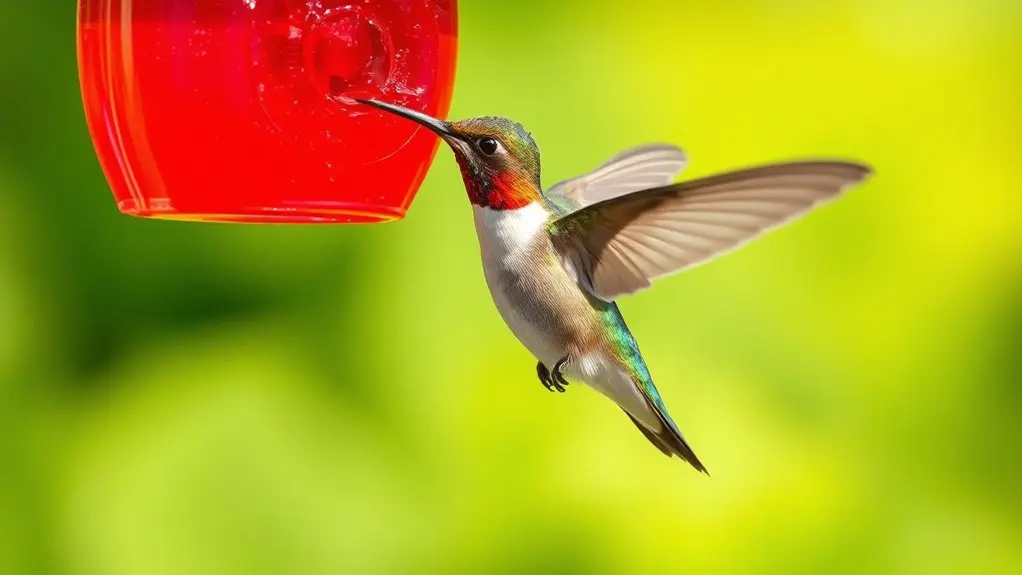
Why do some people choose to feed Gatorade to hummingbirds despite potential risks? You might find that enthusiasts believe Gatorade’s electrolytes help prevent dehydration in hummingbirds, especially during hot or dry conditions. The beverage’s high sugar content and bright colors can attract hummingbirds, resembling natural nectar sources.
Some think the added nutrients and energy from Gatorade could support the birds’ intense metabolic demands. This idea partially stems from research suggesting small birds benefit from electrolyte balance.
However, it’s important to note that Gatorade contains dyes and salts not naturally present in nectar, which may be harmful.
While well-intentioned, feeding Gatorade to hummingbirds involves assumptions about benefits that lack extensive scientific validation and carry potential risks. So, even though it seems helpful, it’s best to be cautious and stick with proven, safe feeding options.
What Do Experts Say About Giving Gatorade to Birds?
You should know that experts generally advise against giving Gatorade to birds. This is because it contains artificial dyes, sweeteners, and a high salt content, all of which can pose health risks.
When it comes to scientific studies, the evidence supporting the benefits of electrolytes in Gatorade for hummingbirds is inconclusive. Plus, these findings haven’t gained wide acceptance among bird specialists.
Expert Opinions
How safe is it to offer Gatorade to birds? Most avian experts advise against it. The artificial chemicals, dyes, and preservatives in Gatorade raise health concerns, especially for small birds like hummingbirds and parrots.
Instead, specialists recommend natural sugar water as a safer alternative.
| Concern | Expert View |
|---|---|
| Artificial Chemicals | Avoid due to toxicity risks |
| Dyes | Potentially harmful additives |
| Salt Content | Can harm small bird species |
| Preservatives | May cause spoilage and illness |
| Recommended Solution | Homemade nectar with sugar & water |
You should prioritize these expert recommendations to protect bird health effectively. That way, you can avoid any unintended harm.
Health Risks
While expert opinions clearly discourage offering Gatorade to birds due to its artificial ingredients, understanding the specific health risks involved underscores the importance of this advice. Gatorade contains additives that can negatively affect birds’ physiology, especially small species like hummingbirds and parrots.
The salt and artificial sweeteners in these drinks may cause serious health complications.
Here are the main health risks you should consider:
- Salt levels in Gatorade can lead to dehydration or electrolyte imbalance in birds.
- Artificial dyes and sweeteners may trigger inflammation or immune system issues.
- Chemicals in Gatorade accelerate nectar spoilage, increasing exposure to harmful substances.
Experts recommend providing only natural water or homemade nectar to protect avian health and avoid these risks. It’s a much safer choice for your feathered friends.
What Are the Health Risks of Artificial Sweeteners and Dyes?
Because artificial sweeteners and dyes are common in many processed beverages, understanding their health risks is essential. Sweeteners like sucralose and acesulfame potassium may cause inflammation and are linked to cancer in humans. These compounds can also trigger autoimmune responses and potentially lead to liver damage with excessive consumption.
Dyes such as Red 40 have associations with tumors and allergic reactions. Additionally, artificial chemicals disrupt gut health and connect to metabolic disorders.
While research on long-term effects in birds is limited, these substances are generally considered unsafe for avian health.
How Does Gatorade Compare to Natural Nectar and Water?
Considering the potential health risks posed by artificial sweeteners and dyes, it’s important to evaluate how Gatorade compares to the natural liquids birds typically consume.
Gatorade contains added sugars and artificial ingredients that differ markedly from the simple sugar-water mixture found in natural nectar. While it mimics nectar’s sugar content, its electrolytes and dyes are unnecessary and potentially harmful for birds.
Natural nectar and water provide the safest hydration and energy sources, closely matching birds’ dietary needs. When you compare these liquids, note that natural nectar offers pure sugars without artificial additives.
Natural nectar and water deliver safe hydration and energy, perfectly aligning with birds’ natural dietary needs.
Water ensures essential hydration without chemicals.
Gatorade introduces artificial dyes and electrolytes not found in birds’ natural diet. So, it’s clear that Gatorade isn’t an appropriate substitute for natural nectar or water.
What Are Safe Alternatives to Gatorade for Birds?
How can you provide safe hydration alternatives to Gatorade for birds? The safest option is homemade nectar made from just sugar and water. This closely mimics natural nectar without harmful additives.
Pure, fresh water remains the best hydration source. It ensures birds stay properly hydrated without exposure to sugars, dyes, or preservatives found in Gatorade.
If electrolyte supplementation is necessary, use commercial bird-specific electrolyte solutions only in minimal amounts and under avian veterinarian guidance.
Avoid any beverages containing artificial sweeteners, dyes, or preservatives. These can be toxic or harmful to birds.
Regularly providing clean water and appropriate nectar supports healthy hydration and physiological function.
This helps prevent risks associated with unsuitable drinks like Gatorade. Taking this approach maintains avian health through scientifically supported hydration methods.
What Should You Do If Your Bird Drinks Gatorade?
While providing safe hydration alternatives is important to prevent exposure to harmful substances, accidental ingestion of Gatorade can still happen. If your bird drinks Gatorade, you should quickly keep an eye on its behavior for any signs of distress or unusual symptoms.
Right away, offer fresh, clean water to help dilute the artificial sweeteners, dyes, and electrolytes your bird consumed. To handle the situation well, watch for symptoms like vomiting, lethargy, or breathing problems.
Also, avoid giving Gatorade regularly since it has ingredients that can be harmful to birds. Make sure to keep all electrolyte drinks out of your bird’s reach to prevent this from happening again.
Taking these steps helps you minimize health risks while keeping your bird safe and properly hydrated.
When to Consult a Vet After Your Bird Drinks Gatorade?
If your bird shows any signs of vomiting, diarrhea, lethargy, or difficulty breathing after drinking Gatorade, you should consult a veterinarian immediately. Prompt action is critical, especially if your bird ingests large amounts or beverages with artificial sweeteners.
You must also seek veterinary advice if you notice swelling or unusual behavior. Early intervention can prevent complications and ensure your bird gets the right treatment.
| Symptom | Action Required |
|---|---|
| Vomiting or Diarrhea | Immediate veterinary consultation |
| Difficulty Breathing | Emergency vet visit |
| Consumption of Large Amount | Contact avian vet immediately |
| Unusual Behavior/Swelling | Seek professional advice |
Always prioritize a professional evaluation for any adverse reactions after your bird drinks Gatorade. It’s the best way to keep your feathered friend safe and healthy.
Frequently Asked Questions
Can Gatorade Attract Wild Birds to Feeders?
Yes, Gatorade can attract wild birds because of its bright colors and sweetness. Birds are naturally drawn to colorful and sugary liquids, so it makes sense they might check it out.
But here’s the thing — Gatorade contains artificial additives that could actually harm the birds. So, it’s not the best idea to use it regularly.
Instead, try using natural, dye-free nectar for feeding. It’s a safer choice and better for the birds’ health overall.
How Quickly Does Gatorade Affect a Bird’s Digestion?
Like a telegram from the past, Gatorade affects a bird’s digestion within hours. You’ll notice electrolyte imbalance and gastrointestinal irritation kicking in quickly. Sometimes, this can cause vomiting or diarrhea depending on how much the bird ingests.
It happens pretty fast, so if you see these signs, it’s important to act quickly. Birds are sensitive, and their systems don’t handle that stuff well at all. Just a little Gatorade can upset their digestion more than you might expect.
Are There Any Birds That Can Tolerate Gatorade?
No bird species naturally tolerates Gatorade well, but some stressed or dehydrated birds might temporarily handle small amounts under veterinary supervision.
You shouldn’t offer it regularly because of its artificial additives and high sugar content. It’s really not designed for birds, so it’s best to stick to water or specially formulated bird electrolytes.
Does Temperature Affect Gatorade’s Safety for Birds?
Just like a knight guarding a castle, you must know temperature influences Gatorade’s safety for birds. Heat accelerates spoilage and harmful breakdown. Cold preserves chemicals but may reduce palatability.
Can Gatorade Residue Harm Birds After Feeder Cleaning?
Yes, Gatorade residue can harm birds after feeder cleaning if it’s not rinsed thoroughly. The artificial sweeteners and dyes in it might cause digestive issues or even allergic reactions in birds.
Plus, leftover sugars can lead to mold growth, which is definitely a health risk for them. So, it’s really important to make sure feeders are cleaned well and completely rinsed out.
Conclusion
So, can birds safely drink Gatorade? Given its artificial sweeteners, dyes, and electrolytes, Gatorade poses potential health risks to birds like conures and hummingbirds. Natural nectar and water remain the best hydration choices.
Why expose your feathered friend to unnecessary chemicals when safer, vet-approved alternatives exist? If your bird ingests Gatorade, keep an eye out for any symptoms and consult a vet right away. Prioritizing their health means choosing hydration options that are proven safe and natural.