
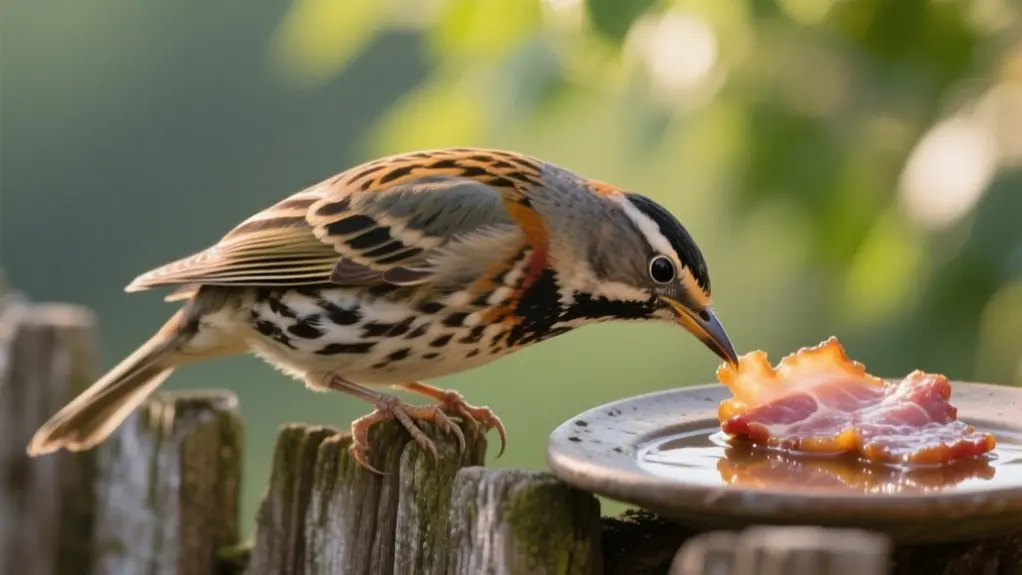
You shouldn’t feed bacon fat to birds because it contains harmful preservatives like nitrates, salt, and additives. These can cause dehydration, toxicity, and long-term health problems. Plus, bacon fat coats their feathers, which damages insulation and increases infection risks.
Sensitive species, especially small songbirds, are particularly vulnerable to these issues. Instead, choose safer alternatives like pure lard or beef tallow. Understanding why bacon fat is unsafe and how to provide better options helps protect your feathered friends’ health.
Why Bacon Fat Is Not Safe for Birds
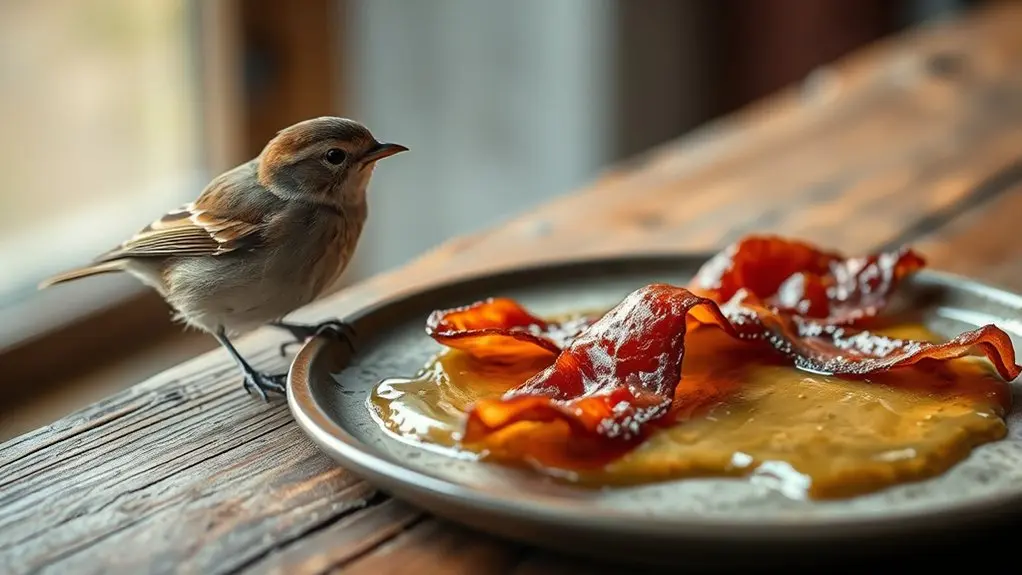
Although bacon fat might seem like a tasty treat for birds, you should avoid offering it because commercial bacon contains chemical preservatives that become more concentrated when cooked, making it harmful to them.
These preservatives, along with nitrates, salt, and sugar found in bacon fat, pose serious health risks. High salt levels can lead to dehydration, while nitrates and additives may cause toxicity.
Preservatives, nitrates, salt, and sugar in bacon fat pose serious health risks to birds, including dehydration and toxicity.
Even raw bacon fat isn’t safe, as it may contain harmful chemicals and preservatives toxic to birds. Furthermore, some of these compounds have carcinogenic properties, which can negatively impact avian health over time.
By steering clear of bacon fat, you’re protecting birds from these dangers and promoting their well-being.
It’s always best to offer natural, bird-safe foods instead. Trust me, the birds will thank you for it!
Harmful Preservatives and Chemicals in Bacon Fat
When you feed birds bacon fat, you’re also exposing them to harmful preservatives like nitrates and nitrites that are commonly used in commercial bacon. These chemicals become more concentrated during cooking, increasing the risk of toxicity.
Bacon fat also contains added salt, sugar, and other additives that birds aren’t equipped to handle. These substances can disrupt their delicate systems and may even contribute to long-term health issues.
Additionally, preservatives in processed bacon have been linked to carcinogenic compounds that pose serious health risks to birds. Using bacon fat in homemade bird food unintentionally introduces these chemical residues, which are unsafe for their well-being.
It’s important to choose natural, bird-safe alternatives to keep your feathered friends healthy and thriving. There are plenty of safer options out there, so why not go with something that won’t harm them? Your birds will thank you for it!
Myths About Feeding Birds Bacon Fat : Busted
Since many people want to provide nutritious treats for birds, it’s important to clear up common myths about feeding them bacon fat. You might hear that bacon fat is safe or even beneficial, but that’s misleading. Here’s what you need to know:
Bacon fat contains preservatives and chemicals, like nitrates and salt, which are harmful to birds. Wild birds don’t naturally eat processed meats, so bacon fat isn’t part of their diet.
Despite myths, bacon fat isn’t a healthy energy source; the additives can damage birds’ feathers and overall health.
Understanding these points helps you make better choices for feeding birds. Avoiding bacon fat protects their wellbeing and supports their natural diet.
How Bacon Fat Harms Birds’ Health and Feathers
When you give birds bacon fat, you mightn’t realize that you’re exposing them to harmful preservatives. These chemicals can actually be toxic to their health.
Plus, bacon fat doesn’t have the important nutrients that birds need to stay healthy. Over time, feeding them this kind of treat can cause nutritional problems.
Toxic Preservatives In Bacon
Although bacon fat may seem like a tempting treat for birds, the chemical preservatives it contains pose serious health risks. When you offer bacon fat to birds, these chemicals can concentrate during cooking and harm them in several ways.
First, carcinogenic compounds in preservatives can damage birds’ health and feathers, increasing their risk of illness.
Then, nitrates and salts often found in processed bacon can lead to dehydration and toxicity, which threatens their survival.
Plus, additives impair feather integrity, reducing insulation and water repellency. Both of these are essential for birds’ comfort and protection.
Nutritional Deficiencies From Fat
Beyond the chemical dangers, bacon fat itself can cause serious harm to birds by coating their feathers and disrupting natural functions. When fat covers their feathers, it damages waterproofing and insulation, leaving birds vulnerable to cold and wet conditions. You’ll notice greasy, matted feathers that impair a bird’s ability to preen and maintain healthy plumage.
This degradation reduces insulation and flight efficiency. Fat buildup also traps dirt and moisture, which can foster bacterial and fungal infections that threaten their health.
Over time, these issues interfere with nutrient absorption and grooming, leading to vitamin deficiencies.
If you care for birds, it’s important to avoid feeding them bacon fat. It compromises their feather condition and overall wellbeing, making them less resilient to environmental stresses.
Identifying Harmful Ingredients in Bird Food
You need to watch out for preservatives in bacon fat because they can concentrate harmful chemicals that pose serious risks to birds. Ingredients like nitrates, salt, and sugar aren’t just unhealthy—they can actually cause dehydration, toxicity, and other health problems.
Knowing these dangers helps you protect birds from nutritional harm and keeps them safer while you’re taking care of them. So, it’s really important to check what’s in the bird food before offering it.
Preservatives In Bacon Fat
When you feed birds bacon fat, it’s important to recognize that commercial bacon often contains chemical preservatives like nitrates and nitrites. These substances can be harmful to birds, especially since cooking bacon fat concentrates these chemicals, increasing toxicity risks.
Also, processed bacon includes other additives such as salt and sugar, which may lead to dehydration or vitamin deficiencies in birds. So, keep these points in mind:
- Nitrates and nitrites, linked to carcinogenic effects in humans, could pose similar dangers to birds.
- Cooking bacon fat intensifies the concentration of these harmful preservatives.
- Salt and sugar in bacon contribute to health problems, undermining birds’ well-being.
For your feathered friends’ safety, it’s best to avoid feeding them bacon fat containing these preservatives. This way, you help protect their health and longevity.
Nutritional Risks For Birds
Although feeding birds bacon fat might seem like a treat, it poses serious nutritional risks because of harmful ingredients commonly found in processed bacon. Bacon fat often contains chemical preservatives, nitrates, and high salt levels that can cause dehydration and organ stress in birds.
Additives and flavorings in processed bacon aren’t suitable for avian health and may lead to vitamin deficiencies. Plus, fats with low melting points and preservatives can harm feather health, which increases the risk of disease.
Ingredients like bread and bacon fat provide little nutritional value and might cause digestive problems or feather loss. When you feed birds these kinds of foods, you’re actually doing more harm than good.
Instead, try to focus on natural, bird-safe foods to support their well-being and avoid these nutritional dangers. It’s a simple way to help keep our feathered friends healthy and happy.
Safe Alternatives to Bacon Fat for Bird Suet
Since bacon fat often contains preservatives and additives that can harm birds, choosing safe alternatives is essential for their health. You want to provide bird suet that’s both nutritious and free from harmful chemicals. Here are three safe options to contemplate:
- Use lard, a natural fat without preservatives, making it ideal for homemade suet.
- Mix peanut butter with lard to create a high-energy, nutritious base birds will love.
- Opt for premade suet cakes made from pure fats like beef tallow and natural ingredients. They’re convenient and safe for your feathered friends.
Avoid fats containing salt or additives, as these can negatively affect birds. By selecting these alternatives, you’ll support the well-being of your feathered visitors while offering them a safe, energy-rich treat.
How to Make Homemade Suet Without Bacon Fat
Choosing safe fats like lard or beef tallow sets the foundation for making your own homemade suet without relying on bacon fat. Start by melting the fat gently and straining it to remove any impurities. This helps prevent spoilage and keeps pests away.
Then, mix the clear fat with bird-friendly ingredients such as birdseed, dried fruit, oats, or cornmeal. These provide a balanced, high-energy treat for your feathered friends.
Pour the mixture into molds or suet cages to shape and contain it. This ensures it stays clean and accessible for birds.
Store your homemade suet in the freezer and only offer it during cold weather to avoid melting and spoilage.
This way, you provide a safe, nutritious option that supports wild birds without the risks linked to bacon fat.
Which Bird Species Are Most Sensitive to Bacon Fat?
When you offer bacon fat to birds, it’s important to recognize that some species are more sensitive to its effects than others. Understanding their vulnerabilities helps you protect them from harm.
Small songbirds like finches and warblers have delicate digestive systems. This makes them especially sensitive to bacon fat and its preservatives.
Ground-feeding birds such as thrushes and blackbirds face higher risks if bacon fat contains salt or nitrates. These substances can cause poisoning.
Birds with compromised health or weakened immune systems are more vulnerable to the toxins and chemical additives found in bacon fat.
Best Practices for Feeding Birds in Winter Safely
Although winter presents harsh conditions for birds, you can support their survival by offering high-fat, energy-rich foods like suet or lard. Avoid bacon fat since its preservatives, salt, and nitrates can harm birds.
Place feeders in shaded, sheltered spots to prevent fats from melting and spoiling quickly. Regularly clean and replace suet or fat-based feeders to stop mold growth and keep pests away.
Be mindful to limit feeding during extreme heat and avoid fats in late spring or summer, as they spoil faster and pose health risks.
Frequently Asked Questions
Can Bacon Fat Attract Unwanted Wildlife to Bird Feeders?
Yes, bacon fat can attract unwanted wildlife like squirrels and raccoons to your feeders. You’ll want to use specific feeder designs and limit bacon fat to avoid scaring smaller birds or damaging your feeders.
It’s a good idea to keep an eye on your feeder and see what’s visiting. That way, you can adjust what you put out and keep the focus on the birds you want to attract.
How Should I Dispose of Leftover Bacon Fat Safely?
Did you know pouring grease down drains causes 60% of sewer blockages? It’s a bigger problem than most people realize.
You should let bacon fat cool and solidify in a container. Then, toss it in the trash or recycle it at local facilities. This helps protect both your plumbing and the environment.
Does Bacon Fat Affect Bird Migration Patterns?
No, bacon fat doesn’t affect bird migration patterns. Birds rely on natural cues like daylight and temperature, not specific foods.
While you might feed birds occasionally, unhealthy fats could harm their health, not their migratory behavior. So, it’s really more about their overall well-being than what you’re feeding them.
Can Bacon Fat Cause Long-Term Behavioral Changes in Birds?
You might think bacon fat won’t change birds, but it can. Feeding them regularly may alter their natural habits, cause health issues, and even disrupt migration.
Is Bacon Fat Toxic to Other Common Garden Animals?
Yes, bacon fat is toxic to many garden animals like squirrels and raccoons because of its preservatives and high fat content. You should avoid feeding it to protect their health and prevent digestive or toxic issues.
It’s really best to stick to natural foods that these animals would normally eat. That way, you help keep them safe and healthy without any risks. So, when you’re thinking about snacks for your garden visitors, skip the bacon fat!
Conclusion
You might think a little bacon fat won’t hurt, but feeding it to birds is like offering them a toxic feast. Those harmful preservatives and chemicals can seriously damage their health and feathers.
Instead, choose safe, homemade suet recipes without bacon fat to keep your feathered friends thriving, especially in winter. By avoiding bacon fat, you’re not just feeding birds, you’re protecting vibrant lives that brighten your world.
Keep their well-being your top priority!