
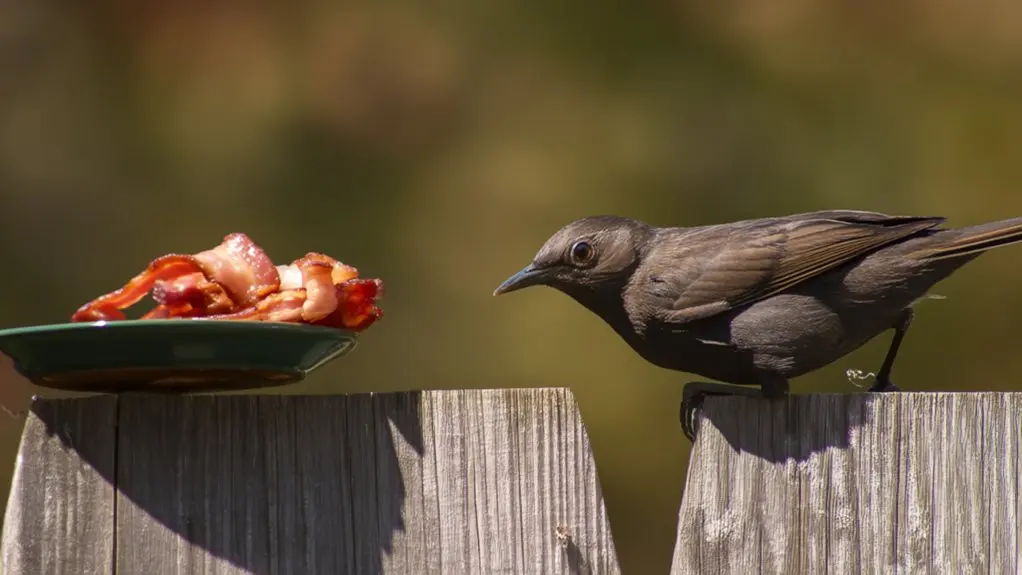
You shouldn’t feed birds bacon because commercial bacon fat often contains harmful preservatives and additives that can damage their health and coat their feathers. This coating reduces insulation and water resistance, which birds really need. Cooking bacon fat also concentrates toxins, posing even greater risks.
Raw bacon fat is somewhat safer but still not ideal. Instead, try using natural fats like lard or peanut butter to give birds energy during cold weather. If you want to protect birds safely while providing calories, there are some important guidelines worth understanding.
What Is Bacon Fat and Why Feed It to Birds?
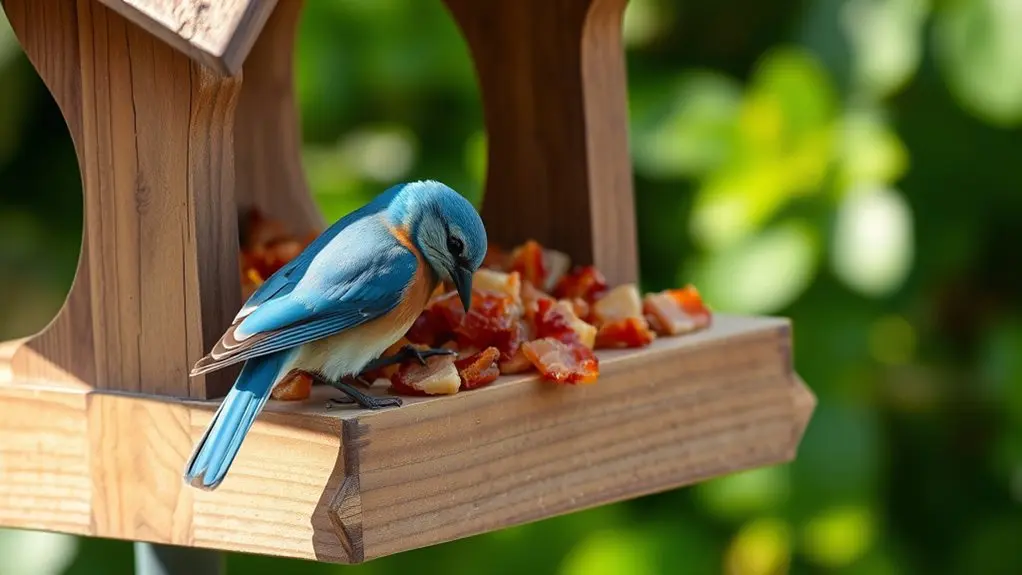
Although bacon fat is a rich source of animal fats and can provide concentrated energy for birds, especially during cold months, you should approach feeding it with caution. Bacon fat is the rendered fat from cooking bacon, containing high levels of animal fats that can boost birds’ energy reserves.
However, it often includes preservatives and additives, particularly in commercial products, which can harm birds. If you decide to use bacon fat, make sure to remove any flesh or stringy bits, as these can attract pests or cause choking.
While raw or cooked bacon fat might seem beneficial for winter feeding, its potential contaminants and chemical additives generally make it an unsafe choice. You should consider safer, natural fat sources to support wild birds instead.
Safety of Commercial Bacon Fat for Wild Birds
When you consider feeding wild birds, you should avoid commercial bacon fat because of the chemical preservatives it contains. These preservatives can become more concentrated when cooked, and some might include carcinogenic compounds that pose health risks to birds.
Using bacon drippings from store-bought bacon in homemade bird suet just isn’t safe because of these harmful additives.
Avoid using store-bought bacon drippings in bird suet due to harmful additives that can endanger wild birds.
The concern here is specific to commercially processed bacon fat. It doesn’t apply to natural animal fats like lard, which are generally safe to use.
So, to protect wild birds, it’s best to stay away from commercial bacon fat.
Instead, choose safer alternatives like pure lard or peanut butter. By doing this, you’ll offer nutritious, non-toxic food that supports their health without exposing them to dangerous chemicals.
It’s a simple switch that makes a big difference!
Raw vs Cooked Bacon Fat for Birds
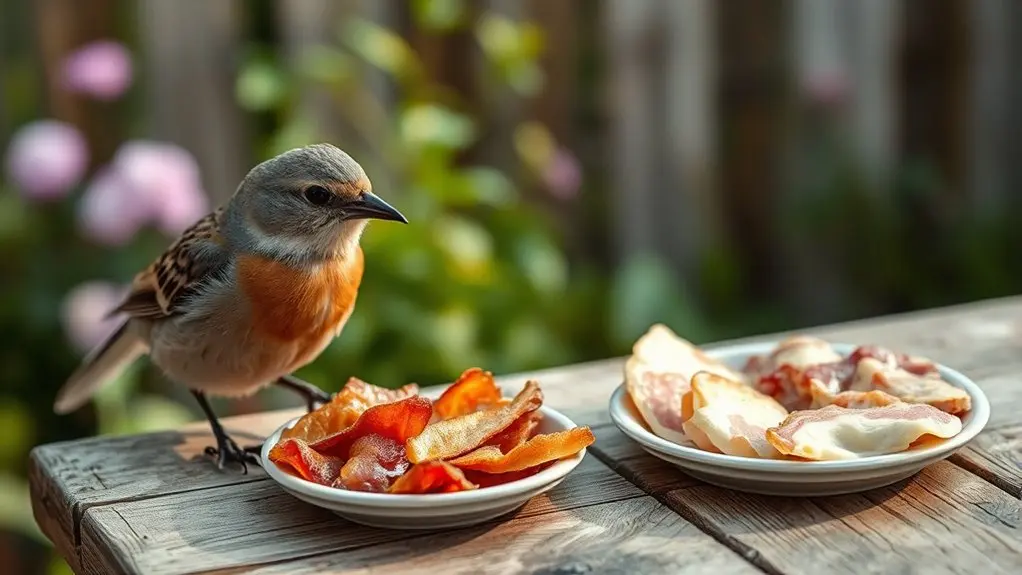
Choosing the right form of bacon fat is important when feeding birds, especially after understanding the risks associated with commercial bacon fat. Raw bacon fat is generally preferred because it closely mimics what birds naturally consume and is considered safer. It’s easier to prepare and store, often frozen for seasonal use.
On the other hand, cooked bacon fat may contain flesh, stringy bits, and preservatives that can be harmful. Cooking also concentrates chemical preservatives, increasing potential risks to birds.
While both raw and cooked fat can be used, raw fat supports bird health more effectively and reduces exposure to additives.
When offering bacon fat, opting for raw ensures a more natural, less processed option that’s safer for your feathered visitors. It’s a simple way to keep your birds healthy and happy!
Health Risks and Nutritional Concerns of Feeding Bacon Fat
Since bacon fat often contains chemical preservatives and high levels of fat, feeding it to birds can pose serious health risks. These preservatives can become more concentrated when cooked, increasing the presence of potentially carcinogenic compounds harmful to birds.
Plus, the high-fat content in bacon fat isn’t just unhealthy; it can cause nutritional deficiencies and other health problems. Because bacon fat is soft and greasy, it’s unsuitable as a natural food source for birds and may impair their overall health.
Given these concerns, it’s best to avoid offering bacon fat to birds altogether. Choosing safer, natural food options will better support their well-being and reduce the risk of exposure to harmful chemicals and unhealthy fats.
How Bacon Fat Can Hurt Bird Feathers and Insulation
You mightn’t realize it, but bacon fat can actually coat bird feathers and mess with their natural structure. When that happens, it damages their insulation.
See, greasy feathers lose their water repellency, which is a big deal because it puts birds at risk of hypothermia. And unfortunately, this kind of damage is irreversible.
That means it gets a lot harder for birds to stay warm and healthy once their feathers are coated in fat.
Feather Damage From Fat
Although bacon fat might seem harmless, it can severely damage bird feathers by disrupting their natural structure. Even small amounts of greasy fat coat feathers, reducing their ability to repel water and maintain insulation.
This causes feathers to become waterlogged, putting birds at risk of hypothermia.
Once coated, feathers lose their insulating properties, leaving birds vulnerable in cold conditions. Birds must spend excessive time and energy preening to clean greasy feathers, which can lead to exhaustion and starvation.
Unfortunately, fat damage is irreversible without specialized cleaning, which wild birds rarely receive. When you feed birds bacon, you risk compromising their feather health and overall well-being.
It’s best to avoid offering bacon or any greasy food that can coat and harm feathers.
Insulation Impairment Risks
When bird feathers get coated with bacon fat, their natural insulation suffers drastically. The greasy fat damages the feather structure, reducing their ability to repel water and trap insulating air.
Even small amounts of bacon fat can cause feathers to become waterlogged, increasing the risk of hypothermia, especially in cold or wet conditions.
Birds rely on clean, dry feathers to maintain body heat, so when these feathers are compromised, their survival chances drop.
Plus, birds have to spend extra time preening to remove the grease, which stresses them out and wastes precious energy.
Unfortunately, once feathers are contaminated with bacon fat, the damage is irreversible and tough to fix.
That’s why bacon fat exposure is such a serious threat to bird insulation and their overall health.
Why Bread and Bacon Fat Are Poor Choices for Bird Suet
You really shouldn’t use bread or bacon fat in bird suet because both can be harmful to birds’ health. For one, bacon fat contains preservatives that might be toxic to them.
Plus, bread doesn’t have the essential nutrients birds need and could lead to nutritional deficiencies.
Feeding birds these things can cause problems like poor feather condition and insulation issues.
Harmful Preservatives In Bacon
Since commercial bacon contains chemical preservatives that concentrate further during cooking, feeding bacon fat to birds can be harmful. These preservatives often include carcinogenic compounds that pose significant health risks to birds.
When you use bacon fat from commercial bacon as suet, you inadvertently expose birds to these toxic additives, which can lead to serious illness.
Unlike natural fats, bacon fat isn’t a safe or nutritious option for birds. Similarly, bread offers minimal nutritional value and can cause vitamin deficiencies, making it a poor choice as bird food.
Both bread and bacon fat may contribute to long-term health problems, including toxicity and malnutrition.
To protect birds, it’s best to avoid feeding them bacon fat or bread and opt for safer, nutrient-rich alternatives instead.
It’s really better to stick with foods that support their health rather than harm it.
Nutritional Deficiency From Bread
Although bread might seem like an easy snack to offer birds, it provides almost no nutritional value and can lead to serious vitamin deficiencies.
Bread lacks the essential fats, proteins, and vitamins birds need for energy and survival, especially in colder months.
When you feed birds bread or bacon fat as suet, you risk malnutrition because they don’t get enough nutrients, which weakens their immune systems.
It can also disrupt their natural foraging behaviors, making them rely on poor food sources.
Plus, these foods can cause digestive issues since they’re not suited to a bird’s diet.
Choosing bread or bacon fat as suet alternatives doesn’t support birds’ health or energy needs.
Instead, try nutrient-rich, natural options that help birds thrive safely.
This is especially important during winter when they need more energy to stay warm and active.
Health Risks For Birds
Why should you avoid feeding birds suet made from bread or bacon fat? Bread offers little nutritional value and can cause vitamin deficiencies if birds eat it regularly.
Bacon fat contains chemical preservatives that may become concentrated when cooked, posing serious health risks. These preservatives can include carcinogenic compounds harmful to birds.
Also, both bread and bacon fat can coat feathers with fat, which messes with their insulation and water repellency. Soft fats like bacon drippings damage feathers and don’t provide good nutrition. This can put birds’ survival at risk.
Safe and Tasty Bacon Fat Alternatives for Bird Suet
When you’re making suet for wild birds, choosing safe fat alternatives is essential to their health. Avoid bacon fat, which often contains harmful preservatives. Instead, use pure fats that provide nutrition without risks.
Consider these three options:
Consider these three wholesome fat choices to nourish wild birds safely and effectively.
- Lard. It’s a natural, unprocessed fat that gives birds the high energy they need in colder months.
- Peanut Butter. This acts as a nutritious binder and delivers healthy fats and protein without additives.
- Beef Suet. Rendered and pure, it’s perfect for homemade suet cakes, supplying essential calories safely.
These alternatives skip the chemical preservatives found in commercial bacon fat. That way, your suet supports wild birds instead of harming them.
Using safe fats helps keep birds healthy and energized during demanding seasons. It’s a simple switch that makes a big difference!
Feeding Fats to Birds Safely in Cold Weather
Because birds need extra energy to survive cold weather, feeding them high-quality fats is essential, but you must do so carefully to avoid harm.
Avoid using commercial bacon drippings, as preservatives can be toxic to birds. Instead, offer genuine suet or hard peanut butter, which provide the necessary calories without harmful additives.
Store fats in shaded, cool areas to prevent rancidity and spoilage.
Never spread fats directly on trees or branches.
Use squirrel-proof feeders or suet cages to guarantee safe access.
Offer fats in moderation and always provide fresh supplies to support bird health during winter.
Avoiding Harm When Feeding Fat-Based Bird Food
Although feeding fat-based foods can help birds survive cold weather, you need to avoid certain fats that pose health risks. Commercial bacon fat contains preservatives harmful to birds, and feeding such fats can coat feathers, reducing insulation and water repellency. This increases their risk of hypothermia and illness.
Feeding birds certain fats can harm their feathers, risking hypothermia and illness despite cold weather benefits.
To avoid harm, follow these guidelines:
- Never offer bacon fat or foods containing chemical preservatives.
- Avoid soft, spreadable fats like vegetable oils or Crisco, as they coat feathers and cause health problems.
- Don’t spread fats directly on trees or branches to prevent greasy feathers and related health issues.
Frequently Asked Questions
Can Pet Birds Eat Bacon Fat Safely?
You shouldn’t feed pet birds bacon fat because it contains harmful preservatives. It can also coat their feathers, which messes with insulation and water repellency.
Instead, go for safer fats like pure suet or hard peanut butter. These options help keep your bird healthy without the risks that bacon fat brings.
How Often Should I Offer Bacon Fat to Birds?
You should offer bacon fat to birds no more than every 2 to 3 days, especially in cold weather. Avoid daily feeding to prevent greasy feathers and health issues. Always monitor their condition carefully.
It’s best to keep an eye on how the birds react and adjust accordingly. Giving them a break between feedings helps keep them healthy and happy. Just remember, moderation is key!
Does Bacon Fat Attract Unwanted Wildlife?
Oh, sure, if you want a raccoon party at your feeder! Yes, bacon fat definitely attracts unwanted wildlife.
You’ll want squirrel-proof feeders to keep those uninvited guests away and protect both your birds and your feeders.
Can Bacon Fat Cause Allergies in Birds?
Yes, bacon fat can cause allergies in birds, especially because of preservatives and additives. These ingredients can trigger allergic reactions that might not be obvious at first.
You really shouldn’t feed bacon fat to birds. Allergic reactions like itching or skin irritation may happen, and that’s definitely something you want to avoid.
What Birds Prefer Bacon Fat Over Other Fats?
Like moths to a flame, woodpeckers, jays, and chickadees prefer bacon fat over other fats. You’ll notice they’re drawn to its strong scent and energy.
But don’t forget to offer healthier alternatives for their safety. It’s all about giving them options they need to stay healthy and happy.
Conclusion
Feeding bacon fat to birds might seem like a tasty treat, but it’s a slippery slope you’ll want to avoid. Its high salt and preservatives can harm their health and feathers. This can turn your kind gesture into a risk.
Instead, stick to safe, nutritious fats like suet made from beef fat or vegetable-based options. Remember, giving birds the right fuel is like offering them a warm blanket. It’s essential for their survival, especially in cold weather.