
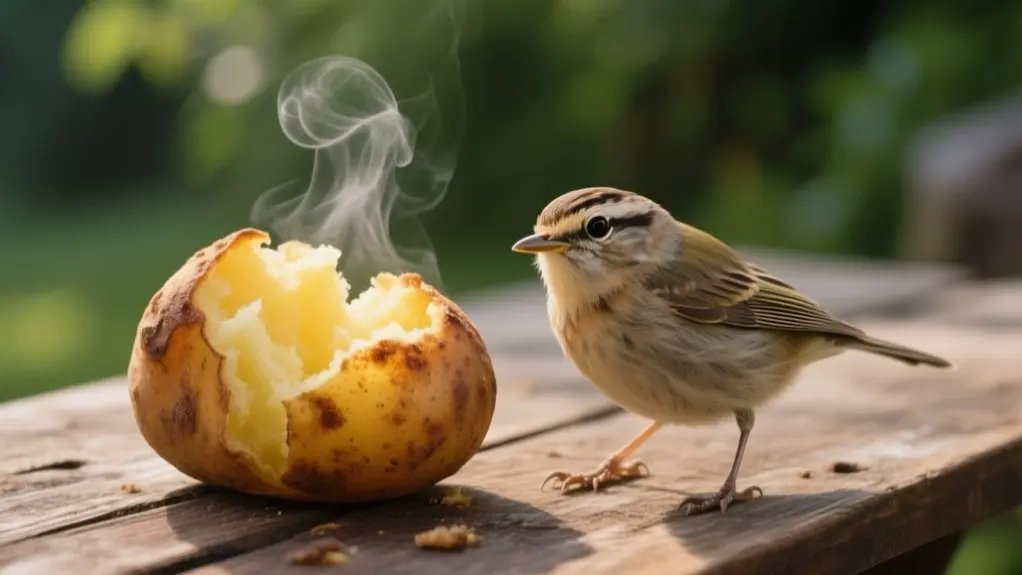
You can safely offer birds plain, fully cooked baked potatoes by peeling them and removing any green parts to avoid harmful solanine. Always serve them cooled, without salt or seasonings, and in small portions to prevent choking and overfeeding.
Avoid raw or green potatoes as they’re toxic. Feeding baked potatoes occasionally supports birds’ energy and health, especially in colder months. Keep your feeding area clean to promote safe eating habits.
Discover more about proper preparation and feeding tips to guarantee your feathered friends thrive.
Are Baked Potatoes Safe and Healthy for Birds?
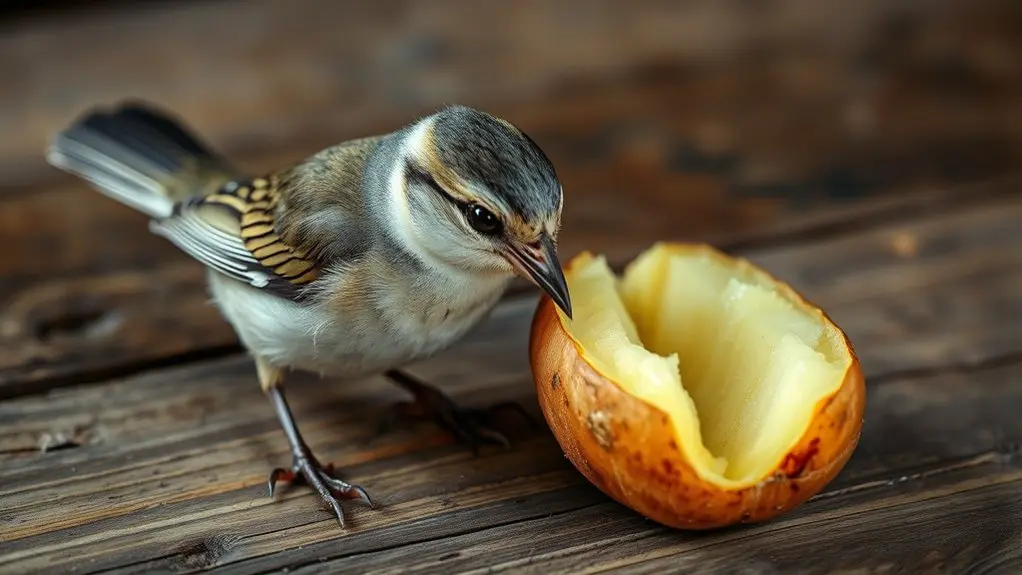
Although baked potatoes can be a safe and healthy treat for birds, you need to make sure they’re fully cooked, peeled, and served plain without any added salt, butter, or seasonings. Proper preparation eliminates harmful substances and guarantees the potato is digestible.
Baked potatoes are safe for birds when fully cooked, peeled, and served plain without additives.
Baked potatoes offer birds a good source of carbohydrates and energy, which is particularly valuable in colder months when energy demands increase.
When you serve baked potatoes, chop or mash them into small portions to help prevent choking and aid digestion, especially for small or ground-feeding birds.
However, don’t overfeed baked potatoes. Offering them occasionally as a treat prevents nutritional imbalance and unwanted weight gain.
Why You Should Avoid Raw or Green Potatoes When Feeding Baked Potatoes
You should never feed birds raw or green potatoes because they contain solanine, a toxin that’s harmful to their health. Those green patches and sprouts? They’ve especially high levels of solanine.
The good news is that cooking helps reduce this toxin. So, always make sure to peel and cook potatoes thoroughly to keep them safe for your birds.
Toxic Solanine Presence
Because raw and green potatoes contain solanine, a natural toxin harmful to birds, you should never feed them without proper preparation.
Solanine mainly concentrates in the skin and sprouts, especially when potatoes turn green from light exposure. This toxin can cause serious neurological and gastrointestinal problems for birds, including weakness, vomiting, and in severe cases, death.
Cooking potatoes thoroughly breaks down solanine, making them safe for birds to eat.
To protect your feathered friends, always peel potatoes carefully, removing any green or sprouted areas. Then, cook them completely before feeding.
Avoid giving raw or green potatoes at all costs. The risk of solanine poisoning is just not worth any potential benefits.
Proper preparation guarantees you provide a safe and nutritious treat.
Risks Of Green Potatoes
Solanine, the toxin found in raw and green potatoes, poses significant health risks to birds and is the primary reason you should steer clear of feeding them these forms. This toxic compound is concentrated mainly in the potato’s skin and sprouting areas, making green or sprouted potatoes especially hazardous. When birds consume these, they risk severe poisoning.
Here are the key dangers you should keep in mind:
- Neurological and gastrointestinal problems can develop quickly.
- Symptoms like weakness and vomiting indicate solanine toxicity.
- In severe cases, poisoning can be fatal to birds.
To protect birds, avoid offering any raw or green potatoes. Instead, opt only for fully cooked, peeled, and plain baked potatoes free of green discoloration or sprouts.
It’s really best to be cautious with what you feed them to keep them safe.
Importance Of Thorough Cooking
How can you guarantee baked potatoes are safe for birds? The key is thorough cooking. Raw potatoes contain solanine, a toxic compound that can seriously harm or even kill birds.
Green potatoes are especially dangerous because they’ve higher solanine levels. Cooking baked potatoes completely breaks down solanine, eliminating this risk.
Undercooked or raw potatoes still contain residual solanine, posing a poisoning hazard.
To protect birds, always remove the skins and verify the potatoes are fully cooked before offering them. This careful preparation is essential to avoid toxin exposure and keep birds healthy when feeding baked potatoes.
How to Prepare Baked Potatoes Safely for Bird Feeding
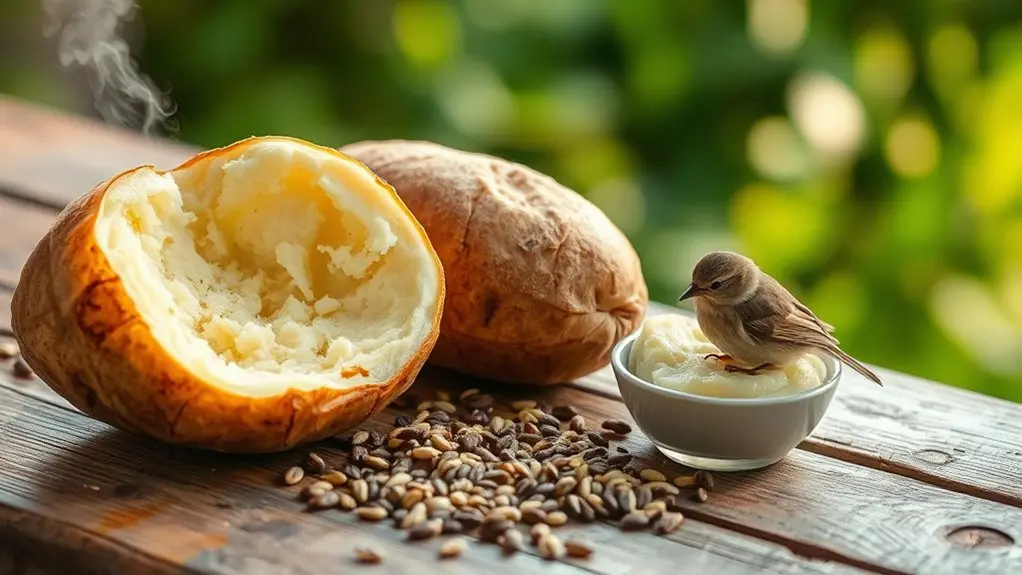
When preparing baked potatoes for bird feeding, you have to cook them thoroughly to get rid of any harmful toxins. This is especially important because of solanine, which is found in the skin and green areas.
To offer baked potatoes safely to birds, follow these key steps. First, remove all the skins and any green parts. This helps reduce leftover solanine and keeps birds from having digestive issues.
Next, serve only plain, unseasoned potatoes. That means no butter, salt, spices, or any additives that might be harmful to birds.
Finally, let the potatoes cool completely. Then cut them into small cubes or mash them up. This makes it easier for the birds to eat and helps prevent burns.
Mistakes to Avoid When Feeding Birds Baked Potatoes
When feeding birds baked potatoes, you want to make sure you don’t give them raw or unpeeled potatoes because they contain harmful toxins.
Also, avoid adding butter, salt, or any seasonings since those can be bad for their health.
It’s a good idea to keep an eye on portion sizes too, so you don’t accidentally overfeed them and cause digestive problems.
Avoid Raw Potatoes
Because raw potatoes contain solanine, a toxic compound harmful to birds, you must never feed them raw or green potatoes. Solanine can cause severe digestive and neurological issues, even death, in birds.
To keep birds safe, always serve only thoroughly cooked, peeled baked potatoes. Here are three critical points to remember:
- Avoid raw or green potatoes entirely, as they’ve the highest solanine concentration.
- Cook potatoes thoroughly to destroy solanine and make them safe for consumption.
- Peel baked potatoes before offering them to birds to reduce toxin exposure and aid digestion.
Following these guidelines will prevent health risks and ensure you’re providing a safe, nutritious treat for your feathered friends. It’s really worth taking the extra time to prepare their food properly!
No Added Seasonings
After ensuring your baked potatoes are safely cooked and peeled, pay close attention to how you serve them. Never add salt, butter, spices, or herbs, as these can harm birds. Ingredients like garlic and onion contain toxic compounds, while oils and preservatives in seasonings may cause digestive issues.
Always offer plain, fully cooled potatoes to avoid choking and poisoning risks.
| Seasonings to Avoid | Reasons | Risks |
|---|---|---|
| Salt, Butter | Harmful additives | Poisoning, distress |
| Garlic, Onion | Toxic compounds | Health deterioration |
| Herbs, Spices | Toxins, oils | Digestive issues |
| Flavored Potatoes | Preservatives, oils | Gastrointestinal upset |
Stick to plain baked potatoes to keep birds safe and healthy.
Control Portion Sizes
Although baked potatoes can be a nutritious treat, you should control portion sizes carefully to prevent health issues in birds. Overfeeding may cause weight gain, digestive problems, and disrupt natural foraging behaviors.
To feed baked potatoes safely, keep these guidelines in mind:
- Offer only a small handful or a few spoonfuls per feeding session to avoid overconsumption.
- Provide baked potatoes as part of a balanced diet to prevent dependency on human food sources.
- Monitor portions regularly to prevent leftovers that could attract pests or spoil, harming bird health.
What Baked Potatoes Do for Your Birds’ Health
When you offer baked potatoes to your garden birds, you provide them with a valuable source of carbohydrates that deliver quick energy, especially during colder months or active breeding periods. These carbohydrates help maintain their activity levels and support essential functions.
Baked potatoes also contain essential nutrients like potassium and vitamin C, which aid nerve function and boost immune health. By serving them plain and properly cooked, you avoid harmful additives, making baked potatoes a safe supplement to their diet.
The high starch content ensures sustained energy, helping birds stay active and healthy. Offering small portions can promote overall vitality without overwhelming their nutritional balance.
This supports various garden bird species effectively throughout the year.
Backyard Birds That Enjoy Baked Potatoes
If you want to attract a variety of backyard birds, offering baked potatoes is a simple and effective option. Several species appreciate this carbohydrate-rich treat, especially during colder months when extra energy is vital.
To safely feed birds baked potatoes, make sure they’re thoroughly cooked, peeled, and free from salt or seasonings.
Here are three common backyard birds that enjoy baked potatoes:
- Blackbirds eat small, plain pieces scattered on the ground.
- Thrushes prefer finely chopped or mashed potatoes because they’re easier to digest.
- Sparrows often feed on platform feeders where you can place peeled potato chunks.
How Often to Feed Birds Baked Potatoes
You should offer baked potatoes to birds just once or twice a week. This helps prevent overfeeding and keeps them healthy.
Also, it’s a good idea to adjust the portion sizes depending on the season. For example, give smaller amounts in warmer months when natural food is more plentiful.
And don’t forget to remove any leftovers quickly to avoid spoilage and pests. That way, the birds stay safe and happy!
Frequency Recommendations
Although baked potatoes can be a safe treat for birds, you should offer them only once or twice a week to avoid overfeeding. Feeding them too often can cause weight gain and upset their nutritional balance.
To make sure you’re providing a healthy supplement, keep these frequency recommendations in mind:
- Limit servings to once or twice weekly to prevent dependency on human food.
- Always serve plain, cooled potatoes without seasonings to avoid harmful additives.
- Monitor portion sizes carefully; baked potatoes should complement, not replace, natural foraging.
Seasonal Feeding Tips
When colder months reduce natural food availability, offering baked potatoes can provide birds with much-needed energy. During this time, you can feed small amounts of cooled, plain baked potatoes a few times a week to support their increased energy needs.
However, in spring and summer, limit feeding baked potatoes to avoid creating dependency and to encourage natural foraging behaviors. Always monitor feeding sites closely and remove any uneaten potatoes after a few hours to prevent spoilage and deter pests.
Adjust how often you feed based on bird activity and the abundance of natural food sources. By doing this, you help maintain a balanced diet for the birds while providing supplemental nutrition when it’s most necessary.
Portion Size Guidelines
While feeding birds baked potatoes can offer a valuable energy boost, it’s essential to do so in moderation, typically once or twice a week, to prevent overfeeding and nutritional imbalance. You should follow these portion size guidelines to guarantee safe feeding practices.
Serve small portions, such as a few spoonfuls or chopped pieces, to avoid excessive starch or calorie intake. Adjust feeding frequency based on species; ground feeders like blackbirds and thrushes benefit from occasional treats.
Monitor leftovers regularly and remove uneaten baked potatoes to maintain a clean feeding area and prevent spoilage.
Remember to vary the diet by providing natural foods alongside occasional carbohydrate treats. This way, birds receive balanced nutrition without over-relying on baked potatoes.
It’s all about keeping things balanced and healthy for our feathered friends.
How to Serve Baked Potatoes to Attract More Birds
To attract more birds with baked potatoes, you should serve them plain, thoroughly cooked, and cooled to guarantee safety and ease of eating.
Peel the potatoes to remove any traces of solanine, then chop or mash them into small, manageable pieces suitable for ground feeders like blackbirds, thrushes, and sparrows.
Place the prepared potatoes on flat platform feeders or scatter them on the ground in shaded areas to draw a wider variety of species.
Avoid adding seasonings, butter, salt, or spices, as these may harm birds and reduce the potatoes’ nutritional value.
Finally, remove any uneaten portions after a few hours to prevent spoilage, mold, and unwanted pests. This helps ensure a clean, safe feeding environment for your feathered visitors.
Combining Baked Potatoes With Other Safe Bird Foods
Although baked potatoes alone offer valuable nutrition, combining them with other safe bird foods can create a more balanced and appealing meal. You can enhance your bird feeding by mixing baked potatoes with various plain, cooked ingredients that add flavor and nutrients without risking digestive upset.
Baked potatoes combined with plain, cooked foods make a nutritious, tasty meal that’s safe and appealing for birds.
Consider these combinations:
- Mix baked potatoes with cooked peas, corn, or chopped vegetables for a nutrient-rich blend.
- Add small amounts of cooked rice or pasta to provide extra carbohydrates and dietary variety.
- Serve alongside crushed eggshells or nuts to boost calcium and healthy fats.
Always avoid seasonings, butter, or oils when preparing these mixes to keep your feathered friends safe and healthy. This approach attracts more bird species and supports their dietary needs effectively.
Give it a try and see how your birds enjoy these tasty combos!
Keeping Your Feeding Area Clean After Feeding Potatoes
Since leftover baked potatoes can spoil quickly and attract unwanted pests, you should regularly remove any uneaten portions from your feeding area. Dispose of scraps in compost bins or trash, not on the ground, to minimize pest attraction.
Sweep away crumbs and debris daily to keep the area clean and discourage disease spread.
Every couple of weeks, clean bird tables and feeders thoroughly with warm, soapy water and a suitable disinfectant to reduce bacteria buildup.
After cleaning, make sure all feeding surfaces are completely dry to prevent bacterial and fungal growth.
Frequently Asked Questions
Can Baby Birds Eat Baked Potatoes Safely?
You shouldn’t feed baby birds baked potatoes because they’re too hard and may cause choking.
Wait until they’re fully fledged, then offer small, plain, peeled, and fully cooked potatoes if recommended by a wildlife expert.
Do Baked Potatoes Attract Unwanted Pests or Animals?
Yes, baked potatoes can attract unwanted pests like ants, flies, and rodents if left out. You should dispose of leftovers quickly and avoid leaving scraps outdoors.
Doing this helps minimize attracting scavengers and nuisance animals. It’s a simple way to keep your space clean and pest-free.
How Do Baked Potatoes Affect Bird Digestion Compared to Other Carbs?
You’ll find baked potatoes easier on birds’ tummies than other carbs. Their soft texture and gentle starches digest smoothly, providing quick energy without overburdening digestion.
This makes them a better option compared to tougher carbs, which might cause a bit more fuss. Birds can handle baked potatoes more comfortably, so it’s a nice choice if you want to keep their digestion happy.
Can Baked Potatoes Cause Allergies in Certain Bird Species?
You won’t typically see baked potatoes causing allergies in birds, but individual sensitivities can occur.
It’s a good idea to introduce them gradually and keep an eye out for any reactions. Make sure to avoid any additives when offering baked potatoes.
Most birds tolerate plain baked potatoes well without allergic issues. Just a little caution goes a long way!
Is It Safe to Feed Baked Potato Skins to Birds?
You can safely feed birds baked potato skins if they’re thoroughly cooked, plain, and free from seasonings or green spots.
Just make sure they’re not raw or sprouted, as those can be toxic.
It’s best to offer them only occasionally as a treat.
That way, you’re keeping your feathered friends safe and happy!
Conclusion
Feeding baked potatoes to birds can be a safe and nutritious treat when prepared correctly, much like offering a well-balanced meal to a friend. Avoid raw or green potatoes, prepare them simply, and serve in moderation to support your birds’ health.
Remember to keep the feeding area clean to prevent illness. By following these guidelines, you’ll create a safe, appealing environment that attracts birds while ensuring their well-being.