
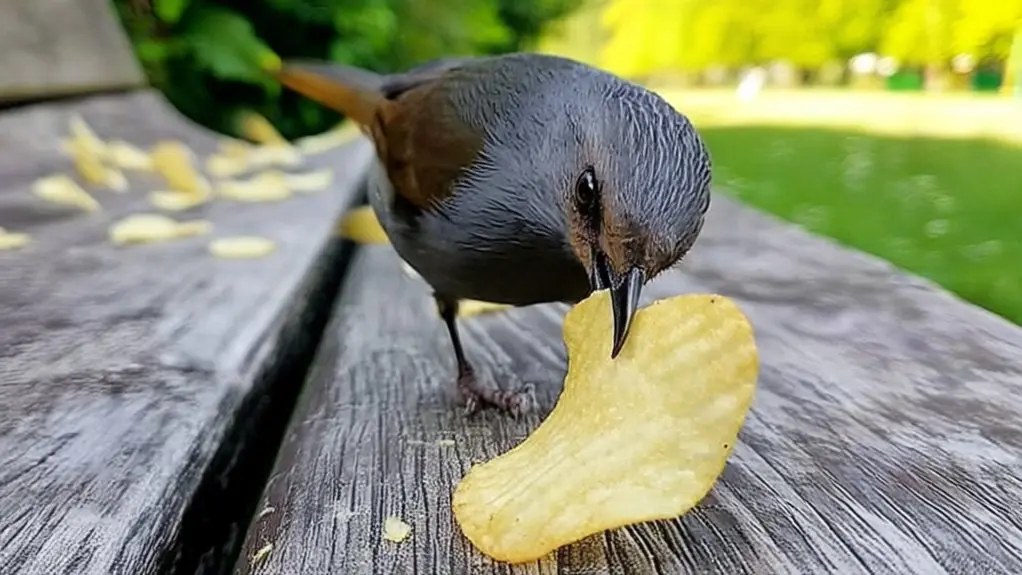
You shouldn’t feed your bird chips since their high salt, fat, and chemical content can harm its health. Chips disrupt electrolyte balance, cause dehydration, and lead to long-term issues like obesity and organ damage.
Birds’ bodies aren’t built to process these additives safely. This puts them at risk of seizures and respiratory problems.
Instead, provide natural, nutritious foods suited to their dietary needs. Learn how to recognize harmful effects and explore healthier snack alternatives to keep your bird safe and thriving.
Harmful Effects of Chips on Birds
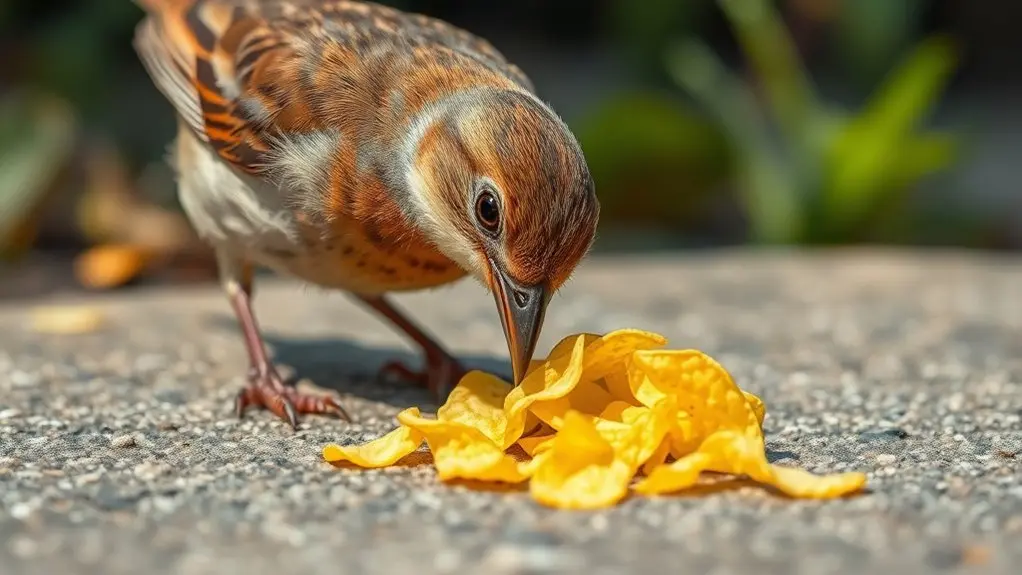
Although potato chips aren’t technically toxic to birds, you should avoid feeding them because of their high salt and fat content. These can damage avian health over time.
Regularly offering salty, processed chips disrupts their electrolyte balance and can cause dehydration since birds lack salt glands needed to get rid of extra sodium. This imbalance raises the risk of kidney strain and other organ issues.
Feeding birds salty chips disrupts their electrolyte balance, risking dehydration and kidney strain due to lack of salt glands.
Also, chips have artificial flavors and preservatives that might cause allergic reactions or toxicity in sensitive birds. Over time, eating such foods leads to dietary imbalances and obesity.
This messes with their natural nutritional needs and can cause chronic health problems. To keep birds healthy, it’s best to skip the chips and give them species-appropriate, nutrient-rich foods that fit their dietary needs.
Salt, Fat, and Additives in Chips
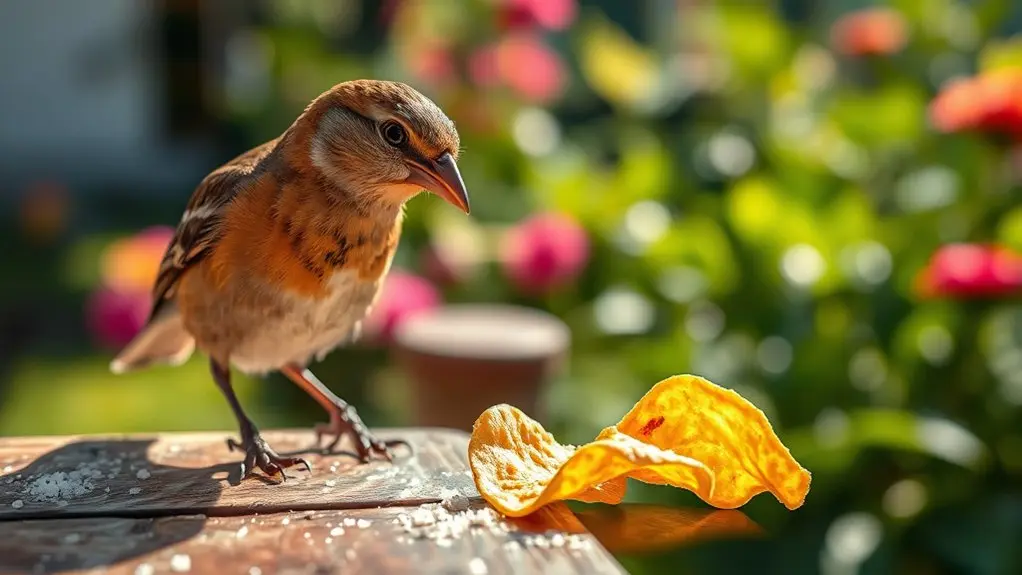
When you offer birds chips, you expose them to high salt levels their bodies can’t efficiently eliminate, leading to toxic buildup. Birds lack the specialized salt glands that sea birds use, making even small amounts of salt dangerous.
Chips also contain added fats and oils, which can disrupt digestion and promote unhealthy weight gain. These fats increase the risk of serious conditions like fatty liver disease.
Additionally, the additives and artificial flavorings in processed chips can irritate a bird’s sensitive respiratory and digestive systems. This combination of salt, fat, and chemicals creates a harmful dietary environment for birds.
To protect their health, avoid feeding chips, as their bodies aren’t equipped to handle these substances safely or efficiently. It’s just not worth the risk when it comes to our feathered friends.
Immediate vs. Long-Term Risks of Chips
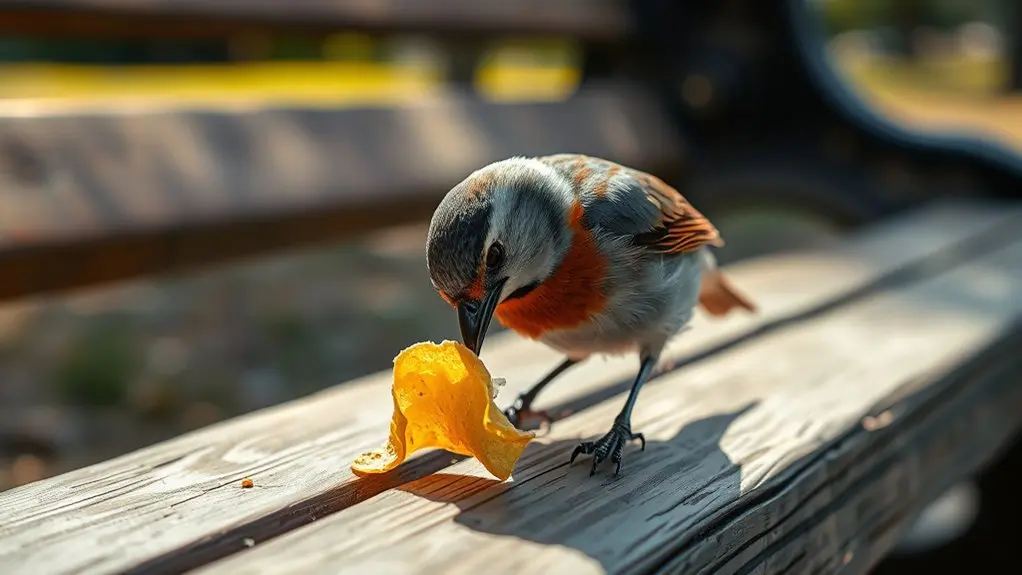
Even though eating chips occasionally won’t cause immediate harm to birds, you should understand the significant long-term health risks associated with regular consumption.
Chips contain high levels of salt, fats, and processed ingredients that don’t pose acute toxicity but can gradually damage a bird’s organs. When birds eat chips frequently, they risk developing chronic conditions like fatty liver disease and nutritional imbalances that impair overall health.
The immediate danger is minimal since chips aren’t directly toxic, but their cumulative effects over time can lead to serious organ damage. So, while a rare chip won’t kill a bird, repeated feeding sets the stage for progressive health issues that can shorten their lifespan and reduce crucial well-being.
Avoid making chips a regular part of a bird’s diet to protect its long-term health.
Why Birds Need Different Food Than Chips
You can’t feed birds chips because their nutritional needs are really different from what we snack on. See, birds do best when they eat a natural diet full of seeds, fruits, and veggies.
These foods give them the important nutrients that chips just don’t have. Plus, giving birds processed stuff that’s high in salt and fat can actually be pretty harmful to their health.
Nutritional Needs Differ
Because birds have specialized dietary requirements, feeding them chips can do more harm than good. Chips lack the essential nutrients birds need to thrive. When you offer chips, you’re not providing vitamins, minerals, and proteins crucial for health and energy.
You’re also missing out on balanced electrolytes necessary for metabolic functions and nutrients that support immune system strength. Plus, chips don’t have the components essential for feather quality and maintenance or elements critical to reproductive health.
Chips contain high salt, fat, and artificial additives, which disrupt these delicate nutritional balances. Birds rely on seeds, grains, fruits, and vegetables to meet these needs.
Processed snacks like chips simply don’t fit that profile. Regularly feeding chips can cause nutritional deficiencies and long-term health issues because birds’ bodies aren’t designed to process such foods.
Natural Diet Importance
Understanding why birds need different food than chips starts with recognizing what their bodies are designed to process. Birds require a natural diet rich in seeds, fruits, vegetables, and grains to fulfill their specific nutritional needs.
Unlike chips, which are high in salt, fats, and preservatives, natural foods provide essential nutrients that support proper digestion and overall health.
When you feed birds chips, you risk causing nutritional deficiencies and health problems like fatty liver disease. Their immune systems and energy levels depend on a balanced, species-appropriate diet that mimics what they’d consume in the wild.
So, offering natural foods isn’t just about feeding them—it’s about keeping them healthy.
By providing natural foods, you help maintain their overall well-being and guarantee they thrive, rather than just survive on unsuitable processed snacks.
It’s a simple way to show you care and make sure your feathered friends stay happy and strong.
Processed Food Risks
Although chips might seem like a harmless treat, their high salt, fat, and artificial additive content poses serious risks to birds. You need to understand that birds metabolize food differently from humans, making processed snacks like chips unsuitable.
Here’s why you should avoid offering chips to birds: Birds can’t process high salt levels, leading to dehydration and health problems. They lack salt glands to eliminate excess salt, which makes salt toxicity even worse.
Artificial flavors and preservatives can disrupt their sensitive digestive systems. Plus, excess fats and carbohydrates increase the risks of obesity and fatty liver disease.
Chips also cause dietary imbalances because they lack the essential nutrients birds need to stay healthy.
Feeding birds chips can really harm their well-being, so it’s best to provide natural, nutrient-rich foods instead. That way, you’re helping them stay strong and healthy.
Signs Your Bird Is Affected by Unhealthy Snacks
You might start to see some changes in your bird’s behavior, like it becoming sleepier than usual or moving around unsteadily.
Along with that, physical signs like lethargy, feather plucking, or unusual droppings can show up.
Catching these warning signs early on can really help you take care of any health problems before they get worse.
Behavioral Changes Noticed
How can you tell if your bird has been affected by unhealthy snacks like chips? Behavioral changes often provide the earliest clues. You might notice shifts in your bird’s normal conduct that suggest discomfort or dietary imbalance caused by junk food consumption.
Watch for these signs:
- Increased lethargy or decreased activity levels
- Reduced interest in regular, healthy foods
- Changes in vocalization, such as quietness or irritability
- Heightened aggression or territorial behavior
- Noticeable weight gain or bloating
These behavioral indicators show that your bird’s well-being is being affected by processed, high-fat, and salty snacks. Keeping an eye on these changes lets you step in early and prevent more serious health issues from developing.
Physical Health Symptoms
What physical signs indicate that your bird has been affected by unhealthy snacks like chips? Watch for lethargy, weakness, or reduced activity caused by high salt and fat.
Digestive issues such as diarrhea or abnormal droppings suggest digestive upset or fatty liver disease from overconsumption. Chronic exposure may also lead to poor feather condition or skin problems.
Immediate toxicity signs include seizures or respiratory distress, particularly if chips contain toxic residues like chocolate or avocado.
| Symptom | Possible Cause | Severity |
|---|---|---|
| Lethargy/Weakness | High salt/fat content | Moderate |
| Diarrhea/Abnormal droppings | Digestive upset or fatty liver | Moderate to severe |
| Seizures/Respiratory distress | Toxic ingredient ingestion | Severe, urgent |
Recognizing these signs early helps prevent long-term damage. So, keep an eye out and act quickly if you notice anything unusual.
Stopping Birds From Eating Chips and Junk Food
Although chips and other junk foods might seem like convenient treats, they pose significant health risks to birds and should be avoided near feeding areas. To effectively stop birds from eating these harmful snacks, you need to take deliberate actions that prioritize their well-being.
Avoid offering chips and remove any leftovers promptly to eliminate temptation. Educate others on the dangers of processed snacks high in salt and unhealthy fats. Substitute junk food with safe alternatives like fresh fruits, vegetables, or homemade bird treats.
Use distraction foods such as unsalted nuts or seeds to redirect birds’ attention. Supervise feeding times consistently and enforce boundaries to prevent access to chips.
Is It Okay to Give Chips Sometimes?
While giving birds chips occasionally mightn’t cause immediate harm, you should understand the potential long-term health risks involved. Chips contain high levels of salt, fat, and processed ingredients that can negatively affect your bird’s health over time.
Occasional chips may not harm birds immediately, but their salt and fat content pose long-term health risks.
Although chips aren’t toxic, frequent or regular treats can lead to issues like fatty liver disease and disrupt a balanced diet.
Small, infrequent portions may be tolerated temporarily, but you shouldn’t make chips a regular part of what your bird eats. It’s really best to prioritize a balanced, nutritious diet for their well-being.
Limiting treats like chips helps prevent dietary imbalances and health complications.
If you do offer chips sometimes, keep the portions minimal and rare to reduce risks. That way, you’re still treating your bird without putting their health in danger.
Safer Snack Alternatives Instead of Chips
If you want to treat your bird without the health risks associated with chips, choosing safer snack alternatives is essential. Chips contain salt, fat, and additives that can harm your bird’s health.
Instead, offer these healthier options:
Small pieces of fresh fruits like berries, grapes, or seedless apple slices are a great choice. You can also try unsalted, plain nuts such as almonds or walnuts, but make sure to give them in moderation.
Cooked vegetables like carrots, peas, or broccoli add nutrients and variety to their diet.
Whole grains like plain, cooked oats or brown rice can satisfy crunchy cravings.
Another option is commercial bird treats or specially formulated seed mixes designed for avian health.
These alternatives provide essential nutrients without harmful additives. They support your bird’s well-being while offering enjoyable flavors and textures.
Tips for Transitioning Birds Away From Chips
When you want to shift your bird’s diet away from chips, gradually introducing healthier, bird-safe treats is essential to guarantee acceptance. Start by replacing chips with small portions of dried fruits, vegetables, or whole grains. Present these nutritious options attractively to encourage your bird’s interest and reduce reliance on salty, processed snacks.
Gradually replace chips with appealing, nutritious treats like dried fruits and whole grains to encourage healthy eating habits.
Try to offer a variety of fresh, colorful fruits and vegetables regularly to make these choices more appealing. Limit or completely eliminate access to chips, substituting them with salt-free treats that meet your bird’s dietary needs.
Be patient and consistent because your bird might need some time to develop a taste for these healthier foods. This gradual, strategic progression supports better nutrition and long-term dietary improvement.
Keep at it, and your bird will thank you!
Frequently Asked Questions
Can Feeding Chips to Wild Birds Impact the Environment?
Yes, feeding chips to wild birds impacts the environment by promoting dependence on processed foods and disrupting natural foraging behaviors. It can also increase pollution and attract pests.
On top of that, it harms biodiversity through altered ecosystems and the introduction of toxins from improperly discarded waste. So, while it might seem like a kind gesture, it can actually cause quite a few problems for the environment.
Do Different Bird Species React Differently to Chips?
You might be surprised that smaller birds like parrots can suffer health issues from just a tiny chip. Different species react uniquely. Some tolerate chips poorly because they are sensitive to salt and fat.
Others show varied tolerance based on their size and diet. It really depends on the bird’s individual needs and biology. So, feeding chips to birds isn’t a one-size-fits-all kind of thing.
Are Baked Chips Safer Than Fried Chips for Birds?
You shouldn’t consider baked chips safer than fried chips for birds. Both contain high salt and artificial additives, which can pose similar health risks. Neither option provides essential nutrients.
Can Chips Cause Behavioral Changes in Birds?
You’ll quickly see chips can ruffle birds’ feathers by causing behavioral changes like increased aggression and loss of natural foraging instincts. Feeding them junk food regularly throws a wrench in their healthy, balanced diet and social habits.
It’s not just about what they eat, but how it affects their behavior. When birds snack on chips, it can lead to some pretty noticeable changes. They might get more aggressive or forget how to find food the way they normally would.
How Should I Dispose of Leftover Chips to Protect Birds?
You should seal leftover chips in trash bins and avoid leaving them exposed. Dispose of them properly in compost or trash, and keep outdoor areas clean to prevent birds from accessing harmful salty, processed snacks.
Keeping chips sealed up and out of reach really helps protect birds. They might be tempted by the salty taste, but it’s not good for their health. So, make sure to tidy up any leftovers quickly. This way, you’re doing your part to keep wildlife safe and happy.
Conclusion
You shouldn’t feed your bird chips, no matter how tempting it seems. Think of it as giving them a medieval sword instead of a safe toy. The salt, fat, and additives can harm their health both immediately and over time.
Instead, opt for safer, bird-friendly snacks to keep them thriving. If you catch your bird nibbling on chips, gently redirect their diet to protect their well-being. This way, you support a healthier, happier feathered friend.