
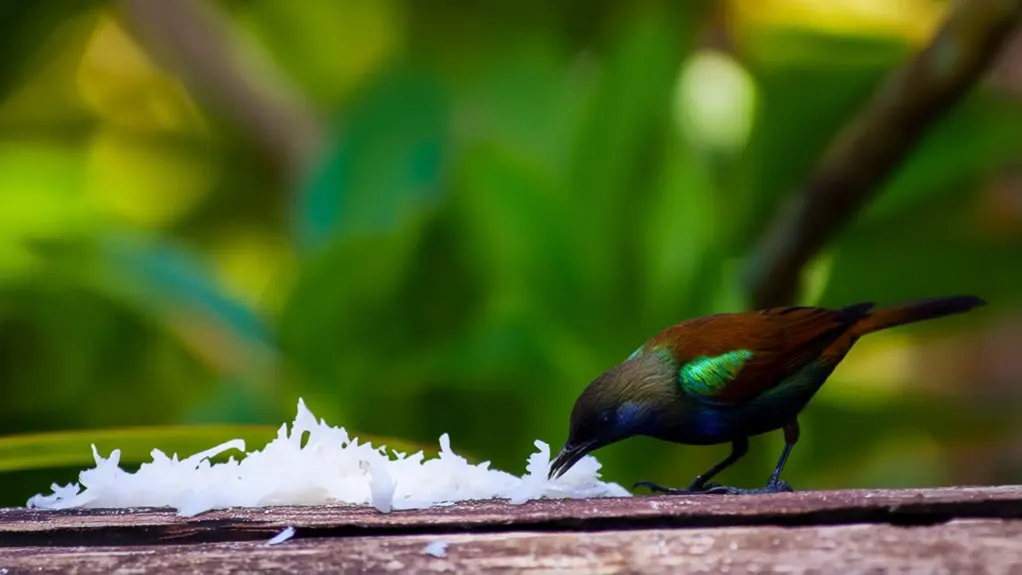
You shouldn’t feed birds dried coconut flakes because they absorb moisture and swell inside their digestive system. This can cause dangerous blockages and discomfort. These blockages might lead to severe health issues or even death.
Desiccated coconut flakes are especially risky due to their dry, granular texture that expands easily. Instead, you can opt for fresh, unsweetened coconut meat or other natural foods that support safe digestion and provide energy.
If you want to know more about safer feeding options and why coconut flakes pose such risks, keep exploring this topic. It’s important to keep your feathered friends healthy and happy!
What Are Coconut Flakes?
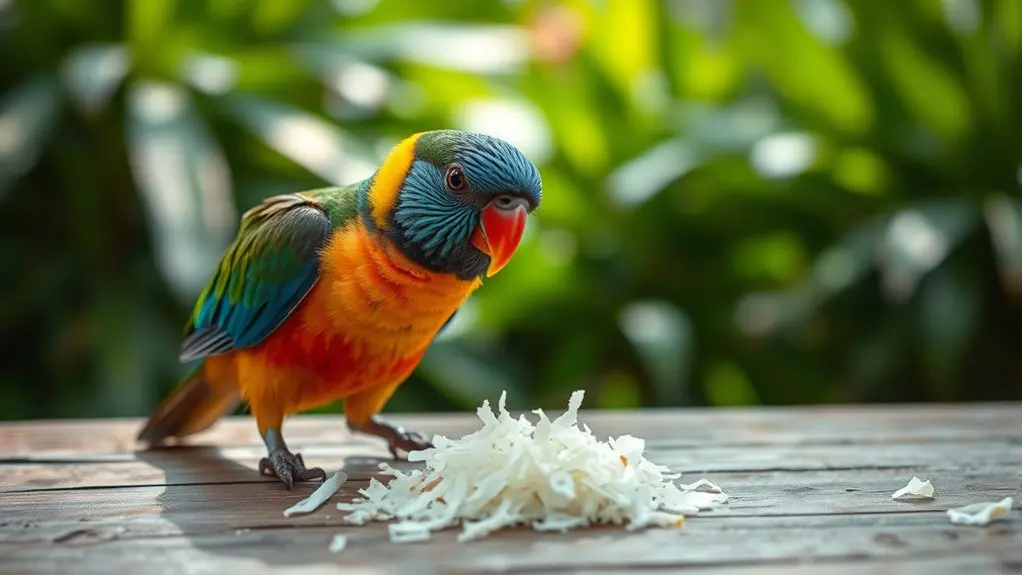
Although coconut flakes are commonly found in many kitchens, you mightn’t know that they consist of dried, shredded pieces of coconut meat used primarily in baking and cooking. These flakes come in two forms: freshly grated or desiccated, with the latter being more prevalent in stores.
Desiccated coconut is dried thoroughly, resulting in a longer shelf life and a granular texture that varies from fine and powdery to larger, chunkier pieces.
Nutritionally, coconut flakes are rich in healthy fats, dietary fiber, and essential minerals such as manganese and copper.
The size and moisture content affect their culinary uses and texture. Understanding these characteristics helps you appreciate why coconut flakes are valued ingredients, distinct from fresh coconut meat or other coconut products commonly used in cooking.
Why People Feed Birds Coconut Flakes
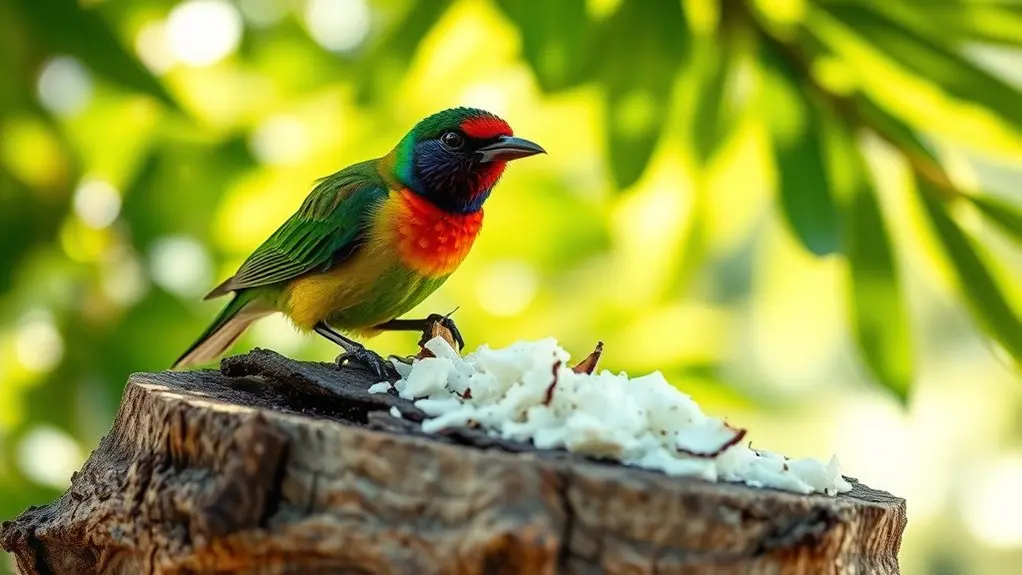
You feed birds coconut flakes because they’re a natural source of healthy fats that birds need for energy. Plus, many bird lovers like using coconut flakes since they attract a variety of species, like woodpeckers and tits.
What’s great is that coconut flakes don’t contain any harmful additives. That’s why they’ve become such a popular, nutritious, and safe alternative to other less suitable foods.
Nutritional Appeal To Birds
Because coconut flakes contain healthy fats and oils, they provide birds with a quick and efficient energy source that’s crucial for their survival. These fats are similar to components found in the natural diets of many wild birds, especially those that eat fruit and seed husks rich in lipids.
The high fat content helps birds regulate their body heat and keep their energy up, which is super important during colder times.
And unlike desiccated coconut, fresh coconut flakes don’t expand in a bird’s stomach, so they’re a safer option.
When you offer coconut flakes, you’re giving birds essential fats that support their feather condition and overall health.
This makes coconut flakes a great supplement that fits well with what many bird species need in their diet.
Popularity Among Bird Feeders
The nutritional benefits of coconut flakes have made them a favored choice among bird feeders seeking to support local wildlife. When you add coconut flakes to feeders, you provide birds with healthy fats essential for energy, especially during colder months. Their natural, minimally processed form appeals to birders aiming to offer wholesome, unrefined food sources.
Coconut flakes also easily blend into homemade seed mixes, increasing their accessibility for various bird species. However, you should exercise caution, as dried coconut flakes can swell in a bird’s stomach, potentially causing discomfort or health issues.
- Provide healthy fats that boost energy
- Serve as a natural, minimally processed treat
- Easily incorporated into homemade seed mixes
- Useful supplement during winter for energy demands
This balance of benefits and risks defines their popularity among bird enthusiasts. So, while they’re great to use, just keep an eye on how much you offer.
How Coconut Flakes Harm Birds
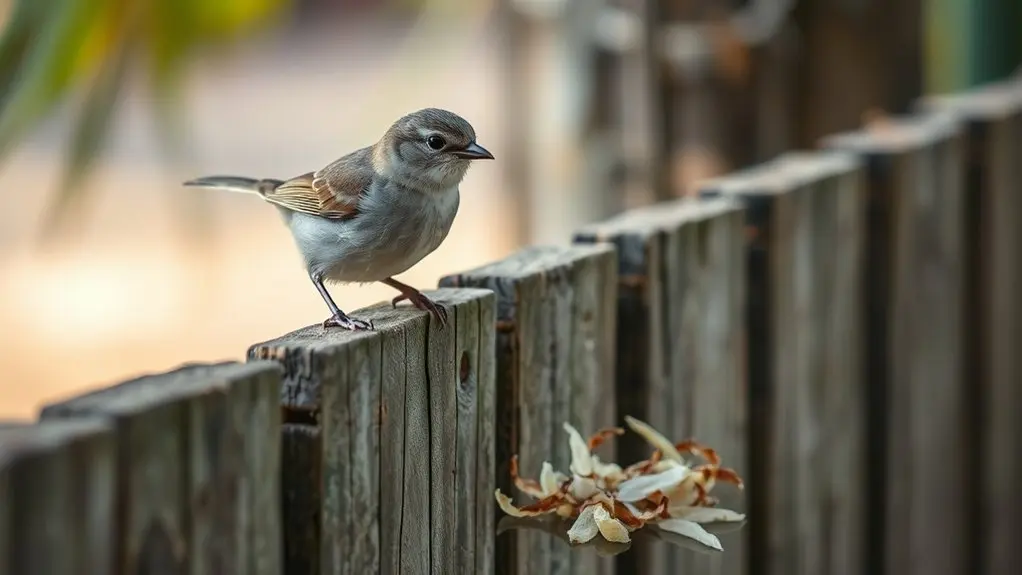
How exactly do coconut flakes pose a threat to birds? When birds consume dried coconut flakes, these flakes can absorb moisture and swell inside their digestive system. This expansion may cause internal blockages, leading to pain, discomfort, and potentially severe health complications.
Unlike fresh coconut, which is safe for birds, desiccated coconut flakes’ swelling nature increases the risk of digestive issues. If a bird ingests a large quantity, the risk of internal injury and blockage intensifies, which can be fatal.
Why Desiccated Coconut Is Dangerous to Birds
When birds eat desiccated coconut, it absorbs moisture in their stomachs and expands, which can cause dangerous internal blockages. This swelling can lead to severe discomfort and pain, potentially resulting in fatal outcomes if consumed in large amounts.
Unlike fresh coconut, desiccated coconut’s dried form poses a significant risk because it swells inside the digestive tract.
Consider these key dangers: the expansion of desiccated coconut can cause bowel obstructions. Internal blockages make it hard for birds to absorb nutrients and properly digest their food.
Plus, the swelling leads to distress and pain for the bird.
If they eat large quantities, the risk of fatal complications goes up. So, it’s really safest to avoid giving dried shredded coconut to birds altogether to keep their digestive health safe.
Coconut Flakes and Bird Health Problems
Coconut flakes can pose serious health risks to birds because they tend to swell after being eaten. This can cause internal blockages and digestive distress. When birds eat desiccated coconut flakes, these flakes soak up moisture and expand in the stomach.
This expansion might lead to painful impactions or even choking hazards. It can mess with normal digestion, causing discomfort or severe intestinal blockages. In some cases, it can be fatal.
Fresh coconut meat is safe in moderation, but dried or shredded coconut flakes are risky because they expand. Feeding birds coconut flakes, especially in large amounts, increases the chances of impaction and digestive problems.
To keep your bird healthy, it’s best to avoid giving them coconut flakes altogether. Instead, offer small amounts of natural, unsweetened coconut meat, which doesn’t have the same swelling risk.
How to Spot Coconut Flake Poisoning in Birds
Recognizing the signs of poisoning caused by coconut flakes can help you act quickly to protect your bird’s health. Coconut flakes, especially desiccated ones, may swell inside the bird’s stomach. This can lead to blockages or discomfort.
Watch for these symptoms: lethargy or unusual inactivity, loss of appetite, difficulty breathing or labored respiration, and abdominal bloating or visible swelling.
If you notice any of these signs after your bird eats coconut flakes, seek veterinary care immediately. Internal obstruction can cause severe distress and might even result in sudden death if untreated.
Prompt intervention is really important to prevent fatal outcomes and keep your bird well. Keeping a close eye on your bird after exposure helps you respond quickly if something goes wrong.
Safe Alternatives to Coconut Flakes for Birds
Although coconut flakes can pose health risks to birds, you can provide safe alternatives that offer similar nutritional benefits. Fresh coconut is an excellent option, supplying healthy fats without the risk of swelling in your bird’s stomach.
Avoid unsweetened dried coconut since it can rehydrate and expand inside the digestive system, causing potential harm. Instead, offer small pieces of whole or shredded fresh coconut to meet dietary needs safely.
Additionally, coconut halves or shells can serve as natural feeders to attract wild birds without health risks.
Always guarantee the coconut products you provide are fresh and unsweetened, maximizing safety and nutritional value for your feathered friends. This careful selection supports bird health while offering a beneficial dietary supplement.
Choosing Nutritious Foods Instead of Coconut Flakes
When selecting foods for wild birds, you should prioritize fresh, natural options that closely resemble their typical diet. Dried or desiccated coconut flakes can swell in a bird’s stomach, posing health risks.
Instead, choose foods that provide essential nutrients and energy without additives or preservatives. Consider these nutritious alternatives:
Opt for nutrient-rich, additive-free foods that deliver energy and support natural bird diets.
- Fresh coconut, which avoids digestive complications linked to dried flakes
- Unsalted nuts, seeds, and suet, rich in fats and proteins for sustained energy
- Fresh fruits, vegetables, and mealworms, supplying vitamins and minerals crucial for health
- Whole, natural foods that mimic birds’ natural dietary intake and promote ideal digestion
Feeding Birds Safely Without Coconut Flakes
Avoid feeding wild birds desiccated coconut flakes. They tend to expand in the stomach, which can cause serious internal blockages.
Instead, offer fresh coconut, which doesn’t swell during digestion and poses far fewer health risks.
Dried flakes can cause pain, discomfort, and potentially fatal digestive issues. So, it’s best to steer clear of shredded or dried coconut altogether.
To feed birds safely, provide natural, unsweetened coconut halves. These allow birds to access nutritious flesh without risking internal blockages.
By choosing fresh coconut pieces over flakes, you support birds’ health while attracting them to your feeding area.
This approach minimizes digestive complications and ensures that you nourish wild birds responsibly.
Summary: Protecting Birds From Harmful Coconut Products
Since desiccated coconut flakes expand inside birds’ stomachs, feeding them these products can cause dangerous internal blockages and even death. To protect birds, you need to be cautious about the coconut forms you offer.
Desiccated coconut flakes can expand inside birds, causing dangerous blockages and potentially fatal outcomes.
Fresh coconut is safe, but dried shredded or desiccated coconut flakes pose significant health risks because they swell up.
Avoid using coconut flakes in bird feeders altogether. Instead, consider these guidelines: provide natural, unsweetened coconut halves or fresh pieces. Never offer dried or processed coconut flakes to wild or pet birds.
Remember, desiccated flakes cause digestive discomfort and can lead to fatal blockages. So, it’s best to prioritize bird-safe foods that don’t swell or cause internal harm.
This way, you keep your feathered friends happy and healthy.
Frequently Asked Questions
Can Coconut Oil Be Safely Given to Birds?
You can give birds small amounts of unprocessed coconut oil safely, but you shouldn’t overdo it.
Too much saturated fat risks weight gain and health problems, so always consult your vet before adding it to their diet. It’s better to be safe than sorry when it comes to your feathered friends!
Are Fresh Coconut Pieces Better Than Coconut Flakes for Birds?
Yes, fresh coconut pieces are better for birds because they don’t swell in the stomach like flakes. You’ll provide safer, moisture-rich food without additives. This reduces the risk of internal blockages and promotes healthier fat intake.
How Do Wild Birds Naturally Consume Coconut in Their Habitat?
Birds break open coconut shells using their strong beaks and feet. They peel the husks to reach the flesh inside.
As the saying goes, “Where there’s a will, there’s a way.” So, they skillfully forage fallen coconuts. It’s pretty impressive how clever they are at getting to their food!
What Are the Signs of Allergic Reactions to Coconut in Birds?
You’ll notice allergic reactions in birds as itching, swelling, redness, and respiratory distress like sneezing or coughing.
They might also have gastrointestinal upset such as vomiting or diarrhea.
In severe cases, you could see lethargy or even anaphylaxis, which needs urgent veterinary care.
Can Coconut Flakes Affect Different Bird Species Differently?
Just like a key fits certain locks, coconut flakes affect bird species differently. Larger birds handle them better, while small songbirds risk digestive blockages due to their delicate systems and limited enzyme capabilities.
It’s kind of like how some foods are easy for us to digest, but others can upset our stomachs. So, when feeding birds, it’s good to keep their size and digestive needs in mind. That way, you’re helping, not harming.
Conclusion
Feeding birds coconut flakes might seem like a harmless treat, but it’s a double-edged sword. While natural coconut can offer some nutrients, desiccated or processed flakes often pose health risks. They can disrupt their delicate systems like a storm unsettling calm seas.
To truly support bird health, choose safer, nutrient-rich alternatives and avoid potentially harmful coconut products. By doing so, you help protect these creatures. This way, their well-being thrives in a balanced, safe environment.