
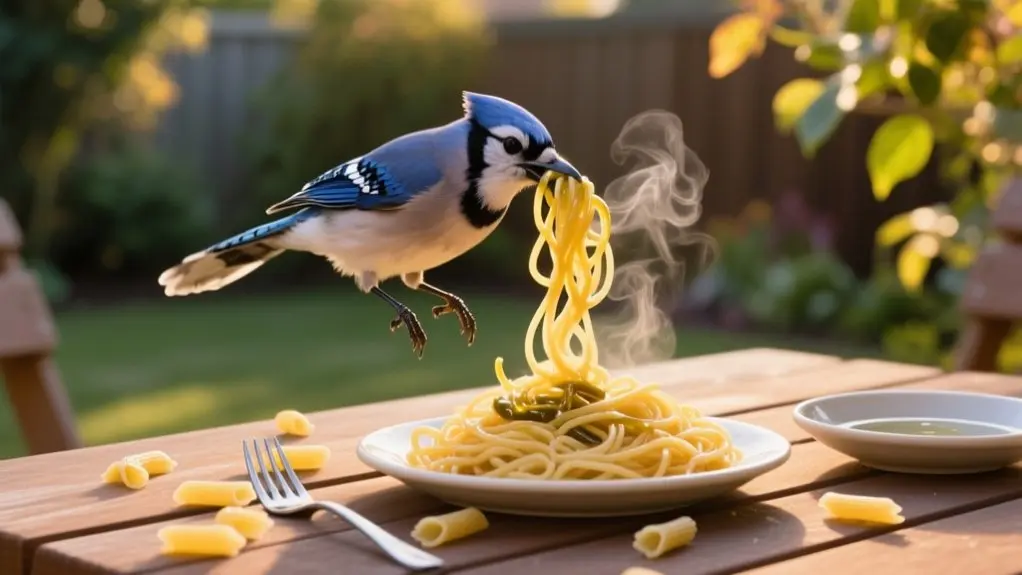
You can safely offer your backyard birds plain, cooked spaghetti in small amounts as an energy boost, especially in colder months. Make sure it’s fully cooled, unsalted, and cut into small pieces to avoid choking.
Avoid sauces or seasonings since those can harm birds’ health. Monitor leftovers to prevent spoilage and pests. Used properly, cooked pasta can complement their diet, but there’s more to know about safe feeding practices and bird health if you want to do it right.
Can Birds Safely Eat Cooked Spaghetti?
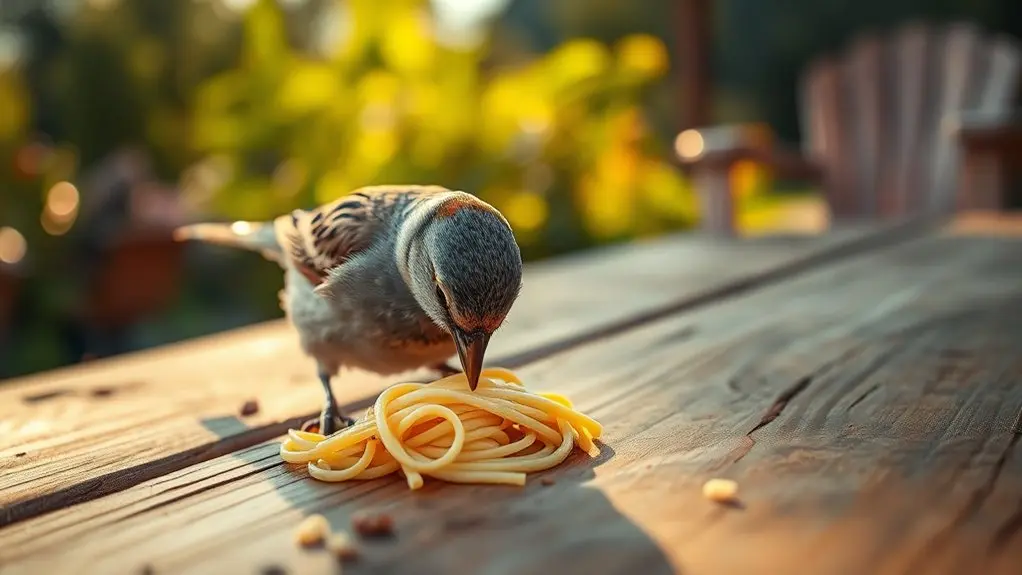
How safe is it to feed birds cooked spaghetti? You can safely offer birds plain, cooked pasta in moderation through your bird feeders. This treat provides carbohydrates that help boost their energy, especially during colder months.
However, you must avoid seasoned spaghetti. Salt, sauces, and additives can harm birds and upset their digestive systems.
Avoid seasoned spaghetti—salt, sauces, and additives can harm birds and disrupt their digestion.
To make it easier for birds to eat, cut the cooked pasta into smaller pieces. Remember, cooked spaghetti should be an occasional treat, not a staple, since relying on it too much can cause nutritional imbalances.
Always monitor how much you provide to prevent leftover food from spoiling and attracting pests, which poses health risks to wildlife.
Using bird feeders responsibly guarantees the birds enjoy safe and healthy feeding.
Why Plain Cooked Pasta Is Best for Birds
When you choose to feed birds cooked spaghetti, sticking to plain pasta guarantees their safety and health.
Plain cooked pasta provides wild birds with a source of carbohydrates, giving them essential energy, especially in colder months.
Avoid adding sauces or seasonings, as these can upset their digestive systems.
Cut the pasta into small, manageable pieces to help wild birds eat it easily and minimize waste.
Remember, plain cooked pasta should only complement their natural diet and not replace it.
When placing pasta in bird feeders, keep portions moderate and ascertain the food is fresh to prevent spoilage.
Doing so attracts more birds while supporting their nutritional needs without risking harm.
What Types of Pasta Are Safe for Birds?
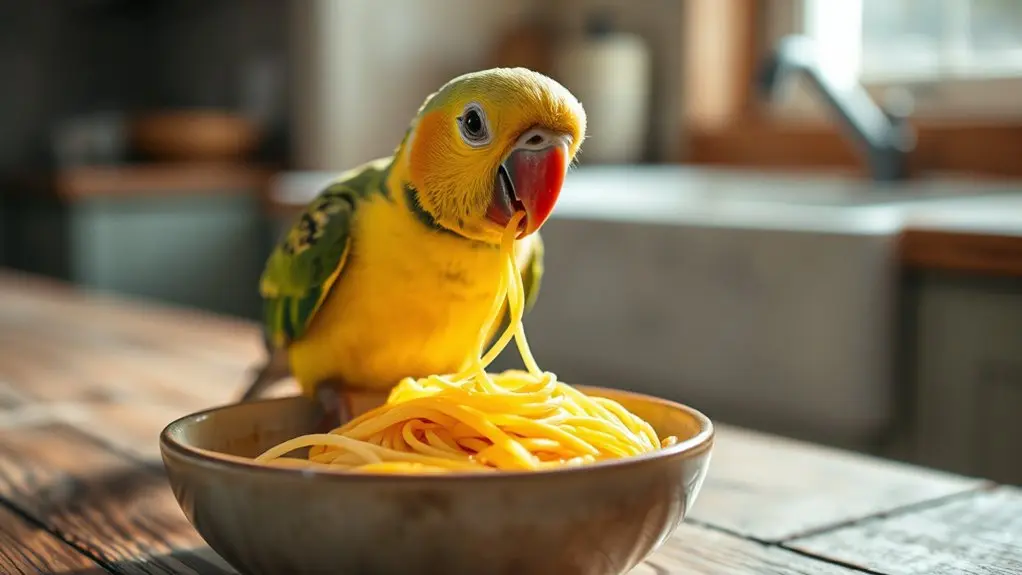
Although many types of pasta exist, only plain, cooked varieties like spaghetti, macaroni, or penne are safe to offer birds in moderation. When filling your bird feeders, avoid sauces or seasonings that can harm your feathered friends.
Uncooked pasta is a no-go since it’s tough to digest. To help your birds enjoy pasta safely, cut it into small pieces before placing it in feeders.
| Pasta Type | Cooked? | Safe for Birds? |
|---|---|---|
| Spaghetti | Yes | Yes |
| Macaroni | Yes | Yes |
| Penne | Yes | Yes |
| Lasagna | No | No |
Stick to these safe pasta types, and your bird feeders will attract happy, healthy visitors.
How to Prepare Cooked Spaghetti for Birds
When you’re getting cooked spaghetti ready for birds, make sure it’s plain—no sauces or seasonings at all. You don’t want to give them anything that might upset their little tummies.
Next, cut the pasta into small, manageable pieces. This way, the birds can easily pick it up and enjoy their meal without any trouble.
Keeping it simple and bite-sized is really the best way to go for their safety and enjoyment.
Plain Pasta Only
Since birds have sensitive digestive systems, you should only offer them plain, cooked spaghetti without any sauces or seasonings.
Plain pasta is safe and easy for birds to digest, making it a suitable occasional treat at your bird feeders.
Avoid any additives that could upset their stomachs or cause harm.
When preparing cooked spaghetti for birds, confirm it’s fully cooled and free from oils or salt.
Serve it sparingly alongside their regular diet of seeds, fruits, and nuts to keep their nutrition balanced.
Always keep an eye on any leftover plain pasta, especially in warm weather, to prevent spoilage that could pose health risks.
Small Bite Sizes
Cutting cooked spaghetti into small, manageable pieces makes it easier for birds to eat and reduces the risk of choking. When adding pasta in bird feeders, focus on small bite sizes to guarantee birds can comfortably consume the plain unseasoned spaghetti without struggling.
Using plain, unseasoned spaghetti is essential since any sauces or seasonings can upset their digestive systems. By preparing spaghetti this way, you help maintain their health and encourage them to enjoy a varied diet rather than relying solely on pasta.
Also, observe how birds respond to different sizes and adjust accordingly to enhance their feeding experience.
Avoid Seasonings
Although cooked spaghetti might seem like a harmless treat, you should always serve it plain to your feathered friends. Pasta is a good occasional snack, but you must avoid seasonings to keep birds healthy.
Seasoned or sauced pasta can upset their digestive systems and cause gastrointestinal issues.
When preparing spaghetti for feeders, follow these steps:
- Serve only plain pasta without salt, oil, or sauces.
- Cut the spaghetti into small pieces to prevent choking and make eating easier.
- Offer spaghetti sparingly as a treat, not a main meal, and monitor leftovers to avoid spoilage.
How Much Cooked Spaghetti Should You Feed Birds?
A few tablespoons of cooked spaghetti per feeding session usually meet the needs of the birds visiting your yard.
When filling bird feeders this spring, remember to offer small portions to avoid waste and spoilage.
Every bird has different appetites, so start with a modest amount and observe how much they eat.
If you notice leftover spaghetti, reduce the quantity next time to prevent uneaten food from attracting pests or molding.
Treat cooked spaghetti as an occasional snack rather than a main food source to keep the birds’ diet balanced and healthy.
Always serve plain spaghetti without sauces or seasonings to support good digestion.
How Cooked Spaghetti Boosts Birds’ Energy
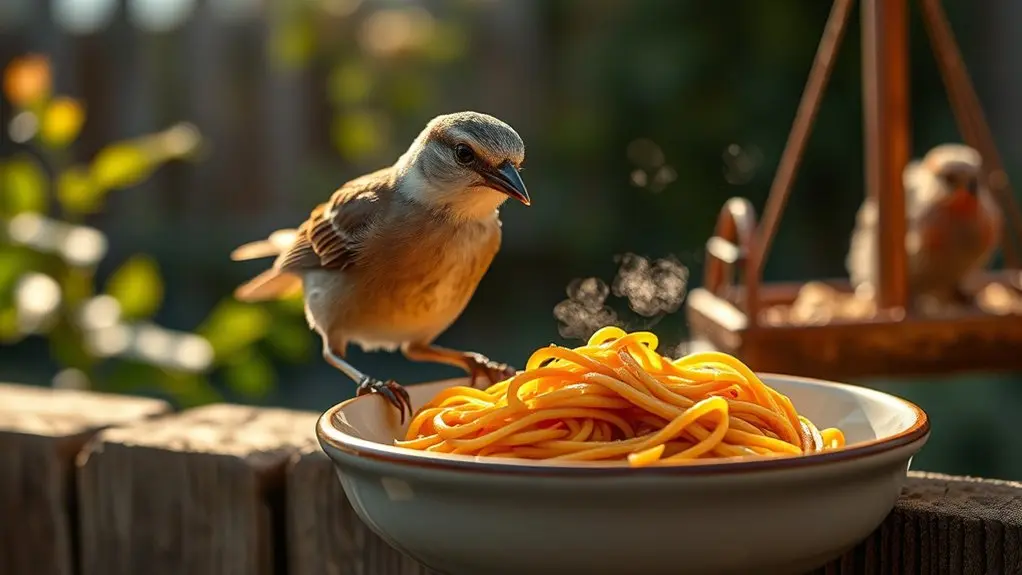
When you offer cooked spaghetti to birds, you provide them with a quick source of carbohydrates that fuels their energy needs, especially during colder months.
This simple food acts as an effective energy source, essential for seasonal feeding when natural supplies dwindle.
By incorporating cooked spaghetti into their diet, you help maintain their dietary balance while supporting their survival.
Here’s how it boosts energy:
- The high caloric content helps birds maintain body heat and regain strength in harsh weather.
- It provides a fast-acting carbohydrate boost, perfect for immediate energy demands.
- Serving plain, cooked spaghetti attracts diverse bird species, enhancing your garden’s ecosystem.
What Are the Health Risks of Feeding Seasoned or Sauced Pasta?
You really shouldn’t feed birds pasta that’s seasoned or covered in sauce. The high salt content in these foods can lead to some serious health problems for them.
On top of that, many sauces contain ingredients like garlic or onions, which often upset a bird’s digestive system. It’s pretty common for birds to get sick after eating these.
And another thing to keep in mind is that leftover sauced pasta spoils quickly. This can attract pests, which ends up causing even more trouble for both you and the birds.
Salt Toxicity Risks
Although seasoned or sauced pasta might seem like a tasty treat for birds, feeding it to them can cause serious health problems because of its high salt content. Birds are very sensitive to salt, and even small amounts can harm their kidney health.
When you feed them salty pasta, you risk dehydration that can quickly become life-threatening.
Here’s what happens when birds consume too much salt:
- Their kidneys struggle to filter excess salt, which can lead to damage.
- They become excessively thirsty but may not always have enough water to rehydrate.
- If salt toxicity gets worse, symptoms like lethargy and neurological issues may develop.
To keep birds safe, avoid giving them seasoned or sauced pasta. Instead, stick to plain, cooked spaghetti.
Digestive Upset Concerns
Since many seasonings and sauces contain ingredients that are toxic or hard for birds to digest, feeding them seasoned or sauced pasta can cause serious digestive upset.
Birds rely on specific digestive enzymes to break down their food, and ingredients like garlic or onion interfere with this process, leading to gastrointestinal distress.
Moreover, the strong flavors and additives can disrupt birds’ natural food preferences, causing them to avoid healthier options essential for balanced avian nutrition.
High salt and harmful compounds in sauces can further exacerbate digestive issues, risking dehydration and nutrient imbalances.
To protect your bird’s health, always offer plain cooked pasta and avoid introducing anything that might hinder their delicate digestive system or nutritional needs.
Spoilage And Pest Attraction
When you feed birds seasoned or sauced pasta, you risk attracting pests like rats and insects that thrive on leftover food. This not only disrupts your backyard’s hygiene but can also harm the birds.
To minimize these risks, focus on:
- Spoilage prevention – Remove uneaten pasta promptly to stop bacteria buildup and reduce health risks for birds.
- Pest management – Avoid feeding sauced pasta outdoors because the spices and salt attract unwanted pests, increasing infestations.
- Hygiene practices – Clean feeding areas regularly to discourage pests and maintain a safe environment for birds.
Alternatives to Cooked Spaghetti for a Balanced Bird Diet
If you want to provide a balanced diet for birds, you should offer a variety of seeds like sunflower, millet, and nyjer instead of cooked spaghetti. These seeds deliver essential nutrients and energy, highlighting the seed variety benefits that support overall bird health.
Fresh fruits like apples, pears, and soft berries serve as excellent hydration sources, supplying vitamins and moisture birds need.
For added energy, especially in colder months, suet balls and seed cakes offer high suet nutrition rich in fats and proteins.
Furthermore, cooked rice and boiled potatoes can be safe carbohydrate alternatives.
Always verify any kitchen scraps are free from salt, sauces, or seasonings to protect bird health and maintain a truly balanced diet.
Using Bird Feeders to Serve Cooked Pasta Safely
Although cooked spaghetti isn’t a typical bird food, you can safely serve it using bird feeders by cutting it into small pieces that birds can easily eat.
When exploring feeder designs for bird feeding pasta types like spaghetti, keep these tips in mind:
Use feeders with small mesh or compartments to keep the pasta in place while allowing birds easy access.
Offer plain, cooked spaghetti without sauces or seasonings to avoid upsetting birds’ diets.
Monitor the quantity to prevent waste and spoilage, especially in warm weather, and clean feeders regularly to maintain hygiene.
How to Avoid Pest Problems When Feeding Cooked Pasta
To avoid pest problems when feeding cooked pasta, try serving it in small portions and make sure to clean the feeding area regularly.
You don’t want to leave pasta out too long, especially when it’s warm outside, because it can spoil and attract unwanted pests.
If you have any leftovers, store them in sealed containers.
Also, keep an eye out for signs of rodents or insects so you can adjust your feeding routine if needed.
That way, you’ll keep things tidy and pest-free!
Preventing Food Spoilage
When feeding cooked pasta to birds, you should offer only small portions that they’ll eat within a few hours to prevent spoilage and pest problems.
Using effective food preservation techniques and portion control strategies helps keep the feeding area clean and safe. Follow these tips:
Store leftover pasta in sealed containers placed in a cool, shaded spot as a safe storage method to slow spoilage.
Regularly inspect feeding spots and promptly remove any uneaten pasta to avoid attracting pests.
Use feeders with small mesh openings to keep pasta dry and encourage quick consumption.
Managing Pest Attraction
Since cooked pasta can quickly spoil and attract unwanted animals, you should serve it in small portions and clean feeding areas regularly. This simple pest control strategy minimizes leftovers that draw pests.
Keep a close eye on feeding frequency to avoid overfeeding, which increases the risk of attracting wildlife like rodents and insects. After feeding, promptly remove any uneaten pasta and clean the area thoroughly to eliminate food remnants that pests seek.
Store unused cooked pasta in sealed containers to keep it fresh and inaccessible to pests. Feeding during cooler weather also helps, as lower temperatures slow spoilage and reduce insect activity.
How to Monitor Birds’ Responses to New Foods
Although introducing new foods like cooked spaghetti can be exciting, you need to carefully watch how birds react to guarantee they accept it safely.
Monitoring techniques help you understand bird behavior and food preferences accurately.
- Observe initial reactions: Note if birds approach the spaghetti with curiosity or avoidance, revealing their interest or hesitation.
- Track feeding patterns: Monitor how often and how long birds visit the food. Frequent visits suggest they enjoy the new option.
- Check leftovers and behavior shifts: Discarded food can signal dislike, while changes like increased vocalizations hint at excitement or competition over the spaghetti.
Tips for Maintaining Bird Health When Feeding Pasta
To keep your birds healthy while feeding them pasta, you’ll want to serve cooked spaghetti plain and cut into small pieces for easy digestion.
Follow pasta feeding guidelines by limiting portions since pasta shouldn’t replace their balanced diet of seeds, nuts, and fruits.
Avoid adding sauces or seasoning, as these can upset their digestive systems. Always check for spoilage to prevent health risks and pests.
Pay attention to bird dietary preferences by observing how they respond to pasta as a healthy treat option.
Regularly clean feeders to maintain hygiene and reduce contamination.
Incorporating these tips guarantees your birds enjoy pasta safely without compromising their nutrition or well-being.
Frequently Asked Questions
Can Baby Birds Eat Cooked Spaghetti?
Yes, baby birds can eat cooked spaghetti, but you need to follow feeding guidelines carefully.
Cooked pasta provides carbohydrates, but it lacks essential nutrients for baby bird nutrition.
Make sure the spaghetti is plain, unseasoned, and cut into small pieces to avoid digestive issues.
Don’t rely on it as their main food source. Focus on a balanced diet to support healthy growth and development.
Monitor their health closely when introducing new foods.
Is It Safe to Feed Spaghetti to Wild Migratory Birds?
You watch migratory birds follow their migration patterns, seek seeds, fruits, and insects aligned with their dietary preferences, and display natural feeding behavior honed by evolution.
It’s not safe to feed them spaghetti regularly because it disrupts their diet and can cause nutritional imbalances.
While an occasional plain noodle won’t harm, relying on spaghetti risks their health and interferes with their natural instincts, so stick to foods that support their true needs.
How Long Can Cooked Spaghetti Be Left Outdoors for Birds?
You can leave cooked spaghetti outdoors for birds up to 2 hours in moderate outdoor temperatures, considering their spaghetti texture preferences for slightly soft pasta.
However, warmer conditions speed up food spoilage risks, cutting that time to just 1 hour.
Beyond these limits, the spaghetti’s texture worsens and harmful bacteria grow, attracting pests.
Can Feeding Spaghetti Affect Birds’ Natural Foraging Habits?
You might be surprised to know that up to 70% of a bird’s daily foraging behavior can change with easy food sources like cooked spaghetti.
Feeding spaghetti can disrupt their natural feeding habits, reducing dietary diversity because they rely on this carbohydrate-rich food instead of varied, nutritious options.
When you offer spaghetti regularly, you alter their feeding habits and risk causing long-term shifts in how and where birds search for food in the wild.
Are There Specific Bird Species That Should Avoid Spaghetti?
You should avoid feeding spaghetti to small birds like finches and sparrows, as their bird digestive systems aren’t built for processed carbs.
Young birds, such as chicks, struggle with spaghetti’s texture, risking choking.
Seed-eaters and nectar feeders, like hummingbirds, won’t benefit from spaghetti’s nutritional value and might face imbalances.
Always follow feeding guidelines birds need to stay healthy, offering species-appropriate foods instead of relying on human pasta.
Conclusion
Feeding birds cooked spaghetti is like offering a gentle handshake, simple, safe, and thoughtful. Just as a friend appreciates plain pasta over a heavy sauce, birds thrive best with plain, cooked spaghetti.
Remember, a small serving keeps them happy without overwhelming their diet. One backyard birdwatcher noticed their finches enthusiastically nibbling plain spaghetti.
It’s a reminder that with care and moderation, you’re sharing more than food. You’re building trust and nurturing nature’s delicate balance.