
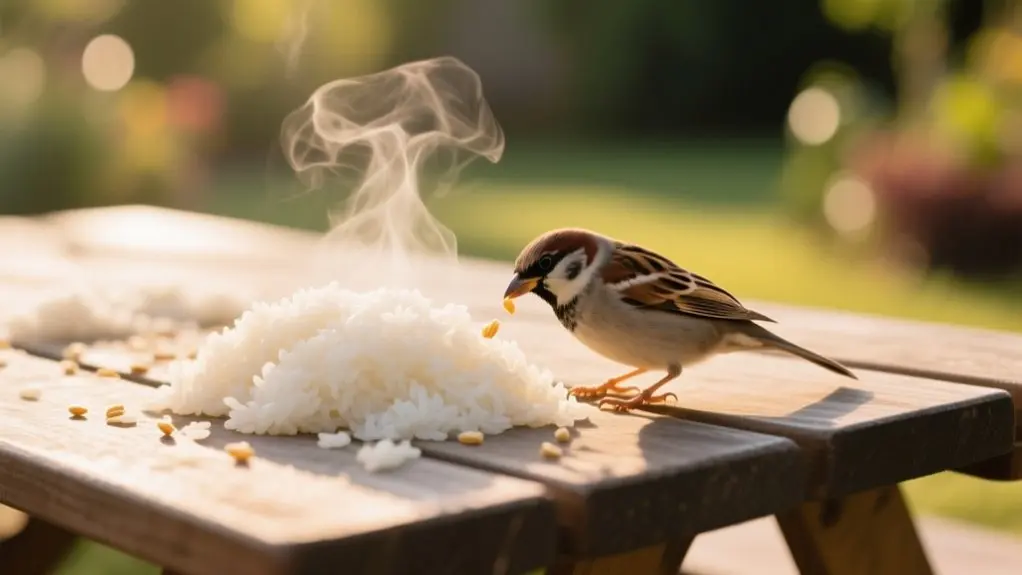
You can safely offer birds cooked white rice occasionally. Just make sure it’s plain and fully cooked without salt or seasonings. Rinse it well and serve it cooled to prevent burns.
Many birds like House Sparrows, Blackbirds, and pigeons enjoy it, especially in winter when energy needs rise. Remember, rice shouldn’t replace their regular diet due to limited nutrients.
If you want to understand the benefits, risks, and best ways to feed it, there’s more useful info ahead.
Is Cooked White Rice Safe for Birds?
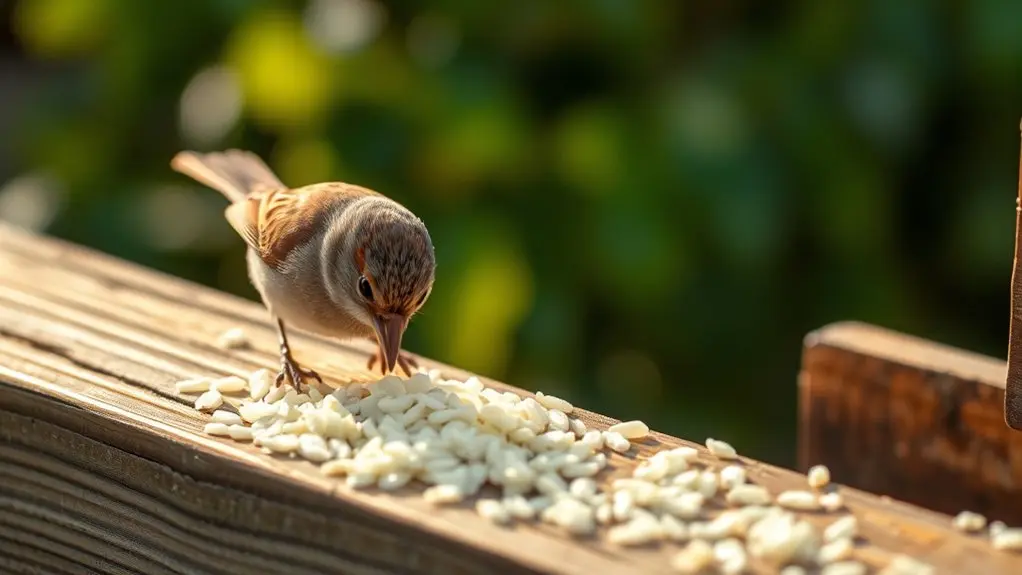
Wondering if cooked white rice is safe for birds? Yes, cooked rice can be a safe occasional treat, as long as it’s prepared without salt or added flavors.
Cooked white rice is a safe occasional treat for birds if prepared plain and without salt.
You should rinse the white rice thoroughly to remove any dirt or bacteria, then boil it until soft and let it cool before offering it to birds.
While birds can eat cooked rice, remember it’s low in nutrients and shouldn’t replace their regular diet. Most smaller birds prefer cooked rice, which provides a quick energy source through simple carbohydrates.
However, moderation is important. Too much rice can cause digestive issues and imbalances.
Which Bird Species Can Eat Cooked White Rice
Although many bird species can eat cooked white rice, some show a stronger preference or better digestion with it than others. House Sparrows and Blackbirds commonly enjoy cooked white rice, especially during winter when they need extra nutrition.
Pigeons, on the other hand, are versatile feeders that can consume both cooked and uncooked rice without issues.
Smaller birds like finches and canaries tend to favor cooked rice because it’s easier for them to digest.
Larger birds such as crows can eat uncooked rice but might discourage smaller species from feeding nearby.
When offering cooked white rice, make sure it’s plain and salt-free to keep the birds healthy and safe.
This way, you support a variety of species effectively.
Cooked vs. Uncooked Rice: What’s Best for Birds?
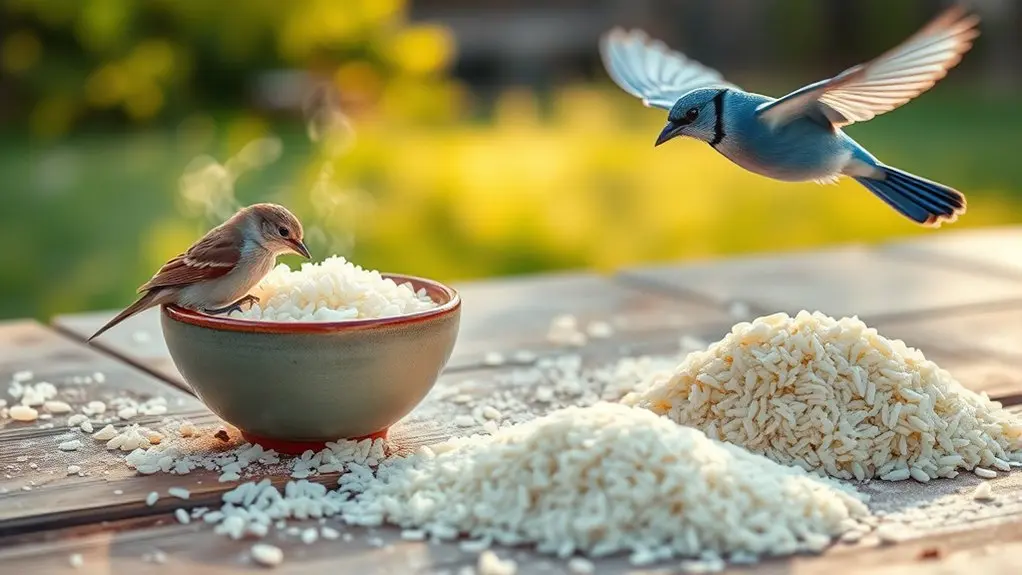
When deciding what type of rice to offer birds, it helps to understand how cooked and uncooked rice affect different species. Most smaller birds prefer cooked rice because it’s easier to digest.
On the other hand, larger birds like pigeons and doves can handle both cooked and uncooked rice without any problems. If you feed uncooked rice, you might attract more large birds but deter smaller ones, which could reduce the variety of birds visiting your feeder.
Remember, cooked rice must be plain, no salt or seasonings, to keep birds safe.
While cooked rice is a nice occasional treat, don’t rely on it as a main food source since birds need more nutritious options like seeds and pellets to stay healthy.
Nutritional Benefits of Cooked White Rice for Birds
You’ll find that cooked white rice gives birds a quick boost of energy because it’s full of simple carbohydrates.
Plus, it’s packed with important nutrients like vitamin B, zinc, and iron, which help keep them healthy overall.
Adding it to their diet every now and then can really give them a nice nutritional boost.
Energy Source Benefits
Because cooked white rice is a simple carbohydrate, it gives birds a quick energy boost that helps them stay active throughout the day.
When you offer cooked white rice, you provide a fast, easily digestible source of fuel that supports their energy needs between meals.
This starchy food fills their stomach, helping maintain steady energy levels.
While cooked white rice isn’t a replacement for more nutritious food sources, it serves as a helpful occasional treat.
It complements their diet by supplying quick energy without overwhelming their digestive system.
Essential Nutrient Content
Although cooked white rice mainly provides simple carbohydrates, it also delivers essential nutrients like vitamin B, zinc, magnesium, and iron that support your bird’s overall health. These essential nutrients contribute to energy metabolism, immune function, and oxygen transport, helping your feathered friend stay active and healthy.
Furthermore, cooked white rice has prebiotic properties that promote a healthy digestive system by supporting beneficial gut bacteria.
However, you should offer cooked white rice in moderation since it lacks the extensive nutrition found in fruits, vegetables, and specially formulated bird feeds.
For small birds, a teaspoon-sized serving is enough to provide benefits without causing dietary imbalances.
Potential Risks of Feeding Cooked White Rice
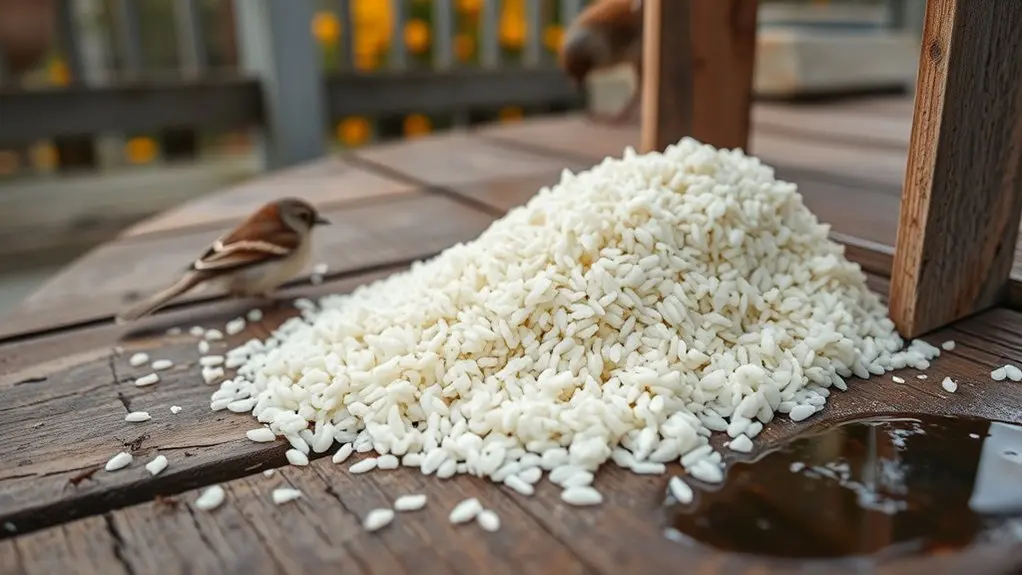
When feeding your bird cooked white rice, you should be aware of several potential risks. Although cooked rice is generally safe, its low nutritional value means relying on it too much can cause deficiencies.
Cooked white rice is safe for birds but should be fed sparingly to avoid nutritional deficiencies.
Furthermore, feeding too much can lead to digestive issues and unwanted weight gain because of the high carbohydrates. To keep your bird healthy, watch out for these concerns:
- Overfeeding cooked rice may reduce intake of more nutritious foods, harming your bird’s overall diet.
- Digestive issues can arise if your bird eats large amounts, as rice is harder to digest in excess.
- Avoid any rice cooked with salt or seasoning, since even small amounts of salt are toxic to birds.
Stick to plain, unsalted cooked rice to minimize these risks.
How Much Cooked White Rice Should You Feed Birds?
To keep your bird healthy, you need to control how much cooked white rice you offer. For small birds like parakeets, one teaspoon of cooked white rice as an occasional treat is enough.
Larger birds such as pigeons and doves can handle more, but you should still feed cooked white rice in moderation to avoid nutritional imbalances. Offering rice only 1-2 times a week helps keep it a special treat rather than a main food source.
Always serve cooked rice plain, no salt or flavorings, since even small amounts of salt can harm birds.
Keep an eye on your birds’ overall diet to guarantee rice doesn’t replace more nutritious options like seeds and pellets. Balance is key when feeding cooked white rice to birds.
The Best Way to Prepare Cooked White Rice for Birds
Since birds are sensitive to additives and textures, you should prepare cooked white rice carefully to guarantee it’s both safe and appealing. Start by choosing plain varieties like long-grain or basmati, which are safe for birds.
Then, follow these steps to prepare cooked rice properly:
Follow these simple steps to ensure your cooked rice is safe and appealing for your birds.
Rinse the rice in cold water until the water runs clear to remove dirt and bacteria. Boil the rice in unsalted water for 10-15 minutes until soft, ensuring it’s fully cooked and safe for birds.
Let the cooked rice cool completely before offering it, preventing burns and digestive problems.
Serve the rice in a shallow dish or tray for easy access, especially for smaller bird species. This careful preparation makes cooked rice a healthy treat for your feathered friends.
Should You Add Seasonings or Salt to Cooked Rice?
Although adding seasonings or salt might enhance flavor for humans, you should never feed birds cooked rice with these additives. Even small amounts of salt can be harmful or toxic to birds, and seasonings like garlic, onion, or butter can negatively impact their health.
To keep your feathered friends safe, always offer plain cooked rice without any flavors, oils, or spices. Plain cooked rice aligns with a bird’s natural diet and avoids introducing substances that could cause harm.
When preparing rice for birds, prioritize their well-being by keeping it simple and natural. Avoid any added seasonings or salt to guarantee the cooked rice remains a safe and healthy treat for your birds.
How Cooked White Rice Fits Into Your Bird’s Diet
When you offer cooked white rice to your bird, you provide a safe, easily digestible source of quick energy.
Cooked rice is low in nutritional value, so it’s best to use it as an occasional treat rather than a main food. Feeding your bird rice in moderation helps prevent digestive issues and nutritional imbalances.
Here’s how cooked rice fits into your bird’s diet:
- Serve plain, without salt or seasonings, to keep it safe and healthy.
- Limit portions, especially for small birds like parakeets. About a teaspoon is enough.
- Use cooked rice as an energy boost during cold weather or when your bird is active.
Best Alternatives to Cooked White Rice Treats for Birds
If you want to offer your bird more variety or boost its nutrition, several alternatives to cooked white rice can make excellent treats.
Quinoa is a top choice, packed with protein, vitamins, and minerals that support your bird’s health.
Millet, a small seed many birds love, provides a rich source of carbohydrates, making it a satisfying and energy-rich snack.
Cooked oats also make a healthy option, delivering energy and dietary fiber to aid digestion.
These alternatives not only diversify your bird’s diet but also enhance its nutritional intake.
How Seasonal Changes Affect Birds’ Cooked Rice Eating
As the seasons shift, you’ll notice birds adjust their eating habits, especially regarding cooked white rice. Seasonal changes impact how much birds rely on cooked rice as a food source.
During winter, cooked rice serves as a high-energy filler when natural foods are scarce.
In winter, cooked rice provides vital energy when natural food sources are limited.
In warmer months, birds reduce their dependence on it but may still enjoy it as a treat.
Keep these points in mind:
- In winter, House Sparrows and Blackbirds favor cooked rice for warmth and easy digestion.
- Spring and summer provide abundant natural food, so birds eat less cooked rice.
- Moderation is key year-round to avoid dietary imbalances, especially in harsher weather.
Understanding these seasonal shifts helps you support birds’ nutrition effectively with cooked rice.
Tips for Safely Encouraging Birds to Eat Cooked White Rice
Although birds often enjoy cooked white rice, you should take care to prepare and serve it safely to support their health. Start by rinsing the rice thoroughly to remove dirt and bacteria.
Cook the rice in unsalted water for 10-15 minutes until soft, since salt can harm birds. Always let the cooked rice cool to room temperature before offering it to avoid burns.
When feeding birds, provide small portions, about a teaspoon for small birds, to prevent overfeeding and maintain balance.
To make the meal more appealing and nutritious, mix the rice with other healthy foods like grains or vegetables. By following these tips, you can safely encourage birds to enjoy cooked rice as part of a varied diet.
Frequently Asked Questions
Can Baby Birds Safely Eat Cooked White Rice?
Yes, you can safely feed cooked white rice to baby birds, but only in moderation.
Following rice feeding guidelines is vital to avoid nutritional imbalances since rice lacks essential nutrients for baby bird nutrition.
Confirm the rice is fully cooked and cooled to prevent choking.
Always combine rice with safe food options designed for their dietary needs, and consult an avian vet before introducing any new foods to guarantee your baby bird stays healthy.
How Long Can Cooked White Rice Be Stored for Bird Feeding?
Imagine you prepare a batch of cooked white rice for your backyard birds. For safe feeding, you should store it in an airtight container in the fridge and use it within 4-6 days.
Following these storage tips and feeding guidelines helps prevent spoilage and bacterial growth.
If you want to keep rice longer, freeze it for up to six months. Proper rice preparation and storage guarantee your birds enjoy safe, nutritious meals.
Does Cooked White Rice Affect Bird Droppings or Digestion?
Yes, cooked white rice can affect your bird’s digestion and droppings composition. Feeding too much might cause digestion concerns, like soft droppings or gastrointestinal discomfort.
While rice offers quick energy, its low nutritional impact means it shouldn’t replace a balanced diet.
Watch your bird’s droppings after feeding rice to spot any changes. Adjust how much you give to keep digestion healthy and avoid digestive issues.
Can Feeding Rice to Birds Attract Unwanted Wildlife?
Yes, feeding rice to birds can attract unwanted wildlife, acting as wildlife attractants for rodents and raccoons.
To avoid this, you should follow feeding guidelines by offering rice in moderation and at times when your preferred birds are active.
Consider alternative foods like seeds or nuts that don’t lure pests as much.
Also, avoid scattering rice on the ground to reduce access by unwanted animals and keep your bird feeding area cleaner and safer.
Is It Safe to Feed Cooked White Rice to Wild Birds?
Imagine you spot a hungry House Sparrow pecking at plain, cooked white rice in your backyard. Yes, it’s safe to feed cooked white rice to wild birds if you follow feeding guidelines, no salt or seasonings.
It offers quick energy but can’t replace balanced bird nutrition.
To keep their diet varied, include rice alternatives like seeds or peanuts. This way, you support their health while enjoying safe feeding practices.
Conclusion
You might think feeding birds cooked white rice is as risky as juggling flaming swords, but it’s actually safe when done right. Many birds can enjoy it as a tasty, energy-boosting treat, but moderation is key to avoid any digestive troubles.
Remember to offer it alongside a balanced diet and watch seasonal changes that affect their eating habits. With these tips, you’ll help your feathered friends thrive happily and healthily!