
You can safely feed your birds small amounts of plain, cooked couscous as an occasional treat, but don’t rely on it as a staple since it lacks essential vitamins and minerals. Couscous is low in nutrients compared to whole grains like quinoa or brown rice, which offer better health benefits.
Always serve couscous plain and in moderation to avoid digestive issues and nutrient gaps. Keep couscous treats balanced with a varied diet to support your birds’ well-being, and discover how to do this effectively.
What Is Couscous and Is It Safe for Birds?
Although couscous is a processed grain product that’s 97% fat-free, it lacks the crucial vitamins and minerals birds need to thrive. When you consider couscous as bird food, you should remember it’s nutrient-poor and offers mostly empty calories.
While it’s safe to give your bird couscous occasionally, you shouldn’t rely on it regularly. Moderation is key; every bite should contribute positively to your bird’s health.
Instead, focus on natural sources like whole grains, seeds, and fresh fruits, which provide the essential nutrients birds require.
Using couscous sparingly as a treat won’t harm your feathered friend, but it shouldn’t replace more nutritious options in their diet.
This way, you guarantee your bird stays healthy and well-nourished.
Couscous Nutrition Compared to Other Bird Grains
When you compare couscous to other grains commonly fed to birds, you’ll find it falls short in nutritional value. Couscous mainly offers empty calories and lacks the essential vitamins and minerals birds need.
Whole grains like brown rice provide more fiber and nutrients, making them a healthier choice. Here’s a quick comparison to help you see why whole grains edge out couscous for bird nutrition:
| Grain | Nutritional Value | Notes |
|---|---|---|
| Couscous | Low | Mostly empty calories |
| Brown Rice | Moderate to High | Rich in fiber and nutrients |
| Quinoa | High | Excellent protein source |
You should limit couscous in your bird’s diet and prioritize whole grains like brown rice for better nutrition.
The Role of Couscous in Bird Feeding and Nutrition
Since couscous offers mostly empty calories and lacks essential nutrients, you should treat it as an occasional snack rather than a staple in your bird’s diet.
Birds thrive on nutrient-rich foods like fruits, vegetables, and whole grains, which provide the vitamins and minerals couscous lacks.
When you include couscous, remember moderation is key. Here’s why:
- Couscous is 97% fat-free but nutrient-free, so it won’t support your bird’s long-term health.
- Overfeeding couscous can displace more nutritious foods, leading to deficiencies.
- Birds need a varied diet to stay strong and active, not just empty calories.
Should You Feed Couscous Cooked or Raw?
How you prepare couscous makes a big difference for your bird’s digestion. You should always feed birds cooked couscous rather than raw. Cooked couscous, similar to cooked pasta, is softer and easier to digest, reducing the risk of gastrointestinal issues.
Raw couscous can be tough on their digestive system and may cause discomfort. Remember, couscous should only supplement their diet and never replace the right foods that provide essential nutrients.
| Feeding Option | Digestibility |
|---|---|
| Cooked Couscous | Easy to digest |
| Raw Couscous | Hard to digest |
| Cooked Pasta | Easy and safe |
| Raw Pasta | Not recommended |
Always serve plain couscous without additives to keep your bird healthy and happy.
Preparing Couscous Safely for Birds
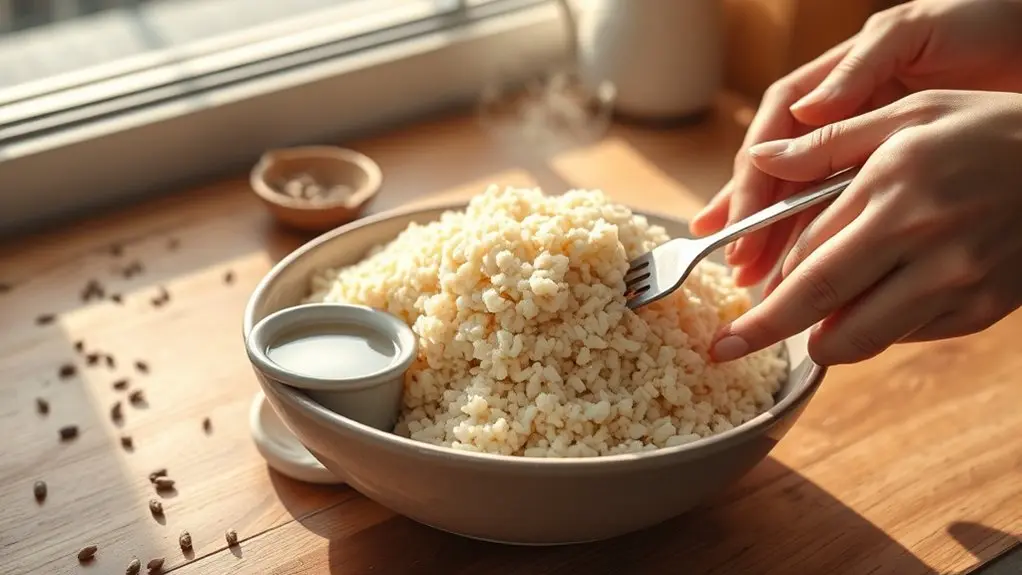
To prepare couscous safely for birds, you’ll want to cook it plain without adding salt, butter, or any seasonings that could harm them.
When feeding birds couscous, keep these tips in mind to guarantee it’s a safe and enjoyable treat:
- Serve small portions to prevent waste and avoid attracting unwanted wildlife.
- Let the couscous cool completely before offering it so your birds don’t get burned.
- Use couscous only as an occasional treat, never as a replacement for their nutrient-rich diet of seeds, fruits, and vegetables.
Watch Out for These Couscous Feeding Mistakes
While preparing couscous correctly is important, you also need to be aware of common feeding mistakes that can harm your birds or disrupt your garden.
First, remember that birds can eat couscous only in small amounts. It’s an occasional treat, not a regular meal.
Offer couscous to birds sparingly, as a rare treat rather than part of their daily diet.
Avoid using couscous as a staple since it lacks essential nutrients and mainly provides empty calories. Always offer plain couscous without salt or seasonings, as additives can be harmful.
Also, don’t leave uneaten couscous out; leftovers attract unwanted wildlife and cause hygiene issues.
To support your birds’ health, consider healthy alternatives like quinoa or brown rice, which offer better nutrition.
Benefits and Drawbacks of Feeding Couscous to Birds
Although couscous isn’t toxic to birds, you should only offer it occasionally because it lacks the nutrients they need to thrive. When birds eat couscous, it serves mainly as an occasional treat rather than a source of essential nourishment.
Here are some benefits and drawbacks to take into account:
- Couscous is easy to digest and can add variety to your bird’s diet.
- It offers empty calories, lacking the nutrient-rich foods birds require for peak health.
- Overfeeding couscous risks displacing more beneficial grains like quinoa or brown rice, which support avian well-being.
To keep your feathered friends healthy, focus on whole, natural foods that provide the vitamins and minerals they need. Treat couscous as a rare indulgence, not a dietary staple.
Safe Serving Sizes of Couscous for Birds
When you introduce couscous to your bird’s diet, keep the serving size small, about one teaspoon of plain, cooked couscous per bird. This amount helps prevent digestive upset and ensures couscous stays an occasional treat rather than a staple.
Always serve couscous without salt or additives, as these can harm birds.
Remember, couscous lacks essential nutrients found in other bird-friendly foods like fruits and seeds, so it shouldn’t replace their main diet.
Offer couscous infrequently and watch your bird closely for any adverse reactions after trying it.
Which Bird Species Can Eat Couscous Safely?
Which bird species can safely enjoy couscous as a treat?
You can offer couscous in moderation to various bird species that digest grains well. When feeding couscous, make sure it’s cooked and unseasoned to provide natural, safe nutrition.
Couscous can attract a range of birds, especially ground-feeders.
Here are three bird species you might notice enjoying couscous:
- Sparrows and finches, who naturally digest grains and appreciate the texture.
- Budgerigars and cockatiels, curious about this new food when it’s plain and safe.
- Ground-feeding birds like doves and pigeons, who find couscous appealing when scattered.
Couscous as an Occasional Treat or a Staple Food?
Now that you know which birds can safely eat couscous, it’s important to understand how often you should offer it. Couscous should be given only as an occasional treat, not as a staple food.
Its low nutritional value means it lacks the essential vitamins and minerals birds need for good health. While it’s not harmful in small amounts, couscous mainly provides empty calories and can’t replace the benefits of a varied diet.
To keep your birds healthy, focus on feeding them more nutritious options like seeds, fruits, and vegetables.
Using couscous sparingly alongside these foods guarantees your birds get a balanced intake without compromising their nutritional needs.
Healthy Alternatives to Couscous for Birds
Although couscous can be an occasional treat, you should offer your birds healthier alternatives that provide better nutrition. Choosing whole grains, fruits and vegetables, and options with high protein content helps keep your feathered friends vibrant and strong.
Consider these healthy alternatives:
- Quinoa is packed with high protein content and essential amino acids. It’s a powerhouse for your bird’s diet.
- Brown rice and barley are whole grains that offer more nutrients than couscous and promote better digestion.
- Fresh fruits and vegetables like carrot shreds, berries, and leafy greens supply crucial vitamins and minerals that couscous lacks.
Tips for Including Couscous in a Balanced Bird Diet
You should offer couscous to birds only in moderation since it lacks essential nutrients.
It’s best to pair it with fruits, vegetables, or seeds to create a balanced meal. That way, you keep their diet healthy while still giving them a tasty treat.
Moderation Is Essential
Since couscous lacks many essential nutrients, you should offer it to your birds only as an occasional treat rather than a regular meal. Feeding couscous in moderation protects your birds’ health and keeps their diet balanced.
To do this effectively:
- Serve small portions of plain, unseasoned couscous to avoid attracting unwanted wildlife.
- Monitor your birds’ overall diet to guarantee they get diverse, nutrient-rich foods.
- Limit couscous to special occasions, preventing overreliance on its low nutritional value.
Pair With Nutritious Foods
When adding couscous to your bird’s diet, pair it with nutrient-rich foods to guarantee they get a balanced meal.
Couscous should never replace more nutritional staples like seeds, fruits, and vegetables that provide essential vitamins and minerals.
Offer couscous as an occasional treat alongside fresh fruits such as berries or carrot shreds to boost nutritional value.
Including high-protein options like mealworms or high-fat foods like suet can also enhance your bird’s diet.
Always serve plain couscous without additives and in small amounts to prevent attracting unwanted wildlife.
Frequently Asked Questions
Can Baby Birds Eat Couscous Safely?
Yes, you can feed baby birds couscous safely, but only in small amounts and as an occasional treat.
For baby bird nutrition, couscous lacks essential vitamins, so it shouldn’t replace their main diet.
Instead, focus on safe grains and couscous alternatives like millet or quinoa.
Follow feeding recommendations by offering protein-rich live foods and fresh fruits alongside grains to guarantee balanced nutrition and support healthy growth in your baby birds.
How Should Couscous Be Stored for Bird Feeding?
Imagine golden grains of couscous kept fresh like treasures in your pantry. For bird feeding, follow these couscous preparation tips: store it in airtight containers to lock in freshness and prevent moisture.
Keep it in cool, dry spots away from sunlight to extend shelf life.
Divide bulk couscous into smaller portions to maintain quality and control portion size guidelines.
Check for spoilage before serving, ensuring your feathered friends get the best every time.
Can Birds With Allergies Eat Couscous?
You should be cautious if your bird has allergies because bird allergy symptoms can worsen with new foods.
Couscous has limited nutritional value and may not meet your bird’s dietary needs.
If you want to try it, use gentle cooking methods like steaming, but watch closely for reactions.
It’s better to offer safe food alternatives rich in vitamins and minerals, and always consult an avian vet before introducing couscous or any new food.
Is Couscous Safe for Wild Birds in My Garden?
Yes, couscous is safe for wild birds in your garden, but its nutritional value is low, offering mostly empty calories.
Since wild birds prefer nutrient-rich foods, you should follow feeding guidelines and offer couscous sparingly as a treat.
To support their health, consider alternative bird foods like brown rice or quinoa, which provide better nutrition.
Always clean up leftovers to avoid attracting unwanted wildlife and keep your garden safe.
How Often Can Birds Have Couscous as a Treat?
You can offer birds couscous as a treat once or twice a week, following treat frequency guidelines to keep their bird diet balance intact.
Because couscous nutritional value is limited, it shouldn’t replace their regular, nutrient-rich foods.
Stick to safe serving sizes, small portions only, to avoid excessive calories.
Always serve plain couscous without additives, making sure it complements their diet without compromising their health or nutritional needs.
Conclusion
So, can you feed couscous to your bird? Absolutely, but in moderation and cooked, not raw. Couscous can be a tasty, nutritious treat, but it shouldn’t replace a balanced diet tailored to your bird’s needs.
Why stick to one food when you can offer a variety of healthy options? Remember, mixing couscous with other grains and fresh foods keeps your feathered friend happy and healthy.