
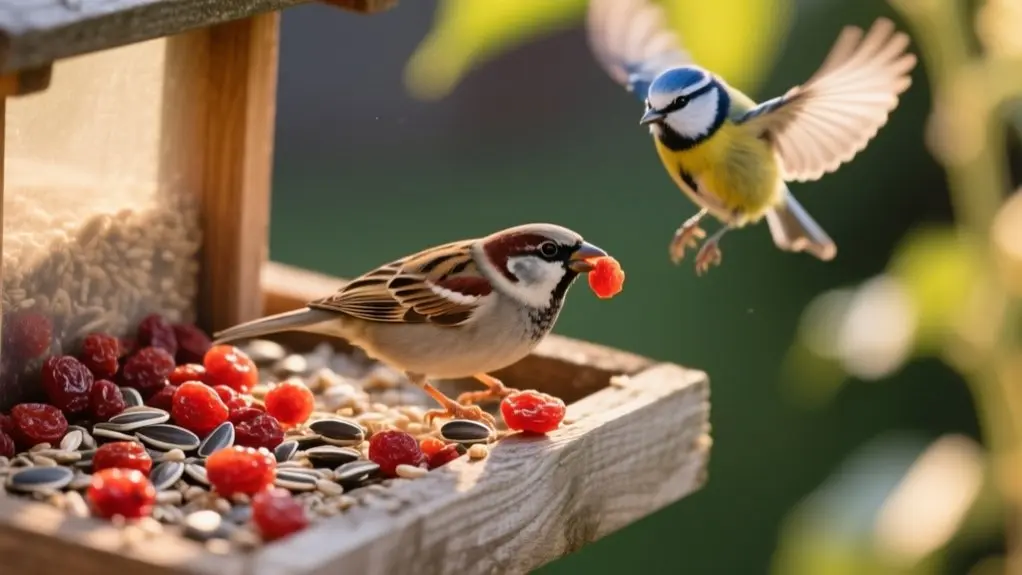
You can safely feed your bird Craisins but only in moderation. Always choose unsweetened, preservative-free options to avoid harmful added sugars and additives.
While Craisins provide antioxidants and fiber that support health, too much sugar can lead to obesity and digestive issues. Introduce them gradually and watch for any signs of discomfort.
Balancing Craisins with fresh fruits, veggies, and quality pellets keeps your bird healthy. There’s more to take into account if you want to offer the best treats and maintain your bird’s well-being.
Are Craisins Safe for Birds?
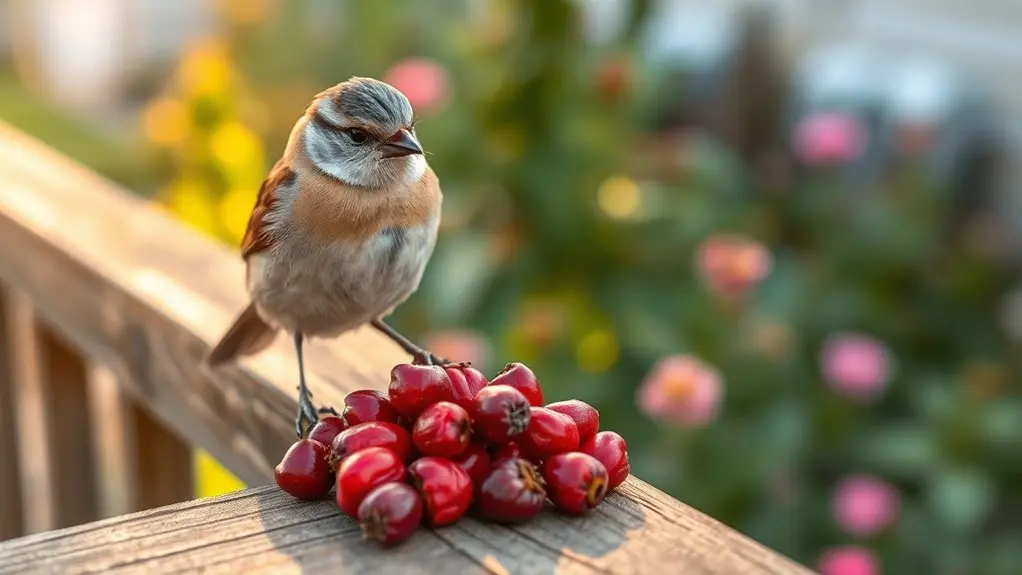
Wondering if Craisins are safe for your feathered friend? Yes, they generally are when given in moderation. Craisins, which are dried cranberries, are full of vitamins and antioxidants that can benefit your bird’s health.
Craisins are safe for birds in moderation, offering vitamins and antioxidants to support their health.
However, you need to keep an eye on the sugar content, as too many Craisins can lead to obesity and other health issues. Birds often enjoy the sweet taste, making Craisins a tempting treat, but they shouldn’t replace a balanced diet of seeds, fruits, and vegetables.
Always choose Craisins without added sugars, preservatives, or sulfites, since these additives can harm your bird.
Introduce Craisins gradually, and watch for any digestive problems or allergic reactions to guarantee your bird stays healthy.
Common Myths About Feeding Craisins to Birds
Although Craisins might seem like a harmless treat, many bird owners fall for common myths that can put their pets’ health at risk.
One big Craisins misconception is assuming all dried fruits are equally safe for birds.
The reality is, Craisins often contain added sugars and preservatives, which can negatively affect your bird’s health.
Bird diet myths lead some to believe that more Craisins mean better treats, but the sugar impact can cause digestive issues and upset your bird’s system.
Remember, cranberries themselves aren’t toxic, but the processing of Craisins reduces nutritional value and adds ingredients you want to avoid.
Always introduce new foods gradually and check ingredients to keep your feathered friend safe and healthy.
Nutritional Benefits and Risks of Craisins for Birds
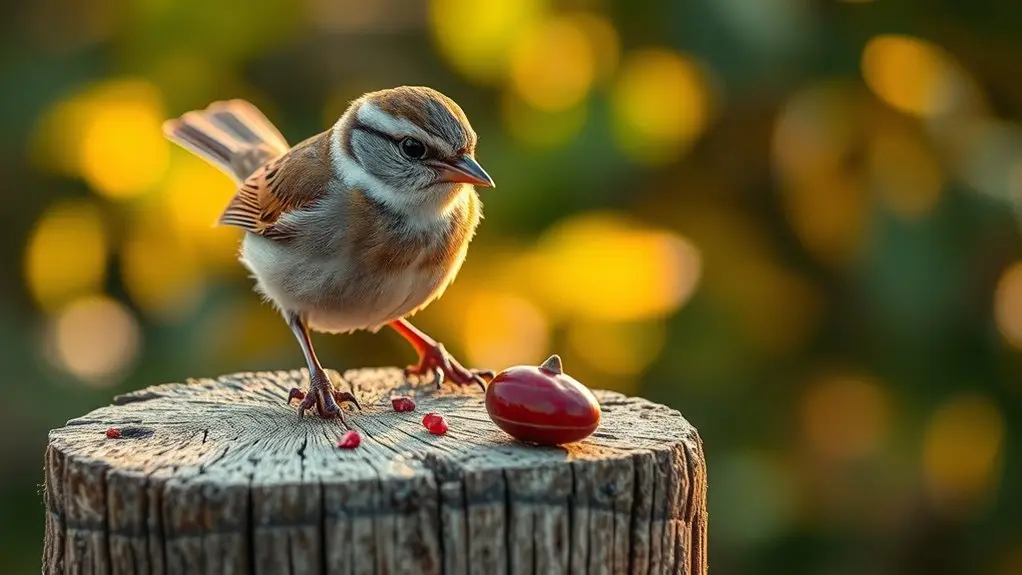
Craisins are a tasty little snack that can actually be good for your bird because they contain antioxidants and fiber. These nutrients help support your bird’s overall health.
But here’s the thing—Craisins are also pretty high in sugar. So, it’s best to offer them only now and then, as a special treat.
If you give your bird too many Craisins, it could lead to problems like obesity or digestive troubles. That’s why keeping it moderate is really important.
When you first introduce Craisins, take it slow and keep an eye on your feathered friend. Watch for any signs that they mightn’t agree with the new treat, like discomfort or allergic reactions.
Nutrient Content Overview
Three key nutritional aspects make dried cranberries, or Craisins, both beneficial and potentially risky for birds.
When examining the Craisins nutritional breakdown, you’ll notice they’re calorie-dense due to high natural sugars. This leads to sugar content concerns, especially for birds prone to diabetes or obesity.
However, Craisins also offer valuable antioxidant benefits analysis, providing vitamins like vitamin C that support immune health. Moreover, they contain dietary fiber, which aids digestion but can cause upset if overfed.
Here’s a quick overview:
- High natural sugar content requires careful portion control to avoid health issues.
- Rich antioxidants and vitamin C promote immune system strength.
- Dietary fiber supports digestion when offered in moderation.
Always choose unsweetened Craisins without added preservatives for your bird’s safety.
Potential Health Risks
When you feed birds dried cranberries like Craisins, you need to watch their sugar intake closely because too much can lead to obesity and other health problems.
Craisins sugar content is particularly high due to added sugars and preservatives, which birds aren’t designed to process well. This can cause Craisins digestive issues, such as upset stomach or diarrhea.
While cranberries offer antioxidant benefits that support bird health, the concentrated sugars in Craisins may outweigh these positives when fed regularly.
To protect your bird’s well-being, avoid making Craisins a staple in their diet. Instead, consider fresher options or unsweetened dried cranberries to provide antioxidants without the risk of excess sugar and digestive discomfort.
Moderation And Monitoring
Offering dried cranberries to your bird can provide some antioxidant benefits, but you need to keep portions small to avoid health issues.
To guarantee your bird stays healthy, adopt moderation strategies and portion control when feeding Craisins.
Here are key steps:
- Soak Craisins in water before feeding to reduce sugar concentration and aid digestion.
- Limit servings to very small amounts, preventing obesity and digestive problems.
- Use monitoring techniques by observing your bird for any signs of adverse reactions like diarrhea or discomfort.
Why Your Bird Needs Unsweetened, Preservative-Free Craisins
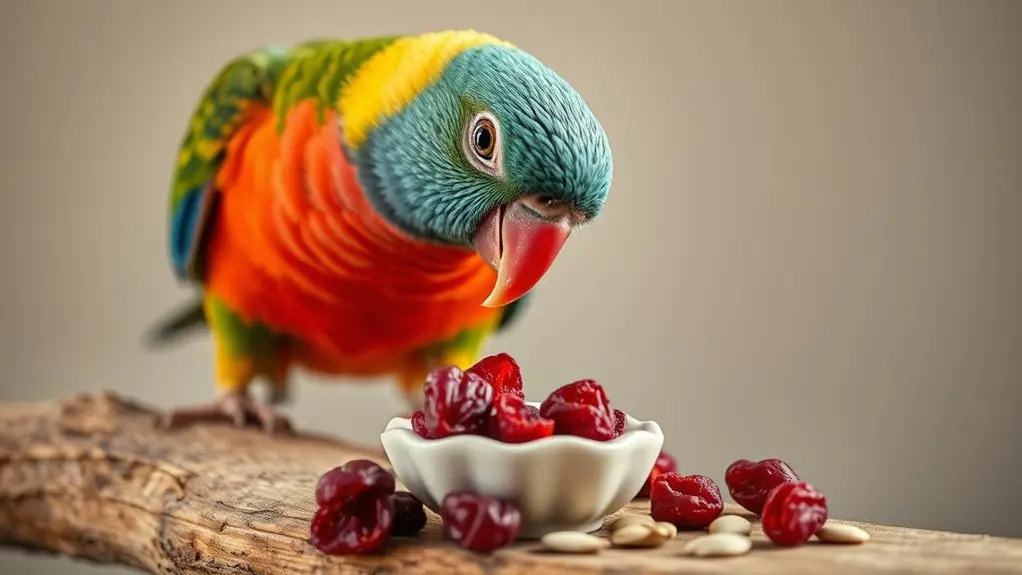
You definitely want to avoid added sugars when picking treats for your bird. Keeping those sugars out helps them stay healthy and can prevent problems like obesity.
Going for unsweetened, preservative-free Craisins means your bird is getting natural ingredients without any harmful chemicals.
It’s a simple choice that really supports their well-being and gives you a safer snack option to offer.
Avoid Added Sugars
Many bird owners don’t realize that most Craisins contain added sugars and preservatives that can harm their feathered friends.
These additives can cause obesity, fatty liver disease, and other health issues.
To keep your bird healthy, avoid sugar substitutes and opt for unsweetened, preservative-free Craisins.
Here’s what you should consider:
- Feeding frequency: Limit Craisins to occasional treats to prevent excessive sugar intake.
- Label reading: Always check ingredients to avoid hidden sugars and preservatives.
- Dried fruit alternatives: Choose natural, unsweetened dried fruits as safer snack options.
Choose Natural Ingredients
Although it might be tempting to grab any bag of Craisins, choosing unsweetened, preservative-free options makes a significant difference for your bird’s health. Natural sourcing and ingredient transparency guarantee your bird avoids harmful additives like sulfites and added sugars.
These health-conscious choices help maintain your bird’s digestive comfort and immune system strength.
| Benefit | Why It Matters |
|---|---|
| No Added Sugars | Prevents digestive issues |
| Preservative-Free | Avoids allergic reactions |
| Nutritional Value | Supports energy and immune health |
How to Choose Safe, Unsweetened Craisins for Birds
How do you guarantee the Craisins you offer your bird are both safe and healthy? Start by focusing on Craisins sourcing tips that align with your bird’s dietary preferences.
You’ll want to avoid added sugars and artificial ingredients that can harm your feathered friend. Here’s how:
- Choose unsweetened Craisins listing only cranberries and natural preservatives, avoiding artificial flavors or colors.
- Opt for organic varieties to reduce exposure to pesticides and chemicals.
- Check packaging for certifications indicating no harmful additives.
These steps assure you provide a safe option that fits your bird’s diet.
How Much Craisins Can You Feed Your Bird?
Once you’ve selected safe, unsweetened Craisins for your bird, it’s important to think about the right amount to offer.
Follow Craisins portion guidelines by limiting treats to just a few pieces weekly, since dried cranberries have concentrated sugars.
Bird size plays a key role here: smaller birds need fewer Craisins than larger species to avoid health issues like obesity.
Start with tiny amounts to see how your bird reacts, then adjust accordingly.
Feeding frequency recommendations suggest offering Craisins only occasionally rather than daily.
Balance them with fresh fruits, vegetables, and high-quality pellets for overall nutrition.
Warning Signs Your Bird Has an Adverse Reaction to Craisins
If your bird starts showing unusual symptoms after eating Craisins, you need to act quickly to identify an adverse reaction. Paying close attention to bird behavior changes and physical signs can help you respond appropriately.
Act quickly if your bird shows unusual symptoms after eating Craisins to ensure their health and safety.
Watch for these warning signs:
- Digestive distress signs like diarrhea, vomiting, or refusal to eat signal your bird isn’t tolerating Craisins well.
- Noticeable bird behavior changes such as lethargy, reduced activity, or feather plucking may indicate discomfort or nutritional imbalance.
- Allergic reaction indicators include swelling around the eyes or beak, which require immediate veterinary care.
Recognizing these symptoms early can prevent serious health issues and keep your bird safe after introducing new foods like Craisins.
How to Introduce Craisins to Your Bird’s Diet
Start by offering your bird a small piece of a craisin and see how they react.
Then, slowly begin mixing craisins into their regular food to help them get used to the new flavor and texture.
Make sure to keep a close eye on their behavior so you can spot any signs of discomfort early on.
Gradual Feeding Approach
When you introduce craisins to your bird’s diet, offer a small piece first and watch closely for any adverse reactions over the next 24 hours.
Using gradual introduction techniques helps guarantee your bird adjusts well to this new treat.
Start with a single craisin to gauge acceptance, as some birds may hesitate with unfamiliar flavors.
Then, focus on observing bird reactions carefully, checking their health and droppings for any signs of digestive issues.
If all goes well, slowly increase the amount over several days, mixing craisins with their regular food.
Adjusting feeding amounts gradually prevents digestive upset and encourages acceptance.
Remember to always choose unsweetened craisins without additives to keep your bird safe and healthy.
- Begin with one small piece to test tolerance.
- Monitor for any adverse signs within 24 hours.
- Increase quantities slowly, blending with usual diet.
Monitoring Bird Reactions
Although introducing Craisins can be exciting, you need to watch your bird closely for any signs of discomfort or allergic reactions. Begin with small amounts and use feeding strategies that allow careful monitoring.
Pay attention to behavioral observations. Look for changes in energy, mood, or unusual actions.
Digestive patterns are equally important; check for irregular droppings or signs of digestive upset within 24 hours after feeding.
If your bird shows no distress, gradually increase the quantity, letting them adjust naturally. Always choose unsweetened Craisins without additives, as sugar can harm birds.
Should you notice lethargy or abnormal digestive symptoms, consult an avian veterinarian promptly. Staying attentive during this process guarantees your bird’s safety and helps make Craisins a healthy treat option.
Fresh Cranberries vs. Craisins: What’s Better for Birds?
Since fresh cranberries contain fewer sugars and more natural nutrients than Craisins, they’re generally a healthier choice for birds.
You’ll find fresh cranberry benefits include high levels of flavonoids and antioxidants that support avian health. Incorporating fresh cranberries into your bird’s diet adds valuable bird diet diversity and serves as excellent seasonal fruit treats.
Here’s why fresh cranberries stand out:
- They provide natural vitamins and phytonutrients without added sugars or preservatives.
- Their low sugar content reduces the risk of health issues linked to processed fruits.
- They encourage variety, keeping your bird’s diet balanced and interesting.
While Craisins can be offered occasionally, fresh cranberries offer superior nutritional value for your feathered friends.
Alternatives to Craisins for Bird Treats
If you want to give your birds tasty treats without the added sugars found in Craisins, you have plenty of healthy alternatives to choose from.
Start by offering a Fruit Variety that includes unsweetened dried fruits like apricots, figs, and apples, or fresh fruits such as berries and bananas. These provide natural nutrients without harmful additives.
You can also explore Nut Options, offering nuts and seeds to supply healthy fats and protein, which are great for your bird’s overall health.
Don’t forget Vegetable Treats. Small pieces of carrots or leafy greens add hydration and essential vitamins.
How Craisins Fit Into a Balanced Bird Diet
When you include Craisins in your bird’s diet, make sure to offer them only as an occasional treat rather than a staple food. While birds enjoy the sweetness and antioxidants, too many can cause health problems due to high sugar content.
To fit Craisins into a balanced diet, consider these points:
- Craisins serving suggestions: Offer small pieces mixed with seeds, fruits, or vegetables to complement their main diet.
- Craisins bird preferences: Observe which birds like Craisins and adjust portions accordingly, introducing them gradually.
- Craisins storage tips: Keep Craisins in an airtight container away from moisture and heat to maintain freshness and avoid added preservatives.
Tips for Monitoring Your Bird’s Health After Feeding Craisins
Introducing Craisins to your bird’s diet means keeping a close eye on their health afterward. Use health tracking methods like observing your bird for 24-48 hours after feeding them small amounts of Craisins.
Watch for bird behavior signs such as lethargy, changes in droppings, or loss of appetite, which may signal digestive upset or other issues.
Always choose unsweetened Craisins without additives and provide fresh water to aid digestion and prevent dehydration.
If any unusual symptoms appear, don’t hesitate to consult an avian vet.
Based on your observations, apply dietary adjustment strategies by reducing or eliminating Craisins if negative reactions occur.
Monitoring carefully guarantees your bird enjoys treats safely and maintains peak health.
Frequently Asked Questions
Can Baby Birds Eat Craisins Safely?
You shouldn’t feed baby birds Craisins regularly because their high sugar content can disrupt baby bird nutrition.
Instead, follow feeding guidelines that emphasize fresh, natural foods.
Look for craisin alternatives like fresh cranberries or other unsweetened fruits, which offer vitamins without added sugars.
Always introduce new foods gradually and watch for any negative reactions.
This approach helps guarantee baby birds get balanced nutrition without unnecessary risks from sugary treats.
Do Craisins Affect Different Bird Species Differently?
Think of Craisins as a sweet melody. Some birds love the tune, while others find it too sharp.
You’ll notice Craisins’ nutritional value varies in impact because bird species preferences differ widely.
When feeding Craisins, you must follow guidelines carefully, offering them sparingly to avoid health risks.
Tailor your approach to each bird’s unique needs, ensuring they enjoy treats without harm or sugar overload.
How Should Craisins Be Stored to Keep Them Fresh?
You should store Craisins in airtight storage containers to keep them fresh and prevent moisture absorption.
Keep them in a cool, dry place with an ideal temperature away from direct sunlight and heat sources.
For opened packages, refrigerate them to extend their shelf life up to six months.
Unopened Craisins can last about a year in your pantry, but always check the expiration date to guarantee the best quality.
Can Craisins Cause Allergies in Birds?
Like a hidden thorn in a rose, Craisins can cause allergies in birds. You might notice Craisins allergy symptoms such as gastrointestinal upset or unusual behavior.
Their nutritional content includes added sugars and preservatives, which can trigger sensitivities.
If you’re worried, try Craisins alternative options like fresh berries or unsweetened dried fruits.
Always introduce new treats slowly and watch your bird closely to keep them safe and healthy.
Are There Seasonal Considerations for Feeding Craisins to Birds?
Yes, you should consider seasonal availability when feeding Craisins to birds since they’re accessible year-round but especially helpful in winter when fresh fruit is scarce.
Adjust feeding frequency to avoid overindulging birds in their high-sugar content, balancing nutritional benefits with their natural diet, especially during breeding seasons.
Offering Craisins in colder months can attract more species, but always monitor how birds respond and tweak feeding habits accordingly for their health.
Conclusion
So, can birds eat Craisins? The truth is, they can, but only if you choose unsweetened, preservative-free ones. You might’ve heard Craisins are bad for birds, but that’s mostly a myth tied to added sugars and chemicals.
Just like you, your bird deserves treats that are both tasty and safe. Keep an eye on their health, and remember, fresh cranberries or other natural snacks might sometimes be the better choice!