
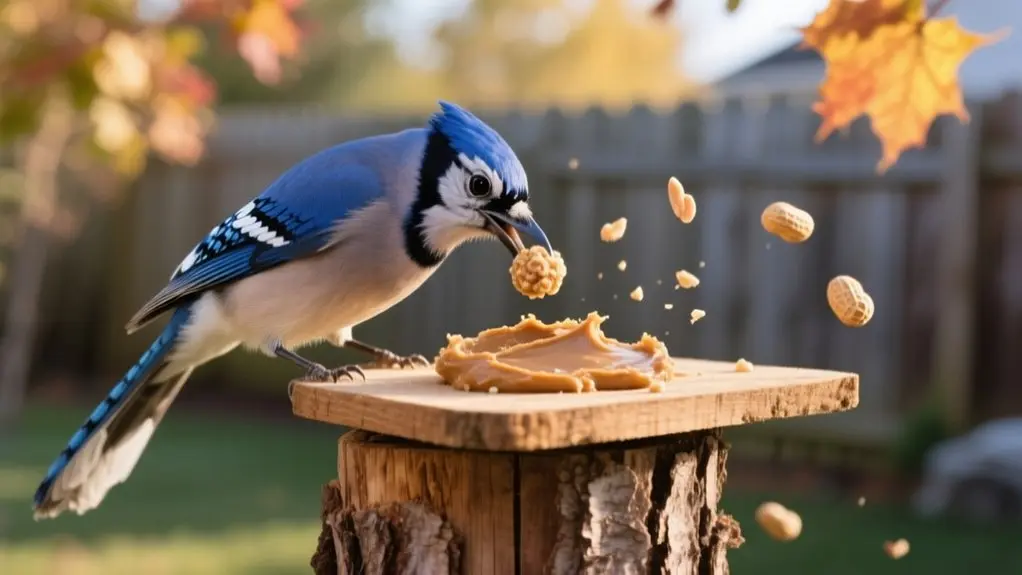
You can safely feed birds crunchy peanut butter, as it offers a protein-rich treat that complements their natural diet. Just choose natural peanut butter without added sugars or oils, serve it in moderation, and mix it with seeds to prevent mess and choking hazards.
Freshness and proper feeder cleaning are key to keeping birds healthy. If you want to attract specific bird species and learn how to serve it best, keep exploring for helpful tips.
Is Crunchy Peanut Butter Safe for Birds?
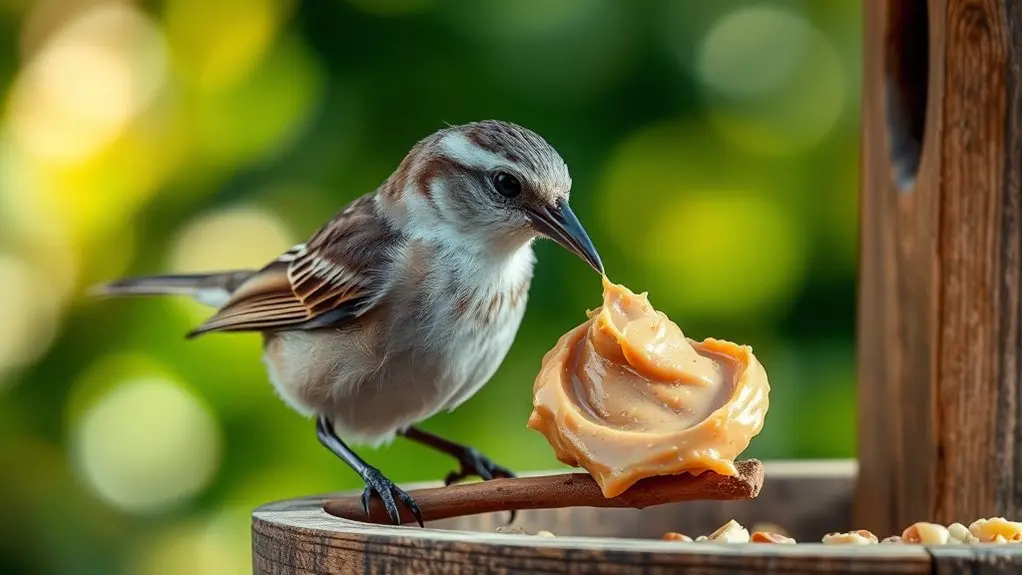
Wondering if crunchy peanut butter is safe for birds? Yes, it generally is. Birds benefit from the protein and fat found in crunchy peanut butter, making it a nutritious treat.
Since birds take small pecks, they can handle the texture without choking. You should choose natural or organic crunchy peanut butter with minimal additives to keep the birds healthy.
Birds peck small bites, so natural crunchy peanut butter with few additives is safe and healthy.
While smooth peanut butter is often easier for birds to eat, many actually enjoy the texture that crunchy peanut butter provides.
Just make certain the peanut butter is fresh and serve it in moderation.
Overfeeding can disrupt a bird’s balanced diet, so use crunchy peanut butter as an occasional supplement rather than a staple. This way, you guarantee safety and nutrition.
Why Do Birds Like Crunchy Peanut Butter?
Although birds don’t have a strong sense of taste, they’re drawn to crunchy peanut butter because its texture mimics the natural foraging experience they enjoy.
Birds love the satisfying crunch that engages species like woodpeckers and nuthatches, who naturally peck at their food.
The bits of peanuts add not only texture but also boost protein and fat content, providing an excellent energy source.
Since many birds rely more on texture than taste, crunchy peanut butter stimulates their interest and encourages visits to your feeder.
By offering this variety, you help diversify their diet, letting birds love a different feeding experience while benefiting from the nutritional value.
This makes crunchy peanut butter an attractive choice for your backyard visitors.
Crunchy vs. Smooth Peanut Butter for Birds
You’ll find that some birds really love the crunch of peanut butter with bits, while others prefer the smooth, creamy texture.
Crunchy peanut butter can actually give a little nutritional boost because of those added nut pieces.
Texture Preferences Among Birds
When choosing peanut butter for birds, texture plays a key role in their feeding enjoyment. Understanding texture preferences among birds helps you select the best option.
Many birds prefer smooth peanut butter because it’s easier to eat, but crunchy peanut butter offers added stimulation as they pick at the nut pieces.
Species like woodpeckers, nuthatches, and blue jays are attracted to both types, so you can try either to see what your local birds prefer.
Always opt for natural or organic peanut butter without additives, regardless of texture.
Nutritional Differences Explained
Since both crunchy and smooth peanut butter offer high protein and fat content that benefits birds, understanding their subtle nutritional differences can help you choose the best option. Crunchy peanut butter contains small peanut pieces, which provide extra texture and encourage natural foraging.
While their nutritional values are similar, crunchy peanut butter may stimulate birds more due to its texture.
| Aspect | Crunchy Peanut Butter | Smooth Peanut Butter |
|---|---|---|
| Protein Content | High | High |
| Fat Content | High | High |
| Texture | Chunky, more natural foraging | Smooth, less textured |
| Bird Appeal | Higher due to texture | Moderate |
| Serving Tips | Mix with birdseed for variety | Serve plain or mixed |
Choosing natural, additive-free options is essential regardless of type.
Which Bird Species Enjoy Crunchy Peanut Butter the Most?
Which bird species are most drawn to crunchy peanut butter? If you want to attract birds that enjoy the texture and flavor of this treat, woodpeckers top the list. They find the crunchy consistency perfect for extracting from feeders or tree bark.
Nuthatches love the challenge of pecking at it, while blue jays are frequent visitors, attracted by its nutty taste.
Many larger birds like chickadees and titmice also enjoy crunchy peanut butter because of its protein and energy-rich fats.
While fruit-loving birds such as orioles usually prefer sweeter foods, they’ll still eat crunchy peanut butter when it’s mixed with birdseed.
If you watch closely, you’ll see just how enthusiastic many birds eat peanut butter as part of their diet.
How to Serve Crunchy Peanut Butter Safely to Birds
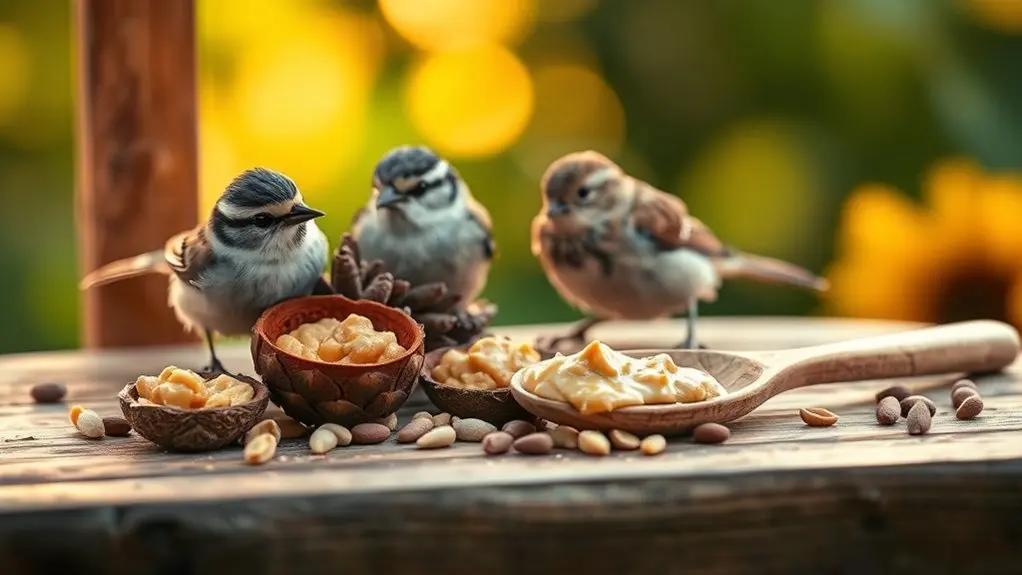
When you’re serving crunchy peanut butter to birds, a good way to start is by mixing it with some birdseed. This makes it easier for them to eat and less messy.
You can also try smearing small amounts on tree bark or using special feeders designed to hold peanut butter, which helps reduce stickiness.
Always make sure to choose natural peanut butter without added sugars or salt.
And don’t forget to clean your feeders regularly—this keeps your feathered friends healthy and safe.
It’s a simple way to enjoy watching birds while taking care of them!
Preparing Peanut Butter Mix
If you want to serve crunchy peanut butter to birds safely, choose a natural variety free of harmful additives that could affect their health.
When preparing peanut butter mix, blend crunchy peanut butter with bird seed to create a nutritious, appealing treat. This mix not only attracts birds but also provides extra nutrients through the seeds.
Smear the mix on tree bark or place it in log feeders to encourage natural foraging behavior and reduce mess. Always clean feeders thoroughly before adding fresh peanut butter mix to prevent mold buildup and keep birds healthy.
Remember to offer the mix in moderation, ensuring it supplements rather than dominates their diet.
Safe Feeding Techniques
Although crunchy peanut butter can be a delicious treat for birds, you need to serve it carefully to keep them safe. Using safe feeding techniques means offering it in moderation, ensuring it’s fresh and free from harmful additives.
Smear a thin layer on tree bark or use specialized feeders to prevent stickiness, making it easier for birds to access. Mixing peanut butter with birdseed creates an appealing treat that attracts various species.
Always clean feeders and feeding areas regularly to avoid mold, which can harm birds. In warmer months, monitor the amount you offer closely to prevent rancidity.
How Should You Mix Crunchy Peanut Butter With Seeds?
To create a bird-friendly snack, mix crunchy peanut butter with seeds using a ratio of one part peanut butter to two parts seeds. This balances nutrition and texture perfectly.
When you mix crunchy peanut butter with birdseed, spread a thin layer on log feeders or tree bark to attract various species.
You can also roll peanut butter-coated pine cones in seeds and hang them for a fun bird treat. Remember to keep mixtures fresh and avoid expired peanut butter to prevent mold.
- Spread a thin peanut butter layer on feeders
- Combine peanut butter with cornmeal to reduce stickiness
- Use a 1:2 ratio of peanut butter to seeds
- Roll pine cones in peanut butter and seeds for hanging treats
This method guarantees safe, appealing snacks for your feathered friends.
Best Crunchy Peanut Butter Types for Birds’ Health
When picking out crunchy peanut butter for your feathered friends, it’s best to go with ones made from natural ingredients. That way, you’re helping keep them healthy and happy.
You’ll definitely want to steer clear of any products that have harmful additives because those can be risky for birds.
Natural Ingredients Importance
When selecting crunchy peanut butter for your birds, focus on natural or organic options that contain minimal additives and preservatives.
Natural ingredients guarantee your feathered friends get the best nutrition without harmful extras.
Choose brands that list only peanuts as the ingredient, assuring purity and quality. The crunchy texture also stimulates birds by giving them a fun challenge as they peck at the nuts inside.
Avoid low-fat peanut butter since birds need the fats and proteins for energy.
Always check the freshness to prevent feeding rancid peanut butter, which can harm their health.
- Opt for natural ingredients with no additives
- Choose crunchy texture for bird stimulation
- Select full-fat varieties for energy needs
- Verify freshness to avoid rancidity
Avoiding Harmful Additives
Although crunchy peanut butter can be a tasty treat for birds, you need to avoid harmful additives like sugars, salt, and hydrogenated oils that can jeopardize their health. Always choose natural or organic peanut butter with minimal ingredients.
Check labels carefully to confirm the product contains mostly peanuts. Avoid brands with extra sugars or oils. Also, inspect the peanut butter’s freshness. Look for oil separation or odd smells before offering it to birds.
| Ingredient Type | Safe for Birds? | Why to Avoid |
|---|---|---|
| Added Sugars | No | Can cause health issues |
| Hydrogenated Oils | No | Harmful fats damaging to birds |
| Natural Peanuts Only | Yes | Best for bird health and enjoyment |
Selecting the right peanut butter keeps your feathered friends safe and happy.
Prevent Choking Hazards When Feeding Peanut Butter
Since birds naturally take small pecks rather than large bites, crunchy peanut butter can be a safer choice to reduce choking risks. When you feed birds peanut butter, keep their safety in mind by making it manageable and safe.
Here’s how to prevent choking hazards:
Mix crunchy peanut butter with birdseed to reduce stickiness. Serve peanut butter in moderation to avoid digestive issues. Use small amounts on feeders to prevent large, sticky clumps. Regularly clean feeders to remove leftover peanut butter and prevent hazards.
Birds handle sticky foods well, and no choking incidents have been reported in the wild, but these steps will guarantee a safer feeding experience for your feathered friends.
Prevent Mold and Spoilage in Peanut Butter Feeders
Keeping peanut butter feeders clean and fresh is essential to prevent mold and spoilage that can harm birds. You should thoroughly clean feeders before refilling to remove any residue from previous servings.
Always store peanut butter in a cool, dry place and avoid using expired products, as rancid peanut butter can be harmful to birds.
In warmer months, feed smaller quantities to reduce spoilage and keep the peanut butter fresh. Regularly check for oil separation or unusual smells in the peanut butter, which signal spoilage.
To make feeding easier and minimize waste, consider mixing in cornmeal to reduce stickiness.
Taking these steps guarantees you provide safe, fresh peanut butter, protecting birds from harmful mold and spoilage in your feeders.
When Is the Best Time to Feed Crunchy Peanut Butter to Birds?
When should you offer crunchy peanut butter to birds for the best results? Timing matters to keep birds healthy and happy. You’ll want to feed peanut butter primarily during colder months and spring when birds need extra energy and protein.
Keep these points in mind:
- Offer peanut butter in fall and winter when natural food is scarce and birds need warmth.
- Spring is ideal for providing protein to nesting birds and their chicks.
- Avoid feeding peanut butter during hot summer months to prevent spoilage and rancidity.
- Use peanut butter in moderation, complementing it with other natural foods for a balanced diet.
How to Clean and Maintain Feeders After Using Peanut Butter
Maintain your bird feeders diligently after using peanut butter to prevent mold and keep birds safe.
Always clean feeders with warm soapy water and a brush, scrubbing every surface to remove sticky residue.
Use warm soapy water and a brush to thoroughly remove all sticky peanut butter residue from feeders.
Rinse thoroughly to eliminate all soap traces, since even small amounts can harm birds.
Let feeders air dry completely before refilling to avoid moisture buildup that encourages mold.
Consider dedicating a specific feeder just for peanut butter to simplify cleaning and avoid cross-contamination with other foods.
Frequently inspect feeders for leftover peanut butter buildup and scrub off excess promptly.
Safe Alternatives to Crunchy Peanut Butter for Birds
After ensuring your feeders are clean and safe, you might want to explore alternatives to crunchy peanut butter that offer similar benefits without the risks.
Crunchy peanut butter can pose choking hazards, so here are some safer options you can try:
Bark Butter is a spreadable suet alternative that provides high energy without the dangers of crunchy bits.
You can also mix smooth peanut butter with quality bird seeds to create a nutritious, less sticky treat.
Homemade suet with natural ingredients like cornmeal and seeds offers a healthy alternative to commercial peanut butter.
Fresh or soaked dried fruits provide essential nutrients and variety in your bird’s diet.
These alternatives keep your feathered friends safe while still delivering the energy and nutrition they need.
Frequently Asked Questions
Can Baby Birds Eat Crunchy Peanut Butter Safely?
Yes, you can safely feed baby birds crunchy peanut butter if you follow proper feeding guidelines. Offer it in small amounts to prevent choking and always monitor them closely because of its sticky texture.
To make it safer, mix the peanut butter with birdseed or cornmeal, reducing stickiness.
Avoid feeding during nesting season, and guarantee the peanut butter is fresh and free from harmful additives for the best care of baby birds.
Does Crunchy Peanut Butter Affect Bird Migration Patterns?
Crunchy peanut butter doesn’t cause migration disruption for birds. You’ll find that birds rely on natural cues like daylight and temperature to time their migration, not the food they eat.
While crunchy peanut butter offers extra energy and can support birds during stops, it won’t alter their migration patterns.
Just remember, feeding it in moderation helps avoid disrupting their natural foraging habits, keeping their migration on track without interference.
How Does Peanut Butter Impact Bird Nesting Behavior?
You might think peanut butter helps birds with nesting materials, but it can actually complicate their nesting behavior.
While its high fat content offers energy, relying on it can make birds neglect natural foraging and gathering of proper nesting materials.
This dependency risks poor nest quality and chick health.
Can Peanut Allergies Affect Wild Birds?
You don’t need to worry about peanut allergies affecting wild birds because they aren’t susceptible like humans. Their digestive systems handle peanuts well, so peanut toxicity isn’t a common issue for them.
Instead, your focus should be on avoiding peanut butter with harmful additives that could cause problems.
As long as you provide fresh, natural peanut butter, you can feed birds safely without stressing about allergies or toxicity.
Is Crunchy Peanut Butter Harmful to Birds With Dietary Restrictions?
Crunchy peanut butter isn’t inherently harmful to birds with dietary concerns, but you’ve got to be cautious.
Its texture can be tough for birds with sensitive digestive systems or allergies.
To keep your feathered friends safe, choose natural, additive-free varieties and introduce it slowly.
If your bird has strict dietary restrictions, mixing smooth peanut butter with seeds might be a better option.
Always watch for any adverse reactions and adjust feeding accordingly.
Conclusion
So, can you imagine your feathered friends happily crunching on peanut butter without worry? Yes, crunchy peanut butter can be a safe and tasty treat for many birds when offered carefully.
Just remember to serve it in moderation, keep feeders clean, and watch for mold. By doing this, you’ll enjoy watching birds flock to your yard, savoring a snack that’s both delightful and safe.
Isn’t that a simple way to brighten their day?