
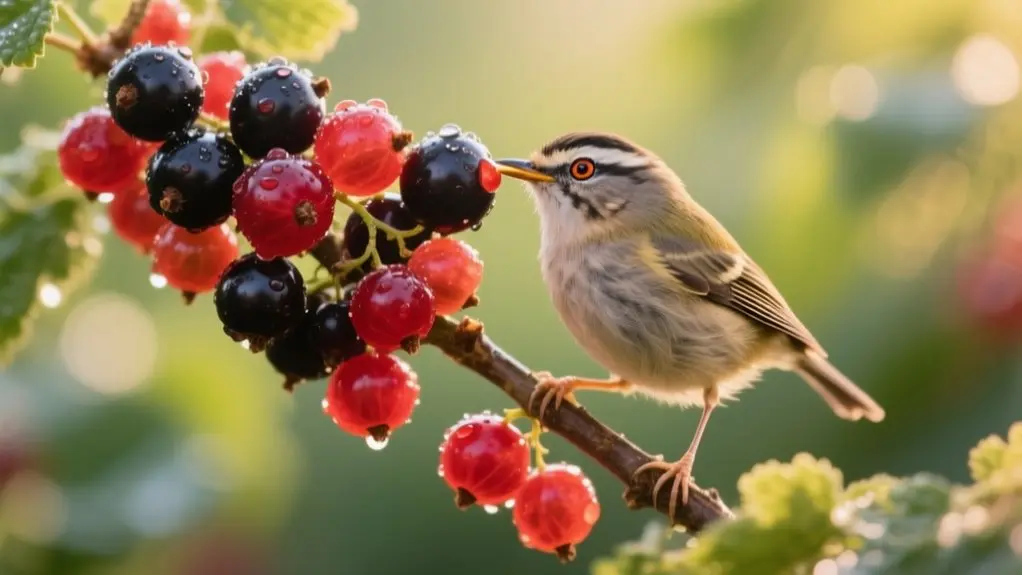
You can safely feed birds currants, as these nutrient-rich berries provide quick energy and attract species like bluebirds, robins, and cedar waxwings. Birds especially enjoy currants in late summer and fall, and the high pectin content aids their digestion.
Make sure the currants are fresh, pesticide-free, and cut into small bunches for easy feeding. If you want to help birds thrive and discover the best ways to include currants and other fruits in their diet, keep exploring.
What Are Currants and Why Birds Like Them
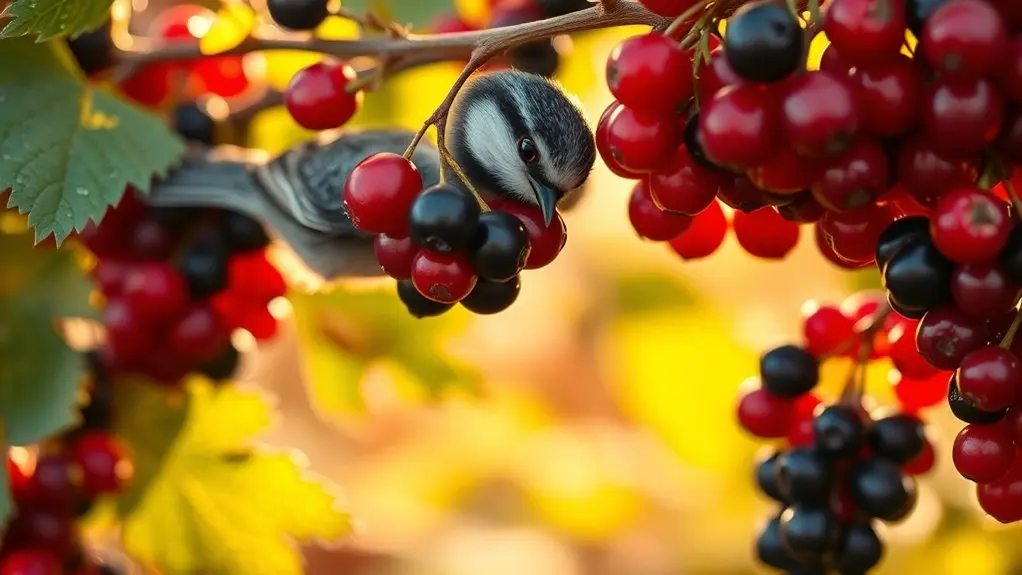
Currants, small berries from the genus Ribes, attract many birds like bluebirds, catbirds, and robins because they’re packed with nutrients and provide quick energy.
You’ll find currants in varieties such as redcurrants, blackcurrants, and whitecurrants, all appealing to different bird species.
Currants come in red, black, and white varieties, each attracting unique bird species to your garden.
These berries are especially popular among frugivorous birds since they offer essential vitamins and a fast energy boost.
Currants are also high in pectin, making them not only tasty but beneficial for wildlife by aiding seed dispersal and supporting healthy ecosystems.
If you grow currants in your garden, you’ll help enhance biodiversity by attracting a range of birds, which in turn supports natural pest control and a balanced environment.
Which Bird Species Commonly Eat Currants?
Which birds are most drawn to these nutrient-rich berries? You’ll often find bluebirds, catbirds, and robins enthusiastically feeding on currants during their peak ripening season.
If you watch closely, cedar waxwings stand out for consuming large amounts of currants, especially in summer.
You might also spot Steller’s jays foraging in gardens or bushes, enjoying these juicy treats.
Here are four common bird species that eat fruit like currants:
- Bluebirds – bright and active feeders.
- Robins – rely on currants during migration.
- Cedar waxwings – known for their berry feasts.
- Steller’s jays – garden visitors with a sweet tooth.
These birds eat fruit not only for its taste but also for the energy currants provide, especially when other foods are scarce.
Are Currants Safe for Backyard Birds?
How safe are those vibrant berries for your backyard birds? Currants, whether red, black, or white, are generally safe and nutritious for many birds like bluebirds and robins. Their high pectin content aids digestion, making currants a beneficial snack.
Just make sure the currants haven’t been treated with chemicals before offering them to your feathered friends. Watching local birds enjoy currants can teach you a lot about their diets and behaviors.
| Bird Species | Currant Variety | Benefit |
|---|---|---|
| Bluebird | Red | Rich in energy |
| Catbird | Black | Aids digestion |
| Robin | White | Nutrient-rich |
| Local Birds | Mixed | Natural food source |
| All | Untreated | Safe for consumption |
When Do Birds Eat Currants During the Year?
When do birds most enthusiastically feast on currants? You’ll notice they primarily enjoy currants during late summer to early fall, when the berries are ripe and packed with nutrients. This season matches their increased foraging and migration needs.
Here’s when you can expect birds to indulge in currants:
- Late summer, as cedar waxwings flock to currant bushes to feast on ripe berries.
- Early fall, when American robins, catbirds, and bluebirds target currants as an essential food source.
- During migration, as currants provide crucial energy for traveling birds.
- In colder months, migrating robins seek out winter currants to sustain themselves.
How Birds Locate and Feed on Currant Bushes
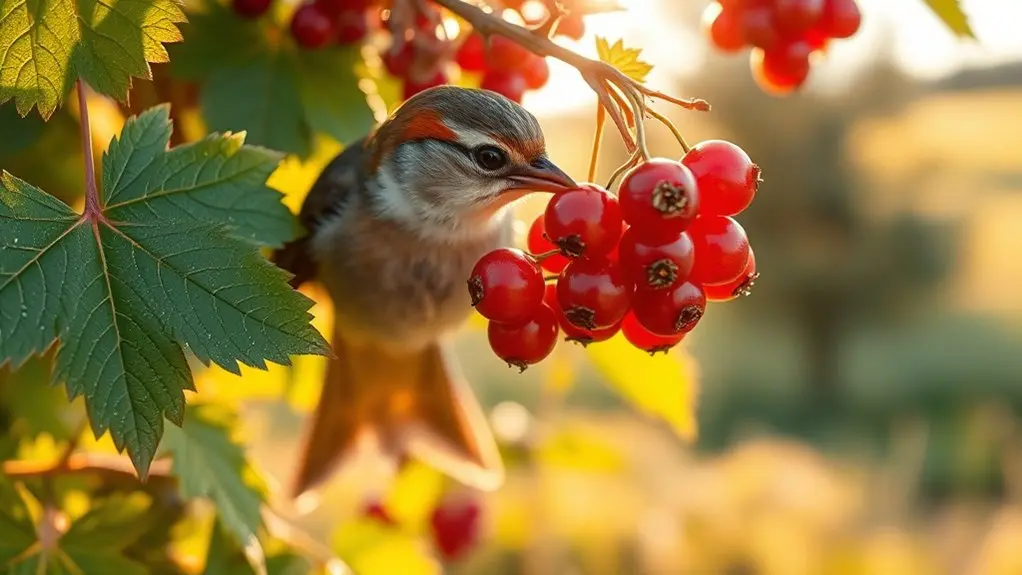
As you watch birds flock to currant bushes during late summer and early fall, you might wonder what draws them so reliably to these plants. Birds like bluebirds, catbirds, and robins spot the bright red, ripe currants from a distance, guided by both sight and smell.
You’ll notice cedar waxwings and Steller’s jays quickly strip the bushes of berries when fruit is at its sweetest. These birds often feed on fruit in clusters, making it easier to snack without picking individual berries.
Cedar waxwings and Steller’s jays feast on clusters of ripe berries, enjoying nature’s sweetest treats.
When you feed birds fruit like currants, you support their natural behavior and help seed dispersal, which encourages new currant plants to grow nearby.
Watching this cycle shows how currant bushes and birds thrive together during the peak ripening season.
How Birds Eat Currants: Feeding Behavior Explained
Though birds have various ways to enjoy currants, you’ll often see them swallowing the berries whole or pecking at them to extract the juice. You might spot bluebirds, robins, or catbirds nibbling on these juicy fruits, especially in summer and fall.
Some birds, like cedar waxwings and Steller’s jays, even strip currant bushes before the berries fully ripen.
When you watch birds nibble on currants, notice these behaviors:
- Swallowing berries whole to get energy fast
- Pecking at currants to savor the juice
- Stripping bushes quickly during peak ripeness
- Choosing both red and black currants as a food source
This feeding behavior helps birds fuel migration and also aids plant propagation in your backyard.
How to Attract Currant-Eating Birds to Your Garden
If you want to attract currant-eating birds, try planting your bushes in sunny spots that also get a bit of shade. This combo helps the berries grow better and makes them more appealing to the birds.
Also, keep an eye on the birds that visit during different seasons. Timing your planting and harvest to line up with their migration and breeding patterns can make a big difference.
Creating the right environment like this means you get to enjoy watching the birds while also harvesting your tasty currants. It’s a win-win!
Ideal Planting Locations
Choosing the right spot for your currant bushes plays a key role in attracting berry-eating birds like robins and waxwings. Currants grow well in sunny or partially shaded areas, so pick locations that offer some light but also shelter, such as garden corners or along fences.
Grouping your currant plants makes them more visible and easier to protect. Here are some tips to help you create an inviting space:
- Plant currants in clusters to enhance berry display and simplify netting.
- Keep currants well-watered and healthy for abundant fruit.
- Add companion berry plants nearby to attract diverse birds.
- Place bird feeders or shallow water sources close to currants.
This setup makes your garden a bird-friendly haven with plenty of tasty currants.
Seasonal Bird Visitors
When late summer and fall arrive, your currant bushes become a magnet for birds like robins, waxwings, bluebirds, and catbirds that feast on the ripe berries. To attract these seasonal bird visitors, plant currants in partial shade and offer supplemental fruits like sliced apples or grapes.
Creating a diverse garden habitat encourages more birds to stop by.
| Bird Species | Favorite Fruits |
|---|---|
| Robins | Currants, apples |
| Waxwings | Currants, grapes |
| Bluebirds | Currants, berries |
| Catbirds | Currants, grapes |
How to Protect Currant Bushes From Too Much Bird Feeding
Although birds like cedar waxwings and robins add life to your garden, they can quickly strip currant bushes of their fruit before it’s ripe. To protect your currants from too much bird feeding, you need a smart approach beyond just setting up bird feeders.
- Use netting to cover the bushes once the fruit starts ripening.
- Group currant plants together, making it easier to cover multiple bushes at once.
- Set up tall fences to support the netting and provide shade your currants enjoy.
- Regularly monitor bird activity and bush health to adjust your protection methods.
How to Feed Currants to Birds Safely
If you want to feed currants to birds safely, start by making sure the fruit is fresh and free from mold.
It’s also important to avoid any currants that have been treated with chemicals.
You can either cut the currants into small bunches or just scatter them on the ground so the birds can easily get to them.
And don’t forget to keep an eye on the feeding spot.
That way, you can clean up any leftovers and help keep the birds healthy and happy.
Preparing Currants Properly
Offer fresh, pesticide-free currants to birds like bluebirds, robins, and waxwings to give them a nutritious energy boost.
To prepare currants properly, follow these steps:
- Choose ripe, fresh currants that are free from spoilage or mold to guarantee safety.
- Cut currant bunches into smaller clusters. This makes it easier for birds to pick and eat.
- Avoid using pesticides or chemicals on currant plants to keep the fruit safe and natural.
- Check feeding areas regularly and remove leftover or spoiled currants. This helps prevent mold growth.
Safe Feeding Techniques
When feeding currants to birds, you’ll want to confirm the fruit is fresh and free from mold or spoilage to keep them healthy.
Using safe feeding techniques means placing currants directly on platform feeders or scattering them on the ground to attract species like bluebirds, robins, and catbirds.
To make feeding easier, cut larger currant clusters into smaller bunches so small birds can access them without trouble. Always use fresh fruit and avoid anything spoiled to prevent health risks.
While setting up feeding spots, remember to maintain cleanliness by regularly removing any uneaten currants.
These safe feeding techniques help confirm birds enjoy this nutritious treat without facing hazards, creating a healthy and inviting environment for your feathered visitors.
Monitoring Bird Consumption
Although currants are a safe and nutritious treat for many birds like bluebirds and robins, you need to monitor how much they eat to keep them healthy.
Monitoring bird consumption helps guarantee the currants remain fresh and attractive to birds, maintaining their attention.
Here’s how to do it effectively:
- Offer fresh currants in small amounts on platform feeders or scatter on the ground.
- Check the currants daily to remove any moldy or spoiled fruit.
- Avoid overfilling feeders to reduce waste and prevent unwanted wildlife.
- Plant currant bushes to provide a natural, steady food source.
Using Currants in Your Bird Feeding Routine
Because currants provide a quick energy boost thanks to their natural sugars, you can easily attract birds like bluebirds, catbirds, and robins by including fresh or dried currants in your feeding routine.
During summer and early fall, offer fresh currants when they’re ripe and abundant. Dried currants work well too, especially during migration, since they keep their sugars and are easy to store.
To make feeding simple, place currants on platform feeders or hang them in mesh bags where birds can reach them easily. Always check that the currants aren’t moldy or spoiled to keep visiting birds safe and healthy.
What Other Fruits Complement Currants for Birds?
Which fruits work best alongside currants to attract and nourish birds? You’ll want to offer a variety that complements the size and nutrition of currants, blueberries, and blackberries, all favorites of birds like robins and bluebirds.
Here are four great options:
- Sliced apples provide a crunchy texture and mild sweetness.
- Halved oranges offer juicy vitamin-rich bites.
- Raisins and dried cranberries deliver concentrated sugars for quick energy.
- Planting raspberry and strawberry bushes creates natural, ongoing fruit sources.
How Currants Benefit Birds’ Health and Nutrition
Pairing currants with other fruits is a great way to attract birds, but understanding how currants alone benefit their health adds another layer to why you should include them in your garden. Currants pack essential vitamins, antioxidants, and natural sugars that boost birds’ immune systems, energy, and longevity. They also promote digestion, helping birds maintain gut health.
| Benefit | Effect on Birds |
|---|---|
| Vitamins A & C | Strengthen immune system |
| High pectin content | Aid digestion |
| Natural sugars | Provide quick energy |
| Antioxidants | Combat oxidative stress |
| Diet diversity | Support balanced nutrition |
Frequently Asked Questions
Can Currants Cause Allergic Reactions in Some Bird Species?
Yes, currants can cause allergic reactions in some bird species. If you introduce currants to your bird’s diet, watch closely for symptoms like digestive upset, lethargy, or feather plucking.
These allergic reactions happen because currants contain tannins and phenolic compounds, which may trigger sensitivities.
Since reactions vary between bird species and individuals, you should monitor your bird’s health carefully to catch any signs of an allergic response early on.
Do Birds Prefer Fresh or Dried Currants?
You might think dried currants are just as good, but birds actually show a fresh preference. They go for fresh currants because they’re juicier and packed with natural sugars that give quick energy.
You’ll notice birds like bluebirds and robins flocking to fresh fruit instead of dried.
Still, offering both can be smart, but if you want to attract the most birds, fresh currants are the way to go.
How Do Weather Conditions Affect Birds’ Consumption of Currants?
Weather conditions directly impact birds’ consumption of currants by influencing their seasonal availability.
You’ll notice birds eat more currants during cold spells when they need extra energy, especially in migration.
Prolonged rain or heat can make currants sour or waterlogged, turning birds away.
Droughts reduce fruit production, limiting what’s available.
Windy or stormy weather also keeps birds from foraging, so their currant intake drops during harsh conditions.
Are Currant Seeds Safe for Birds to Ingest?
Think of currant seeds as tiny life keys, safe for birds to access nourishment. You don’t need to worry about seed toxicity here. Currant seeds are harmless and easily pass through a bird’s digestive system.
In fact, they offer valuable nutrients that support birds like robins and bluebirds.
Just remember, not all seeds share this safety. Avoid toxic ones like apple or cherry pits to keep your feathered friends healthy.
Can Currants Be Used to Deter Pests From Gardens?
Yes, you can use currants for pest control in your garden. By planting currant bushes, you attract beneficial birds like bluebirds and catbirds that naturally reduce harmful insect populations.
This creates a balanced ecosystem, helping keep pests at bay.
Plus, regular pruning and netting improve fruit health and protect crops.
Incorporating currants alongside other plants boosts your garden’s overall pest control, making your green space healthier and more vibrant.
Conclusion
Now that you know birds love currants, you can add them to your backyard feeding routine confidently. Did you know that up to 40% of certain bird species’ diets include berries like currants during the fall? That’s a big boost for their nutrition!
By offering currants safely and seasonally, you’re helping birds thrive while enjoying their vibrant visits. So, go ahead, feed those currants and watch your feathered friends flourish!