
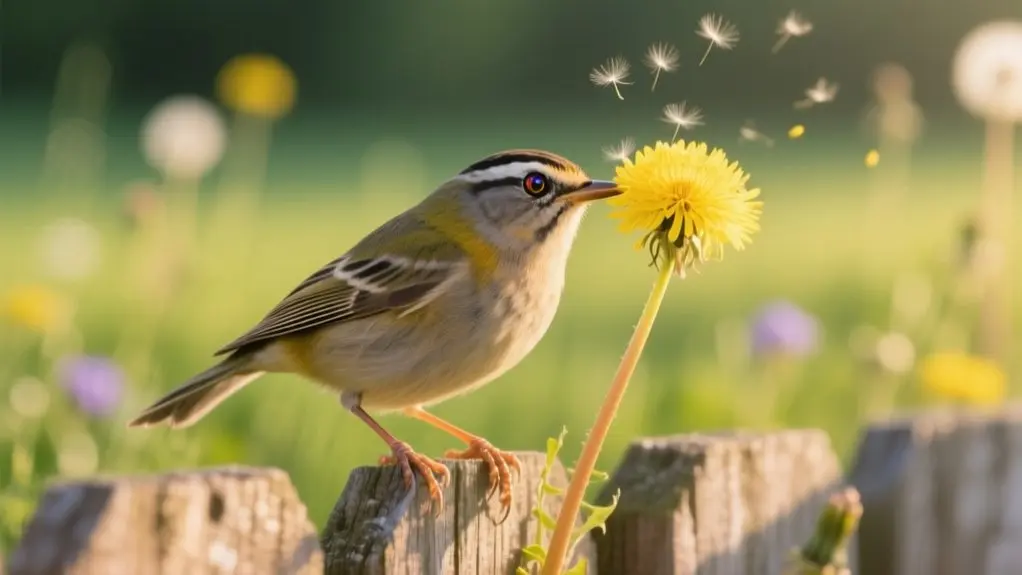
Yes, you can safely feed dandelions to many common bird species because they’re packed with vitamins, minerals, and antioxidants that support bird health and energy. Birds enjoy various parts, especially the energy-rich seeds, while leaves and flowers also offer nutrition and hydration.
Just make sure the dandelions are free of pesticides and introduce them gradually. If you want to understand how urban birds depend on dandelions and which species prefer them, keep exploring these insights.
What Are Dandelions and Where Do They Grow?
Dandelions are hardy flowering plants you’ll often spot in lawns, gardens, and disturbed areas across temperate regions. These plants thrive in various environments thanks to their deep taproots, which access nutrients and moisture even in tough soil.
You’ll recognize dandelions by their bright yellow flowers that bloom in spring and summer, later turning into fluffy puffballs. The entire dandelion plant, leaves, stems, and flowers, is edible, making it a valuable food source for many creatures.
Seed-eating birds, in particular, benefit from dandelions since the puffball seed heads provide nourishment. Beyond feeding birds, dandelions support pollinators and contribute to ecosystem health, showing that these common plants are more than just weeds.
Can Birds Eat Dandelions? Quick Answer
Birds happily include many parts of this plant in their diet, enjoying not only the seeds but also the leaves and flowers.
You’ll find dandelions to be a nutritious option for birds, packed with essential vitamins and minerals. They provide hydration, which is especially valuable during warmer months when water may be scarce.
You should make sure the dandelions you offer are organic and free from pesticides or herbicides to keep birds safe.
While seeds are popular, many birds also nibble on the tender leaves and bright yellow flowers.
Feeding birds dandelions is a simple way to support their health naturally, as these plants offer both nutrition and moisture.
Which Bird Species Eat Dandelions Most Often?
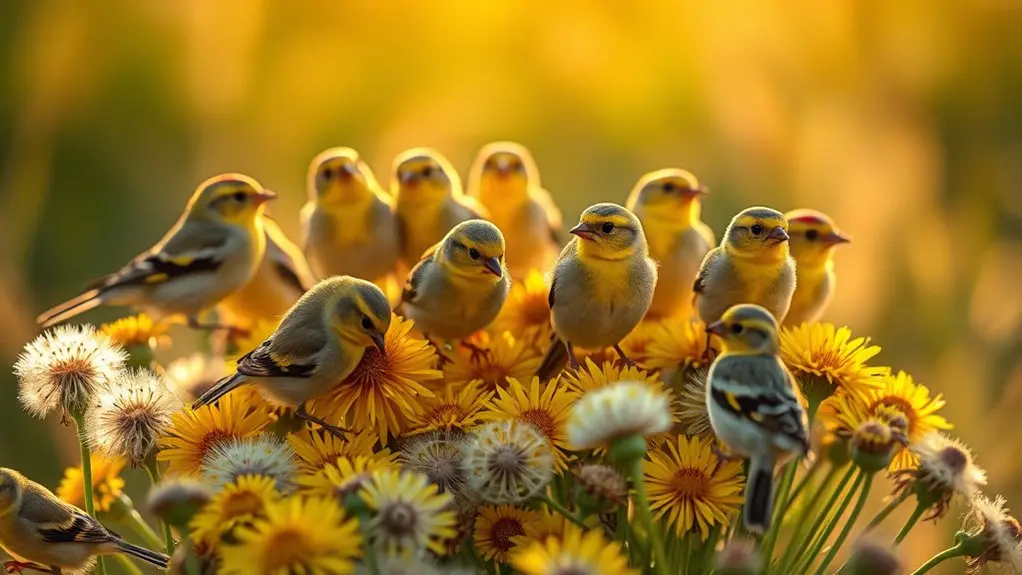
You’ll often spot Lesser and American Goldfinches enjoying dandelion seeds.
In fact, American Goldfinches sometimes hold the stems down with their feet while they eat.
Sparrows, especially House Sparrows, also like to include these seeds in their diet.
Knowing this helps you see just how important dandelions are for many backyard birds’ nutrition.
Common Dandelion Eaters
Although many plants provide food for wildlife, few are as versatile as the common dandelion when it comes to feeding various bird species. You’ll find that many seed-eating birds, like Lesser Goldfinches and American Goldfinches, rely heavily on dandelion seeds as a nutritious food source.
Mourning Doves and House Sparrows also dig into dandelion seeds, especially in urban areas where these plants thrive.
Beyond seeds, ground-feeding birds such as Quail enjoy the dandelion leaves because they offer essential nutrients that support their diet.
The dandelion’s ability to attract a variety of bird species highlights its important role in urban and natural ecosystems, making it a valuable plant for feeding and sustaining diverse bird populations.
Feeding Habits And Preferences
When you observe dandelions in your yard, you’ll notice that certain bird species rely on them more than others for food and nesting materials.
Lesser Goldfinches, for instance, have unique feeding habits, consuming seeds from unopened dandelion heads.
American Robins prefer foraging dandelion greens, adding valuable nutrients to their diet, much like fruits and vegetables do.
House Sparrows often eat dandelion seeds, especially in urban areas where these plants thrive.
Goldfinches not only feast on the seeds but also use dandelions as nesting material, showing the plant’s versatility.
While birds enjoy a variety of foods such as corn on the cob, dandelions remain an essential seasonal resource, especially during spring and summer when seeds are abundant and easy to access.
Which Dandelion Parts Are Edible for Birds?
Wondering which parts of the dandelion your feathered friends can safely eat? Good news: birds can enjoy all parts of this plant.
The leaves provide vitamins A, C, and K and contain high water content, helping keep birds hydrated.
Bright yellow flowers attract birds with their nectar and pollen, offering extra nutrients.
Even the roots are edible, supplying fiber and additional nourishment.
However, never feed dandelions treated with pesticides or herbicides, as these chemicals can harm birds.
In urban areas where native plants are limited, offering dandelions supports birds’ dietary needs and encourages natural foraging.
Are Dandelions Safe for Birds to Eat?
You’ll find that dandelions offer great nutritional benefits for birds, packed with vitamins and minerals.
They’re generally safe, but it’s good to keep an eye out for any potential pesticides or pollutants that might be on them.
Nutritional Benefits for Birds
Although some plants can be harmful, dandelions offer a safe and nutritious option for birds. Their dandelion health benefits include providing vitamins A, C, and K, along with essential minerals like calcium and iron.
You’ll notice birds adapt their bird feeding habits by consuming the entire plant, including roots, leaves, flowers, and even seeds from unopened heads, as Lesser Goldfinches do. This versatility makes dandelions an excellent seasonal food source, especially when other options are scarce.
Plus, the antioxidants in dandelions help boost birds’ immune systems, while the high fiber content supports digestion.
Potential Toxicity Concerns
While dandelions offer many nutritional benefits for birds, it’s important to think about any potential risks before adding them to your bird-feeding routine.
Though dandelions themselves are generally safe and nutritious, you need to be cautious about toxicity thresholds related to chemical exposure.
Herbicides and pesticides commonly used on lawns can linger on dandelions, posing serious health risks to birds if ingested.
To protect your feathered friends, focus on safe sourcing by collecting dandelions from untreated areas or growing your own.
By ensuring the plants are free from harmful chemicals, you minimize toxicity concerns and provide a healthy, natural food source.
Keeping these precautions in mind will help you safely incorporate dandelions into your birds’ diet without compromising their well-being.
Safe Foraging Practices
When you provide dandelions to birds, you offer them a safe and nutrient-rich food source that supports their health. Foraging techniques matter. Make certain the dandelions haven’t been treated with herbicides or pesticides. This guarantees the plants are safe for birds and promote ideal bird nutrition.
Dandelions are especially helpful in urban habitats, where natural food sources can be limited. Birds like Lesser Goldfinches enjoy seeds from unopened flower heads, and many species eat the entire plant.
Keep these safe foraging tips in mind:
- Harvest dandelions from pesticide-free areas
- Offer the whole plant (leaves, stems, flowers)
- Focus on urban habitats lacking native plants
- Introduce dandelions gradually to local bird diets
- Observe birds’ preferences to refine your foraging approach
These practices support healthy, safe feeding habits.
How to Tell If Dandelions Are Safe for Birds
To guarantee dandelions are safe for your birds, always check that they haven’t been exposed to herbicides or pesticides. These chemicals can be harmful.
Use dandelion identification tips to confirm you’re harvesting the right plant. Look for bright yellow flowers and jagged leaves.
Practice safe harvesting methods by picking fresh, healthy plants free from mold or decay. Remember, the entire dandelion plant is edible, so you can offer leaves, flowers, and roots for variety.
Consider seasonal dandelion availability too. They’re most abundant in spring and early summer, providing fresh nutrition during these times.
When Should You Avoid Giving Dandelions to Birds?
You should avoid giving dandelions to birds if the plants have been exposed to herbicides or pesticides, as these chemicals can be toxic. Following proper bird feeding guidelines guarantees their safety and health.
Avoid feeding birds dandelions treated with herbicides or pesticides to ensure their safety and well-being.
Also, steer clear of dandelions that are moldy or rotten, since spoiled food causes serious health issues. When foraging seasonally, choose dandelions from uncontaminated areas to avoid pollution risks.
Be cautious with dandelion roots, as they may be harder for some birds to digest. If birds haven’t eaten dandelions before, introduce them gradually to prevent digestive problems.
Here are key dandelion preparation tips to remember:
- Avoid chemically treated dandelions
- Don’t feed moldy or rotten parts
- Limit dandelion root feeding
- Collect from clean, pollution-free areas
- Introduce dandelions slowly to new feeders
Why Dandelions Are Good for Wild Birds
Ensuring the dandelions you offer to birds are safe is just one part of the picture. These resilient plants provide essential dandelion benefits, supplying wild birds with vitamins A, C, K, calcium, and iron.
Their seeds offer a high-energy meal that supports bird foraging, especially for species like American and Lesser Goldfinches. Dandelion flowers also attract insects, giving insectivorous birds extra food options.
In urban wildlife settings, dandelions thrive, making them an important natural resource where other plants may not grow.
| Dandelion Benefits | Bird Foraging Role |
|---|---|
| Rich in vitamins & minerals | Seeds fuel energy needs |
| Flowers attract insects | Supports diverse diets |
| Thrives in urban areas | Essential for urban wildlife |
How Urban Birds Rely on Dandelions
Although urban environments often lack diverse native plants, birds like the Lesser Goldfinch depend heavily on dandelions for their seeds. These seeds provide essential nutrition throughout spring and summer.
In Urban Bird Habitats, dandelions thrive in disturbed soils, ensuring reliable Seed Availability when other plants may fail. This consistent food source plays a significant role in Ecosystem Support, indirectly benefiting birds by sustaining pollinators and enhancing biodiversity.
If you’re observing city birds, you’ll notice how these resilient plants help sustain them when natural options are scarce.
- Dandelions adapt well to urban soils
- Seeds offer critical nutrients for seed-eating birds
- Provide food during early plant growth stages
- Support pollinators that benefit the ecosystem
- Substitute native plants in limited urban environments
Do Birds Prefer Dandelion Seeds, Leaves, or Flowers?
How do birds decide which part of the dandelion to eat? Your observation of bird foraging behavior shows many seed-eating species prefer dandelion seeds for their energy-rich content. Lesser Goldfinches even target seeds from unopened heads.
While dandelion leaves provide nutritious greens, especially in spring, birds generally favor seeds. Flowers attract some birds because of nectar but rank lower in preference. Seasonal feeding patterns influence which parts birds consume most.
| Dandelion Part | Bird Preference |
|---|---|
| Seeds | Highest; energy-rich, favored mostly |
| Leaves | Moderate; nutritious, spring feeding |
| Flowers | Low; nectar source, less preferred |
| Unopened Seeds | Preferred by Lesser Goldfinches |
| All | Used variably depending on season |
Your understanding of dandelion seed preferences helps explain these feeding choices.
Other Weeds Similar to Dandelions for Bird Feeding
When you’re looking to attract birds with plants similar to dandelions, several common weeds can serve as excellent alternatives. These plants provide valuable nutrition and variety for your feathered visitors.
You’ll find that the chickweed benefits include nutritious leaves and seeds that appeal to many bird species. Nettle seeds, despite the plant’s sting, are a favored treat during breeding.
Plantain varieties offer high nutritional value with seeds that birds love.
Here are five great options to explore:
- Chickweed: Edible leaves and seeds for diverse birds
- Nettle: Seeds packed with nutrients for breeding birds
- Plantain: Various types with highly favored seeds
- Purslane: Rich in omega-3s, good for hydration
- Clover: Protein-rich leaves and seeds for seed-eaters
Including these weeds can boost your garden’s bird-friendly appeal.
How to Grow or Find Dandelions for Your Local Birds
Because dandelions thrive in disturbed soils and urban areas, you can often find them growing naturally in your garden, lawn, or nearby fields without any special effort. To boost dandelion growth, avoid herbicides and pesticides. This protects both plants and birds.
Using native plants alongside dandelions enhances urban gardening benefits by attracting local wildlife like Lesser Goldfinches. Here are some dandelion growth tips to help you support your local birds:
| Task | Benefit | Tip |
|---|---|---|
| Avoid chemicals | Protects dandelions & birds | Use organic methods |
| Maintain disturbed soil | Encourages natural growth | Lightly till soil if needed |
| Plant native seeds | Supports biodiversity | Choose local native species |
| Provide water | Aids seed germination | Water during dry spells |
| Leave seed heads | Food for birds | Don’t mow too early |
Frequently Asked Questions
Can Dandelions Cause Allergies in Birds?
Dandelions rarely cause bird allergies, so you don’t need to worry much about dandelion effects. Most bird allergies stem from pollen sensitivity, not from eating the plants themselves.
However, if your bird has a history of allergies, it’s smart to watch for any signs of discomfort when introducing dandelions.
Keep an eye on your feathered friend, and if you notice sneezing or itching, stop feeding dandelions and consult a vet.
Do Pet Birds Enjoy Eating Dandelions?
Imagine offering your pet bird a dandelion like a knight presenting a prized herb at a medieval feast.
You’ll find many birds enjoy the dandelion benefits, from its vitamins to its slightly bitter taste that suits their bird preferences.
When feeding dandelions, make sure they’re pesticide-free for safety.
Offering fresh dandelion greens also adds variety and hydration, keeping your feathered friend happy and healthy with a natural, engaging treat.
How Do Dandelions Affect Bird Digestion?
Dandelions positively affect bird digestion by boosting digestive enzymes that break down food efficiently.
You’ll notice dandelion benefits through their high nutritional value, especially vitamins A, C, and K, which support gut health.
The fiber in dandelion leaves helps regulate digestion, reducing constipation and promoting smooth nutrient absorption.
Including dandelions in your bird’s diet enhances digestive function, making them a natural aid for maintaining a healthy digestive system.
Can Dandelions Be Used in Birdseed Mixes?
Absolutely, you can confidently create birdseed mixes with dandelions! Dandelion nutritional benefits boost bird health, blending beautifully with other seeds.
Birds’ dandelion foraging habits show they favor these flavorful flowers and seeds. Considering dandelion seed preferences, including these seeds satisfies their natural cravings.
Are Dandelions Toxic to Baby Birds?
Dandelions aren’t toxic to baby birds and actually offer nutritional benefits like vitamins A, C, and K.
To safely include dandelions in their diet, you should focus on proper dandelion preparation.
Wash them thoroughly to remove pesticides and herbicides.
Follow feeding guidelines by introducing small amounts gradually, encouraging natural foraging behavior.
This helps support healthy growth while ensuring the dandelions are a safe, nutritious supplement for your baby birds.
Conclusion
You now know that birds can safely enjoy dandelions, especially their seeds and leaves. Notably, studies show that over 30% of urban bird diets include dandelion parts, highlighting their importance as a natural food source.
So, next time you see these bright yellow blooms, remember they’re more than just weeds. They’re a crucial treat for your local feathered friends. Growing dandelions can help support bird populations right in your backyard!