
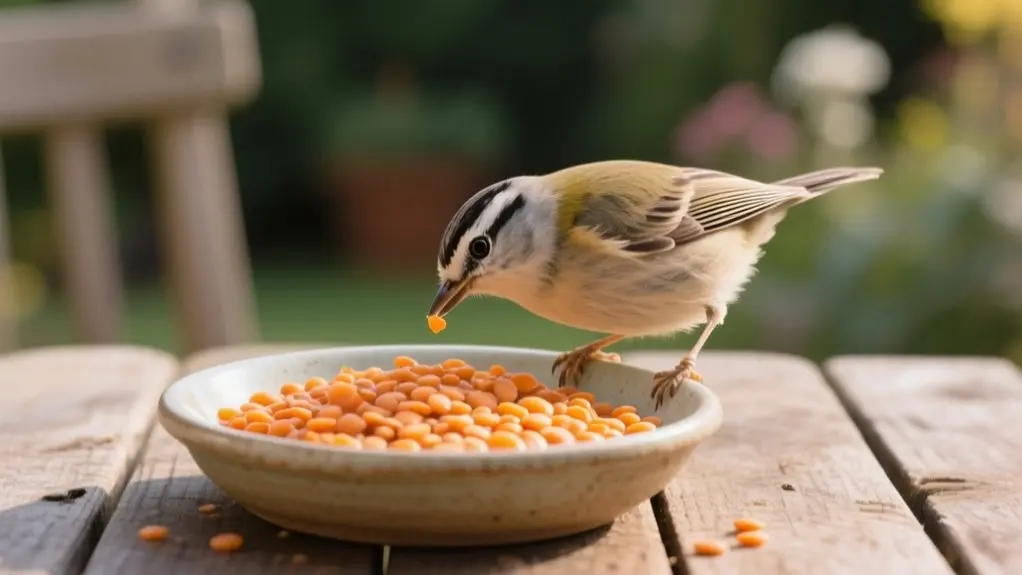
Yes, you can safely feed cooked lentils to birds as long as they’re plain, fully cooked, and properly stored to avoid mold and toxins. Raw lentils contain harmful compounds, so thorough cooking or sprouting is essential.
Serve in small portions to prevent pests, and watch for any signs of spoilage or bird distress. Lentils offer valuable nutrients and can be a healthy supplement when prepared correctly.
There’s more to know about which birds enjoy lentils and how to serve them safely.
Are Cooked Lentils Safe for Wild Birds?
Although raw lentils can pose risks, cooked lentils are safe for wild birds as long as you serve them plain, unsalted, and without added fats or seasonings. Cooking breaks down compounds in raw lentils that can be toxic, making them easier for birds to digest.
Cooked lentils are safe and nutritious for wild birds when served plain and unsalted.
You should always cool the lentils completely and avoid any human food additives before offering them.
Serve cooked lentils in moderation to reduce the risk of mold growth and contamination.
Lentils can be a valuable, protein-rich supplement, especially during winter months when natural food sources dwindle.
Nutritional Benefits of Lentils for Birds
When you include lentils in bird diets, you provide a rich source of protein, iron, and folate that supports their overall health. Lentils supply essential amino acids indispensable for maintaining strong feathers and muscle development. Their iron content aids in oxygen transport and energy metabolism, while folate supports cell function and immune response.
Sprouted lentils, in particular, increase nutrient bioavailability and hydration, enhancing nutrient absorption. Incorporating lentils also adds dietary variety, which can help prevent nutritional deficiencies and promote a balanced diet.
By feeding birds cooked lentils, you contribute to strengthening their immune systems and overall vitality. This nutritional boost makes lentils a valuable, natural supplement to traditional bird feed, benefiting both wild and captive birds alike.
It’s an easy way to help your feathered friends stay healthy and thrive!
Preparing Lentils Safely for Birds
Because raw lentils contain antinutrients and toxins, you need to rinse and cook them thoroughly without any salt, spices, or oils before offering them to birds. Cook lentils until they’re soft, then let them cool completely to avoid burns or choking hazards.
Always serve plain, unsalted lentils and store leftovers in the refrigerator. Serve small portions to prevent spoilage and keep pests away.
| Step | Reason | Emotion Evoked |
|---|---|---|
| Rinse thoroughly | Remove dirt and toxins | Confidence |
| Cook fully | Neutralize harmful compounds | Assurance |
| Cool completely | Prevent burns/choking | Care |
| Serve plain & small | Maintain safety and freshness | Trust & Responsibility |
Which Bird Species Enjoy Lentils Most?
Now that you know how to prepare lentils safely for birds, it’s helpful to understand which species are most likely to enjoy them. Finches, including goldfinches and house finches, particularly appreciate lentils for their high protein content.
Parrots and parakeets accept cooked or sprouted lentils as a nutritious dietary supplement.
Small ground-feeding birds like quail frequently forage for sprouted lentils to boost their energy and nutrient intake.
Chickens and doves also readily consume lentils, making them a favored choice in supplemental feeding.
While larger birds such as pigeons and some raptors may occasionally peck at lentils, these legumes primarily appeal to small to medium-sized seed and grain eaters.
Understanding these preferences helps you provide the right nutrition to your feathered friends effectively.
Serving Lentils Safely to Avoid Pests
You’ll want to serve cooked lentils in small, controlled portions. This helps minimize leftovers that might attract pests.
Also, using clean, covered containers and elevated feeders can really keep rodents away from the food.
Preventing Pest Attraction
How can you serve cooked lentils to birds while keeping pests at bay? Start by offering lentils in small, manageable portions within secure containers to minimize spillage. Use covered or hanging feeders to restrict access for pests like mice, rats, and raccoons.
Always clean up any leftover lentils promptly and avoid leaving uneaten food outdoors, as this attracts rodents and insects. Keep feeding areas dry to prevent mold growth, which can lure pests and harm birds.
After each feeding, discard uneaten lentils and thoroughly clean feeding dishes to maintain hygiene and deter infestations. By following these steps, you guarantee a safe feeding environment for birds while effectively preventing unwanted pests from invading your outdoor space.
Proper Portion Control
Although feeding birds cooked lentils can be a rewarding experience, controlling portion sizes is essential to prevent attracting pests like mice and rats. Serve small portions and remove uneaten lentils promptly to avoid spoilage and pest infestation.
Make sure to store any unused lentils in airtight containers in the refrigerator to keep them fresh. It’s a good idea to limit feeding to just a few times per week.
Also, use designated, easy-to-clean trays to reduce mess and keep an eye on pest activity more efficiently.
| Proper Portion Control Tips | Benefits |
|---|---|
| Serve small lentil portions | Minimizes leftover food |
| Remove uneaten lentils | Prevents spoilage and pests |
| Use clean feeding trays | Eases pest monitoring |
Signs of Health Issues After Feeding Lentils
When you introduce cooked lentils to your bird’s diet, it’s important to watch for signs of health issues that may arise. Monitor for lethargy, decreased appetite, or abnormal droppings. These often indicate digestive upset or intolerance.
Introducing cooked lentils requires careful monitoring for lethargy, poor appetite, or unusual droppings in your bird.
Respiratory distress, sneezing, nasal discharge, or swelling around the eyes could signal exposure to moldy or spoiled lentils. Be alert for sudden weight loss and behavioral changes such as increased hiding or reduced activity. These may suggest digestive discomfort or poisoning.
Diarrhea or unusual stool consistency after feeding lentils also warrants concern. Always observe your bird closely after adding new foods.
If you notice any adverse symptoms, seek veterinary care promptly to ensure your bird’s health and safety.
Risks of Feeding Lentils to Birds
You should avoid feeding birds raw lentils because they contain toxins like lectins, which can cause serious digestive issues.
Also, watch out for lentils that are improperly stored or spoiled. Mold growth on these lentils can lead to respiratory problems or infections.
Toxicity Concerns
Because raw lentils contain toxins and anti-nutrients, you should never feed them to birds unless they’re thoroughly cooked. Improperly cooked lentils can cause digestive distress or toxicity due to resistant starches.
To keep your bird safe, consider these toxicity concerns:
- Raw or undercooked lentils may disrupt digestion and nutrient absorption.
- Anti-nutrients in lentils can interfere with your bird’s ability to absorb essential minerals.
- Overfeeding lentils increases the risk of nutritional imbalances and health problems.
- Always verify lentils are fully cooked and free from any signs of spoilage before offering them.
Mold And Spoilage
How can mold and spoilage in lentils threaten your bird’s health? Moldy lentils can produce harmful mycotoxins, like those causing aspergillosis, which is a serious respiratory disease in birds. Spoiled lentils often have fuzzy or discolored mold, which is a clear sign of potential danger.
Feeding your bird lentils contaminated with mold may lead to respiratory issues, weakened immunity, and digestive problems. Mold grows quickly in moist or improperly stored lentils, which increases the risk of toxicity if your bird eats them.
To keep your bird safe, always check lentils carefully for any signs of mold or spoilage before feeding. It’s best to store lentils in a cool, dry place to prevent moisture buildup and mold growth.
Taking these simple steps helps ensure your bird stays healthy when you offer cooked lentils as a treat or part of their diet.
Protein-Rich Alternatives to Lentils for Birds
While cooked lentils provide an excellent protein source for birds, you can also enhance their diet with other nutrient-dense legumes. Including a variety of protein-rich foods helps supply essential amino acids and supports overall health.
Make certain all beans are thoroughly cooked or sprouted to eliminate toxins before feeding.
Consider these alternatives:
- Sprouted mung beans – rich in protein and easy to digest.
- Adzuki beans – offer iron and a unique nutrient profile.
- Chickpeas – high in protein and fiber, beneficial for digestion.
- Peas – provide protein and vitamins, enhancing dietary diversity.
Frequently Asked Questions
Can Baby Birds Eat Cooked Lentils Safely?
Yes, you can safely feed baby birds cooked lentils if they’re plain, fully cooked, and unsalted.
Make sure to serve small, mashed portions to avoid choking. It’s best to introduce lentils gradually and watch their reaction carefully. This way, you’ll know if they’re handling it okay.
How Often Can I Feed Lentils to My Pet Bird?
You shouldn’t feed lentils daily. Limit servings to 2 or 3 times a week. This helps keep your bird healthy by preventing digestive issues.
At the same time, lentils provide protein and fiber, which are great for your pet. Just keep an eye out for any discomfort. If you notice anything off, adjust the feeding schedule accordingly.
Are Canned Lentils Safe for Birds if Rinsed Well?
Yes, you can safely feed your bird canned lentils if you rinse them thoroughly to remove excess sodium and preservatives. Always choose plain, unseasoned lentils, and offer them in moderation for the best health benefits.
Just make sure to give them a good rinse to wash away any extra salt or additives. Birds can be sensitive to these, so keeping it simple is key. It’s a convenient option when you don’t have fresh lentils on hand.
Can Lentils Cause Digestive Upset in Birds?
Yes, lentils can cause digestive upset in birds if overfed or given raw. You should always cook lentils thoroughly and introduce them gradually.
This helps avoid bloating, diarrhea, or discomfort. Lentils have high fiber and antinutrient content, which can be tough on a bird’s digestive system if not prepared right. So, it’s best to take it slow and observe how your bird reacts.
Is It Okay to Mix Lentils With Birdseed?
Think of mixing lentils with birdseed as adding a dash of protein spice to their diet. You can do it safely. Just serve fully cooked, plain lentils in moderation.
Also, keep feeding areas clean to avoid spoilage. That way, your feathered friends stay happy and healthy!
Conclusion
So, if you fancy turning your backyard birds into lentil connoisseurs, go ahead. Just don’t serve them a five-star lentil soufflé. Cooked lentils can be a safe, nutritious treat, but remember, birds aren’t exactly food critics.
Too much might lead to a bird-sized food coma or unwelcome pest parties. Keep portions small and prep them right. You’ll have happy, healthy feathered friends—not a lentil-fueled avian riot.