
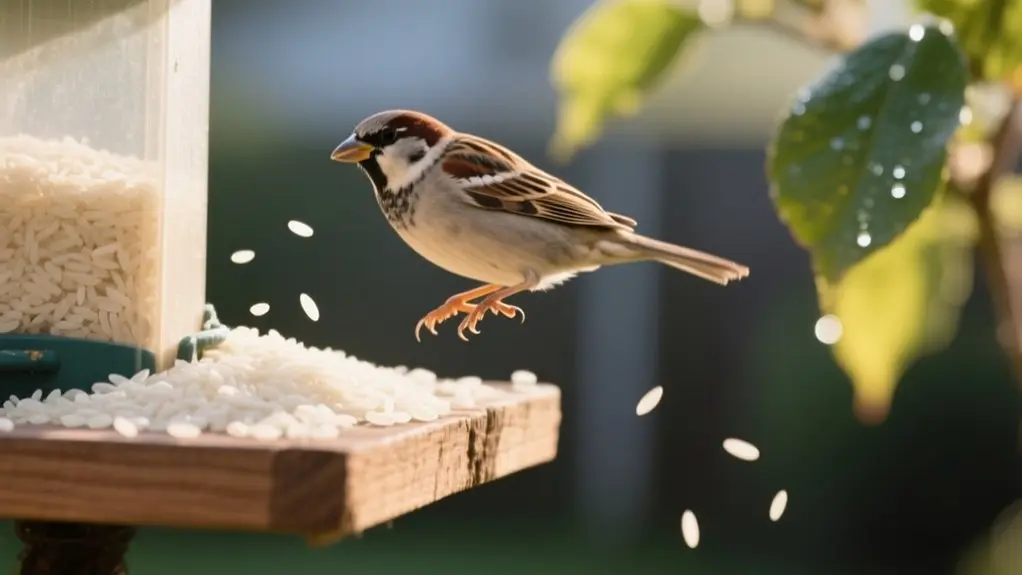
You can definitely feed birds dry rice without worrying about it swelling in their stomachs or causing harm. Birds have strong digestive systems and a gizzard that efficiently grinds grains, so uncooked rice poses no risk.
Smaller birds might prefer cooked rice since it’s softer, but both forms are safe if offered in moderation alongside other foods. If you want to understand which species enjoy rice and learn about safer alternatives, there’s more useful info ahead.
Can Birds Safely Eat Rice?
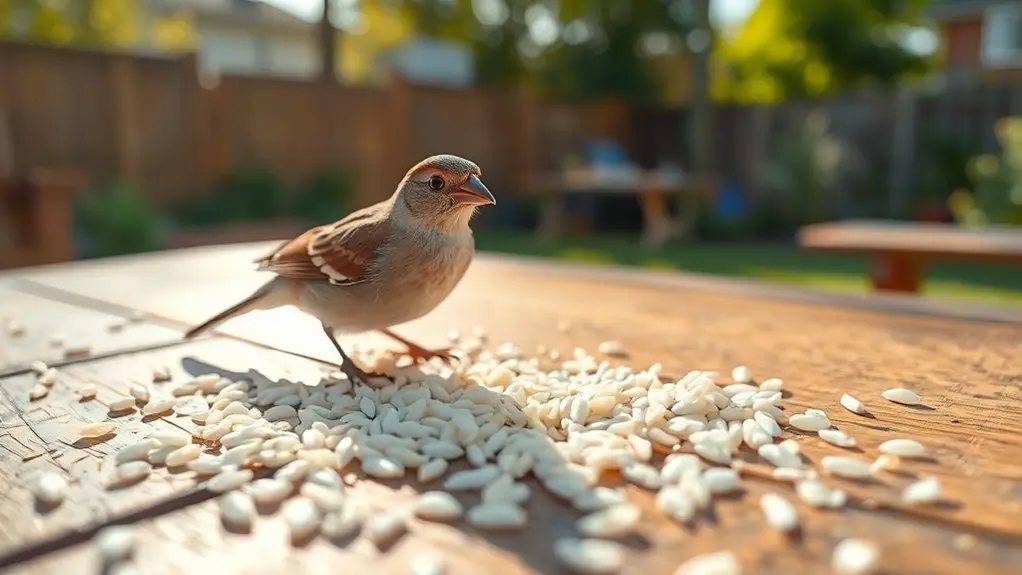
Although many people worry that rice might harm birds, you’ll be glad to know that birds can safely eat both cooked and uncooked rice. Their digestive systems efficiently break down grains, so feeding birds uncooked rice poses no risk of harmful swelling.
In fact, species like pigeons, sparrows, and blackbirds often enjoy rice as part of their diet, especially in agricultural areas.
Pigeons, sparrows, and blackbirds commonly include rice in their diets, especially near farms.
While rice provides a quick energy boost, it lacks essential vitamins and minerals, so it’s best to offer it in moderation alongside other nutritious foods.
When feeding birds, cooked rice that’s unseasoned and free of additives tends to be more appealing and safer for many bird species.
Debunking the Myth That Rice Harms Birds
You might’ve heard that rice expands in birds’ stomachs and causes harm, but that’s just not true.
Actually, birds have strong digestive systems that break down rice efficiently without any swelling.
When you think about it, their digestion is pretty impressive.
Understanding how their digestive system works really helps clear up this common myth.
Rice Expansion Myth
Since many people worry that uncooked rice expands in birds’ stomachs and causes harm, it’s important to know this is a myth.
The rice expansion myth suggests that dry rice swells inside birds, damaging their digestive systems.
However, birds’ stomachs, particularly their gizzards, are designed to grind hard seeds and grains like uncooked rice efficiently.
Scientific studies confirm that birds consume uncooked rice safely, even during long migrations, without any adverse effects.
This misconception originated from a 1996 Ann Landers column and has since been debunked by research.
Despite attempts like Connecticut’s proposed ban on throwing rice at weddings, no evidence supports the idea that uncooked rice harms birds.
Bird Digestion Facts
Understanding how birds digest food clears up the confusion about dry rice harming them. Key bird digestion facts reveal that birds have a specialized organ called the gizzard, which grinds hard seeds and grains, including uncooked rice.
This means uncooked rice doesn’t swell dangerously inside a bird’s stomach, as many myths suggest. Instead, birds like sparrows and doves digest rice efficiently, using it as a carbohydrate source for energy.
However, rice lacks the full nutritional value birds need, missing essential vitamins and minerals, so it shouldn’t be their sole food.
Wild birds such as bobolinks and blackbirds naturally forage for rice, especially during migration, showing it’s a safe and familiar part of their diet.
Understanding these facts helps you see why feeding birds dry rice isn’t harmful.
How Birds Digest Dry and Cooked Rice
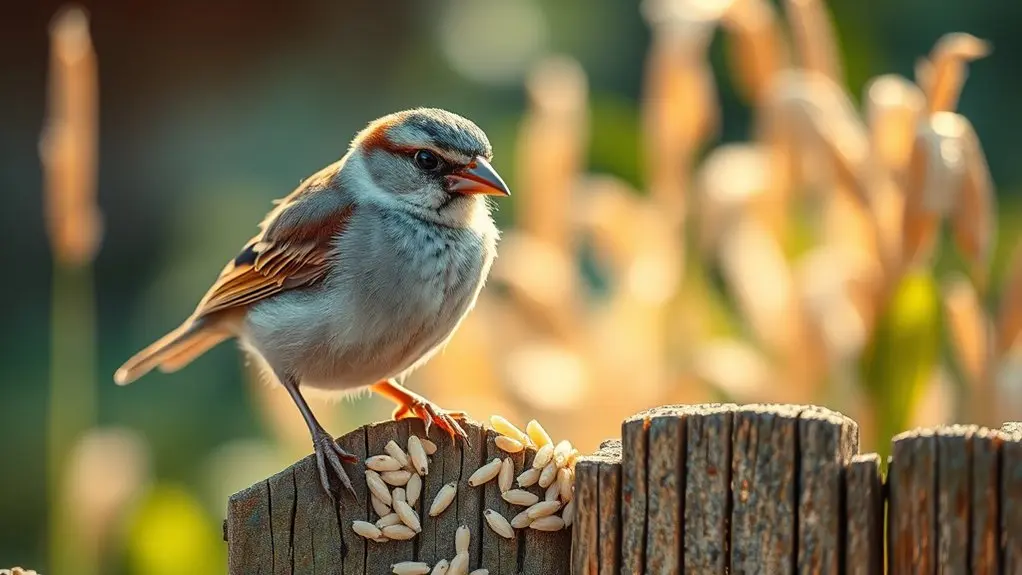
You might be curious about how birds deal with dry rice compared to cooked rice in their digestive system.
Well, their gizzard is pretty amazing—it can break down tough grains like dry rice without any trouble.
On the other hand, cooked rice is much easier for them to digest, especially if it’s plain and unseasoned.
Knowing this can help you feed birds in a safe and thoughtful way.
Rice Digestion Process
Although dry rice might seem hard for birds to digest, their specialized gizzard grinds and breaks down the grains efficiently. This allows them to handle both dry and cooked rice without issues.
Understanding the rice digestion process helps you see why uncooked rice doesn’t swell inside their stomachs because they lack the heat needed for expansion.
Different bird species eat rice differently. Smaller birds like sparrows manage uncooked rice, while larger ones like pigeons handle it with ease.
Here’s what you should know:
- Birds use their gizzard to break down hard grains
- Uncooked rice passes safely without swelling
- Cooked rice is softer and often preferred
- Rice offers energy but lacks complete nutrients
This knowledge helps you feed birds responsibly.
Cooked Vs. Dry
While both cooked and dry rice provide energy to birds, the way their digestive systems handle these forms differs slightly. Birds have strong gizzards that can break down uncooked rice just as well as cooked rice.
Contrary to popular belief, uncooked rice doesn’t expand inside a bird’s stomach since it lacks the heat needed to swell. Cooked rice is softer and easier for birds to digest, making it a convenient option, especially for smaller species.
However, uncooked rice remains suitable for many birds like pigeons, although it lacks essential vitamins and minerals. To support their health, you should offer rice as a supplement rather than a primary food source.
Brown rice, whether cooked or uncooked, provides more nutrients, making it a healthier choice for feeding birds.
Which Wild Bird Species Commonly Eat Rice?
Because rice is available in various environments, several wild bird species have adapted to include it in their diets. When you feed rice, you’ll notice certain wild birds are more likely to eat it.
The common species that regularly consume rice include:
- Bobolinks, which forage for wild rice during migration
- Red-winged blackbirds, attracted to rice when it’s available
- Sparrows and doves, which readily accept and digest uncooked rice
- Blackbirds, grackles, and blue jays, who eat rice occasionally
Though these birds do feed rice, rice isn’t a major attractant compared to seeds like black oil sunflower seeds.
Wild rice offers better nutrition, making it a preferred choice for some species seeking a balanced diet.
Understanding these common species helps you know which wild birds might show up when you provide rice.
Is Cooked or Dry Rice Better for Feeding Birds?
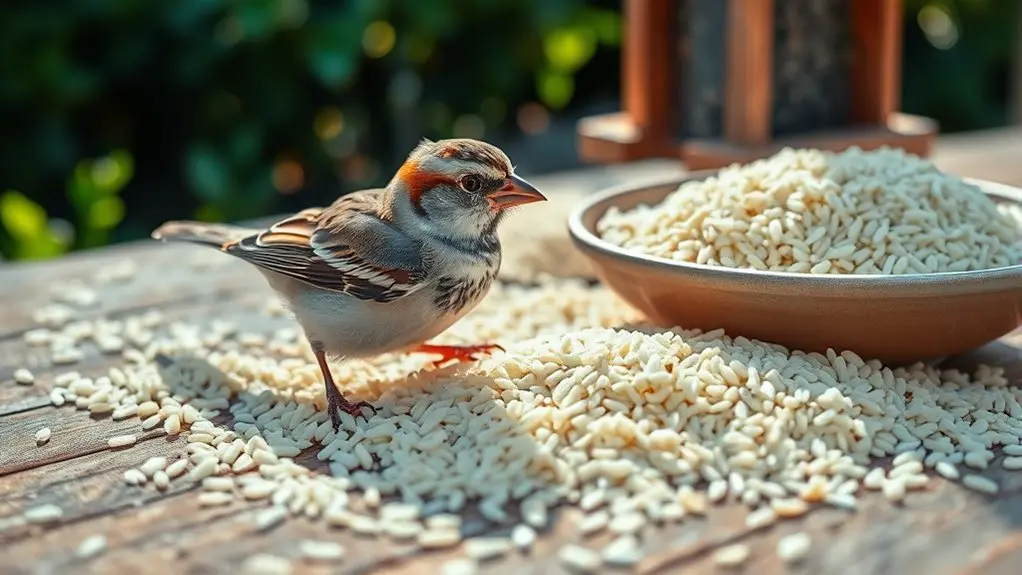
When you’re deciding whether to feed birds cooked or dry rice, it really depends on the size of the bird and how well they digest food.
Bigger birds can handle dry rice just fine, but smaller birds tend to do better with cooked rice because it’s softer and easier to eat.
Also, make sure you choose plain rice without any seasoning—that way, it stays safe for the birds.
Oh, and if you want to give them something a bit healthier, brown rice has more nutrients.
Just keep in mind, rice should only be a small part of their diet since birds need a variety of foods to stay healthy.
Nutritional Differences Between Types
If you want to provide birds with rice, understanding the nutritional differences between cooked and dry varieties can help you choose the best option. Both cooked and uncooked rice offer nutrients, but their benefits vary.
Cooked rice is softer and easier for birds to digest, while uncooked rice is tougher but still broken down by birds’ gizzards.
Brown rice, whether cooked or uncooked, retains more nutrients than white rice and supports better bird health.
Keep these points in mind:
- Cooked rice is gentler on smaller birds’ digestion
- Uncooked rice doesn’t harm birds’ stomachs despite myths
- Brown rice provides essential vitamins and minerals
- Variety in rice types with other foods improves bird nutrition
Moderation remains key to a balanced diet.
Digestibility For Various Birds
Although many bird species can digest uncooked rice thanks to their strong gizzards, you’ll find that cooked rice is often easier for birds to eat and digest, especially for smaller or younger ones.
Birds can eat uncooked rice like sparrows and doves because their digestive systems handle hard grains well. However, smaller species might struggle more with dry rice’s tougher texture.
Cooked rice offers a softer, more recognizable food source that improves digestibility for various birds. Including both cooked and uncooked rice in feeding routines provides variety, catering to different birds’ needs.
Furthermore, brown rice delivers extra nutrients compared to white rice, making it a healthier option.
Understanding digestibility for various birds helps you choose the best rice form to support their diet effectively.
Safety Concerns And Tips
Understanding how different types of rice affect birds leads naturally to concerns about their safety. When feeding rice to birds, you might wonder whether cooked or uncooked rice is better. Both are safe, but uncooked rice is easily digested by species like sparrows and doves, dispelling myths about swelling in their stomachs.
To address safety concerns, keep these tips in mind:
- Always offer cooked rice unseasoned; salt and spices can harm birds.
- Brown rice provides more nutrition than white rice.
- Uncooked rice is safe and can promote natural foraging behavior.
- Varying rice types enriches birds’ diets and supports their health.
What Nutritional Value Does Rice Offer Birds?
While rice doesn’t offer all the vitamins and minerals birds need, it provides a valuable source of carbohydrates that fuel their energy. When you feed rice to birds, you’re giving them a quick energy boost, especially from white rice, which is easy to digest for species like sparrows and doves.
However, its nutritional value is lower compared to wild rice, which contains more nutrients thanks to its outer layers.
Keep in mind that rice alone isn’t a complete diet; it works best when combined with other foods to guarantee birds get essential vitamins and minerals.
Offering different types of rice and a variety of foods can enhance the overall nutritional balance for birds, supporting their health and activity throughout the day.
Can Feeding Rice Cause Health Problems in Birds?
If you worry that feeding rice to birds might harm them, rest assured that this concern is largely based on a myth.
Scientific studies show birds digest hard seeds and grains efficiently, so uncooked rice hits their stomachs without causing harm. The idea that rice swells dangerously inside them is unfounded.
When you feed rice to birds, keep in mind:
- Birds’ stomachs break down uncooked rice easily, especially small species like sparrows and doves.
- Rice provides carbs but lacks key vitamins and minerals, so it shouldn’t be their main food.
- Overfeeding rice or any food can lead to digestive issues.
- Larger birds may digest cooked rice better, but avoid seasoning.
In moderation, rice is safe and won’t cause health problems for birds.
Safe Ways to Feed Rice to Wild Birds
Because birds can digest uncooked rice easily, you can safely offer it in small amounts as a treat.
When you feed wild birds, choose plain, unseasoned rice, either uncooked or cooked, to avoid harmful additives.
Brown rice is a better choice since it provides more vitamins and minerals, supporting bird health.
Remember to offer rice alongside other foods like seeds and nuts to give wild birds a balanced diet.
Larger species such as pigeons and doves especially appreciate rice and digest it well.
Avoid overfeeding rice to prevent dietary imbalances.
What Are Good Alternatives to Rice for Feeding Birds?
When you want to diversify what you offer wild birds, several alternatives to rice provide excellent nutrition and attract a variety of species.
These options are easier for birds to digest and can bring more feathered friends to your feeder.
Here are some great alternatives to rice:
Millet: Soft and digestible, perfect for many bird species.
Sunflower seeds: Especially black oil sunflower seeds, packed with nutrients and loved by many birds.
Niger seeds: Rich in fats and proteins, favored by finches and small birds.
Safflower seeds: Less appealing to squirrels but enjoyed by songbirds.
Offering these alternatives helps support bird health and encourages diverse visits to your yard.
Can Contaminants in Rice Harm Bird Health?
Although rice might seem like a harmless snack for birds, contaminants such as heavy metals and pesticides can pose serious health risks. Contaminants in rice often come from agricultural runoff and pesticide use, which have been linked to declines in bird health.
For example, heavy metals can reduce hatching and breeding success in waterfowl, while pesticides negatively affect bobolink populations. If birds regularly consume contaminated rice, they may face developmental problems and illnesses.
Heavy metals and pesticides in rice harm waterfowl and bobolinks, causing breeding and developmental issues.
To protect bird health, you should offer rice that’s free from harmful substances. Organic rice is a safer option.
Always check the source of the rice you provide to make sure it’s free of contaminants.
Being mindful of these risks helps you support birds’ well-being effectively.
Why Do Some People Avoid Throwing Rice at Weddings?
Rice is often seen as a harmless treat for birds, but you might be surprised to learn why many people steer clear of throwing it at weddings. The idea that uncooked rice causes birds’ stomachs to explode has made folks wary, even though studies show birds will eat rice safely.
This warning, don’t feed rice, took hold after a 1996 Ann Landers column, influencing public opinion and legislation.
Here’s why some avoid throwing rice at weddings:
- The exploding stomach myth scares well-meaning guests.
- Connecticut once proposed banning uncooked rice at celebrations.
- Alternatives like white millet are easier to clean and eco-friendly.
- Concerns about wildlife safety persist despite scientific evidence.
Expert Advice on Feeding Rice and Encouraging Healthy Bird Habits
Feeding birds rice can be a safe and enjoyable way to support their diet, as long as you follow a few expert guidelines.
Contrary to popular belief, uncooked rice won’t hurt wild birds, so you don’t need to worry about it expanding in their stomachs.
However, birds prefer a mix of foods since rice alone is bad as a sole diet; it lacks essential vitamins and minerals. Offering both cooked and uncooked rice, especially brown rice, can provide energy and extra nutrients.
Always keep the rice plain. Avoid salt or seasoning, which can harm birds.
Frequently Asked Questions
How Much Rice Can I Feed Birds Daily Without Overfeeding?
You should limit rice serving sizes to about one tablespoon per bird daily to avoid overfeeding.
Keep in mind birds have specific dietary needs, so rice should only supplement their regular meals.
Feeding frequency matters. Offer rice occasionally rather than every day to prevent nutritional imbalance.
Always monitor your birds for any signs of discomfort or digestive issues and adjust rice portions accordingly to keep them healthy and happy.
Can Rice Feeding Attract Unwanted Pests or Predators?
Yes, feeding rice can lead to pest attraction and increase predator presence around your feeding area.
When you scatter rice, leftover grains might draw rodents and other pests, altering the natural feeding habits of local wildlife.
To avoid this, you should clean up uneaten rice promptly and consider bird-specific food options.
Managing feeding habits carefully helps reduce unwanted visitors and keeps both birds and your surroundings safer.
Is It Safe to Mix Rice With Other Bird Feed Grains?
You can safely mix rice with other bird feed grains if you follow bird feeding guidelines carefully.
Since rice should only make up 10-20% of the mix, it balances well with seeds like millet or sunflower, creating safe grain combinations.
Rice’s nutritional value adds variety but isn’t enough alone.
Do Baby Birds Eat Rice or Only Adult Birds?
Baby birds generally don’t eat rice because their rice digestion isn’t fully developed. This makes it hard for them to process dry grains.
You should focus on baby bird nutrition by offering softer, nutrient-rich foods like insects or specialized chick feed.
Adult birds can handle rice better, but when feeding baby birds, stick to feeding guidelines that prioritize easily digestible options.
This supports their growth and helps avoid digestive issues.
How Should Rice Be Stored Before Feeding to Birds?
You should follow rice storage tips by keeping rice in an ideal container that’s airtight to guarantee moisture control.
Store it in a cool, dry place away from direct sunlight to maintain freshness and prevent spoilage.
Label the container with the date so you can track its age.
Regularly check for pests or mold, and discard any contaminated rice before feeding it to birds to keep them safe and healthy.
Conclusion
So, you’ve learned that birds can safely munch on dry rice without any medieval fears of harm. Whether it’s cooked or dry, rice isn’t the villain some old tales suggest.
Still, it’s smart to offer variety and avoid contaminants to keep your feathered friends healthy. Next time you see those birds pecking away, remember, feeding them thoughtfully helps them thrive. No need to worry about an ancient curse or a rice catastrophe!