

You can give your bird small amounts of plain mozzarella cheese occasionally, but it shouldn’t be a regular part of their diet because of its high fat, salt, and dairy content. Too much can cause digestive issues, obesity, or allergic reactions, especially in smaller or sensitive species.
Always introduce it gradually and watch for any problems. Different birds may tolerate mozzarella differently. So, safer natural alternatives might be better for everyday feeding.
There are more details that explain how to serve mozzarella safely and which birds might enjoy it. Just keep an eye on your feathered friend and make sure it’s a treat, not a staple.
Is Mozzarella Cheese Safe for Birds?
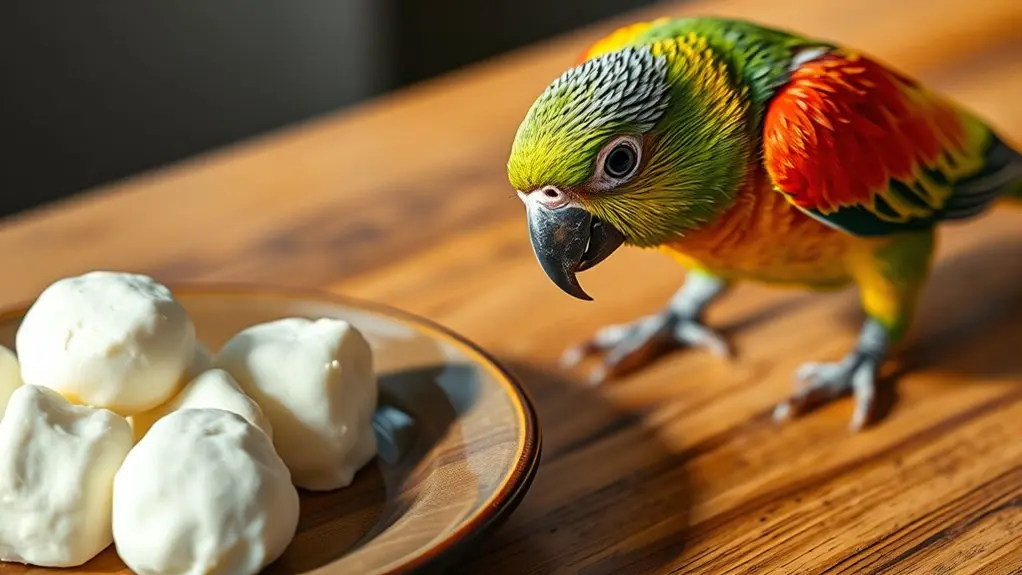
How safe is mozzarella cheese for your bird? Generally, mozzarella is safe when given in small amounts as an occasional treat. Because it’s a dairy product, your bird can digest it, but it shouldn’t be a regular part of their diet.
Too much cheese can lead to digestive problems or obesity due to high fat and salt content. You must offer mozzarella without added seasonings, preservatives, or mold, which could harm your bird.
Always check with a veterinarian before introducing new foods like mozzarella cheese to verify it’s appropriate for your bird’s specific dietary needs.
How Much Mozzarella Can Birds Eat?
You should offer birds only small amounts of mozzarella cheese as an occasional treat. Keep the portion sizes minimal to avoid any health risks.
Moderation is really important because too much cheese can lead to digestive issues or nutritional imbalances.
Also, always make sure the cheese is plain and that any moisture is removed before you serve it.
Safe Serving Sizes
Although mozzarella cheese can be a tasty treat for your bird, it’s important to serve it in small amounts to avoid health issues. For most small to medium birds, about a teaspoon of shredded mozzarella is a safe serving size. Larger birds may tolerate slightly bigger portions, but you should consult an avian veterinarian before increasing the amount.
Keep in mind that mozzarella is high in fat and sodium, so overfeeding can cause digestive problems or obesity. Always offer plain mozzarella without added seasonings or preservatives.
Remember, mozzarella should only be an occasional treat, not a regular part of your bird’s diet.
Moderation Guidelines For Birds
Because mozzarella cheese contains high levels of fat and salt, you should offer it to your bird only in very small amounts and infrequently. A tiny piece, roughly the size of your bird’s beak or a small fraction of their daily food intake, is sufficient as an occasional treat.
Limit servings to once or twice a week to avoid health risks like obesity and digestive issues.
Regular consumption isn’t advisable, as cheese isn’t a natural part of a bird’s diet. After introducing mozzarella, closely monitor your bird for any adverse reactions or allergies.
What Makes Mozzarella Hard to Digest for Birds?
When birds consume mozzarella cheese, their digestive systems struggle to process the high levels of fats and dairy sugars it contains. Unlike mammals, birds lack the enzymes needed to efficiently break down these components. This can lead to digestive issues such as bloating and diarrhea.
Also, the dairy proteins in mozzarella may trigger allergic reactions or intolerance in some species. You should be aware that mozzarella’s soft, stringy texture can pose a choking hazard or cause blockages, especially in smaller birds.
Key factors that make mozzarella hard to digest for birds include:
- Insufficient enzymes to break down dairy fats and proteins
- Potential for digestive upset and allergic reactions
- Risk of choking or gastrointestinal blockage due to texture
Understanding these challenges helps you make safer feeding choices.
Why Fat and Salt in Mozzarella Matter for Birds
Beyond the digestive challenges mozzarella poses due to its proteins and texture, its fat and salt content also raise significant concerns for birds. High fat levels in mozzarella can be tough for birds to digest, potentially leading to obesity and liver problems.
Meanwhile, the salt content can cause dehydration and disrupt electrolyte balance, risking kidney damage and toxicity. Birds naturally require low-fat, low-salt diets, making mozzarella an unsuitable snack. Avoiding fat and salt in their diet helps maintain their health and well-being.
| Nutrient | Impact on Birds |
|---|---|
| Fat | Difficult digestion, obesity risk |
| Salt | Dehydration, kidney strain |
| Electrolytes | Imbalance, toxicity potential |
| Dietary Needs | Prefer low-fat, low-salt foods |
Risks of Feeding Moldy or Expired Mozzarella
Although mozzarella cheese can be a tempting treat, feeding moldy or expired mozzarella to birds carries significant health risks. Mold growth, often visible as purple discoloration, indicates harmful mycotoxins that can cause allergic reactions or food poisoning in birds.
Even if mozzarella is only slightly past its expiration date, you should inspect it carefully and avoid feeding it if any unusual colors or odors are present.
To protect birds’ health, always discard mozzarella that shows signs of spoilage. Think of it like this: it’s better to be safe than sorry when it comes to what your birds eat.
Consider these risks when offering mozzarella:
- Moldy cheese may produce toxins harmful to birds’ digestive systems.
- Expired cheese can harbor bacteria leading to illness.
- Allergic reactions or poisoning symptoms may develop rapidly after ingestion.
Which Bird Species Like Mozzarella Treats?
You’ll find that many pet birds, like parrots and cockatiels, enjoy small amounts of mozzarella as a treat.
On the other hand, species such as budgerigars and lovebirds might accept it only occasionally.
Cheese has a mild flavor and soft texture, which often attract these birds, but their preferences can vary quite a bit.
Bird Species Preferences
When you offer mozzarella cheese as a treat, certain bird species like parrots, budgerigars, cockatoos, and African grey parrots tend to show more interest due to their preference for its creamy texture and mild flavor. These birds often enjoy small amounts of mozzarella, but you should always serve it plain, avoiding added salt, seasonings, or preservatives.
Keep these points in mind when feeding mozzarella to your birds: Parrots and budgerigars appreciate the cheese’s softness and mild taste, making it an appealing occasional snack.
Cockatoos and African grey parrots are more inclined to accept cheese compared to other species.
Moderation is essential to prevent health issues like obesity or digestive discomfort.
Understanding species preferences helps you provide safe, enjoyable treats for your feathered friends. It’s all about knowing what they like and keeping their health in check.
That way, you can spoil them a little without any worries.
Cheese Attraction Factors
Because many birds are drawn to the high-fat and protein content in mozzarella cheese, species like parrots, finches, and crows often show interest in this treat. These birds tend to prefer softer, milder cheeses like mozzarella over stronger, aged varieties due to its gentle flavor and texture.
When offering mozzarella, keep in mind that not all birds are attracted to cheese. Some may avoid it because of lactose sensitivity or intolerance.
If you decide to provide mozzarella as a treat, do so sparingly, considering its dairy content and potential digestive impact.
Understanding which species are more likely to enjoy mozzarella helps you make informed decisions about safe treats. This way, you can support your bird’s health while offering variety in their diet.
How to Introduce Mozzarella Cheese to Your Bird
Although mozzarella cheese can be a delightful treat for your bird, you should introduce it gradually and in small amounts to monitor for any adverse reactions. Start by offering tiny, manageable pieces to prevent choking and guarantee easy consumption.
Always use plain mozzarella without added herbs, spices, or salt, as these additives can be harmful. Treat mozzarella as an occasional indulgence rather than a staple food to maintain a balanced diet.
Keep a close eye on your bird after introduction to detect any digestive issues or discomfort immediately. Remember, moderation and careful observation are key to safely incorporating new foods.
Cut cheese into small pieces for safety and ease of eating. Avoid flavored or salted mozzarella varieties. Observe your bird’s reaction closely after initial feeding.
Best Bird-Safe Alternatives to Mozzarella Cheese
While mozzarella cheese can occasionally be offered to birds with caution, many owners prefer safer, more natural options to support their pet’s health.
Instead of cheese, you can provide chopped apples, carrots, or leafy greens, which supply essential nutrients without risking digestive upset. These fruits and vegetables align better with a bird’s natural diet and promote overall well-being.
Chopped apples, carrots, and leafy greens offer essential nutrients and support a bird’s natural diet safely.
Additionally, some commercial bird treats mimic cheese flavors but are formulated specifically for avian safety, making them a reliable alternative.
Before introducing any new food, including these alternatives, consult an avian veterinarian to verify it suits your bird’s dietary needs.
Prioritizing bird-safe options helps maintain your pet’s health and prevents potential complications from dairy consumption.
Frequently Asked Questions
Can Mozzarella Cheese Cause Allergies in Birds?
Yes, mozzarella cheese can cause allergies in birds. If you notice digestive issues, respiratory problems, or skin irritations after feeding it, stop immediately.
Then, consult a veterinarian to guarantee your bird’s safety and health. It’s always better to be cautious when introducing new foods. Your bird’s well-being comes first!
Is Shredded or Cubed Mozzarella Better for Birds?
You should choose shredded mozzarella for birds since it’s easier and safer to eat, reducing choking risks.
Cubed pieces may suit larger birds but always offer cheese in moderation to maintain a balanced diet.
Can Baby Birds Eat Mozzarella Cheese Safely?
You might think mozzarella is a gentle treat, but baby birds shouldn’t have it regularly. It’s best you stick to their natural diet and consult an avian vet before offering any cheese or human food to keep them safe.
When it comes to feeding baby birds, their health is super important. So, even if mozzarella seems harmless, it’s better to be cautious. Always check with a professional to make sure you’re doing right by your feathered friends.
How Should Mozzarella Cheese Be Stored for Bird Feeding?
You should store mozzarella cheese in an airtight container and refrigerate it. Make sure to keep it away from heat or sunlight to maintain its freshness.
After opening, submerge the cheese in water or brine. This helps keep it moist and prevents spoilage before you feed it to the birds.
It’s a simple way to make sure the cheese stays good for longer and is safe for the birds to eat.
Can Mozzarella Cheese Affect a Bird’s Behavior or Mood?
Think of mozzarella as a quiet ripple in a vast lake. It won’t change your bird’s mood or behavior. You probably won’t notice any effects at all.
Just be careful not to give too much. Eating too much can cause digestive issues, which might affect your bird’s overall well-being. So, a little bit is fine, but don’t overdo it!
Conclusion
You can safely offer your bird small amounts of mozzarella cheese. But keep in mind that about 70% of birds may struggle to digest dairy because they’re lactose intolerant. Always avoid moldy or expired cheese.
Also, limit portions to prevent issues from fat and salt content. Introducing mozzarella gradually and watching your bird’s reaction is the best way to keep things safe.
If you want a healthier option, consider bird-safe treats like fruits or nuts. They provide better nutrition without the risks that come with dairy.