
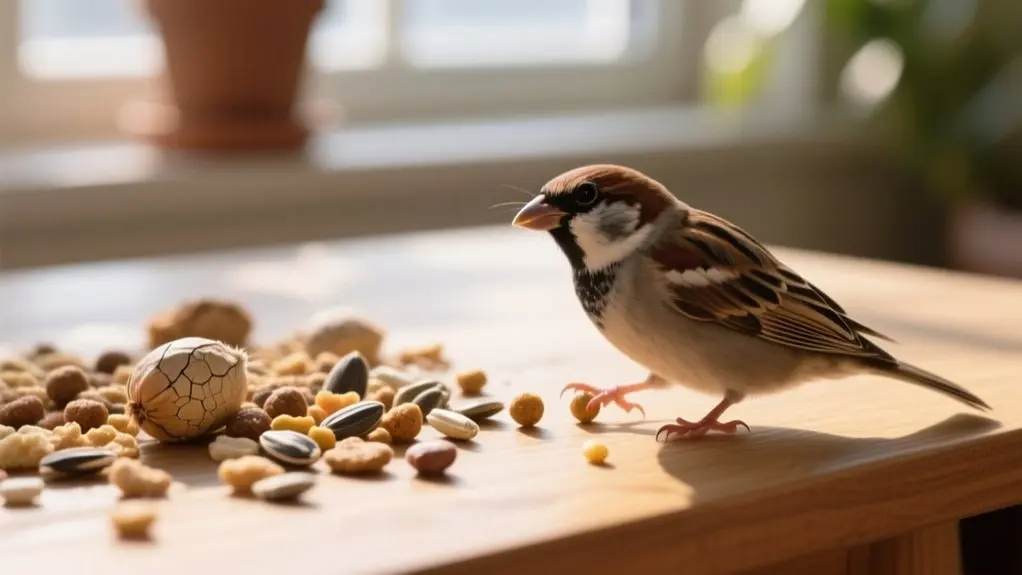
You can offer birds leftover hamster food occasionally, especially larger ones like pigeons and crows, since they often accept grains found in it. However, hamster food lacks the essential vitamins and minerals birds need and may contain harmful additives, sugars, or fats that can cause health issues, particularly in small or sensitive birds.
It’s best not to make it a regular part of their diet. Keep exploring for ways to help birds enjoy safer, more balanced meals.
Can Birds Eat Hamster Food? The Quick Answer
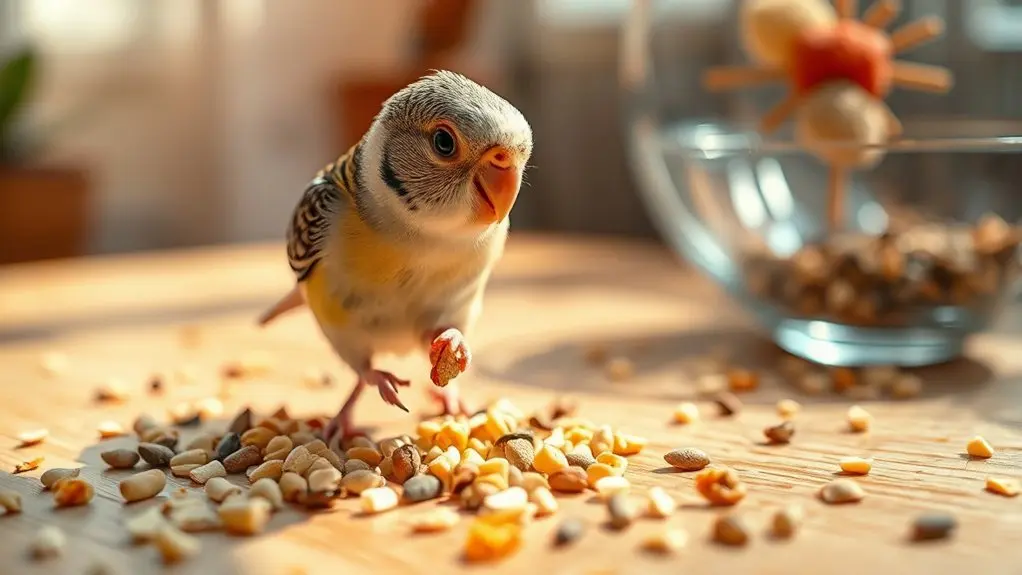
Wondering if birds can eat hamster food? The quick answer is yes, many birds can eat hamster food because it mainly contains grains, a staple in a varied diet for many bird species.
Larger birds like pigeons and crows often accept hamster food readily since they’re opportunistic feeders. However, not all birds will eat it, as ingredient differences in hamster food can influence their interest.
Larger birds like pigeons and crows readily eat hamster food, but ingredient differences may affect other birds’ interest.
You should be cautious with small birds, though, since some components mightn’t suit their dietary needs.
Using leftover hamster food for birds is a smart way to reduce waste and offer an alternative food source.
Just remember to observe which birds eat it and adjust accordingly to guarantee their health and safety.
What Hamster Food Contains and Why Birds Should Avoid It
Although hamster food contains a variety of grains, seeds, and pellets designed for hamsters’ nutritional needs, it often lacks the specific vitamins and minerals birds require to stay healthy.
Hamster food is formulated to meet the unique needs of small rodents, not birds.
It may contain added sugars or ingredients like certain nuts that can be harmful to birds. Your bird’s diet needs nutrients such as vitamin A and calcium, which hamster food doesn’t provide adequately.
Especially for small birds, some components in hamster food can cause digestive issues or nutritional imbalances.
While some larger birds might nibble on hamster food occasionally, it’s not suitable as a regular part of their bird diet.
To keep your feathered friend healthy, avoid relying on hamster food to meet their nutritional needs.
Are Hamster Seed Mixes Safe for Birds?
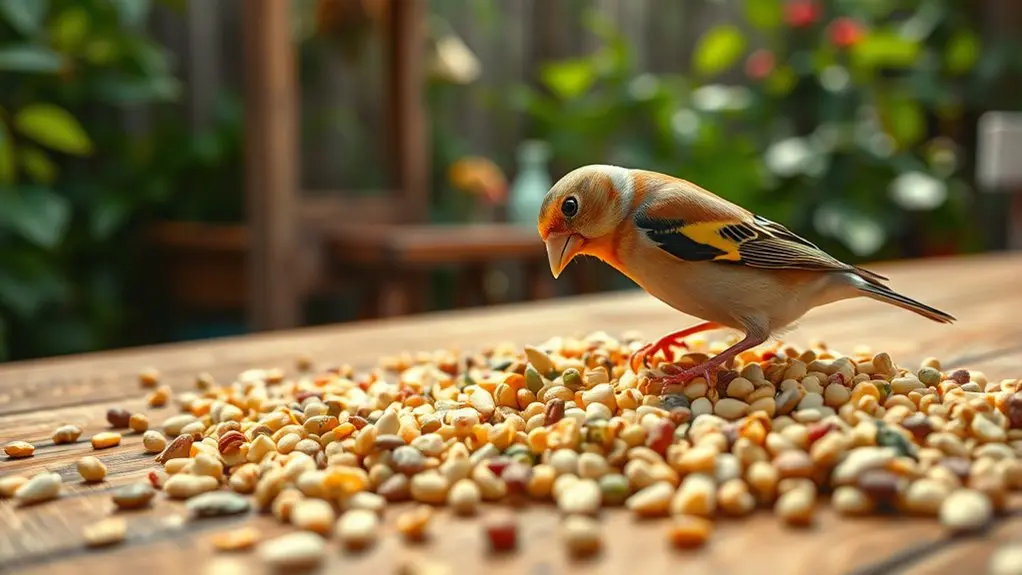
How safe are hamster seed mixes for your birds?
Hamster seed mixes often contain grains and seeds similar to bird seed, which can offer some nutritional benefit to certain bird species. Larger birds like pigeons may handle these mixes better, but smaller birds might struggle with some ingredients.
You should avoid hamster seed mixes that include preservatives or sweeteners, as these additives can harm your birds.
Since ingredient quality varies, it’s important to watch how your birds react when trying hamster seed. If they show any signs of distress, discontinue use immediately.
While some seeds overlap with bird seed, hamster mixes aren’t formulated specifically for birds, so use caution and prioritize bird-safe food options to maintain their health.
Why Hamster Nugget Pellets Aren’t Good for Birds
Since hamster nugget pellets are designed to meet the unique nutritional needs of hamsters, they don’t provide the balanced diet birds require. If you feed these pellets to birds, you risk causing dietary imbalances because the protein and fat content in hamster nugget pellets is often too high for many bird species.
Birds need a diet rich in seeds, fruits, and vegetables, which these pellets lack, limiting essential nutrients necessary for avian well-being.
Moreover, the binding agents in hamster nugget pellets can be hard for birds to digest, potentially leading to gastrointestinal issues.
For your bird’s health, it’s best to avoid hamster nugget pellets and stick to foods formulated specifically for their dietary needs.
Which Birds Are Likely to Eat Hamster Food?
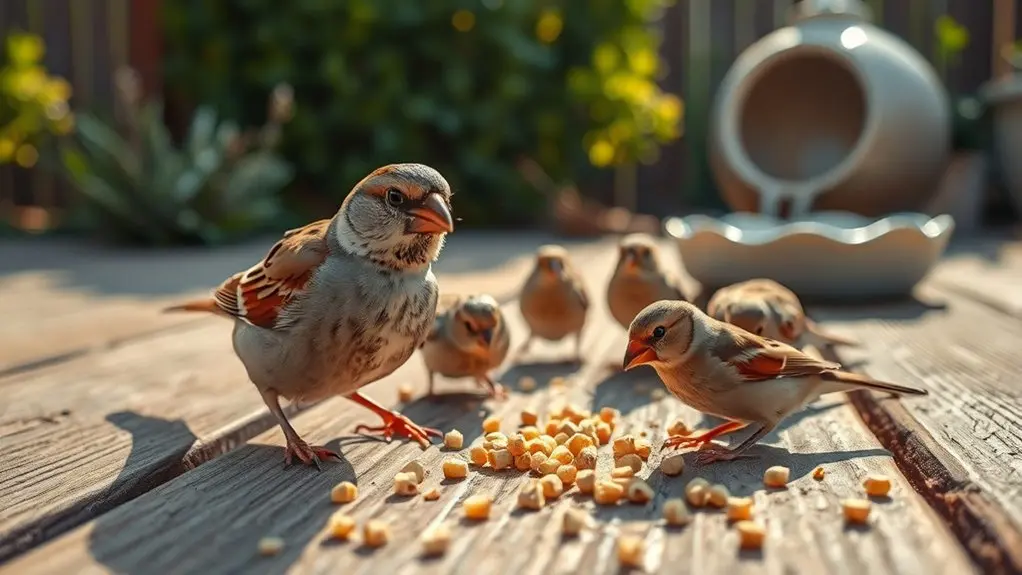
When you leave hamster food accessible outdoors, certain birds quickly seize the opportunity to eat it. Pigeons are among the most likely birds to consume hamster food because they’re opportunistic feeders and love grains.
Crows also adapt easily and include hamster food in their varied diet.
Many garden birds, like sparrows and finches, may nibble on hamster food if it contains grains similar to what they eat naturally.
Larger birds such as gulls and magpies often scavenge leftover hamster food too.
While smaller birds might be less interested, the grain content can attract a surprising variety of bird species depending on what’s common in your area.
Risks of Feeding Hamster Food to Birds
You might think hamster food is an easy snack to share with birds, but it’s actually not the best idea.
The problem is that hamster food often contains added sugars, fats, and artificial additives. These ingredients can create serious nutritional mismatches for birds.
So, even though it seems convenient, feeding birds hamster food could end up doing more harm than good.
It’s important to stick to foods that are specifically made for birds to keep them healthy and happy.
Nutritional Mismatch Concerns
Although hamster food might seem like a convenient option, it often fails to meet the specific dietary needs of birds. This nutritional mismatch can lead to inadequate nourishment and rejection of the food.
Hamster food is formulated for rodents and usually contains grains, seeds, and additives that don’t align with birds’ unique diets. Birds often require fruits, vegetables, and specialized seeds to stay healthy.
Here are three key concerns about feeding hamster food to birds:
- Hamster food lacks essential nutrients birds need, leading to imbalances.
- Ingredients like added sugars and preservatives can be harmful to birds.
- Many bird species may simply reject hamster food, causing waste.
Potential Health Hazards
Feeding birds hamster food doesn’t just risk nutritional imbalances; it can also introduce serious health hazards. Hamsters need a diet tailored to their metabolism, often including high-fat seeds and artificial additives that aren’t suitable for birds. These ingredients can cause obesity and other health issues in avian species.
Furthermore, hamster food sometimes contains sugar and preservatives that disrupt birds’ digestive systems and overall well-being. Regularly feeding birds sunflower seeds found in hamster mixes may lead to nutritional imbalances due to their high fat content.
Birds require a balanced diet formulated specifically for their unique nutritional needs, which hamster food fails to provide.
You should also watch out for contamination or spoilage in hamster food, as moldy or spoiled portions can cause respiratory problems and other serious health complications in birds.
Using Extra Hamster Food Safely
You can safely feed extra hamster food to birds like pigeons and crows since it’s mostly grains, which are similar to what they usually eat.
Just make sure the food is fresh.
Also, keep an eye on how the birds respond so you can avoid any problems.
That way, you reduce waste and give local birds a nice little snack.
Safe Bird Feeding
Since hamster food often contains grains and seeds similar to bird mixes, you can safely offer extra portions to certain birds like pigeons and crows.
When feeding wild birds, keep these tips in mind to guarantee safe bird feeding:
- Observe the wild bird species within your area to see if they accept the hamster food without issues.
- Offer fresh, additive-free hamster food to avoid harming the birds.
- Avoid feeding small or specialized birds, as they may have dietary restrictions.
Reducing Food Waste
Although leftover hamster food might seem insignificant, it offers a great opportunity to reduce waste by feeding certain birds safely. Many hamster foods are grain-based, making them similar to bird seed mixes and suitable for birds like pigeons and crows.
By repurposing extra hamster food, you embrace food recycling benefits and support sustainable feeding practices. Just make certain to avoid harmful ingredients such as added sugars or preservatives.
Observing local bird preferences helps guarantee you’re offering appropriate nutrition.
Using leftover hamster food this way not only minimizes waste but also encourages larger birds to visit your garden, contributing to wildlife conservation efforts.
This simple action supports biodiversity and creates a more vibrant outdoor environment while responsibly managing surplus pet food.
Best Foods for Wild and Pet Birds
When choosing the best foods for wild and pet birds, you’ll find that many species thrive on grains similar to those in hamster food. Understanding their seed preferences and foraging behavior helps you provide dietary diversity that suits their needs.
Larger birds like pigeons and crows often scavenge grains readily, while smaller species may be more selective.
Consider these nutritious options:
- Mixed seeds: millet, sunflower, and cracked corn appeal to various birds.
- Fresh fruits and vegetables: berries, apples, and leafy greens support balanced diets.
- Insects and mealworms are essential protein sources for many wild birds.
Understanding Garden Birds’ Nutritional Needs
You’ll notice that many garden birds, like pigeons and crows, eat a variety of seeds and grains.
Interestingly, these often match the ingredients found in hamster food.
When you understand their specific nutritional needs, it becomes easier to choose the right foods to attract different species.
Plus, paying attention to local feeding habits means you can support birds effectively without wasting extra pet food.
Common Garden Bird Diets
Since garden birds adapt their diets based on available food, offering a variety of seeds, grains, and fruits can support their nutritional needs effectively.
You’ll notice that seed diversity plays a key role in attracting different species, encouraging natural foraging behavior. Their dietary adaptation allows them to switch between grains, fruits, and even kitchen scraps, depending on what’s accessible.
To create an inviting feeding spot, consider these options:
- Mixed seeds like sunflower, millet, and safflower for balanced nutrition
- Fresh fruits such as berries and apples to provide vitamins
- Grains and leftover hamster food for larger birds accustomed to grain-rich diets
Nutritional Requirements Overview
Offering a variety of seeds, fruits, and grains helps meet the diverse nutritional needs of garden birds. You’ll notice that bird dietary habits vary widely, influenced by species specific preferences.
Smaller birds often prefer finer seeds, while larger ones can handle coarser grains and occasional protein sources.
Seasonal food availability also plays a key role. Birds adapt their diets as natural resources change throughout the year. By understanding these factors, you can provide the right mix to support their health.
Since many garden birds are opportunistic feeders, supplementing with appropriate foods guarantees they get balanced nutrition without waste. This approach keeps your feathered visitors thriving, especially when natural food is scarce.
Local Bird Feeding Habits
When local birds find hamster food left outside, they often take advantage of it because many species, like pigeons and crows, are opportunistic feeders.
You’ll notice that bird behavior patterns reveal a preference for grains and seeds, which hamster food typically contains.
Understanding seasonal feeding trends helps you provide food that supports their nutritional needs throughout the year.
Urban bird diets are flexible, especially in larger birds adapting to available resources.
To visualize their feeding habits:
- Pigeons peck at scattered grains near your garden path.
- Crows drop larger seeds to crack them open.
- Sparrows flit between feeders and leftover crumbs.
Tips for Attracting Birds With Safe Bird Food
To attract a variety of birds to your yard, you should provide a mix of grains, seeds, and nuts. Many garden birds are opportunistic feeders that enjoy these foods.
Offering a variety of grains, seeds, and nuts attracts diverse garden birds to your yard.
Use bird feeding techniques like platform feeders for larger birds and scatter seeds on the ground to welcome ground-feeders.
Incorporate seasonal food variations by adding suet or fat balls during colder months to supply essential energy.
When creating bird habitats, make sure feeders are clean and stocked with additive-free food to keep birds safe and encourage regular visits.
Helping Birds Switch to a Healthy Diet
You might notice birds, especially larger ones like pigeons and crows, eating hamster food since its grains appeal to them.
To help them shift to a healthier diet, use diet change strategies that gradually replace hamster food with bird-friendly grains. This approach minimizes disruption and encourages acceptance of better options.
Keep these tips in mind:
- Introduce a mix of seeds, grains, and fresh fruits to mimic natural diets.
- Observe birds’ preferences regularly to adjust feeding choices effectively.
- Apply seasonal feeding tips by offering foods that suit local availability and bird needs.
Ensure all food is fresh and free from additives to support a smooth change and promote overall bird health.
Where to Find Good Bird Food Alternatives
Although it might be tempting to stick with hamster food, finding good bird food alternatives guarantees your feathered visitors get the nutrients they need. Check local pet stores for trusted bird food brands offering seed variety options that cater to different species.
These mixes often include seeds, grains, and nuts, closely mimicking natural diets. You can also find organic bird mixes that avoid harmful additives, providing a healthier choice.
Seed, grain, and nut mixes mimic natural diets, with organic options offering a healthier, additive-free choice.
Supplement their meals with fresh fruits and vegetables like apples and carrots, but steer clear of toxic foods like avocado.
If you have leftover hamster food, consider offering it to opportunistic birds like pigeons and crows, who might enjoy the grains.
Prioritizing quality bird food assures your birds stay healthy and happy.
Frequently Asked Questions
Can Hamster Food Cause Allergic Reactions in Birds?
Yes, hamster food can cause allergic reactions in birds. You need to watch for allergic symptoms like feather plucking, swelling, or respiratory issues if your bird eats it.
Ingredient safety is a big concern because hamster food contains seeds or additives that don’t suit birds’ dietary restrictions.
If you introduce hamster food, monitor your bird closely to catch any adverse reactions early and guarantee their health stays protected from harmful ingredients.
How Should I Store Hamster Food to Keep It Fresh?
You should store hamster food in airtight storage containers to guarantee proper moisture control and keep it fresh longer.
Make certain to place the container in a cool, dry spot away from direct sunlight.
Label it with the purchase date so you can track the shelf life, which usually lasts 6-12 months.
Avoid transferring food to non-original packaging, as it can expose the food to air and contaminants, reducing freshness.
Is It Okay to Mix Hamster and Bird Food Occasionally?
You might be surprised, but yes, you can mix hamster and bird food occasionally. Doing this can add food variety and subtly change feeding habits, which your bird may enjoy.
However, be cautious. Nutritional balance is key. Some hamster food ingredients mightn’t suit all birds, especially smaller species.
Can Birds Develop a Preference for Hamster Food Over Their Diet?
Yes, birds can develop a preference for hamster food over their usual diet if they find it appealing.
You should remember that their dietary habits are influenced by taste and availability, but this mightn’t meet all their nutritional needs.
If you let them eat hamster food regularly, their food preferences could shift, potentially causing imbalances.
It’s important to balance their diet with species-appropriate foods to keep them healthy and happy.
What Should I Do if My Bird Accidentally Eats Hamster Food?
If your bird accidentally eats hamster food, act quickly. Studies show 20% of birds face health concerns from improper diets.
Watch for food toxicity risks like vomiting or lethargy. Provide fresh water and their regular diet immediately.
If symptoms appear, don’t hesitate to contact emergency vet options to guarantee safety.
Secure hamster food tightly to prevent future mistakes and keep your feathered friend healthy and happy.
Conclusion
You might think sharing your hamster’s food with birds is a harmless treat, but it’s like offering a lion a salad. It just doesn’t work! Hamster food lacks the nutrients birds desperately need and can even harm them.
So don’t risk turning your feathered friends into picky eaters with the wrong diet. Instead, stick to safe, nutritious bird food to keep their wings strong and spirits high. Trust me, they’ll thank you with every joyful chirp!