
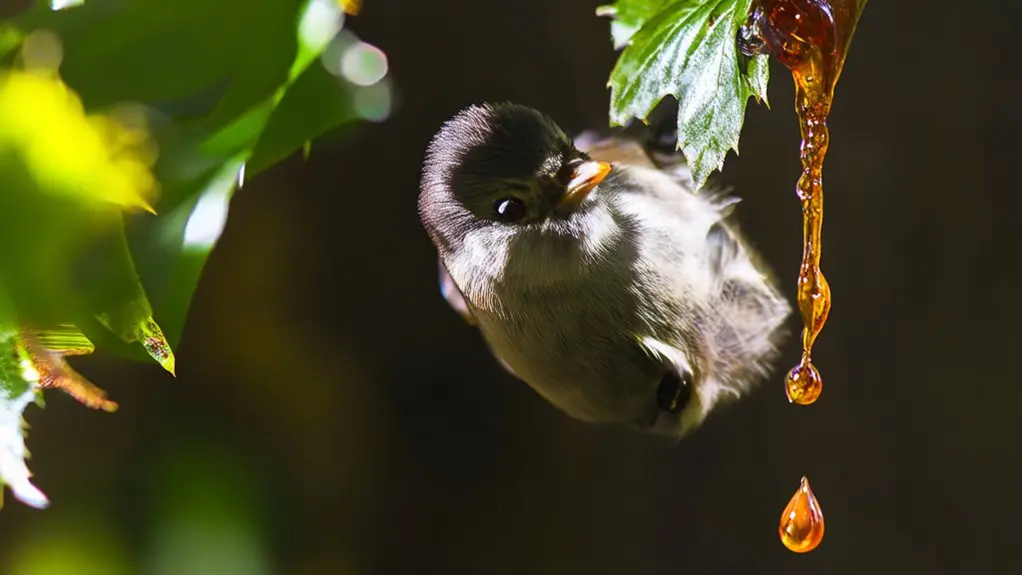
You can offer birds only tiny amounts of maple syrup, but it’s generally unsafe because of its high sugar content and artificial additives. Maple syrup’s sucrose is hard for birds to digest, which can cause digestive upset, dehydration, and blood sugar spikes. Its sticky texture also poses choking risks and attracts pests.
Feeding maple syrup regularly can mess with their natural diets, leading to malnutrition and behavioral issues. So, it’s better to avoid giving them this sweet treat often. To keep birds healthy, consider safer, nutrient-rich alternatives instead.
More detailed facts and guidance follow.
Is Maple Syrup Safe for Birds?
Although birds may be attracted to the sweet taste of maple syrup, it’s important to understand that it isn’t a suitable food for them. While small amounts are generally safe, maple syrup has a high sugar content that offers minimal nutritional benefits.
If birds consume it regularly, they risk developing digestive issues and obesity due to excessive sugar intake. Additionally, such consumption can disrupt insulin regulation and negatively affect feather condition.
Instead of relying on maple syrup, you should provide birds with natural, species-appropriate foods like seeds, fruits, and insects, which better meet their dietary needs. By avoiding maple syrup, you help maintain their health and support their natural feeding behaviors.
Why Maple Syrup Is Unhealthy for Birds
When birds consume maple syrup, they expose themselves to high sugar levels and artificial additives that can damage their digestive systems. This sugary substance lacks the essential nutrients birds require, making it a nutritionally poor choice that can lead to imbalanced diets.
Its thick, sticky consistency poses a physical risk, as it may cause choking or blockages in the airway or digestive tract.
Its sticky texture can cause choking or block digestive pathways, posing serious risks to birds.
Regular consumption of maple syrup can also contribute to obesity and associated health problems due to excessive sugar intake. Plus, it disrupts natural feeding behaviors, which rely on varied, nutrient-rich foods.
By introducing unnatural substances like maple syrup, you inadvertently harm birds’ health, compromising their digestive function and overall well-being.
How Maple Syrup’s Sugar Impacts Bird Digestion
You should know that birds’ digestive systems aren’t really made to handle the high sugar content in maple syrup. This can cause their blood sugar to spike quickly and might upset their digestion.
Plus, too much sugar can throw off their natural diet and even encourage harmful bacteria to grow in their gut.
On top of that, the sticky texture of maple syrup can be dangerous—it might cause choking or even damage some birds’ beaks and feathers.
Sugar Content Effects
How does the high sugar content in maple syrup affect a bird’s digestive system? Maple syrup contains mainly sucrose, which birds struggle to digest because they lack the necessary enzymes. This can cause digestive disruption and rapid blood sugar fluctuations.
It can also lead to dehydration and malnutrition by hampering nutrient absorption. Plus, the sugar offers no real nutritional benefit and may attract unwanted pests or predators. So, it’s best to avoid feeding birds maple syrup to keep them healthy.
| Effect on Birds | Explanation |
|---|---|
| Digestive disruption | Birds can’t properly break down sucrose |
| Blood sugar fluctuations | Rapid spikes and drops cause stress |
| Dehydration | Excess sugar leads to water loss |
| Nutrient absorption | Sugar interferes, causing malnutrition |
Bird Digestive Limitations
The inability of birds to properly digest sucrose-rich substances like maple syrup stems from specific limitations within their digestive systems. Birds lack the enzymes necessary to efficiently break down the complex sugars in maple syrup, resulting in poor digestion.
When you feed birds maple syrup, the concentrated sugars can overwhelm their gastrointestinal tract, often leading to diarrhea and stomach upset.
Additionally, this sugar overload can cause nutritional imbalances, as it interferes with the absorption of essential nutrients. Over time, excessive sugar consumption may also contribute to dehydration due to its osmotic effects in the gut.
You should understand that a bird’s metabolism isn’t adapted for high-sugar intake, and their digestive limitations make maple syrup an unsuitable food source despite its natural origins.
Potential Health Risks
Although maple syrup is a natural sweetener, its high sugar content poses significant health risks to birds by overwhelming their digestive systems. Birds have limited ability to process concentrated sugars, leading to digestive upset when maple syrup is consumed.
The rapid spike in blood glucose caused by its high sugar concentration can disrupt metabolic balance and strain physiological functions.
Furthermore, regular intake may interfere with a bird’s natural diet, reducing essential nutrient absorption and contributing to obesity and related health complications.
Additionally, maple syrup’s sticky consistency increases the risk of choking or obstruction in the beak and digestive tract.
Given these factors, feeding birds maple syrup can compromise their digestive efficiency and overall health. So, even though it’s natural, it’s just not a good idea to include it in their diet.
Health Risks of Feeding Birds Maple Syrup and Other Sweeteners
Because birds rely on a balanced diet of insects and seeds, feeding them maple syrup or other sweeteners can cause significant health problems. High sugar levels in these sweeteners lead to digestive distress, dehydration, and malnutrition by displacing natural food sources. You should also consider that sugary foods can trigger abnormal behaviors such as aggression and dependency on humans.
Additionally, sweeteners attract pests, disrupting ecosystems and increasing risk to birds. Regular feeding interferes with natural foraging instincts, impairing overall health.
| Health Risk | Effect on Birds |
|---|---|
| Malnutrition | Displacement of natural diet |
| Digestive Issues & Dehydration | Caused by high sugar content |
| Behavioral Changes | Increased aggression, human dependency |
Avoid feeding birds sweeteners to maintain their natural health balance. It’s really best to stick with what birds naturally eat to keep them happy and healthy.
Natural Foods That Are Safer for Wild Birds
If you want to feed wild birds, it’s a good idea to offer them nutritious seeds like sunflower, millet, and safflower. These provide essential proteins and fats that birds really need.
You can also give them safe fruits and berries, such as blueberries, apples, and elderberries. These are packed with vitamins and antioxidants but don’t have the harmful sugars that can cause problems.
All in all, natural foods like these are much better for birds than processed sweeteners like maple syrup, which might actually disrupt their diet.
Nutritious Seeds For Birds
When selecting seeds to feed wild birds, it’s important to choose natural, nutritious options like sunflower, millet, and safflower. These seeds provide crucial fats, proteins, and vitamins that help promote energy, feather development, and overall well-being.
Avoid seeds coated with artificial flavors or preservatives because those additives can upset birds’ digestive systems.
You can also include cracked corn and oats to supplement their diet with carbohydrates, which are necessary for sustained energy. Offering a variety of natural seeds encourages birds to forage naturally and helps keep their diet balanced.
By focusing on these nutrient-dense, unprocessed seeds, you support wild birds’ physiological needs effectively.
Plus, you minimize health risks that come with processed or artificial feed options. This approach aligns with avian nutritional science and promotes a healthier bird population overall.
Safe Fruits And Berries
Although many wild birds thrive on a diet rich in seeds, incorporating certain fruits and berries can provide essential nutrients and antioxidants that enhance their health. You should offer fresh, ripe, and pesticide-free options to prevent harmful chemicals.
Some fruits and berries are safe in moderation and support bird well-being, while others can be toxic. It’s good to know which ones to include and which to avoid.
Here are some safe options to include:
- Blueberries: rich in antioxidants and vitamins
- Strawberries: provide essential nutrients and hydration
- Blackberries: offer fiber and antioxidants
Avoid fruits coated with sugar or artificial sweeteners, and steer clear of toxic berries like holly and yew.
Practical Tips for Feeding Birds a Healthy Diet
Since birds require a balanced intake of nutrients to maintain ideal health, feeding them a diet rich in natural sources such as seeds, fruits, and insects is essential. These foods provide crucial proteins, fats, vitamins, and minerals necessary for energy and physiological functions.
While small amounts of pure maple syrup can be offered as an occasional treat, its high sugar content risks health issues like obesity and nutritional imbalance. If you choose to provide syrup, dilute it with water to reduce sugar concentration and monitor birds’ reactions closely.
Avoid processed or artificial sweeteners entirely, as they can be toxic.
Frequently Asked Questions
Can Baby Birds Safely Consume Maple Syrup?
You shouldn’t let baby birds consume maple syrup, as its high sugar content disrupts digestion, causes dehydration, and replaces essential nutrients.
Instead, provide specialized formulas tailored for their nutritional needs to guarantee proper growth and health. It’s really the best way to make sure they get everything they need to thrive.
Does Maple Syrup Attract Specific Bird Species More Than Others?
Maple syrup acts like a sweet beacon, drawing woodpeckers, jays, orioles, and waxwings more than others. You’ll notice nectar-feeders avoid it, while its scent sometimes lures unwanted critters competing for the sugary prize.
It’s interesting how some birds just can’t resist that rich, sugary smell. But not every bird is a fan—nectar-feeders tend to steer clear. And sometimes, other critters show up hoping for a taste too.
How Does Maple Syrup Affect Birds During Migration?
You disrupt birds’ natural energy balance by offering maple syrup during migration. Its high sugar content can cause digestive issues, reduce nutrient intake, and alter behavior.
This increases their vulnerability to predators and compromises their successful journey. So, it’s really best to avoid giving them maple syrup while they’re on the move.
Can Birds Become Addicted to Maple Syrup?
No, birds can’t become addicted to maple syrup. While they’re drawn to its sugar, their neurological systems don’t develop addiction like humans.
However, excessive consumption can harm their health and disrupt natural feeding behaviors. So, it’s best to avoid giving them too much of it.
Are There Any Natural Syrups Safer Than Maple Syrup for Birds?
You won’t find a golden elixir safer than pure water for birds. Natural syrups like berry or apple have lower sucrose, but all syrups risk digestive upset. So, it’s best to avoid feeding birds any sweetened syrup.
Honestly, water is just the safest choice. Even though some syrups seem natural and harmless, they can still cause problems. When it comes to birds, sticking with what’s simple is usually better.
Conclusion
You shouldn’t feed birds maple syrup because it has a lot of sugar. This can mess up their digestion and cause health problems like obesity and malnutrition. For example, a study on urban songbirds found that those eating sugary stuff had lower survival rates.
Instead, try giving them natural foods like seeds or berries. These provide the nutrients birds need without any harmful effects. Choosing healthier options helps support birds’ well-being and keeps ecosystems balanced.