
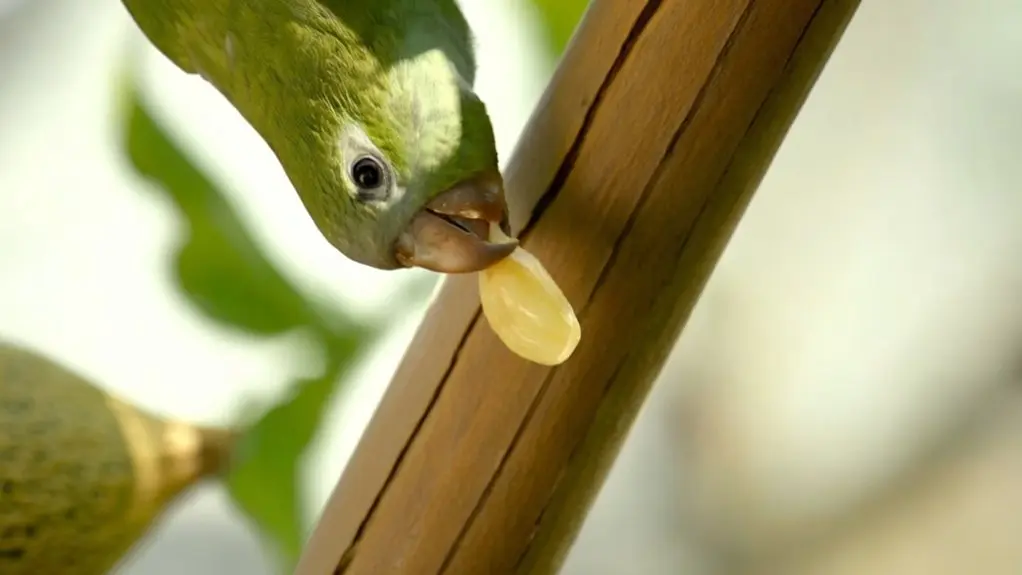
You can safely offer melon seeds to birds when they’re properly prepared. Make sure they’re rinsed, free of additives, and either raw or lightly roasted without salt. These seeds provide essential fats, vitamins, and minerals. Just remember to feed them in moderation to avoid choking or nutritional imbalances.
Different bird species have varied preferences, so it’s a good idea to adjust the seed size accordingly. Proper storage and handling are important too. This helps prevent mold and spoilage.
If you want to learn more about the best species to feed, how to prepare the seeds, and the best feeding practices, there are plenty of details to explore. It’s worth digging a little deeper to keep your feathered friends happy and healthy.
Are Melon Seeds Safe and Healthy for Birds?
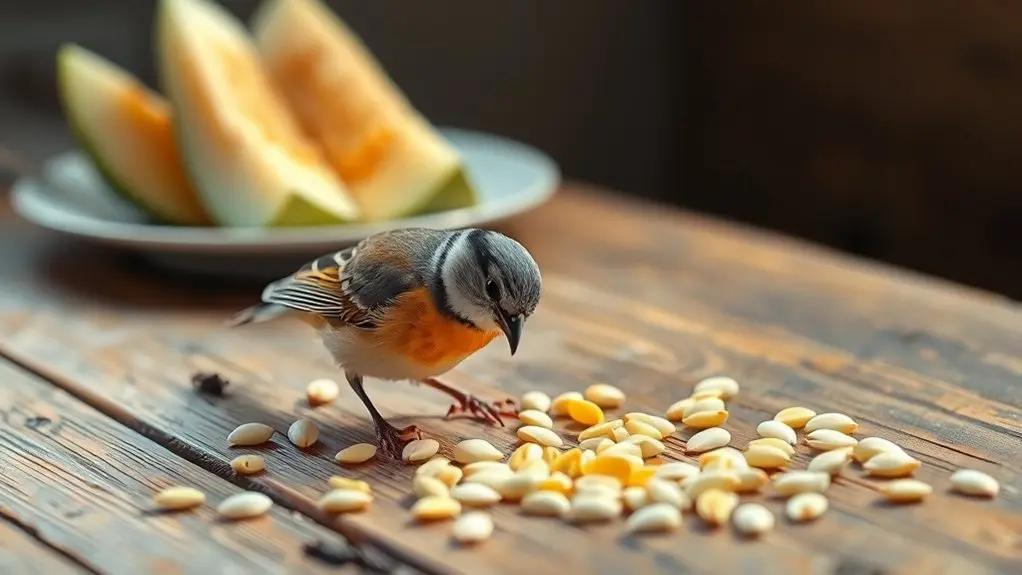
Although you might hesitate to offer melon seeds to birds, they’re generally safe and nutritious when given in moderation. Seeds from watermelon, cantaloupe, and honeydew contain healthy fats, vitamins, and minerals essential for avian health.
Melon seeds from watermelon, cantaloupe, and honeydew offer birds essential nutrients when fed in moderation.
You should verify that any seeds you provide are free from harmful additives or preservatives, which can pose risks. Serving melon seeds raw and whole is acceptable. You can also lightly roast them to enhance flavor, but avoid adding salt or seasonings, which can be detrimental.
Keep in mind that melon seeds should complement, not replace, a balanced diet comprising other seeds, fruits, and vegetables. Moderation is key to preventing nutritional imbalances and digestive issues.
This way, your birds can benefit from these seeds safely and healthily.
Bird Species That Love Melon Seeds
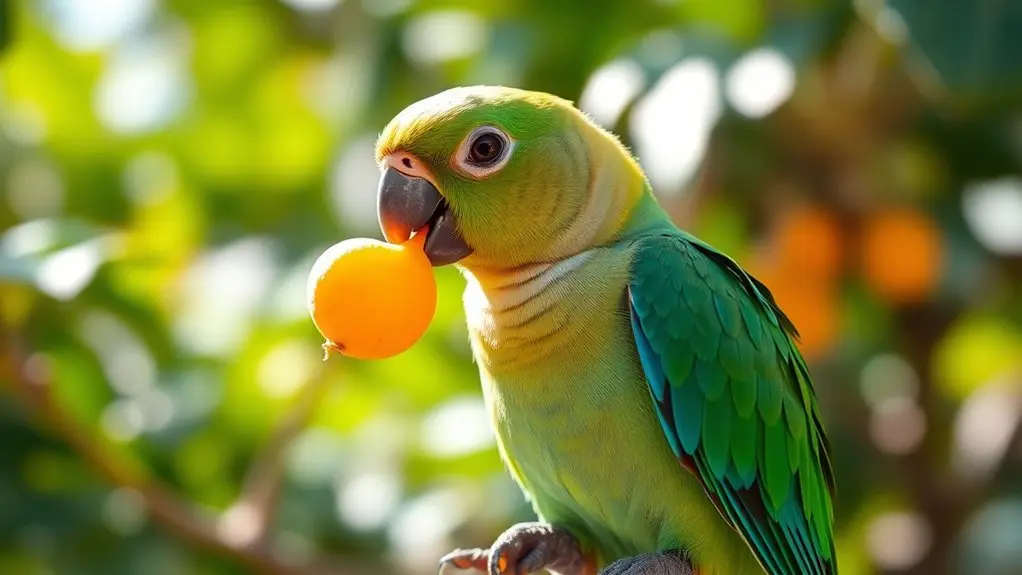
You’ll notice that finches, doves, and cardinals are some of the most frequent consumers of melon seeds. Each of these birds shows its own unique feeding preferences.
For example, finches and sparrows often forage right on the ground, usually going for seeds that are mixed in with other food sources.
On the other hand, cardinals tend to pick out larger, intact seeds.
Knowing these little habits can really help you offer melon seeds in ways that make the most of their nutritional benefits.
Popular Bird Seed Eaters
When you observe birds feeding, you’ll notice that certain species show a clear preference for melon seeds due to their nutritional value and availability. Finches such as American goldfinches and house finches frequently consume these seeds. Parrots and parakeets also eat melon seeds, often as enrichment treats.
Although pigeons and doves are not primary seed eaters, they will occasionally feed on melon seeds. Native birds like buntings and sparrows forage for them in the wild. Melon seeds provide a safe, moderate supplement without harmful additives if offered properly.
| Bird Species | Feeding Behavior |
|---|---|
| Finches | Regular consumers, seed specialists |
| Parrots & Parakeets | Treats and enrichment |
| Pigeons & Doves | Opportunistic, occasional seed eaters |
Feeding Preferences by Species
Because melon seeds are rich in oils and nutrients, several bird species actively seek them out as a food source. If you offer melon seeds, you’ll notice that certain birds show clear preferences based on their natural diets and feeding behaviors.
Finches, like goldfinches and house finches, favor melon seeds because of their small size and high oil content. Ground feeders such as pigeons and doves will eat them when they’re easily accessible.
Woodpeckers and nuthatches include melon seeds in their varied diets, especially near fruiting plants or seed feeders.
Tropical species like toucans and hornbills naturally eat melon seeds as part of their fruit-rich diets.
Consider these species that love melon seeds:
- Finches (goldfinches, house finches)
- Pigeons and doves
- Woodpeckers
- Nuthatches
- Toucans and hornbills
Preparing Melon Seeds Safely for Your Birds
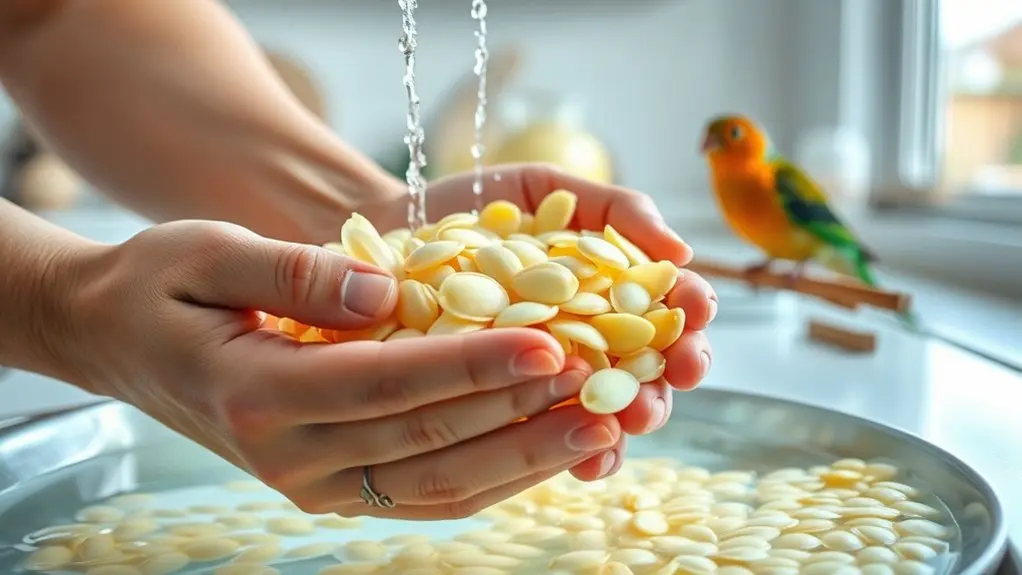
Although melon seeds can provide valuable nutrients to birds, preparing them safely is essential to prevent health risks. First, rinse the seeds thoroughly to remove dirt, salt, and any leftover pulp. This helps stop bacterial growth.
Make sure all the fruit flesh is removed to avoid mold developing. You can lightly roast the seeds to make them easier to digest, but don’t add seasoning, salt, or oils. These things can actually be harmful to birds.
Store the dried seeds in an airtight container and keep them in a cool, dry place. This will help preserve their freshness and prevent spoilage.
It’s best to offer melon seeds in small portions since they’re high in fat and calories. Eating too many can lead to health problems for your birds.
Following these steps will help you give your birds a safe and nutritious treat that they’ll enjoy.
How Often Should You Offer Melon Seeds?
After preparing melon seeds safely, it’s important to think about how often you should offer them to your birds. Melon seeds are high in fat, so they should be an occasional treat rather than a daily food source. Giving them once or twice a week gives your birds some nutritional variety without the risk of overfeeding.
You should keep an eye on how much they eat to maintain a balanced diet and prevent obesity. During breeding season, you might want to offer seeds a bit more often to meet their higher energy needs. Just be careful not to go overboard.
Always remove any leftover seeds quickly to avoid mold growth and spoilage. It’s better to be safe than sorry!
- Offer melon seeds 1–2 times per week
- Avoid daily feeding due to high fat content
- Monitor intake to prevent obesity
- Increase frequency cautiously during breeding season
- Remove leftovers to prevent mold and spoilage
Risks to Watch For When Feeding Melon Seeds
When you’re feeding melon seeds to birds, it’s important to keep an eye out for potential choking hazards, especially if the seeds are larger or harder. You don’t want your feathered friends struggling to swallow.
Also, make sure to check the seeds for any signs of mold or spoilage. Contaminated seeds can lead to health problems, so it’s best to avoid giving those to your birds.
And one more thing—be careful about any contamination from chemicals or preservatives. These substances can be harmful, so always try to provide clean, natural seeds whenever possible.
Potential Choking Hazards
Because melon seeds can vary in size and hardness, you need to be cautious about potential choking hazards when feeding them to birds. Large seeds especially pose a risk to smaller species that may swallow them whole, causing airway obstruction. To minimize this risk, break the seeds into smaller, manageable pieces before offering them.
Dried seeds tend to be harder, which makes swallowing more difficult, particularly for young or small birds. It’s always a good idea to supervise feeding sessions so you can step in quickly if a bird struggles.
Key precautions include:
- Avoid offering whole large seeds to small birds
- Break seeds into smaller fragments
- Limit dried seed portions for vulnerable birds
- Watch birds closely during feeding
- Remove any seeds that are too large or partially swallowed
Mold And Spoilage Risks
In addition to choking risks, mold and spoilage present significant dangers when feeding melon seeds to birds. Melon seeds can develop mold rapidly if stored in moist or improper conditions, which increases health risks.
Moldy seeds may contain mycotoxins, toxic compounds that can cause illness or poisoning in birds. These toxins can lead to digestive disturbances and respiratory problems.
To minimize these risks, make sure seeds are thoroughly dried and stored in a cool, dry environment. It’s essential to inspect melon seeds regularly and discard any showing signs of mold or spoilage before offering them to birds.
Seed Contamination Concerns
Although melon seeds provide valuable nutrients to birds, you need to stay alert about seed contamination risks. Contaminated seeds can introduce harmful fungi, bacteria, or chemicals that can harm birds. For example, improperly stored seeds might’ve Aspergillus mold, which leads to respiratory problems.
Also, seeds treated with preservatives or sulfur compounds can be toxic. Pesticide residues from cultivation add more hazards if seeds aren’t cleaned well.
To keep risks low, try these precautions:
- Store seeds in dry, cool places to stop mold from growing
- Avoid seeds with added preservatives or sulfur compounds
- Wash seeds thoroughly to get rid of pesticides and chemicals
- Check seeds for mold or discoloration before feeding
- Throw away any seeds that look spoiled or contaminated
Other Nutritious Treats Similar to Melon Seeds
When you offer birds melon seeds, you might also consider pumpkin seeds, sunflower seeds, and watermelon seeds as nutritious alternatives. Pumpkin seeds contain magnesium, zinc, and healthy fats, supporting both seed-eating and omnivorous bird species.
Sunflower seeds, particularly black-oil varieties, deliver high-energy nutrition favored by many wild birds. They enhance their diet with essential fatty acids and protein.
Watermelon seeds are soft and safe, providing a natural, palatable treat suitable for various birds.
In all cases, make sure the seeds are clean, unsalted, and free from added flavors or preservatives to avoid health risks. Moderation is key.
Offering these seeds alongside a balanced diet helps maintain birds’ nutritional needs without causing digestive or metabolic issues.
Storing and Handling Melon Seeds Properly
Proper storage and handling of melon seeds considerably influence their quality and safety as bird feed. To keep their nutritional value excellent and prevent contamination, you should follow some simple guidelines.
First, rinse melon seeds thoroughly to get rid of any leftover fruit flesh and pesticides.
Then, store them in an airtight container and keep it in a cool, dry place to stop mold from growing. Avoid humid spots because moisture causes spoilage.
Also, keep melon seeds separate from other seeds to prevent cross-contamination.
Make it a habit to check your seeds regularly. If you notice any that look moldy, discolored, or smell off, it’s best to throw them away.
By sticking to these practices, you make sure the seeds stay safe and nutritious for your birds.
- Rinse seeds thoroughly before use
- Store in airtight containers
- Keep in cool, dry places
- Separate from other seeds
- Discard moldy or discolored seeds
Frequently Asked Questions
Can Melon Seeds Help Improve a Bird’s Feather Quality?
Yes, melon seeds can help improve your bird’s feather quality by providing essential fatty acids, vitamins, and minerals that support keratin production and feather maintenance.
When fed in moderation, these nutrients promote stronger, glossier, and healthier feathers. So, including melon seeds in your bird’s diet can be a great way to boost their feather health. Just be sure not to overdo it!
Do Melon Seeds Attract Wild Birds to Feeders?
Yes, melon seeds attract wild birds to feeders by providing essential nutrients and stimulating natural foraging behavior. You’ll notice increased visits from species like finches and cardinals when you offer unsalted, preservative-free melon seeds.
It’s pretty simple—birds love them because they’re a tasty and healthy snack. Just make sure the seeds are fresh and clean to keep your feathered friends happy. Give it a try and watch your backyard come alive with bird activity!
Can Baby Birds Safely Eat Melon Seeds?
You shouldn’t offer baby birds melon seeds. You shouldn’t risk choking hazards, and you shouldn’t ignore their digestive limitations.
Wait until they’re fully fledged with stronger beaks before introducing hard seeds like melon seeds safely into their diet.
Are Melon Seeds Suitable for Birds With Dietary Restrictions?
You should consult a veterinarian before feeding melon seeds to birds with dietary restrictions. Seeds contain fats and nutrients that might conflict with specific health conditions or dietary needs.
Even though they’re generally safe in moderation, it’s better to be cautious. Your vet can help determine if melon seeds are a good fit for your bird’s diet.
How Do Melon Seeds Compare to Commercial Bird Seed Mixes?
You’ll find melon seeds offer a purer, more natural choice than commercial mixes, free from fillers and additives. They provide concentrated fats and proteins, making them a scientifically sound, wholesome supplement for seed-loving birds.
Honestly, it’s a simple, healthy option that many bird enthusiasts appreciate. Plus, birds seem to really enjoy the taste!
Conclusion
You can safely offer melon seeds to birds like parrots and finches, but moderation is key. For example, a study on pet cockatiels showed improved digestion when given small amounts of cleaned, unsalted melon seeds twice weekly. Always prepare seeds properly by drying and removing any additives.
Make sure to keep an eye on your bird for any adverse reactions. It’s also important to balance melon seeds with a varied diet to guarantee ideal nutrition and safety. That way, your feathered friend stays happy and healthy!