
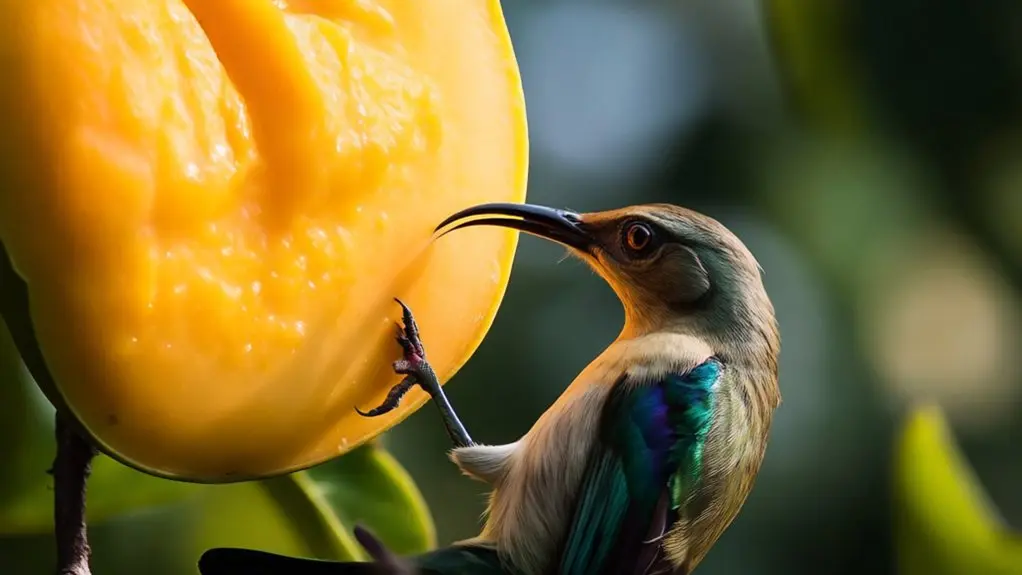
You can safely offer your bird mango skin if you prepare it properly by washing it thoroughly and removing any spoiled or moldy parts. Mango skin provides valuable vitamins, antioxidants, and fiber that support your bird’s health.
However, serve it in small amounts as an occasional treat and watch for allergic reactions like itching or respiratory issues. Knowing how to prepare, serve, and monitor your bird guarantees their safety and well-being with this nutritious snack.
Is Mango Skin Safe for Parrots? Allergies and Risks
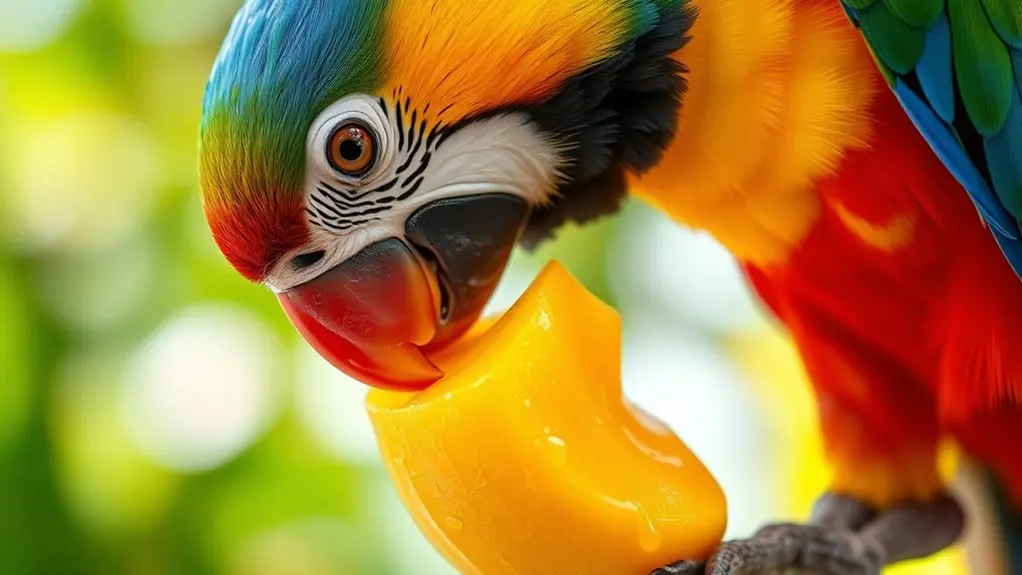
Although mango skin offers beneficial antioxidants and fiber, you should approach feeding it to your parrots with caution because of potential allergies and health risks. Some parrots might develop allergic reactions or skin sensitivities, especially if they already have food allergies.
Also, mango skin can hold onto pesticide residues if it’s not washed thoroughly, which can be toxic. Overripe or moldy mango skin raises the risk of contamination with spoilage organisms, and that can cause foodborne illnesses in birds.
To be safe, always check the mango skin carefully for freshness and cleanliness before giving it to your parrots. When you introduce mango skin into their diet, keep a close eye on them for any signs of discomfort, itching, or digestive upset. Watching for these signs helps prevent health problems and keeps your parrots feeling good.
How Do You Prepare Mango Skin Safely for Your Parrot?
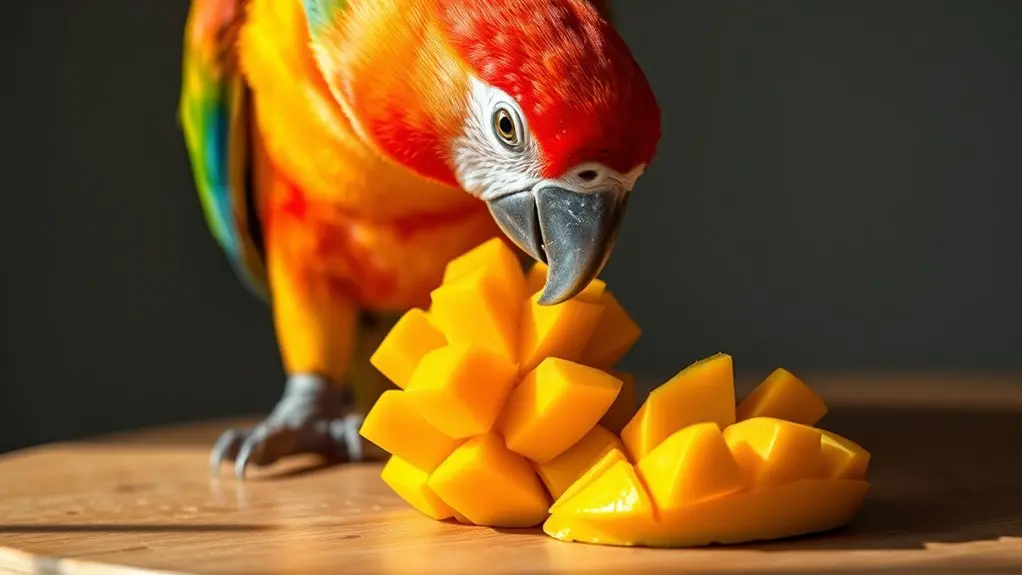
Before you give mango skin to your parrot, make sure to wash it really well. This helps get rid of any pesticide residues or other contaminants that might be on the skin.
Next, take a careful look and remove any parts that look spoiled or moldy. You definitely don’t want your bird eating anything that could make them sick.
After that, cut the skin into small, easy-to-handle pieces that match your bird’s size. Doing this not only keeps things safe but also lowers the chances of choking or your parrot coming into contact with anything harmful.
Washing And Cleaning
When preparing mango skin for your parrot, you need to wash it thoroughly under running water to remove pesticides, dirt, and bacteria. Use a gentle scrub brush to guarantee all surface residues are effectively cleaned.
For extra safety, soak the mango skin in a vinegar solution (1 part vinegar to 3 parts water) for a few minutes. Then rinse thoroughly to eliminate contaminants and any leftover vinegar.
Finally, dry the skin completely with a clean towel or air dry to prevent mold growth before feeding.
| Step | Purpose |
|---|---|
| Washing | Remove dirt, pesticides, bacteria |
| Vinegar soak | Eliminate potential contaminants |
| Drying | Prevent mold growth |
Cutting And Serving
After thoroughly cleaning and drying the mango skin, you can go ahead and prepare it for your parrot by cutting and serving it safely. Use a sharp knife to peel the skin carefully, making sure no residue is left behind that could be hard to digest.
Next, slice the skin into small, manageable pieces or strips. This helps reduce the risk of choking and makes it easier for your parrot to eat. Take a close look at the pieces and remove any dark, moldy, or spoiled sections to avoid feeding unsafe fruit.
Serve the prepared mango skin in moderation as an occasional treat. Always ensure it’s fresh and clean before offering it.
How Much Mango Skin Should You Feed Your Parrot?
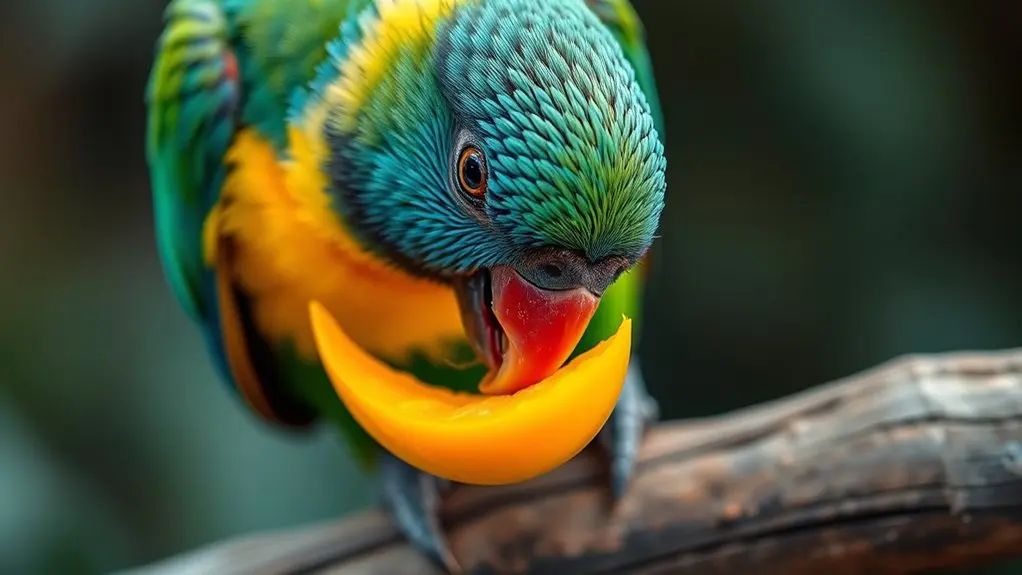
Although mango skin provides beneficial fiber and antioxidants, you should feed your parrot only a small amount at a time, about the size of a thumbnail. Offering more than this can lead to digestive upset or overfeeding because mango skin is dense in fiber.
Limit feeding to a thin strip once or twice weekly as an occasional treat rather than a staple. Always inspect the mango skin carefully and discard any pieces from spoiled, moldy, or overly dark fruit to prevent health risks.
Before serving, thoroughly wash the mango skin to remove pesticide residues and contaminants.
What Nutrients Does Mango Skin Provide for Parrots?
You’ll find that mango skin offers parrots key vitamins like A, C, and K, though in trace amounts. These vitamins support their overall health in subtle but important ways.
Plus, mango skin is rich in antioxidants such as mangiferin and quercetin. These antioxidants help reduce inflammation and give their immune system a nice boost.
On top of that, the high potassium content in mango skin is great for nerve and muscle function.
Key Vitamins Present
When you include mango skin in your parrot’s diet, you provide a range of essential nutrients that support their overall health. Mango skin contains vitamin A at approximately 54 mcg per 100 grams, which is critical for maintaining vision and cellular integrity. It also supplies vitamin K, about 4.2 mcg per 100 grams, playing an important role in blood clotting and bone strength.
Additionally, mango skin offers trace amounts of vitamin C that help boost immune function. Alongside these vitamins, the skin contains dietary fiber and polyphenols that aid digestive health. These nutrients work together to keep your parrot’s physiological functions in good shape.
Antioxidant Benefits Explained
Beyond vitamins, mango skin offers a variety of antioxidants that play a significant role in maintaining your parrot’s health. It contains polyphenols like mangiferin, gallic acid, and quercetin, which effectively neutralize harmful free radicals, reducing oxidative stress.
Additionally, mango skin provides carotenoids such as beta-carotene, which your parrot’s body converts into vitamin A. This vitamin is essential for immune support.
The skin’s fiber content also aids digestion and contributes to antioxidant defense by minimizing cellular damage.
You’ll also find trace amounts of vitamin C and vitamin K that further bolster this antioxidant system. These nutrients enhance your parrot’s immune function.
Offering mango skin in moderation can help protect your parrot from oxidative damage while supporting overall health. It’s a valuable addition to their diet when prepared safely.
Mineral Content Overview
Although mango skin is often overlooked, it provides essential minerals that contribute greatly to your parrot’s health. Mango skin contains potassium, which plays a critical role in regulating nerve signals and muscle contractions, ensuring proper neurological and muscular function.
Additionally, it supplies carotenoids that convert into vitamin A, supporting your bird’s vision and skin integrity. Trace amounts of vitamins A, C, and K in the skin further enhance immune response and blood clotting.
Beyond minerals and vitamins, mango skin offers dietary fiber, promoting healthy digestion and gut function. The presence of antioxidants like mangiferin, gallic acid, and quercetin also complements nutrient absorption and overall well-being.
Including mango skin in your parrot’s diet can therefore provide a balanced mix of essential minerals and nutrients critical for maintaining ideal health. So, it’s definitely worth adding to their meals!
What Are the Benefits of Mango Skin for Your Parrot?
Since mango skin contains antioxidants, fiber, and essential vitamins, it can offer significant health benefits to your parrot. Including thoroughly washed mango skin in your bird’s diet provides crucial nutrients that support multiple physiological functions.
You’ll notice improvements in your parrot’s immune system, vision, and blood clotting due to vitamins A, C, and K.
Additionally, polyphenols like mangiferin and quercetin help maintain cellular health and may reduce disease risk. The fiber content aids digestion and promotes gut health.
Key benefits of mango skin for your parrot include:
- Enhanced immune response from vitamins A and C
- Support for healthy vision and skin
- Improved blood clotting via vitamin K
- Antioxidant protection through polyphenols
- Dietary variety contributing to overall well-being
Just make sure the skin is clean and pesticide-free before offering it to your bird.
What Signs Show Your Parrot’s Reaction to Mango Skin?
While mango skin offers valuable nutrients to your parrot, it’s important to watch how your bird reacts after eating it. Look out for signs of allergic reactions like itching, swelling, or redness around the beak and face.
Digestive issues such as diarrhea or vomiting might mean your parrot is sensitive or intolerant.
Respiratory symptoms, including sneezing or wheezing, could also suggest an allergic response to compounds in the mango skin.
Also, keep an eye on lethargy or reduced activity levels since these often signal something’s wrong. Changes in feather condition or skin irritation are other key signs your parrot mightn’t be handling the mango skin well.
If you notice any of these signs, stop feeding your bird mango skin and check in with an avian veterinarian right away. It’s the best way to keep your parrot healthy and safe.
Frequently Asked Questions
Can Other Bird Species Eat Mango Skin Safely?
Yes, you can safely offer mango skin to many bird species if you thoroughly wash it and introduce it gradually.
Just keep an eye out for any allergic reactions or digestive issues, because some birds might be sensitive to its urushiol content. It’s always better to be cautious when trying something new with your feathered friends.
Does Mango Skin Affect a Parrot’s Digestion?
Think of mango skin as a double-edged sword for your parrot’s digestion. It offers beneficial fiber and antioxidants but can cause irritation or upset if given excessively. So, always wash it thoroughly and offer in moderation to keep digestion smooth.
It’s all about balance. A little mango skin can be a healthy treat, but too much might do more harm than good. Just keep an eye on how your parrot reacts, and you’ll be good to go!
Can Mango Skin Be Frozen for Later Use?
Yes, you can freeze mango skin for later use. Just wash it thoroughly and cut it into small pieces. Then, store the pieces in airtight containers.
Make sure to freeze them consistently to preserve the nutrients. When you’re ready to use it, thaw the mango skin gradually in the refrigerator. This way, it’s perfect for feeding your birds.
Are Canned Mango Skins Safe for Birds?
Yes, canned mango skins can be safe for birds if you thoroughly rinse them to remove preservatives and syrup. Always check the ingredients for harmful additives and avoid sugars.
It’s best to introduce them gradually so you can monitor any digestive reactions. That way, you’ll know how your bird handles them. Just keep an eye out and take it slow.
How Often Can Mango Skin Be Included in a Bird’s Diet?
You can offer mango skin once or twice weekly, balancing its sugary treat with your bird’s regular diet. Although it’s tempting to give more, overfeeding can lead to digestive issues and nutrient imbalance.
Conclusion
You can safely offer your parrot mango skin, but proceed with caution. Think of it as a delicate dance between nutrition and risk. Always wash the skin thoroughly to remove pesticides and monitor for any allergic reactions.
Feed small amounts to avoid digestive upset. Mango skin provides beneficial antioxidants and fiber. By watching your parrot’s response closely, you guarantee this treat becomes a healthy, enriching part of their diet without unexpected surprises.