
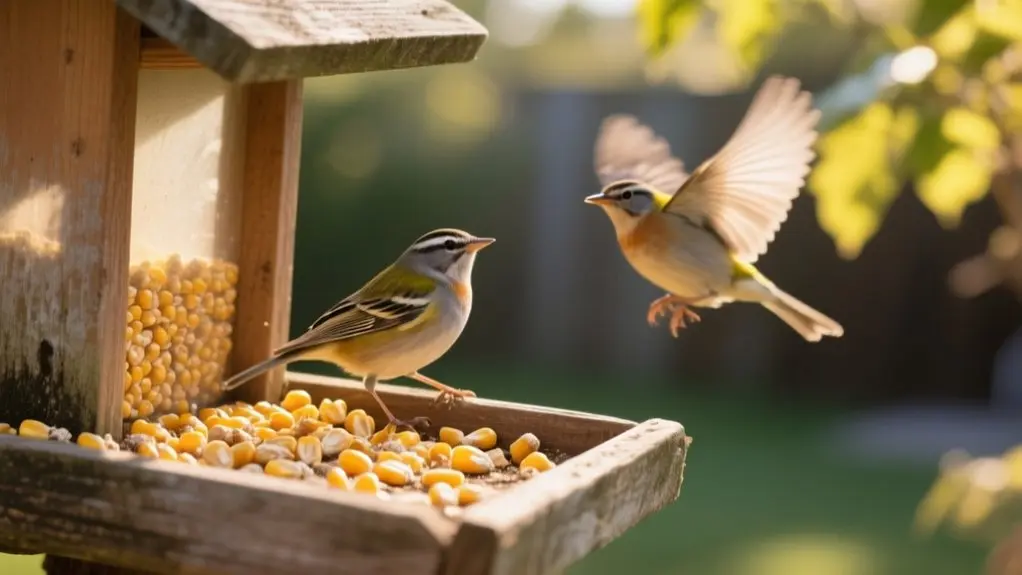
Yes, you can safely feed dried corn kernels to birds, as they’re a nutritious, energy-rich food packed with essential vitamins and minerals. Many species like ducks, sparrows, jays, and wild turkeys enjoy whole or cracked corn, especially during colder months or migration when energy needs rise.
Just be sure to offer uncontaminated corn in moderation and watch for mold or pests. If you want to understand how feeding corn affects bird behavior and how to manage potential risks, keep exploring.
Can Birds Eat Dried Corn Kernels Safely?
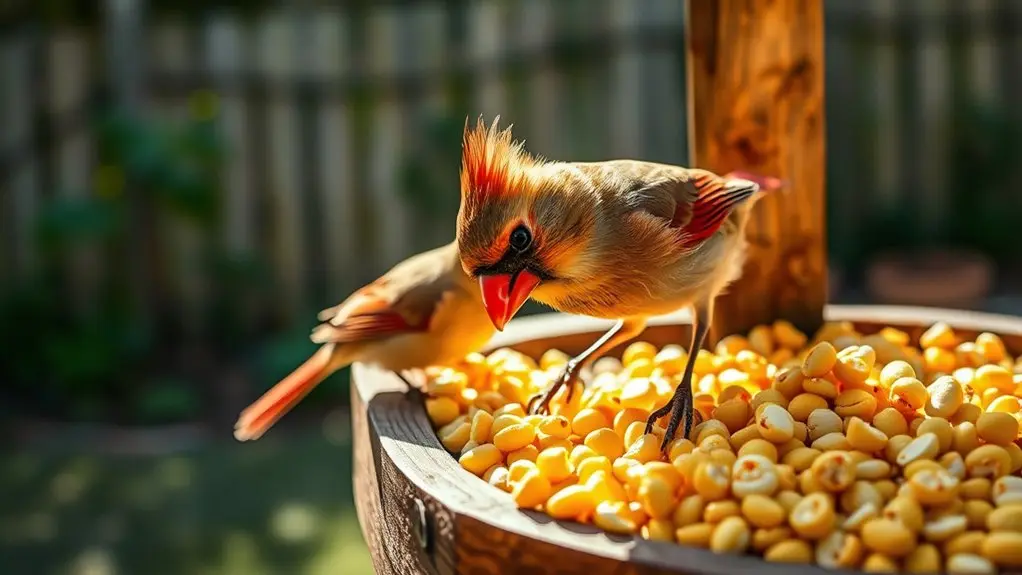
Wondering if birds can eat dried corn kernels safely? Yes, birds can enjoy corn as a nutritious treat rich in carbohydrates and essential nutrients.
Larger birds often prefer whole dried corn kernels, while smaller birds tend to favor cracked corn since it’s easier for them to handle.
When offering dried corn, make certain it’s free from mold and contaminants to keep birds healthy. You’ll want to provide it in moderation, as uneaten corn can spoil quickly and attract pests.
Regularly check your feeding stations to guarantee the corn stays fresh and safe for the birds visiting your yard.
Bird Species That Prefer Dried Corn
Although many birds enjoy a variety of foods, certain species show a clear preference for dried corn kernels because of their high energy content. When you provide dried corn, especially whole kernels, you’ll notice some birds are particularly drawn to it.
Many birds prefer dried corn kernels for their high energy, especially when offered whole.
Waterfowl like ducks and geese often favor whole kernels. Ground-feeding birds such as native sparrows and doves eat dried corn when other food is limited.
You’ll also find that larger songbirds, including crows and jays, enjoy these kernels. Wild turkeys and quail foraging in open areas do too.
Here are bird species that prefer dried corn:
- Crows and jays
- Ducks and geese
- Native sparrows
- Wild turkeys and quail
- Blackbirds and starlings (prefer cracked corn)
What Makes Dried Corn Good Nutrition for Birds
You’ll find that dried corn kernels are packed with high-energy carbohydrates and essential vitamins, which help birds stay healthy and active.
It’s pretty interesting how different bird species have their own unique dietary needs. For example, larger birds like crows really benefit from whole kernels.
On the other hand, smaller birds tend to enjoy ground corn more. Knowing these nutritional benefits can make it easier for you to support a variety of birds right in your backyard.
Nutritional Benefits Overview
When you offer dried corn kernels to birds, you provide them with a high-energy food that fuels their migration and helps them endure colder months. Dried corn delivers essential calories and carbohydrates, making it a reliable energy source for various bird species.
Its nutritional benefits extend beyond energy, including crucial vitamins and minerals that support metabolism and overall health.
Plus, the fiber in dried corn aids digestion, promoting a healthy gut.
If you want to attract and nourish birds effectively, dried corn is a practical choice.
- High in calories and carbohydrates
- Rich in B vitamins and minerals
- Supports healthy metabolism
- Contains fiber for digestion
- Attracts diverse bird species
This makes dried corn a valuable option when birds eat corn for nutrition.
Species-Specific Dietary Needs
Because different bird species have unique dietary needs, dried corn kernels serve as an excellent nutritional option for many. This is especially true for larger ground feeders like crows, jays, doves, and quail that can easily handle the size of whole kernels.
Dried corn provides these species with essential calories and carbohydrates, fueling their energy, especially during migration. You’ll find that dried corn is rich in B vitamins and phosphorus, supporting crucial metabolic functions.
However, not all species share the same dietary preferences. Smaller birds like sparrows may prefer seeds or nuts over dried corn.
Understanding these species-specific dietary preferences helps you offer the right food variety, ensuring each bird benefits from a balanced diet tailored to its needs.
Offering dried corn thoughtfully meets the nutritional demands of many ground-feeding birds effectively.
How Birds Eat Different Types of Dried Corn
You’ll notice that birds prefer different types of dried corn based on how they like to eat.
Some birds go for whole kernels, while others find cracked corn easier to handle and more energy-packed.
Knowing these little preferences can really help you attract a wider variety of birds to your feeder.
Corn Types Consumed
Three popular types of dried corn, cracked corn, whole kernels, and sweet corn, draw a variety of birds depending on their feeding habits.
You’ll notice ground-feeding birds like doves and sparrows prefer cracked corn because it’s easier to peck apart.
Larger birds such as crows and waterfowl go for whole kernels, gaining essential energy for migration.
Sweet corn attracts birds for its sugary taste but can lead to crop damage.
Besides corn, birds often enjoy sunflower seeds, which add variety to their diet.
- Cracked corn suits small, ground feeders
- Whole kernels provide high energy
- Sweet corn appeals to sweetness-loving birds
- Blackbirds, sparrows, and starlings frequent fields
- Sunflower seeds complement corn in feeding
Understanding these types helps you attract and support different bird species effectively.
Feeding Preferences Varied
Although bird species differ widely in their feeding habits, many show clear preferences when it comes to dried corn types.
Backyard birds like sparrows and doves often prefer cracked corn because it’s easier to eat on the ground.
Larger birds, such as crows and waterfowl, usually go for whole kernels, which provide more energy.
During migration, feeding preferences shift as birds seek high-calorie foods like dried corn to fuel their long journeys.
Blackbirds, starlings, and native sparrows actively forage for dried corn in open areas, though they might favor other seeds like sunflower or nuts.
When you offer dried corn, remember to provide it in moderation to avoid spoilage and health risks.
Understanding these varied preferences helps you attract a wider range of birds to your backyard.
Reasons Birds Avoid Cracked Corn
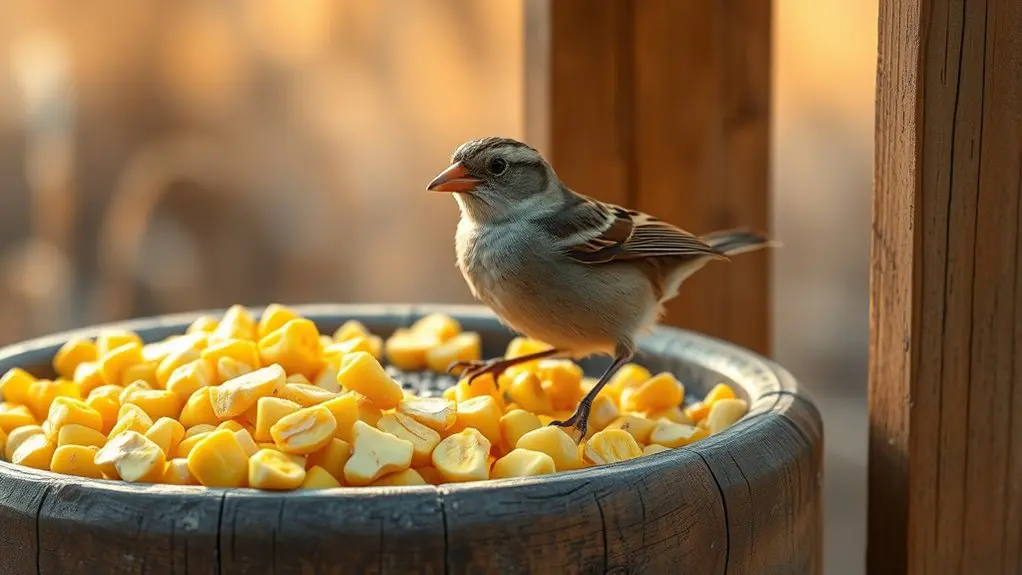
When birds have access to more nutritious options like nuts and sunflower seeds, they tend to avoid cracked corn because it offers less appeal and sustenance.
You’ll notice blue jays and other birds eating cracked corn only when other foods run low.
Blue jays and similar birds turn to cracked corn mainly when preferred foods are scarce.
Birds and squirrels often compete for better-tasting treats, leaving cracked corn less favored.
Seasonal changes also affect their interest, making cracked corn a last-resort food.
Plus, some species simply ignore it altogether.
Here’s why birds avoid cracked corn:
- It’s less nutritious compared to nuts and sunflower seeds
- Blue jays prefer higher-energy foods
- Squirrels often outcompete birds for better food
- Seasonal shifts reduce cracked corn consumption
- Some birds, like house sparrows, disregard cracked corn entirely
Understanding this helps you tailor feeding to attract more birds.
Best Ways to Offer Dried Corn to Birds
If you’re offering dried corn to birds, it’s best to use feeders that keep the kernels off the ground.
Platform or tray feeders work great for this because they make it easy for ground-feeding birds to get to the corn.
You’ll also want to place your feeders in safe, visible spots.
This not only attracts more birds but also lets you keep an eye on the food to make sure it stays fresh.
Another tip is to mix the dried corn with other seeds.
This can make the offering more appealing and encourage a wider variety of birds to stop by.
Effective Feeding Methods
Since dried corn kernels can spoil quickly, it’s best to offer small amounts that birds can eat within a day or two.
To make feeding effective, focus on corn feeding techniques that match bird foraging habits. Scatter corn on the ground or use platform feeders to attract ground-feeding birds like doves and sparrows.
You can also try specialized corn feeders to keep kernels dry and pest-free. Regular feeder maintenance tips are essential. Remove uneaten corn promptly to prevent mold and contamination.
Here are five effective feeding methods to try:
- Offer corn in small daily portions to avoid spoilage
- Scatter kernels on the ground for natural foraging
- Use platform feeders for easy access
- Hang specialized corn feeders to reduce moisture exposure
- Clean feeding areas regularly to maintain hygiene
Feeder Types and Placement
Although dried corn kernels can spoil if not handled properly, choosing the right feeder types and placement can make all the difference in attracting a variety of birds.
Use platform feeders with screened bottoms to offer corn kernels to ground-feeders like doves and sparrows, ensuring good drainage to prevent mold.
Hanging feeders designed to hold whole ears of corn attract larger birds such as crows and jays, expanding your backyard visitors.
Incorporate height variations by placing feeders at different levels and spacing them about 15 feet apart to accommodate diverse species and their feeding preferences.
Furthermore, scatter some dried corn on the ground to encourage natural foraging behavior.
Considering feeder designs and accessibility factors will help you provide dried corn safely and attract more birds to your yard.
Ground Feeding and Feeder Feeding Methods
When you scatter dried corn kernels on the ground, you increase the chances of attracting ground-feeding birds like doves and native sparrows that prefer foraging there.
Using ground feeding techniques alongside feeder design options lets you cater to different bird preferences effectively.
Combining ground feeding with feeder designs meets diverse bird preferences for a more successful feeding experience.
Platform feeders work well for whole or cracked corn, providing drainage and keeping food fresh.
Bird behavior observations show some species, like blue jays and woodpeckers, favor feeders, while others stick to ground foraging.
To optimize feeding:
- Scatter corn kernels visibly on the ground
- Use platform feeders to prevent spoilage
- Monitor feeder levels regularly
- Observe which species prefer ground vs. feeder feeding
- Adjust methods based on bird responses
Balancing ground feeding and feeders guarantees more birds enjoy your dried corn kernels.
Seasonal Effects on Birds’ Corn Feeding Habits
As the seasons change, you’ll notice shifts in how birds feed on dried corn kernels. During migration periods, many species increase their intake of corn to meet heightened energy requirements. They rely on this high-calorie food to fuel long flights.
In spring and summer, birds’ seasonal diets shift toward abundant natural foods, so corn consumption drops. However, in fall and winter, when natural supplies wane, birds like blackbirds and sparrows turn to dried corn more frequently.
Weather also plays a role. Snow cover can limit access to natural foods, pushing birds to feeders stocked with corn kernels.
Significantly, migration patterns and species differences influence feeding behavior. Larger birds and waterfowl especially favor whole kernels during colder months, making dried corn a crucial seasonal resource.
Health Risks to Watch for When Feeding Corn
Feeding dried corn kernels to birds can introduce health risks you should watch for to keep your feathered visitors safe.
Corn feeding risks include salmonella outbreaks and exposure to mold toxins, both harmful to birds.
To avoid these dangers, practice mold prevention strategies and spoilage detection methods regularly. Always check corn for signs of mold or an off smell, and discard any spoiled kernels immediately.
Limit feeding amounts so birds eat the corn within one to two days, reducing the chance of spoilage and pest attraction.
- Inspect corn frequently for mold or odor
- Use small quantities to prevent leftover feed
- Discard moldy or spoiled corn promptly
- Avoid cracked corn to reduce pest issues
- Monitor birds for signs of illness after feeding
Stay vigilant to protect your backyard birds.
How Feeding Corn Changes Backyard Bird Behavior
Although dried corn kernels provide a high-energy food source that attracts many backyard birds, you’ll notice changes in their behavior and feeding patterns over time.
Birds like crows, blackbirds, and sparrows may alter their feeding strategies, shifting from preferred foods to corn, especially when other resources decline.
Seasonal adaptations play a key role, as birds often take time to accept dried corn but gradually include it more in their diet during colder months.
These behavioral changes can also affect how often and where birds feed. Ground scattering tends to increase consumption and attract larger species.
Managing Pests and Unwanted Wildlife at Dried Corn Feeders
Watching how dried corn changes bird behavior can be rewarding, but it also brings challenges like unwanted visitors. To keep pests at bay, you need effective pest control strategies and wildlife deterrents. Use feeders with weight-sensitive perches to limit access for squirrels and mice.
Observing birds enjoy dried corn is rewarding, but managing unwanted pests requires smart feeder strategies.
Regular feeder maintenance tips, like cleaning and checking for moldy corn, help prevent spoilage and health risks. Physical barriers such as netting can block larger animals while letting birds feed easily.
Be cautious when scattering corn on the ground; it attracts birds but also unwanted wildlife.
- Use weight-sensitive perch feeders
- Clean feeders regularly to avoid mold
- Install netting as a physical barrier
- Monitor feeders often for signs of pests
- Place corn carefully to minimize ground access
These steps keep your dried corn feeders bird-friendly and pest-free.
Combining Corn With Other Bird Foods
When you combine dried corn kernels with other bird foods like sunflower hearts or millet, you attract a wider variety of species with different preferences and nutritional needs.
Using smart corn pairing strategies, you can mix cracked corn with high-energy foods like peanuts or suet to appeal to ground feeders such as doves and sparrows.
Seasonal corn preferences also matter. During migration, offering corn alongside grains boosts energy intake.
Effective corn feeding techniques include blending corn into birdseed mixes to reduce waste, since jays and crows enjoy corn while others pick preferred seeds.
You can also create DIY treats like popcorn and cranberry wreaths to diversify your feeding options and keep more bird species visiting your backyard throughout the year.
Frequently Asked Questions
Can Feeding Dried Corn to Birds Attract Predators?
Yes, feeding dried corn to birds can attract predators. You’ll notice predator behavior intensifies around concentrated feeding spots because they spot easy prey.
To protect bird safety, you should adjust your feeding strategies by scattering corn widely rather than clustering it. This reduces predator attention and lowers risks for birds.
Being mindful of where and how you feed helps keep the bird community safer from hawks, crows, and other predators.
How Does Dried Corn Impact Bird Migration Patterns?
Migration cues meet mighty meals when you spot dried corn, which offers rich nutritional value that fuels your flight.
You’ll notice birds shifting their habitat preferences, gravitating toward cornfields to grab energy before soaring.
This abundant, accessible food source influences when and where you migrate, prompting earlier arrivals and altered routes.
Is Dried Corn Suitable for Feeding Pet Birds Indoors?
Yes, dried corn kernels offer nutritional benefits like carbs and essential nutrients for your pet birds indoors. When feeding, follow guidelines by ensuring the corn is unsalted and free from additives.
Keep in mind bird preferences: larger birds enjoy whole kernels, while smaller ones prefer ground corn. Introduce it gradually to monitor reactions.
Store the corn in a cool, dry place to keep it fresh and safe for your feathered friends.
What Is the Environmental Impact of Widespread Corn Feeding?
You’ll find that widespread corn feeding contributes considerably to corn monoculture effects, which intensify habitat loss by replacing diverse ecosystems with single-crop fields.
This reduction in varied habitats directly fuels biodiversity concerns, as fewer species can thrive.
When you feed birds lots of corn, you unintentionally support these negative environmental outcomes, encouraging dominant species while diminishing overall ecological balance.
It’s important to reflect on these impacts before promoting large-scale corn feeding.
Can Birds Develop Allergies From Eating Dried Corn?
Yes, birds can develop allergic reactions from eating dried corn, though it’s not very common.
If you notice signs like digestive upset or skin irritation, it might indicate corn toxicity or an allergy affecting bird health.
You should monitor your birds closely after introducing dried corn and avoid feeding it excessively.
Keeping their diet varied helps reduce risks and supports overall bird health, preventing potential allergic responses.
Conclusion
So, can you safely offer dried corn kernels to your feathered friends? Absolutely, but with some caution. You’ll want to know which birds prefer them and keep an eye out for health risks and unwanted visitors.
After all, isn’t it worth a little effort to enjoy watching a variety of birds thrive in your backyard? Just remember to mix corn with other foods and manage your feeders wisely for the best birdwatching experience.