
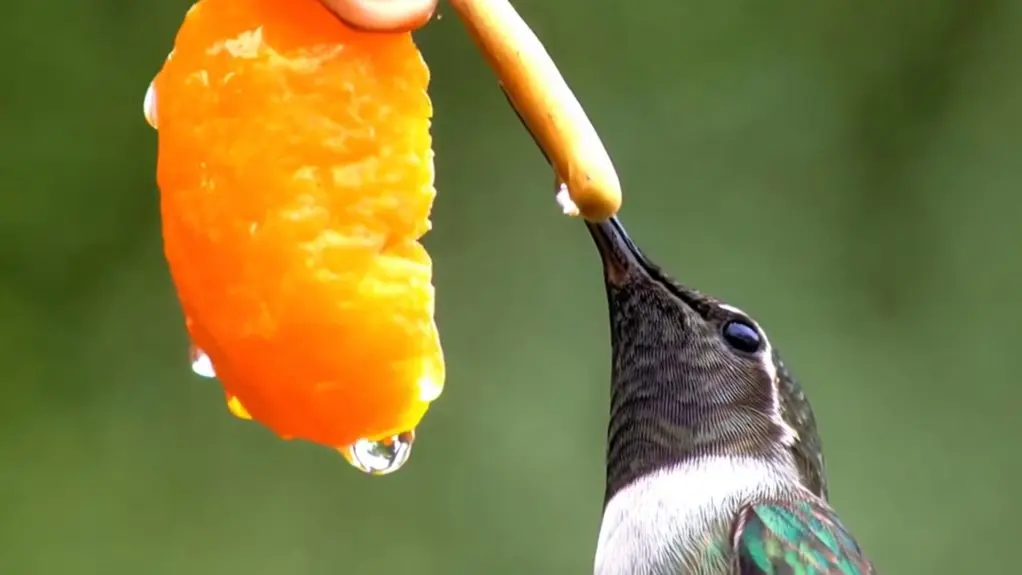
You can safely feed birds peeled mandarin orange segments in moderation. Just make sure to avoid seeds, peel, and spoiled fruit to prevent choking and toxicity.
Many birds, like orioles and thrushes, enjoy the fresh, juicy flesh, especially in warmer months. Most birds, though, prefer calorie-rich foods in winter.
Mandarins provide vitamin C and hydration but should complement, not replace, primary foods. If you want to explore which species favor mandarins and proper feeding tips, there’s more to take into account.
Can Birds Safely Eat Mandarin Oranges?
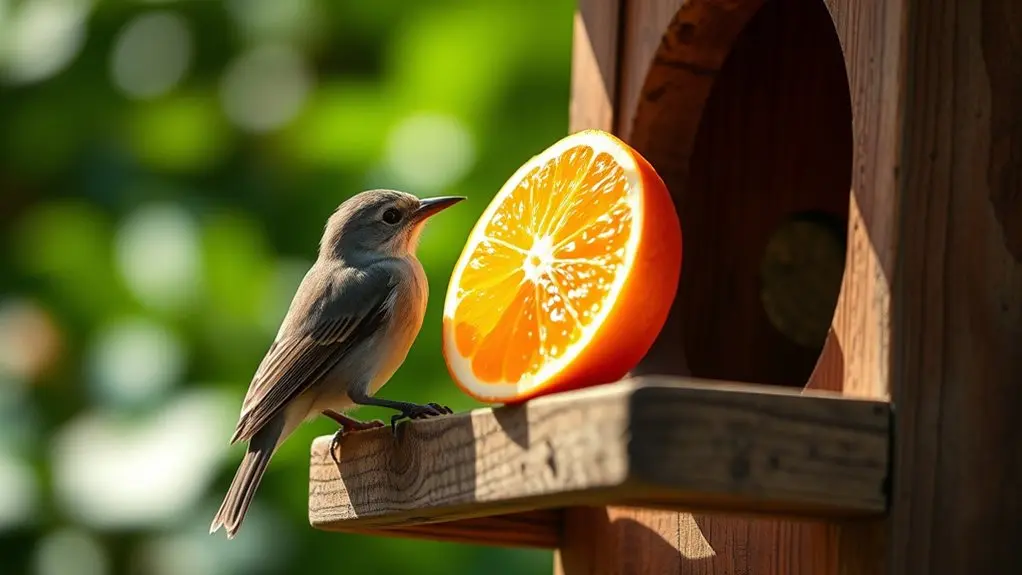
Although mandarin oranges contain nutrients beneficial to birds, you should only offer them small amounts of peeled flesh to guarantee safety. The flesh provides vitamin C and hydration, which can support fruit-eating species like parrots and orioles.
However, you must avoid giving birds the peel, pith, or seeds, as these parts contain oils and compounds that may be harmful.
The high sugar content in mandarins requires moderation since excessive intake can lead to health problems.
So, mandarins should serve as a supplemental treat rather than a primary food source.
Why Most Birds Avoid Mandarins in Winter
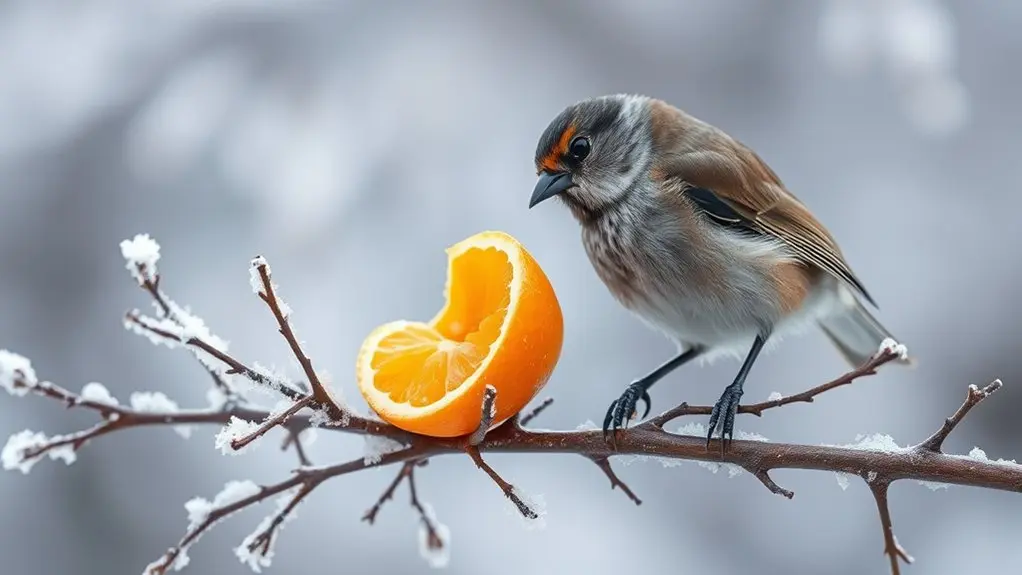
You might’ve noticed that most birds tend to avoid mandarins in winter. That’s because their feeding habits change during the colder months. They start going for high-energy foods like seeds and suet instead.
Citrus fruits, like mandarins, don’t provide much fat, which birds really need to stay warm. Plus, mandarins have a strong taste that many birds just don’t like when it’s cold outside.
So, it makes sense that mandarins rarely attract wild birds in winter.
Understanding these little seasonal preferences helps explain why you won’t see many birds enjoying mandarins once the temperature drops.
Seasonal Bird Feeding Habits
Because winter demands high energy intake, most native bird species focus on calorie-rich seeds and fats rather than citrus fruits like mandarins.
You’ll notice birds reduce their activity and avoid foraging for fresh, moisture-rich foods in cold months. Their feeding habits adapt to maximize survival.
Here’s why mandarins aren’t favored in winter:
- Birds prioritize energy-dense foods like seeds and fats that provide more calories per bite.
- Cold temperatures lower birds’ inclination to seek out fresh fruits, which require more effort and offer less energy.
- Many birds instinctively avoid soft or spoiled fruits that may carry harmful mold or bacteria during winter.
Understanding these habits helps explain why mandarins rarely appear in winter diets despite their availability. It’s all about what keeps birds going when it’s cold out.
Citrus Appeal In Cold
Winter’s harsh conditions sharply reduce birds’ interest in mandarins, as their feeding behavior shifts to conserve energy. During cold months, many bird species, especially those that feed on seeds and insects, avoid foraging for citrus fruits like mandarins.
Since fresh fruit becomes scarce, birds not adapted to citrus rarely seek it out, limiting its appeal.
Additionally, mandarins spoil or soften quickly in low temperatures, which decreases their accessibility and attractiveness. Birds prioritize high-energy foods such as seeds and suet, which better support their metabolic needs for warmth and sustained energy.
If you’re feeding birds in winter, focus on these energy-rich options rather than citrus. Mandarins don’t provide the necessary nutrients to help birds survive cold conditions effectively.
Nutritional Benefits of Mandarins for Birds
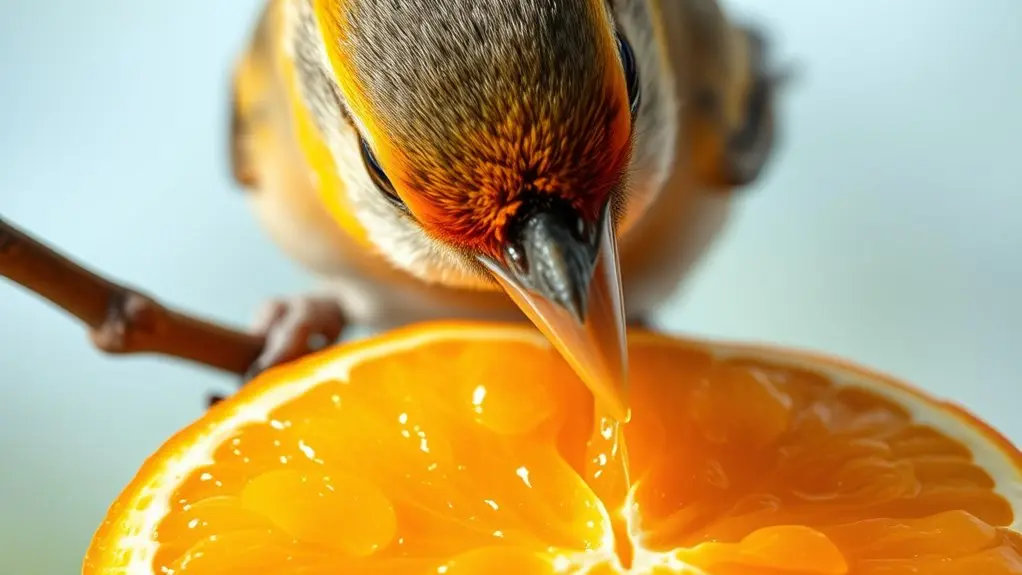
You’ll find mandarins packed with essential vitamins like vitamin C, which really helps support birds’ immune systems. Plus, their natural sugars give birds a quick boost of energy.
On top of that, mandarins have lots of water and potassium, which are great for keeping birds hydrated and maintaining their electrolyte balance.
All in all, these nutrients make mandarins a tasty and valuable snack for many fruit-eating birds.
Essential Vitamins Provided
How do mandarins benefit birds nutritionally? These fruits provide essential vitamins and nutrients that support avian health. When you feed mandarins to birds, you supply them with key compounds that promote their immune system and overall well-being.
Specifically, mandarins offer:
- Vitamin C – Crucial for enhancing immune function and aiding in tissue repair.
- Potassium – Helps maintain proper nerve function and fluid balance.
- Fiber – Supports healthy digestion and gut motility.
Additionally, mandarins contain antioxidants that protect bird cells from oxidative stress.
Offering small amounts of mandarin fruit can contribute to a bird’s nutritional needs, especially for species that naturally consume fruit.
Natural Sugar Content
Although mandarins contain natural sugars that provide birds with a quick energy source, you should offer these fruits in moderation to avoid digestive issues or excessive weight gain. The primary sugar in mandarins is fructose, which birds metabolize rapidly, supporting their active lifestyles.
Beyond energy, mandarins supply fiber, potassium, and antioxidants that contribute to overall health.
Their high vitamin C content further enhances immune function, particularly in fruit-eating bird species. Additionally, the natural sugars can stimulate foraging behavior, encouraging birds to seek out these fruits, especially when other food sources are limited.
However, excessive consumption may disrupt digestive balance or lead to unhealthy weight gain.
Hydration And Electrolytes
Beyond providing energy through natural sugars, mandarins play a big role in keeping birds hydrated and balancing their electrolytes. Their high water content is great for helping birds stay hydrated, especially when it’s hot or dry out.
Mandarins also supply essential electrolytes like potassium, which is super important for muscle function and nerve signaling. When you offer your bird mandarin segments that are properly prepared, you’re supporting their overall physiological balance.
Here’s why mandarins are great for your bird’s hydration and electrolytes:
- Mandarins’ water content helps maintain fluid balance and keeps dehydration at bay.
- Potassium in mandarins supports muscle contractions and nerve communication.
- The natural sugars in mandarins help replenish energy and keep electrolyte levels steady during activity.
Which Birds Like Mandarins?
Which bird species are naturally drawn to mandarins? Many fruit-eating birds like orioles, tanagers, and thrushes seek mandarins for their natural sweetness and vitamin C. American Robins and Cedar Waxwings peck at citrus fruits during scarce food periods.
Parrots and some backyard songbirds may sample mandarin segments but usually prefer their typical diet. Citrus-loving birds thrive mainly in warmer climates, with fewer species attracted in colder regions during winter.
| Bird Species | Attraction to Mandarins |
|---|---|
| Orioles | Prefer sweet, vitamin-rich fruits |
| Tanagers | Regularly consume mandarins in the wild |
| Thrushes | Seek mandarins seasonally |
| American Robins | Eat mandarins when other food is scarce |
| Cedar Waxwings | Frequently peck at citrus fruits |
How to Prepare Mandarins Safely for Birds
Knowing which bird species enjoy mandarins helps you provide this fruit safely to your feathered visitors. Proper preparation minimizes health risks and guarantees your birds benefit from this treat without digestive issues or choking hazards.
Follow these steps:
- Peel the mandarin thoroughly, removing all skin and white pith, as their oils can upset bird digestion.
- Remove every seed to prevent choking and avoid potential toxicity.
- Cut the fruit into small, manageable pieces that birds can easily handle and consume.
Always offer fresh, firm mandarins, and avoid spoiled or overly soft segments.
Serve mandarins only in moderation as a supplementary treat within a balanced diet. This way, you’re making sure your birds get the best nutrition possible.
How to Recognize If Birds Accept or Reject Mandarins
You’ll know birds accept mandarins by how they act around the fruit. If they’re pecking at it, eating the juicy flesh, and coming back for seconds, that’s a good sign.
Different types of birds show different levels of interest—fruit-eating ones are usually more into fresh, peeled segments.
On the other hand, if the birds just ignore the mandarins, only peck at the peel, or quickly fly away, they’re probably not fans of the fruit. It’s pretty easy to tell by watching their behavior!
Bird Eating Behavior
When birds encounter mandarins, their eating behavior provides clear signs of acceptance or rejection. You can observe their reactions to determine whether they find mandarins suitable as food. Here’s what to look for:
- Repeated Pecking: Birds interested in mandarins peck multiple times, consuming small bites, especially of fresh, firm fruit.
- Peel Preference: Some species prefer peeled mandarins, as exposed flesh is easier to eat, while others avoid the peel entirely.
- Avoidance of Spoiled Fruit: Birds typically reject mandarins that are moldy, rotting, or emit a foul odor. They respond negatively to texture and smell.
Signs Of Acceptance
Although birds may approach mandarins out of curiosity, their behavior quickly reveals whether they accept the fruit as food. You’ll notice acceptance when birds peck at the flesh and consume it willingly. Frequent pecking and eating indicate that the mandarins are appealing to them.
On the other hand, if birds ignore the fruit or fly away shortly after approaching, they likely reject it. Sometimes, birds may peck only at the peel without eating the fruit, which shows disinterest.
Consistent acceptance across multiple visits confirms that birds are comfortable with and enjoy mandarins as part of their diet.
How Much Mandarin Orange to Feed Birds
Since mandarin oranges contain natural sugars and acids, it’s important to feed birds only small, peeled segments. This helps avoid any digestive issues. You should carefully control the quantity based on the bird’s size and species to keep things safe and nutritious.
Feed birds small, peeled mandarin orange segments to ensure safe digestion and appropriate nutrition.
Here are some tips to follow:
- Offer peeled segments only. Avoid the peel and pith because they’ve oils that can be harmful to birds.
- Limit servings to a few small segments per feeding session. This prevents overconsumption of sugars and keeps their digestion happy.
- Adjust the portion size depending on the bird. Smaller birds need fewer segments, while larger birds can handle a bit more.
Risks of Feeding Spoiled or Overripe Mandarins
If you feed birds spoiled or overripe mandarins, you risk causing digestive upset because of mold, bacteria, or fermentation byproducts. Spoiled mandarins often have harmful molds and toxins that can be toxic if ingested.
Plus, overripe fruit tends to attract pests and insects. These critters might bring pathogens to birds nearby, which is definitely not good.
Birds usually avoid spoiled fruit anyway. Changes in smell and texture let them know something’s off, so they’re less likely to eat it.
Feeding spoiled mandarins puts birds’ health in danger and could lead to illness from toxins or infections.
To keep birds safe, always offer fresh, healthy fruit.
This way, birds get nutritious food without the risk of harmful contaminants from decayed or fermenting mandarins. It’s a simple step that really makes a difference!
Alternatives to Mandarins for Feeding Birds in Winter
To protect birds from the risks posed by spoiled mandarins, you can offer alternative foods better suited for winter conditions. Birds rely on energy-dense, nutrient-rich sources that withstand cold weather without deteriorating. Consider these options:
- Seeds: Sunflower seeds and millet provide essential fats and proteins, supporting birds’ metabolic needs.
- Suet Cakes: High-fat suet cakes supply concentrated calories, crucial for thermoregulation during freezing temperatures.
- Native Berries and Dried Fruits: Small amounts of dried fruits and native berries deliver carbohydrates and vitamins without the spoilage risks of citrus.
Providing fresh, unfrozen water alongside these foods ensures hydration. Avoid spoiled or decaying fruit to prevent mold growth and pest attraction.
These alternatives help maintain bird health and energy balance throughout harsh winter months.
It’s really about giving birds what they need to stay warm and healthy when it’s cold out. So, sticking to these food options and keeping the water fresh makes a big difference!
Tips for Attracting Birds With Fruit During Cold Months
When you offer fresh, peeled mandarins during cold months, you attract fruit-eating birds like cedar waxwings and orioles by providing them with an accessible and nutritious food source. Peel the fruit to guarantee birds can easily reach the flesh and avoid the hazards of mold or spoilage.
Place segmented mandarins on platform feeders or tree branches to simulate natural feeding conditions when wild fruit is scarce. Be sure to remove any overly soft or spoiled fruit to prevent health risks and discourage pests.
Including mandarins in your winter feeding routine supplies essential vitamin C, supporting birds’ immune systems during cold weather.
Consistent, fresh fruit offerings can greatly enhance your chances of attracting and sustaining fruit-loving bird species in winter.
Frequently Asked Questions
Can Mandarin Orange Peels Harm Birds if Ingested?
Yes, mandarin orange peels can harm birds if ingested. Their tough texture and essential oils may irritate the digestive system, potentially causing gastrointestinal upset and liver issues. So, you should always remove peels before feeding birds.
It’s better to be safe than sorry when it comes to your feathered friends. Sticking to just the fruit without the peel can keep them happy and healthy.
Do Birds Get Any Hydration From Eating Mandarins?
Yes, birds get hydration from mandarins, which are about 85-86% water. You’ll find mandarins help keep birds hydrated, especially in dry conditions.
But remember, always provide fresh water for their full hydration needs. It’s important they get enough water beyond just the fruit.
Are Canned Mandarin Oranges Safe for Birds?
Yes, you can safely feed birds canned mandarin oranges if they’re packed in natural juice without added sugars or preservatives. Just make sure to rinse them thoroughly before offering.
Give them in moderation, though. It’s always a good idea to keep an eye on the birds afterward to watch for any digestive issues.
That way, you’ll know if the oranges agree with their system or not.
Can Feeding Mandarins Affect Bird Migration Patterns?
Yes, feeding mandarins can influence bird migration by providing extra energy and sugar cues. This might change when birds decide to migrate or even the routes they take.
But, if you feed them too much, it could mess with their natural behaviors and migration patterns. So, it’s best to offer mandarins carefully and only during certain seasons.
That way, you help without causing problems for the birds. It’s all about finding the right balance!
How Do Mandarins Compare to Other Citrus Fruits for Birds?
Mandarins have lower acidity and a sweeter flavor than other citrus fruits, making them gentler and more appealing for birds. Their easier-to-peel skin also makes it simpler for birds to enjoy them.
Plus, mandarins provide similar nutritional benefits as other citrus fruits but with less chance of digestive irritation. So, they’re a tasty and bird-friendly option all around.
Conclusion
You can safely offer mandarin oranges to birds, but keep in mind that only about 10% of bird species actively eat citrus fruits like mandarins, especially in winter. Preparing the fruit properly and feeding it in moderation helps make sure birds get nutritional benefits without any risks.
Avoid spoiled mandarins to keep their health safe. If mandarins aren’t available, try other fruits to attract birds during cold months. With careful feeding, you’ll support their diet in a way that’s both scientific and safe.