
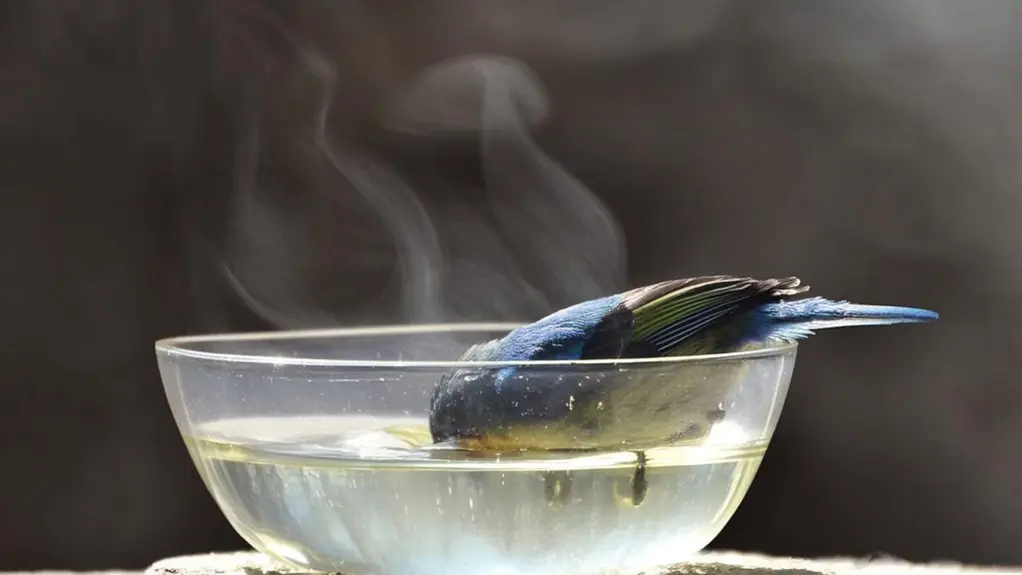
You can safely offer birds warm water between 98°F and 110°F to support their hydration and health without causing burns or discomfort. Birds prefer lukewarm water, especially in cold weather, as it helps conserve body heat and encourages drinking.
Avoid water above 115°F to prevent tissue damage, and always make certain water is clean by replacing it daily. Proper water temperature and hygiene promote bird well-being and comfort.
Here’s what else you need to know about maintaining safe, fresh water for birds.
Can Birds Safely Drink Warm Water, and What Temperature Is Best?
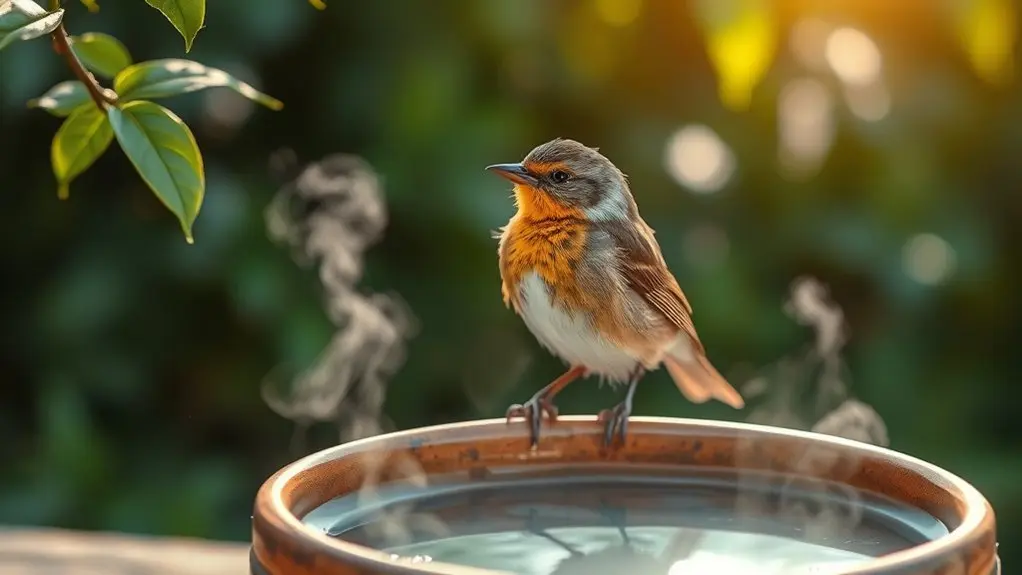
Although birds can safely drink warm water, it’s important to make sure the temperature stays within a safe range. Ideally, the water should be close to their natural body temperature, around 105-110°F (40-43°C).
Anything above 115°F (46°C) can cause burns or discomfort to their sensitive beaks and mouths.
On the other hand, cold water below 50°F (10°C) might discourage them from drinking and can increase bacterial growth.
To keep your bird hydrated without any risk, lukewarm water between 90-100°F (32-38°C) works best.
Before giving your bird water, always check the temperature with a reliable thermometer to make sure it’s safe and comfortable.
Keeping the water in this temperature range will help support your bird’s health and avoid injuries or reluctance to drink caused by water that’s too hot or too cold.
Why Do Birds Prefer Warm Water at Certain Times?
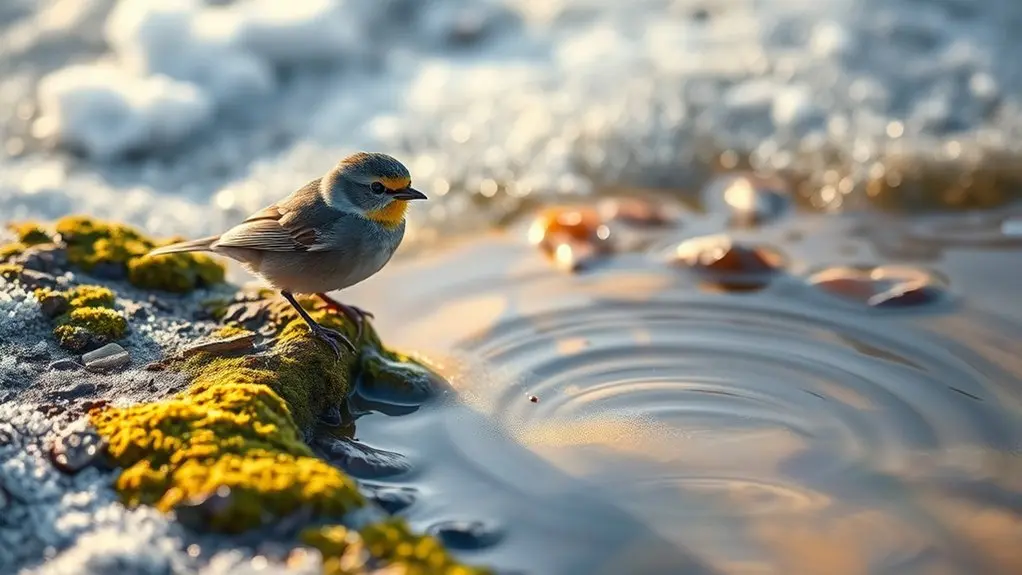
When temperatures drop, birds prefer warm water because it helps them conserve body heat and reduces the energy they expend on thermoregulation. You’ll notice this preference particularly in colder weather, early mornings, or late evenings.
Birds instinctively seek warmth to avoid cold water shock and maintain hydration efficiently.
Here’s why you’ll see birds opting for warm water at certain times:
- Warm water minimizes heat loss, conserving essential energy.
- It encourages more frequent drinking during low temperatures.
- Bathing in warm water eases feather cleaning without causing discomfort.
- Some species rely on warm water seasonally to support body temperature regulation.
Understanding these behaviors helps you provide suitable water sources that align with birds’ physiological needs during colder periods. It’s a simple way to make a big difference for them when the weather turns chilly.
How Warm Water Helps or Harms Bird Health and Hydration
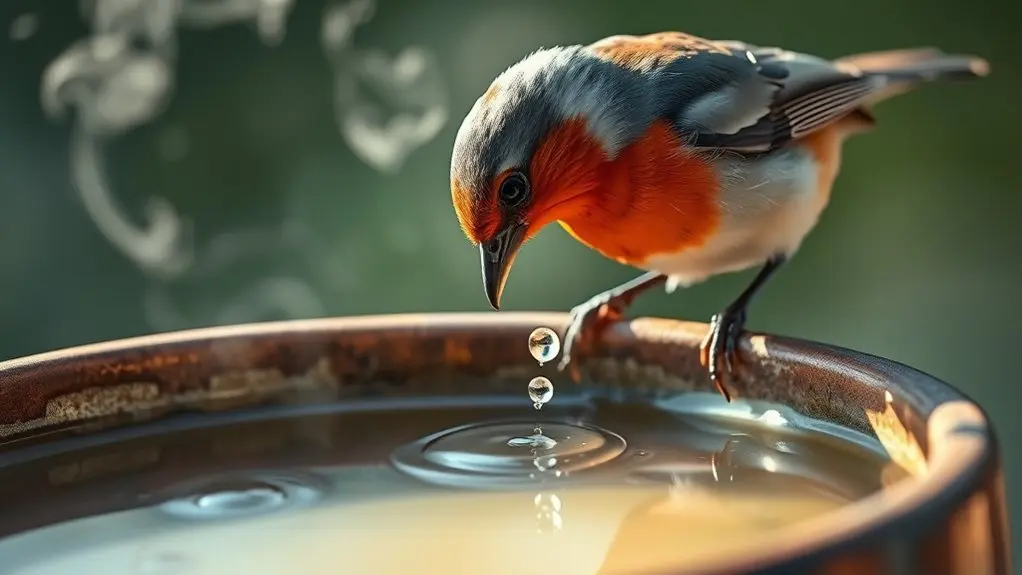
Warm water plays a critical role in supporting bird hydration, especially during cold weather. It helps reduce the energy birds expend to warm the liquid internally.
When you provide water at a moderate, lukewarm temperature, you help birds maintain hydration efficiently without forcing them to use extra metabolic energy.
This is important because dehydration risks increase when birds expend energy on warming cold water. However, you must avoid offering extremely hot water, as it can damage delicate tissues in a bird’s mouth and throat. That could cause pain or injury.
By carefully regulating water temperature to remain warm but never hot, you promote safe hydration and support overall health. This balance minimizes stress and prevents harm.
It helps birds stay healthy and properly hydrated in varying conditions.
What Are the Risks of Hot or Contaminated Water for Birds?
You should know that hot water can actually cause burns and mess with a bird’s ability to regulate its body temperature, which can lead to heat stress.
On the other hand, contaminated water often has bacteria, fungi, or chemicals in it. These can increase the chances of infections or even poisoning.
Heat-Related Health Risks
Although birds rely on water for hydration and thermoregulation, exposure to hot or contaminated water poses significant health risks. When you provide water that’s too warm, you risk burns or scalds to delicate tissues and feathers. This can impair a bird’s natural insulation and flight.
Warm water can also cause dehydration or heat stress because it fails to cool the bird properly, disrupting normal thermoregulation. There’s also the risk of shock or hyperthermia, especially in sensitive species, from sudden contact with excessively hot water.
On top of that, warm or contaminated water may expose birds to harmful microorganisms or chemicals. These can make heat-related illnesses even worse.
Contamination And Disease
When water becomes hot or contaminated, it creates an ideal environment for bacteria, fungi, and parasites to thrive. This greatly increases health risks for birds.
Warm, stagnant water promotes the growth of pathogens like E. coli and Salmonella, which can cause serious infections.
Contaminated water also raises the risk of diseases such as avian salmonellosis and aspergillosis.
Plus, chemical pollutants from polluted sources may lead to poisoning or chronic health problems.
To protect birds, you need to provide fresh, clean water regularly and clean containers to prevent harmful microorganism buildup.
Monitoring water quality and temperature helps reduce disease transmission and supports birds’ overall health and wellbeing.
Maintaining strict hygiene and water standards is essential for minimizing contamination risks in bird habitats.
How to Provide Safe, Fresh Warm Water for Birds
Since birds are sensitive to water temperature, providing warm water around their body temperature (98-102°F) encourages them to drink during cold weather.
To guarantee safety and freshness, follow these steps:
- Use a thermometer to confirm the water temperature stays between 98-102°F, never exceeding 110°F.
- Warm water gently with a microwave or double boiler to avoid hot spots or burns.
- Replace the warm water frequently to prevent bacterial growth and maintain freshness.
- Never add chemicals, antifreeze, or salt, as these are toxic to birds.
Keeping water at the right temperature really helps birds stay hydrated when it’s cold out. Just be sure to check the temperature regularly so it doesn’t get too hot.
And remember, fresh water is key—so swap it out often!
Seasonal Tips: Offering Warm Water in Winter vs. Summer
Because water temperature needs vary with the season, you should modify how you offer warm water to birds in winter versus summer. In winter, provide moderately warm water to prevent freezing and encourage hydration.
In summer, offer slightly warm water to reduce evaporation but avoid temperatures that could harm birds.
| Season | Water Temperature | Key Consideration |
|---|---|---|
| Winter | Slightly warm | Prevents freezing, attracts birds |
| Summer | Room temperature to slightly warm | Minimizes evaporation, avoids scalding |
| Both | Moderate warmth | Avoids thermal shock to birds |
Adjusting water temperature seasonally ensures birds have safe, accessible hydration year-round without risking health or comfort.
It’s a simple step that makes a big difference for our feathered friends!
Keeping Bird Water Clean and Comfortable
You should change your bird’s water every day to keep it fresh and safe. This helps stop algae and bacteria from building up.
Plus, make sure to clean the container well each time so any debris or contaminants that could harm the birds are removed.
Also, try to keep the water at a comfortable temperature by putting it in a shaded spot. This not only helps the birds feel more comfortable but also slows down evaporation.
Water Freshness Importance
When you maintain bird water by changing it regularly, you prevent bacterial growth and algae buildup that can harm birds. Keeping water fresh is essential for their health and hydration.
To optimize water freshness, use shallow, textured containers. These make cleaning easier and give birds stable footing.
Avoid chemicals, soaps, or additives since they can introduce health risks.
Also, place water in shaded locations to reduce evaporation and keep it cooler.
It’s a good idea to check water sources often to prevent stagnation. This also helps stop mosquitoes from breeding.
Simple steps like these really make a difference for your feathered friends!
Cleaning Frequency Tips
Maintaining fresh water goes hand in hand with a consistent cleaning schedule to keep bird baths inviting and safe. You should change the water at least once daily to prevent algae, bacteria, and mold growth.
In hot weather, increase the frequency to multiple times per day to keep water cool and sanitary.
Use a brush or scrubber for thorough cleaning, removing any debris or buildup. Avoid chemical cleaners or soaps, as residues can harm birds.
Positioning the bird bath in shaded areas also helps maintain water quality and encourages regular bird visits.
By sticking to these cleaning frequency tips, you’re making sure your bird bath stays hygienic and your birds stay healthy and well-hydrated.
It really makes a difference in creating a safe and welcoming spot for our feathered friends.
Temperature Comfort Guidelines
Although birds can adapt to a range of temperatures, providing water close to ambient conditions optimizes their drinking comfort and health. You should maintain water temperature carefully to avoid discomfort or health risks.
Here are key temperature comfort guidelines:
Aim for water near the natural outdoor temperature to prevent thermal shock. Avoid very cold water, especially in winter, as it can cause discomfort or shock. Use moderately warm water in colder months to encourage frequent drinking.
Change and clean water regularly to prevent bacteria and algae growth that compromise comfort. Keeping the water fresh not only helps with comfort but also keeps birds healthier overall. It’s a simple step that makes a big difference!
Encouraging Birds to Use Warm Water Sources
Since birds prefer accessible hydration, offering slightly warmed water can really encourage them to use your birdbaths during cold weather. Make sure the water is warm but not hot, ideally at or just above room temperature. Gradually warming the water helps birds adjust without causing them any distress.
Avoid sudden temperature changes that might startle the birds. It’s a good idea to regularly check and replace the water to keep it safe and appealing. This also prevents bacterial growth and stops the water from getting too cold.
Place birdbaths in sheltered spots to reduce heat loss and keep them away from cold winds. Using a shallow basin makes it easier for birds to access the water. Slight warming prevents freezing, so the water stays available.
Frequently Asked Questions
Can Warm Water Affect Different Bird Species Differently?
Yes, warm water affects bird species differently. You’ll find some, like thrushes, accept it because it mimics a winter thaw.
On the other hand, others, like finches, avoid it. You’ll notice temperature sensitivity impacts hydration behavior in distinct ways.
Do Baby Birds Require Different Water Temperatures?
You should provide baby birds water between 85-95°F. Their sensitive thermoregulation requires this range to prevent hypothermia or burns.
Water outside this temperature can harm their delicate systems. It might also discourage proper hydration. So, keeping the water just right really matters for their health.
How Often Should I Change the Warm Water Offered to Birds?
You should change warm water at least once daily to prevent bacterial growth. During hot weather or if birds visit often, replace it twice a day.
Always clean the container before refilling. This helps keep the water safe and fresh for the birds. It’s a simple step that makes a big difference!
Can Warm Water Help Birds During Illness?
Yes, warm water can help birds during illness by soothing their throat and encouraging hydration. You should avoid hot water to prevent burns, offering lukewarm water instead to support easier swallowing and promote recovery.
It’s really about making it easier for them to drink and stay hydrated. Just remember, lukewarm is the way to go—not too hot, not too cold. This little change can make a big difference in how comfortable your bird feels when it’s not well.
Are There Specific Containers Best for Warming Bird Water?
Like a gentle conductor, ceramic or plastic bowls evenly warm bird water without overheating. Avoid metal or glass containers, as they risk burns or cracks.
Choose shallow, unbreakable vessels for safe, consistent temperature control while caring for birds. This way, you keep things simple and safe for your feathered friends.
Conclusion
You can safely offer birds warm water, but keep it comfortably lukewarm. Think of it like a gentle steam rising from a Victorian teapot, not boiling hot. Warm water helps with hydration, especially in cold weather.
But remember, too hot or contaminated water can risk their health. Always keep an eye on the temperature and cleanliness. That way, you make sure the birds stay healthy, hydrated, and happy.
Whether it’s frosty winter or scorching summer, your careful attention really makes a big difference.