
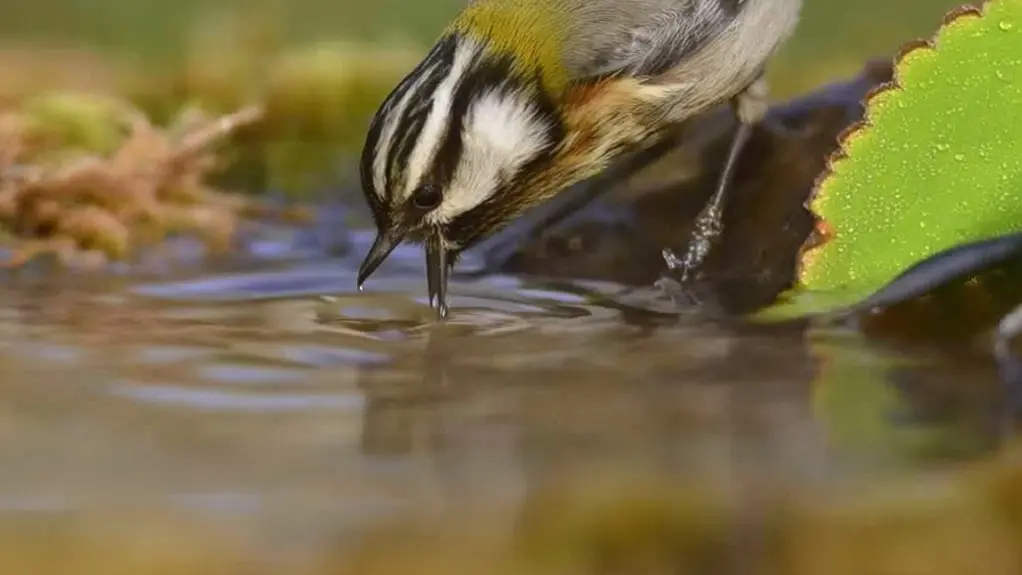
You can confidently provide water for birds knowing they drink by dipping their bills and tilting their heads to let gravity aid flow, since they lack lips and can’t suck like mammals. Some species, like pigeons, use specialized tongues to draw water without tilting.
While most need fresh water, seabirds have salt glands to safely handle seawater. Their hydration depends on environment, diet, and behavior.
Discover how birds adapt and how you can support their water needs year-round.
How Do Birds Drink Water Without Lips?
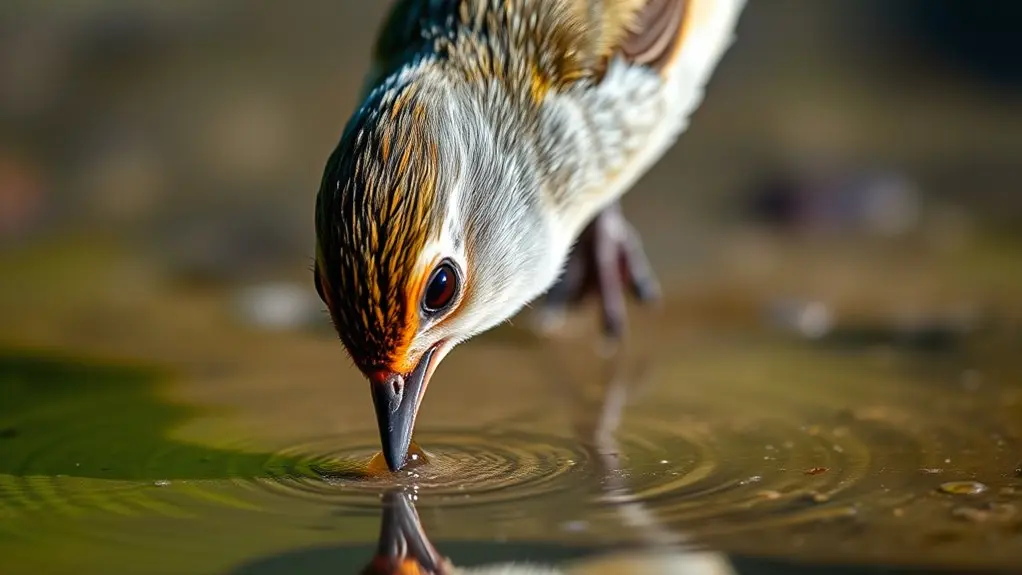
Although birds lack lips, they’ve developed efficient methods to drink water. You’ll notice many birds dip their bills directly into water, then tilt their heads back, using gravity to help the water flow down their throats. This tilting is essential since they can’t create suction like mammals do.
Some, like pigeons and doves, have a unique mechanism where their tongue muscles act like pistons, enabling them to suck water without tilting their heads.
Other species, such as swallows, skim water surfaces mid-flight, scooping water into their bills.
Natural Water Sources for Birds
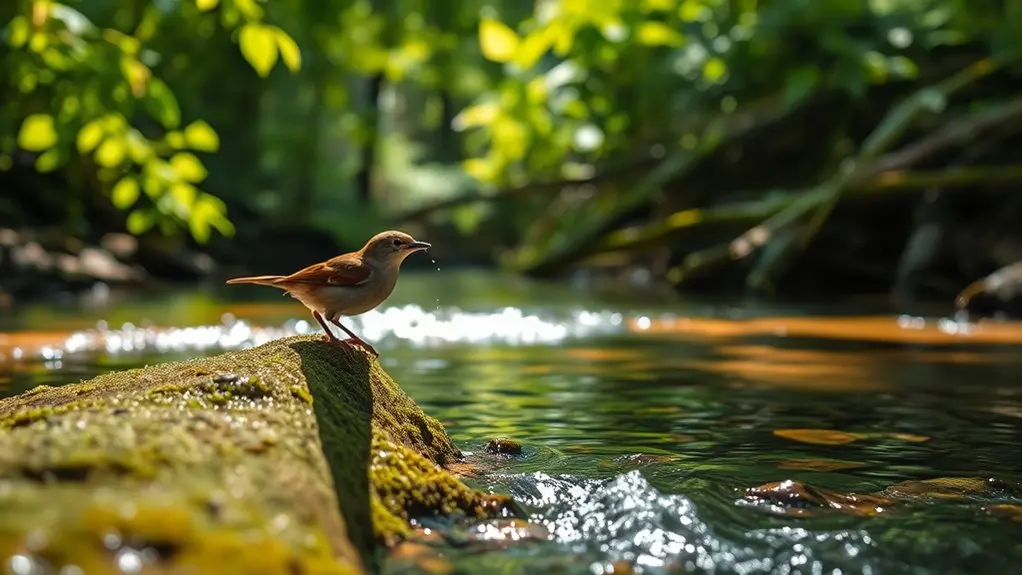
When birds need to hydrate, they turn to a variety of natural water sources such as ponds, lakes, streams, and reservoirs. Each of these provides essential moisture for survival.
You’ll find birds drinking from small puddles, dew on leaves and grass, or garden ponds with water features that attract many species.
Seabirds like gulls and albatrosses have specialized salt glands that let them safely consume seawater, which other birds cannot.
During hot or dry conditions, these natural sources become critical for maintaining hydration. It’s pretty amazing how birds rely on accessible freshwater and their own unique adaptations to meet their water needs.
By understanding these sources, you can better appreciate how birds survive and thrive using natural hydration strategies.
It’s all about making the most of what nature provides!
Do All Birds Need to Drink Water Daily?
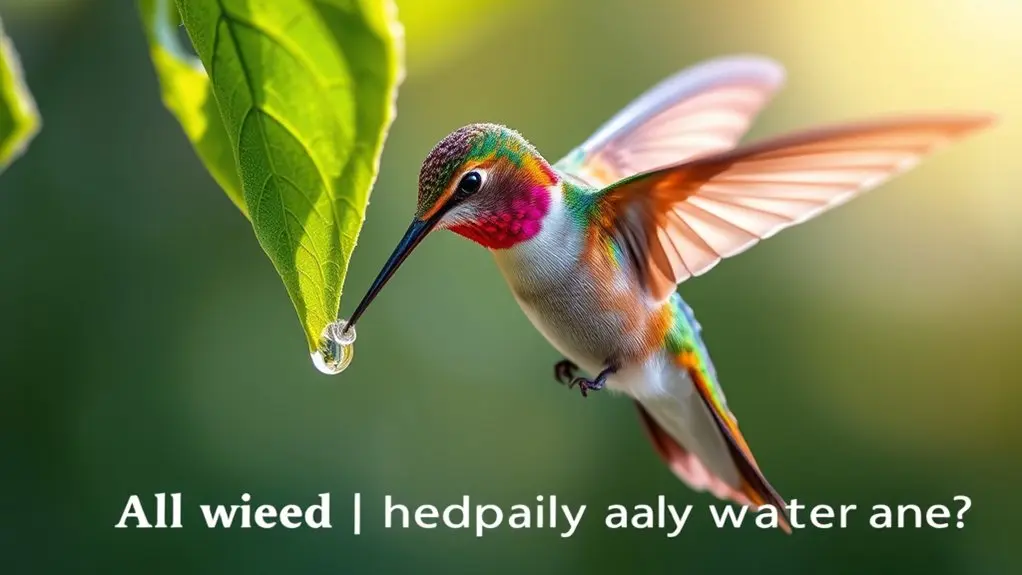
Because all birds need water to stay hydrated, their ways of getting it can be pretty different depending on the species and where they live. You’ll notice that many birds, like raptors, get a lot of their water from the moisture in their prey. This means they don’t have to drink water as often.
On the other hand, small birds, especially those living in hot or dry places, go out of their way to find water every day so they don’t get dehydrated.
Some birds that live in the desert can go a long time without drinking because they rely mostly on the moisture they get from their food.
But no matter what, all birds need access to water. How often they drink really depends on how much moisture is in their diet and what the environment is like, rather than a strict rule that they must drink every day.
How Much Water Do Birds Drink Daily?
The amount of water birds drink daily varies a lot depending on their size, species, diet, and the environment they live in. Bigger birds like emus drink between 9 to 18 liters (2.5 to 5 gallons) of water each day. Smaller birds might only need about 15 milliliters (0.5 ounces).
You’ll notice birds usually drink several times throughout the day, especially when it’s hot or dry outside. This helps them stay hydrated. Smaller birds are more prone to dehydration, so they need to drink more often.
Interestingly, some desert birds like ostriches and emus can survive for over two weeks without drinking water. They manage this by getting enough moisture from the food they eat.
Can Birds Drink Saltwater or Only Fresh Water?
Although most birds need freshwater to stay hydrated, many seabirds have evolved special adaptations that let them drink saltwater safely. For example, gulls and albatrosses have salt glands located above their eyes that actively filter out excess salt from the seawater they drink. This filtered salt is then excreted through their nostrils.
Their nostrils often have slit-like or feather-covered openings that help prevent salt from getting into their respiratory system. These features let seabirds keep their osmotic balance without needing freshwater sources.
On the other hand, birds that don’t have salt glands have to rely on freshwater or metabolic water they get from their diet. Knowing these differences helps us understand how seabirds manage to survive and thrive in marine environments where freshwater is rare or nonexistent.
How Do Birds Find Water in Dry Habitats?
When you explore arid environments, you’ll notice that birds have evolved remarkable strategies to find and conserve water despite scarcity. Many rely heavily on water stored in their food, such as insects, seeds, or succulent plants, extracting moisture metabolically.
In arid habitats, birds ingeniously extract and conserve water from their food to survive scarcity.
Desert species like sandgrouse possess specialized belly feathers that absorb water from distant sources and transport it back to their chicks.
Parrots and other drought-adapted birds efficiently extract moisture from fibrous plant materials with hidden water reserves. Additionally, some seabirds use salt glands to drink seawater and excrete excess salt, but terrestrial desert birds primarily depend on food-derived water and behavioral adaptations.
These physiological and behavioral mechanisms enable birds to survive prolonged periods without direct water intake. It’s pretty amazing how they manage to thrive in such harsh, dry habitats.
How Can You Provide Water for Birds at Home?
If you want to attract birds to your yard and support their hydration needs, providing accessible, clean water is essential. Use a shallow birdbath or dish filled with fresh water to mimic natural puddles. Position it 3-4 feet above ground in a safe, visible spot away from predators.
Change the water every 2 days and clean the bath regularly to prevent harmful algae and bacteria. Adding perches or stones inside gives birds stability while drinking. In winter, keep water from freezing with an immersion heater or protected light source.
| Action | Reason |
|---|---|
| Place birdbath 3-4 ft high | Keeps birds safe from ground predators |
| Change water bi-daily | Prevents bacterial/algal growth |
| Add perches inside | Provides stability for drinking birds |
Why Birdbaths Are Important for Birds
Because birds rely on accessible water sources for both hydration and hygiene, maintaining a clean, shallow birdbath in your yard plays a critical role in supporting their health. Birdbaths provide fresh water essential for drinking and bathing, which promotes plumage maintenance and thermoregulation.
You should guarantee the birdbath is shallow and naturalistic, resembling puddles to encourage comfortable, safe drinking. Adding perches or stones inside offers stable footing, reducing the risk of drowning or slipping.
Regularly cleaning and refilling the birdbath prevents algae and bacterial growth, safeguarding birds from pathogens.
Do Birds Drink Water in Winter?
You’ll notice that water can be hard for birds to find in winter because natural sources often freeze over.
So, if you want to help keep birds hydrated, you can stop your birdbath from freezing by using heaters or insulating it.
Knowing about these challenges makes it easier to support birds during the cold months.
Winter Water Availability
How do birds manage their hydration during the harsh winter months? Many birds continue to drink water even when temperatures drop, especially if natural sources like ponds and streams remain unfrozen. They actively seek unfrozen water in garden birdbaths, puddles, or by melting snow.
Species such as chickadees and woodpeckers show remarkable persistence in finding liquid water despite freezing risks. When liquid water is scarce, birds increase their consumption of snow or ice as an alternative way to stay hydrated.
You can help by providing a birdbath that’s either heated or regularly refreshed to prevent stagnation and freezing. This water availability is essential for maintaining their physiological balance and overall survival during cold conditions.
After all, water intake supports their metabolic processes and helps with thermoregulation.
Preventing Birdbath Freezing
Why do birdbaths freeze so quickly in winter, and how can you prevent this to guarantee birds have access to liquid water? Birdbaths freeze rapidly because of low temperatures and exposure to cold air. This cuts off birds from essential hydration.
To keep water accessible, you can use an immersion heater or heated water bowl to keep the temperature above freezing. Another option is placing a small, safe light bulb inside a waterproof container beneath the birdbath to generate gentle heat.
You can also add floating foam or insulation on the surface to slow freezing by reducing heat loss. Changing and refilling the water frequently helps keep it fresh and prevents ice buildup.
These scientifically backed methods make sure birds have liquid water to drink even during severe winter conditions.
Bird Hydration Challenges
Ensuring birds have access to liquid water during freezing temperatures highlights the broader hydration challenges they face in winter. Many birds reduce direct water intake by relying on snow and ice. They melt it using body heat to keep themselves hydrated.
Species like chickadees and woodpeckers actively seek out liquid water when it’s available. This shows how different birds have their own strategies.
Birds also get moisture from food like seeds, berries, and insects. This helps them survive long stretches without drinking.
In cold climates, birds often visit unfrozen water bodies or use heated birdbaths to find fresh water. Because freezing conditions limit natural water sources a lot, providing accessible liquid water is really important.
It’s key for bird health and survival throughout the winter.
Frequently Asked Questions
Can Birds Drink Water While Flying?
Yes, some birds like swallows and swifts can drink water while flying by skimming surfaces or capturing moisture mid-air. This lets them stay hydrated without having to land. It’s pretty impressive how they manage that!
But most bird species need to pause their flight to drink from water sources. So, while it’s possible for some, it’s definitely not the norm.
Do Baby Birds Drink Water or Get Hydration From Food?
Baby birds primarily gain hydration from gooey grub gifted by their guardians. You’ll notice they rarely drink water directly since their moisture mainly manifests through insects and prey. This ensures efficient fluid fulfillment for fledgling fitness and growth.
How Does Dehydration Affect Bird Behavior?
You’ll notice dehydrated birds become lethargic, reducing their foraging and escape abilities. They’ll vocalize more and show agitation.
They struggle with thermoregulation and weakened immunity. Plus, their reproductive success drops because their energy and health take a hit.
It’s like everything slows down for them when they don’t have enough water. They just can’t function at their best.
Can Birds Get Water From Fruits and Vegetables?
Yes, birds can get water from fruits and vegetables. You’ll find moisture-rich foods like berries and cucumbers provide essential hydration. This is especially helpful in dry habitats.
Eating these foods reduces their reliance on direct water sources for survival and health. So, fruits and veggies aren’t just tasty snacks for birds—they’re important for keeping them hydrated too.
Do Migratory Birds Drink Water Differently Than Resident Birds?
You wouldn’t expect migratory birds to carry a pocket watch, yet they time their water intake precisely. They drink less frequently and often hydrate mid-flight or through food.
This is quite different from resident birds, who drink regularly and reliably. It’s like they have their own unique water schedule that fits their lifestyle. Makes you wonder how they manage it so well, doesn’t it?
Conclusion
Now that you know birds drink water without lips by scooping it with their beaks, you can better support them. For example, a study observing urban sparrows showed they rely heavily on backyard birdbaths during dry spells.
Providing clean, fresh water daily helps maintain their hydration and health, especially in hot or winter months when natural sources are scarce. So, setting up a birdbath is a simple, effective way to aid your local feathered friends scientifically and practically.