
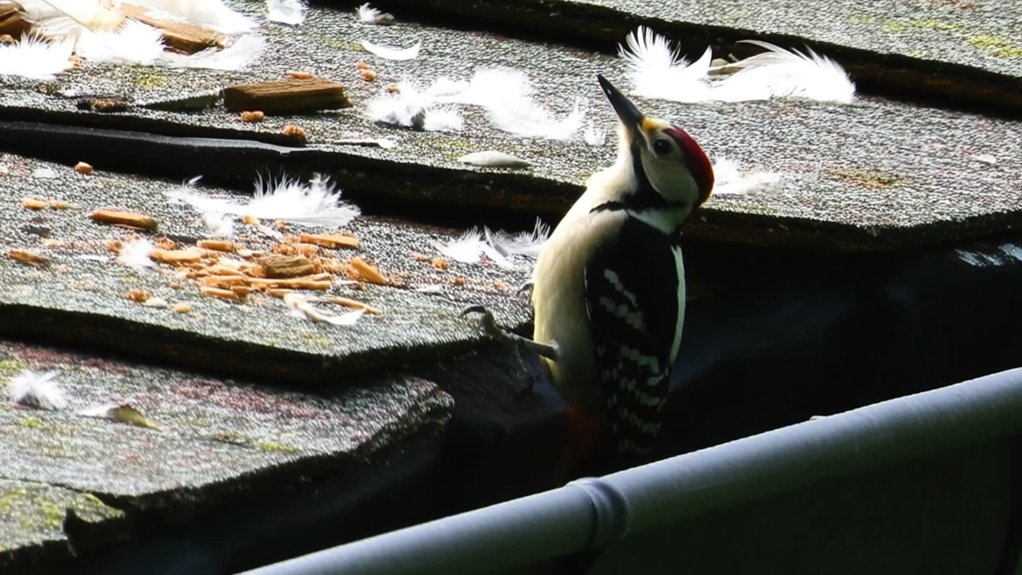
Yes, birds can damage your roof in several ways. They peck at shingles and flashing, loosening materials and increasing leak risks. Nesting in gutters blocks water flow, causing clogs and overflow damage.
Their droppings contain corrosive uric acid that degrades roofing materials and promotes mold growth. This can accelerate decay over time. Plus, birds nesting in chimneys or attics create fire hazards and structural damage.
There are also health risks to consider. Understanding how these impacts happen can help you protect and maintain your roof more effectively. It’s all about staying ahead before problems get worse.
How Birds Damage Your Roof
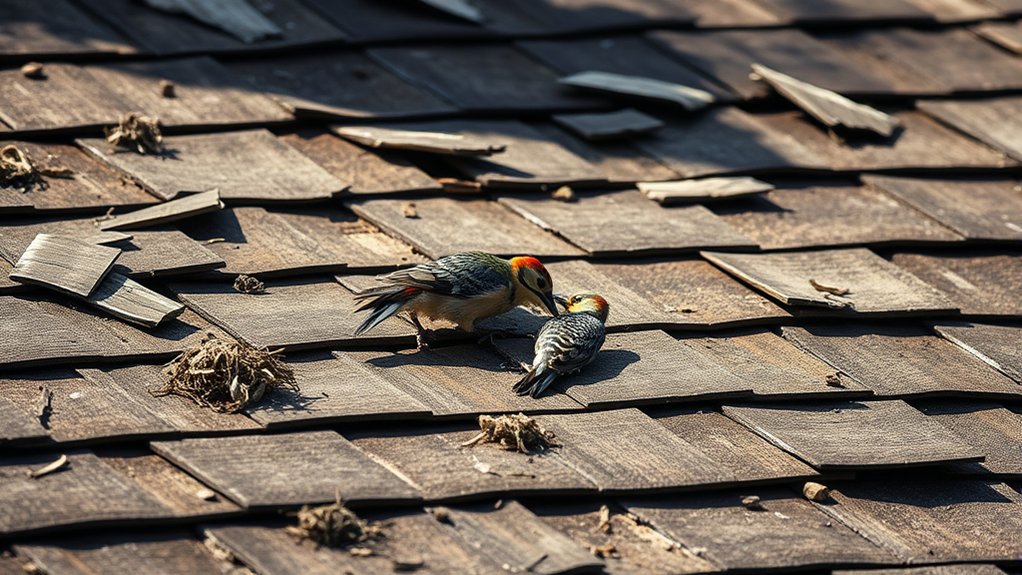
Although birds may seem harmless, their activities can cause significant damage to your roof. When birds peck at shingles or roof surfaces, they’re usually trying to get to insects or collect nesting materials. But this pecking can physically damage the roofing components.
Pecking can loosen shingles and damage flashing, which increases the risk of leaks and structural problems.
Pecking can damage shingles and flashing, leading to leaks and serious roof issues.
Birds also build nests in gutters, vents, or roof gaps. These nests block water flow and can lead to water damage and leaks.
The debris from nests further clogs drainage systems.
Over time, this mix of physical damage and blocked water pathways weakens your roof’s integrity. This can cause premature wear and tear.
Knowing how birds cause this damage helps you see how their activity affects your roof’s structure and lifespan. It’s important to keep an eye out and address these issues before they get worse.
Why Bird Droppings Harm Your Roof
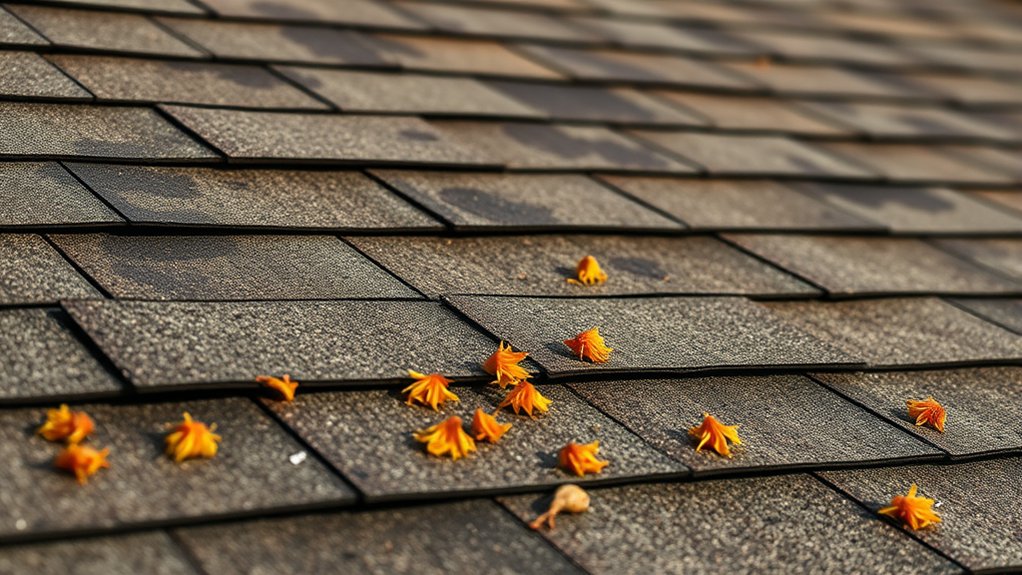
When bird droppings accumulate on your roof, they introduce uric acid, a highly corrosive substance that degrades roofing materials such as shingles, tar paper, and membranes. This acid breaks down protective coatings, accelerating material deterioration and leading to premature roof aging.
You’ll also notice staining and discoloration, which reduce your roof’s aesthetic appeal.
Plus, large amounts of droppings trap moisture, creating an environment conducive to mold growth that further damages roofing components. Over time, this buildup compromises the structural integrity of critical elements like roof vents and flashing, increasing vulnerability to water infiltration.
How Bird Nests Cause Gutter Water Damage
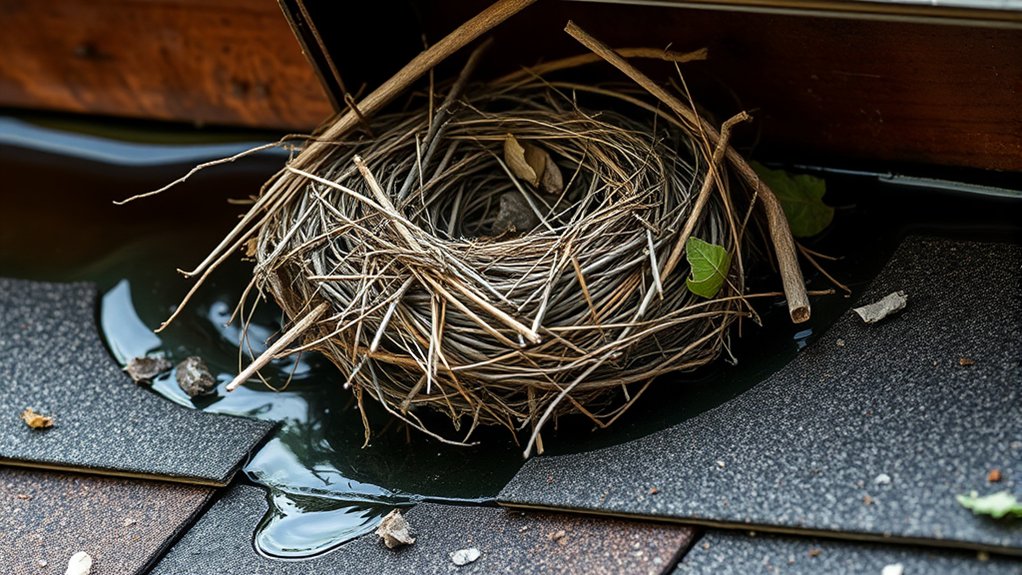
Bird nests lodged in your gutters obstruct water flow, causing overflow that damages both the roof and fascia. The accumulation of nesting debris and droppings clogs gutters, increasing the risk of water pooling and leaks.
Moisture trapped within nests accelerates rust and rot in metal components, weakening gutter structures. Additionally, bacteria and fungi from bird droppings promote material deterioration and corrosion.
This damage allows water to seep into your roof, leading to mold growth, wood rot, and costly structural repairs. Imagine water overflowing uncontrollably, eroding your home’s foundation.
Picture rust eating away at essential gutter metal. Consider mold silently invading your roof’s interior. Visualize costly repairs escalating due to unchecked damage.
Preventing nests in gutters is essential to protect your home’s structural integrity. It’s one of those small maintenance tasks that can save you big headaches down the road.
Risks of Birds Nesting in Chimneys and Roofs
You should know that when birds build nests in your chimney, it can block the airflow. This blockage can cause smoke and harmful gases to back up into your home, which is definitely not safe.
On top of that, these nests can lead to damage in your roof, especially if cavity-nesting birds like swifts decide to settle in those vulnerable spots.
That’s why it’s really important to have regular inspections and take protective steps. Doing so helps keep your chimney and roof in good shape and prevents these kinds of problems from happening.
Chimney Blockage Hazards
How can nests inside chimneys compromise home safety? When birds build nests inside chimneys, they block airflow, forcing smoke and toxic gases like carbon monoxide back into your living spaces.
Swift nests, made from mud and twigs, increase fire hazards and can damage chimney integrity.
Also, fledglings might accidentally fall inside, which creates rescue challenges and safety risks. You should know that blocked chimneys cause dangerous smoke and gas buildup indoors.
Nest materials can ignite, leading to chimney fires.
Trapped or fallen birds increase the need for emergency intervention. Removing nests improperly can lead to legal violations and safety problems.
Regular inspections and installing chimney caps or guards help prevent these hazards, keeping both your home and local wildlife safe.
Roof Structural Damage
What risks do nests pose to the structural integrity of roofs and chimneys? Birds nesting in these areas can block essential airflow, causing dangerous smoke and gas buildup inside your home.
Species like swifts often build nests within chimneys, trapping debris that increases fire hazards.
Additionally, nests can allow moisture intrusion, leading to wood rot and weakening structural components over time.
Fledglings falling from nests into living spaces also present safety concerns.
If you don’t address these nests promptly, you risk damage that compromises your roof’s durability and chimney function.
Regular chimney inspections and installing caps help prevent birds from entering and nesting.
These proactive measures reduce the likelihood of structural damage, preserving both safety and the integrity of your home’s roofing system.
What Bird Infestations in Your Attic Mean for Roof Damage
If you start hearing unusual noises or spot droppings and nesting materials in your attic, it’s a clear sign that birds have moved in. These little intruders can cause quite a bit of trouble—they chew through insulation, wiring, and even wood framing.
That can lead to serious structural damage and also bring health risks because of parasites and corrosive droppings.
So, catching the problem early is really important. The sooner you detect and prevent a bird infestation, the better you can limit the damage and avoid expensive roof repairs down the line.
It’s definitely worth keeping an eye out!
Signs of Attic Infestation
Because bird infestations in your attic introduce nesting materials and droppings, they frequently cause insulation contamination and structural damage. You might notice blocked vents or chimneys, which reduce airflow and increase moisture buildup. This moisture can potentially foster mold growth.
Parasites such as mites and fleas often come along with these infestations, posing health risks and speeding up roof material damage. Common signs include high-pitched noises and scattered debris. These signs indicate active nesting that puts stress on your attic’s integrity.
Catching these indicators early is really important to stop widespread damage to insulation, rafters, and roofing components.
Watch for these signs:
- Persistent high-pitched chirping or fluttering sounds
- Accumulation of feathers, droppings, or nesting debris
- Blocked attic vents or chimneys impairing ventilation
- Presence of parasites like mites or fleas in insulation
Structural Risks From Birds
Beyond the signs of infestation, the physical presence of birds in your attic poses significant threats to the structural integrity of your roof. Birds chew through insulation, wiring, and wooden framing to build nests, which compromises essential support elements.
The accumulation of droppings and nesting materials increases the load on roof structures, risking sagging or collapse.
On top of that, bird activity promotes moisture buildup, which encourages mold growth that weakens roofing components over time. You should also be aware that birds attract mites and parasites, which speeds up the degradation of attic materials.
All these effects combined can seriously compromise your roof’s durability and safety.
Understanding these structural risks highlights why it’s so important to deal with bird infestations promptly. Taking quick action helps you avoid costly repairs and keeps your home’s roofing system strong and intact.
Prevention and Early Detection
While bird infestations in your attic often go unnoticed at first, they serve as clear indicators of entry points that can lead to water damage and structural deterioration if left unsealed. Early detection allows you to remove nests before they damage insulation and roofing materials.
You should monitor for signs like droppings, nesting debris, or noises, as these point to prolonged bird presence and potential roof risks.
Ignoring infestations risks pest introduction and disease spread, compromising roof integrity and air quality. Conduct regular attic inspections to catch early nesting stages and act promptly.
Discovering nests too late can mean costly repairs. Bird droppings accelerate material decay. Pests from nests threaten your family’s health. Unsealed gaps invite water infiltration and rot.
Health and Pest Risks From Birds Nesting on Roofs
Although birds nesting on your roof may seem harmless, their presence can pose significant health and pest risks. Bird droppings contain uric acid, a highly corrosive substance that weakens roofing materials over time.
Birds nesting on roofs can cause serious damage due to corrosive droppings and health risks.
Nests often harbor parasites such as fleas, mites, and lice, which can transfer to humans and cause health problems.
Birds also carry bacteria, fungi, and viruses like salmonella and E. coli, contaminating roof surfaces and increasing disease risk. Their activity attracts additional pests, including ticks and mites, raising the likelihood of indoor infestations.
Accumulated droppings and nesting debris create unsanitary conditions and promote mold growth in roofing and attic areas. This further compromises your home’s structural integrity and indoor air quality.
Legal Rules for Removing Bird Nests From Roofs
You need to follow strict legal rules when removing bird nests from roofs because active nests are protected under the Wildlife and Countryside Act 1981.
Timing is really important here—you can only remove nests once the chicks have fledged and the nest is no longer active.
Also, before you remove any nests during the breeding season, you’ll need to get special permits from authorities like the RSPB or Natural England.
Nest Removal Restrictions
Because bird nests and their occupants are legally protected under the Wildlife and Countryside Act 1981 in the UK, you need to follow strict rules when removing nests from roofs. Removing active nests that contain eggs or chicks is illegal without proper permission.
You can only take down nests after the chicks have fledged or if the nest creates safety risks. Usually, this happens during the non-breeding season. If birds are nesting, construction or maintenance work should stop to avoid disturbing them.
Taking nests down without authorization can lead to legal trouble. So, it’s really important to be careful and follow the law.
Here are some key things to keep in mind:
- Protect vulnerable chicks and eggs during breeding
- Avoid disturbing nesting birds to help ensure their survival
- Get the necessary permits before removing any nests
- Remember that removing nests too early harms protected species and breaks the law
Timing Nest Removal
When should you remove bird nests from roofs to stay within legal boundaries? In the UK, the Wildlife and Countryside Act 1981 prohibits removing active nests during the breeding season to protect nesting birds.
You should only remove nests after chicks have fledged, which typically occurs outside the nesting period.
Attempting removal or blocking nest entrances during breeding can disrupt protected species, cause population harm, and result in legal penalties.
To comply, monitor nesting activity and wait until the season ends before intervening.
It’s also essential to consult local wildlife authorities or experts prior to nest removal to ensure adherence to regulations and proper timing.
This approach balances roof maintenance needs with conservation obligations, minimizing ecological impact while avoiding legal consequences.
How to Safely Remove Birds and Their Nests
Although it may be tempting to remove birds and their nests right away, legal protections often prohibit disturbing active nests until the chicks have fledged. So, you should wait until the nesting season ends and the nests become inactive before you try to remove them.
When the time comes, wear thick gloves and approach cautiously. This helps avoid alarming the parent birds. If you find any trapped fledglings, use a flashlight and a sheet to safely capture and release them.
Always check with your local wildlife authorities beforehand to make sure you’re following the rules. This way, you protect vulnerable chicks and avoid legal penalties.
You’ll also prevent unnecessary harm to parent birds defending their nests. Plus, you ensure safe handling of fragile fledglings during removal.
Most importantly, respecting wildlife regulations helps maintain the ecological balance.
How to Prevent Birds From Nesting on Roofs
To effectively prevent birds from nesting on your roof, you need to implement a combination of physical barriers and deterrents before the breeding season begins.
Start by sealing gaps, vents, and other potential entry points to eliminate nesting sites. Install bird deterrents such as spikes or reflective strips along roof edges to discourage landing.
Seal entry points and install spikes or reflective strips to prevent birds from landing and nesting on your roof.
Applying bird-proof mesh or netting over vulnerable areas like gutters and eaves physically blocks nest construction.
Additionally, use decoy predators like fake owls or hawks, moving them regularly to maintain effectiveness.
Timing these measures during late winter or early spring is critical, as it deters birds from establishing nests when they become most active.
Combining these scientifically grounded strategies guarantees a significant reduction in bird nesting on your roof.
Repairing and Maintaining Your Roof After Bird Damage
Since bird damage can compromise your roof’s structural integrity, promptly inspecting and repairing affected areas is critical. You need to address holes or gaps quickly to prevent leaks and further structural issues. Bird droppings’ acidity can erode shingles and underlying layers, so cleaning these off immediately is essential.
Replace damaged flashing and shingles with help from roofing professionals to restore durability. Additionally, seal nesting sites, vents, and roof penetrations to minimize future infestations. Taking these steps early can save you a lot of trouble down the road.
To effectively maintain your roof after bird damage, focus on:
- Immediate removal of corrosive bird droppings
- Professional replacement of damaged shingles and flashing
- Thorough sealing of potential nesting and entry points
- Scheduling regular inspections to catch damage early
This proactive approach guarantees your roof remains resilient against ongoing or future bird-related effects. It’s all about staying ahead and keeping your roof in great shape!
Frequently Asked Questions
What Types of Birds Are Most Likely to Damage Roofs?
You’ll find pigeons, starlings, woodpeckers, and crows most likely to damage roofs. They block gutters, create holes, or pry shingles, causing water damage and structural issues.
Larger birds cause minor wear from perching and nesting. It might not seem like a big deal at first, but over time, that wear can add up and lead to bigger problems. So, keeping an eye on these birds is a good idea.
How Does Seasonal Migration Affect Bird Nesting on Roofs?
You might assume migration randomly affects nesting, but it actually triggers seasonal roof nesting patterns. Birds return annually during spring, increasing nesting attempts. So, you’ll notice heightened activity and potential damage precisely when migration peaks.
It’s pretty interesting how predictable it all is. The timing isn’t random at all, which means you can almost anticipate when the birds will start showing up on your roof. That way, you can prepare for the busy season ahead.
Can Bird Damage Reduce My Home Insurance Coverage?
Yes, bird damage can reduce your home insurance coverage if insurers classify the damage as preventable or maintenance-related.
You’ll need to implement bird-proofing measures. Otherwise, claims for roof damage may be denied or excluded.
Are There Eco-Friendly Repellents Effective Against Roof-Nesting Birds?
You can use eco-friendly repellents like peppermint oil sprays, reflective tapes, biodegradable bird spikes, and ultrasonic devices.
Combining these methods creates an effective, humane strategy to deter roof-nesting birds without harming the environment or wildlife. It’s all about keeping things safe for both the birds and your home.
Plus, these options are easy to set up and don’t involve any harsh chemicals. So, you get peace of mind and a bird-free roof in a natural way!
How Quickly Should Roof Damage From Birds Be Repaired?
You shouldn’t wait like Rip Van Winkle; repair bird-related roof damage within weeks. Acidic droppings and nests accelerate corrosion, leaks, and mold growth, so prompt action minimizes structural deterioration and costly repairs.
Taking care of it quickly helps preserve your roof’s integrity effectively. Don’t let small problems turn into big headaches!
Conclusion
You need to understand how birds damage your roof, why droppings corrode surfaces, and how nests block gutters. It’s important to recognize the risks of infestations in chimneys and attics. Also, make sure to follow legal rules before removing nests.
You should safely remove birds, prevent future nesting, and repair any damage promptly. By staying informed and acting cautiously, you can protect your home’s structure. Maintaining your roof diligently will help keep it in good shape and extend its lifespan against bird-related harm.