
You can’t be pregnant if you’re a bird because their biology supports only external egg development, not internal gestation like mammals. Birds lack a uterus and specialized reproductive structures necessary for carrying embryos inside. Fertilization happens internally, but the egg forms with protective calcium carbonate shells and is laid outside to incubate.
This evolutionary adaptation suits environmental and physiological demands. If you explore further, you’ll uncover how their anatomy and environment shape this unique reproductive strategy. It’s pretty fascinating once you dive into the details!
Why Birds Don’t Get Pregnant Like Mammals
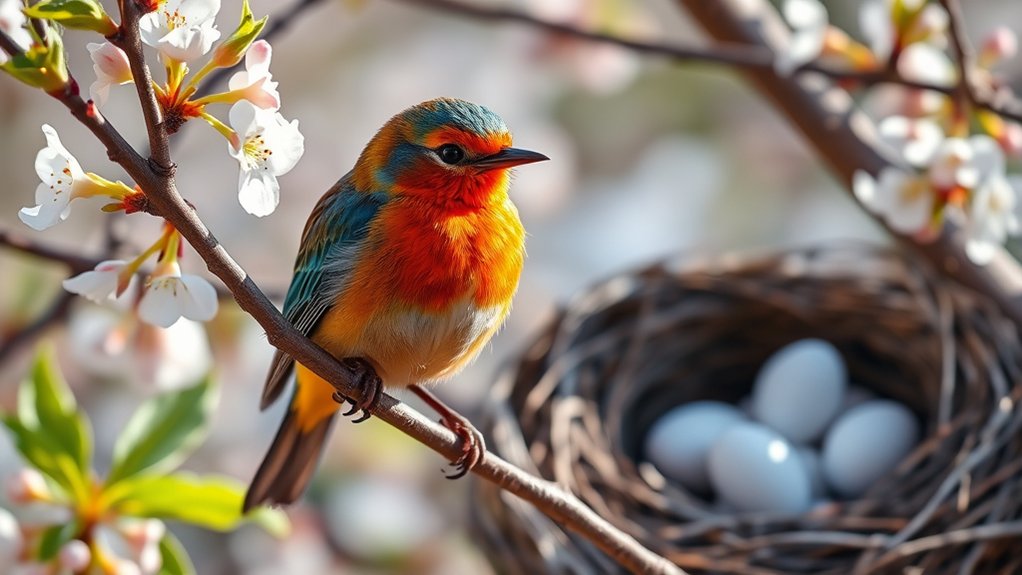
Although birds reproduce by laying eggs, they don’t get pregnant like mammals. That’s because their reproductive systems are specially adapted for external egg production, not internal gestation. Unlike mammals, birds don’t have a uterus that can support a developing embryo inside their bodies.
Instead, their bodies are built to form eggshells that are perfect for incubation outside the body. Evolution has shaped them this way because of things like regulating temperature and adding calcium to make strong eggshells. These needs have stopped birds from evolving internal gestation.
Some reptiles and mammals evolved to carry embryos inside them, but birds stayed focused on laying eggs. So, pregnancy as we know it in mammals just isn’t possible in birds because of their unique anatomy and the way they’ve evolved to handle egg production and incubation outside their bodies.
Bird Reproduction: Mating and Egg-Laying Explained
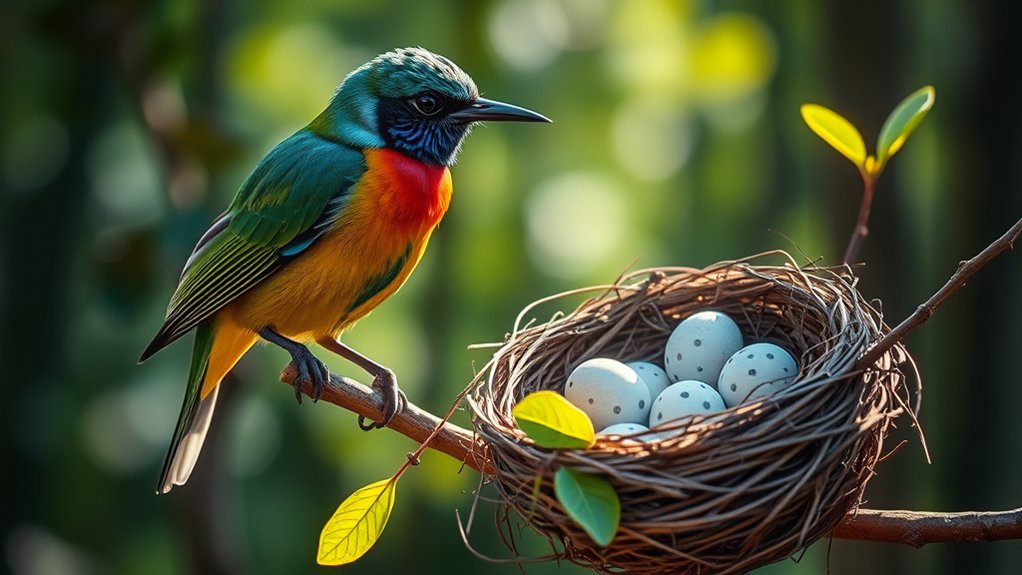
When birds mate, fertilization happens inside the female’s body before she starts forming eggs. It takes about 48 hours for each egg to develop. After fertilization, the female lays eggs roughly every day.
Both the male and female often share the job of keeping the eggs warm. This helps the eggs stay at the right temperature so the baby birds can grow properly.
Most female birds need to be at least two years old before they can reproduce successfully.
Unlike mammals, birds don’t get pregnant. Their babies develop outside the body, inside the eggs, until they hatch.
- Fertilization happens inside the female’s body before egg formation
- Egg-laying intervals typically occur every 24 hours
- Both parents frequently participate in incubation and chick care
- Female birds must reach maturity, usually around two years, to reproduce
This way of reproducing really shows how birds have their own unique strategy for keeping their species going.
Inside a Bird: The Egg Formation Process
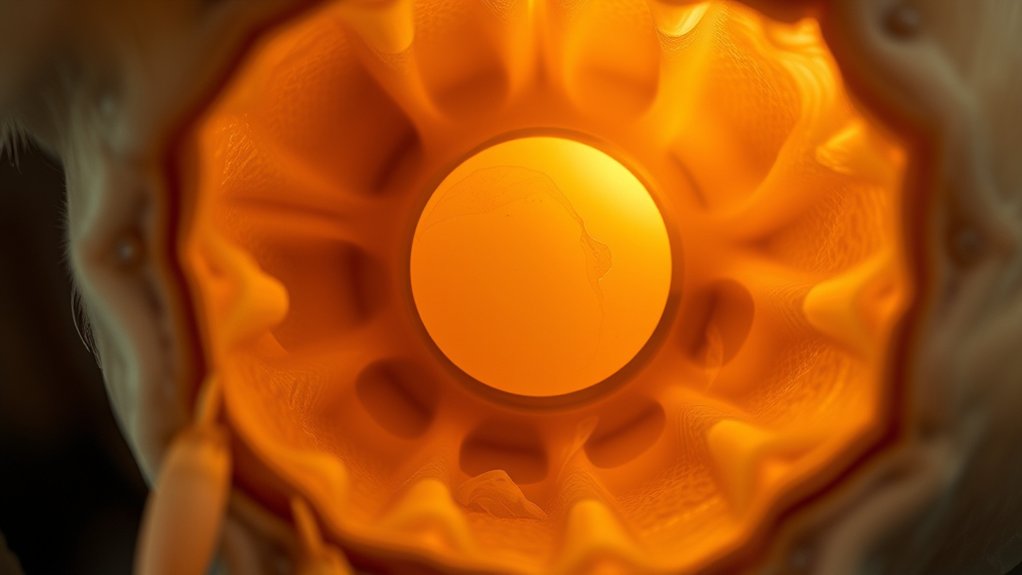
You’ll find that egg formation in birds takes about 48 hours. It all starts with the development of the ovum in the ovary.
Then, as the yolk moves through the oviduct, layers of egg white and protective membranes get added.
After that, the hard calcium carbonate shell forms in the uterus.
Knowing these parts and the timeline really helps you understand how a fully developed egg gets ready to be laid. It’s pretty fascinating how everything comes together step by step!
Egg Formation Timeline
How exactly does a bird’s egg develop before it’s laid? The egg formation process inside a bird takes about 23 hours from fertilization to laying. Fertilization happens early on when the egg is still small and shell-less within the oviduct.
As the egg travels through the oviduct, layers of egg white, or albumen, are added before shell membranes form.
The final step involves depositing a hard calcium carbonate shell in the last few hours.
Once fully formed, the egg is laid and ready for incubation or natural hatching.
Key stages include:
- Fertilization inside the oviduct
- Addition of albumen layers
- Formation of shell membranes
- Deposition of the hard calcium carbonate shell
Components Of Eggshell
Although the eggshell appears solid and uniform, it actually consists of multiple components that work together to protect and support the developing embryo. Primarily, the eggshell is made of calcium carbonate, which forms a hard outer layer to shield the embryo.
Inside this shell, you’ll find several membranes that act as barriers against bacterial invasion and help regulate gas exchange. Tiny pores within the shell allow oxygen to enter and carbon dioxide to leave, which is essential for the embryo’s respiration.
The shell forms in the bird’s shell gland, or uterus, through a 20-hour process where layers are gradually added.
It’s also interesting to note that eggshell thickness and strength vary across bird species. This variation is influenced by factors like diet, environment, and evolutionary adaptations, making sure each species gets the right kind of protection it needs.
Why Birds Lay Hard-Shelled Eggs Outside Their Bodies
Because birds lay their eggs externally, the hard shell develops after fertilization to protect the embryo during incubation. This shell formation takes about 48 hours, during which calcium deposits create a resilient barrier.
You should understand that birds’ reproductive systems are adapted specifically for external egg-laying, unlike mammals that gestate internally.
The hard shell plays a vital role in preventing dehydration and physical damage while the egg remains outside the mother’s body.
Consider these key points:
- Eggshell formation occurs post-fertilization, ensuring embryo protection.
- Calcium deposition solidifies the shell within approximately two days.
- Birds evolved this strategy to reproduce without internal gestation.
- The shell safeguards the egg from environmental hazards and water loss.
This evolutionary adaptation allows birds to efficiently nurture embryos outside their bodies. It’s a pretty clever way nature figured out how to keep those eggs safe!
How Environmental Factors Affect Bird Reproduction
You’ll notice that temperature directly affects egg development because it influences the conditions during incubation.
Then, food availability plays a big role too—it determines whether birds have enough energy to reproduce.
On top of that, seasonal changes in daylight help regulate breeding cycles by triggering hormonal responses.
When you understand these factors, it’s easier to see why birds time their reproduction to match the environment.
Temperature Impact On Eggs
When environmental temperatures stray beyond the narrow range of 99°F to 104°F (37°C to 40°C), bird eggs face significant risks that can disrupt embryonic development. You should understand that both excessive heat and cold can impair embryogenesis, leading to malformations or developmental delays.
High temperatures may cause dehydration and increase embryo mortality, while low temperatures slow growth and reduce hatching success. Birds instinctively regulate egg temperature through incubation and shading to maintain this critical thermal balance.
Key temperature impacts include:
- Embryonic malformations from temperature fluctuations
- Increased embryo mortality due to dehydration at high heat
- Slowed embryonic growth under low temperatures
Behavioral adaptations like incubation help to stabilize temperature.
Maintaining ideal temperature is essential for successful bird reproduction. It’s really all about keeping those eggs cozy and just right.
Food Availability Effects
How does food availability shape the reproductive success of birds? When food is abundant, you’ll see birds laying more eggs, producing larger clutches, and successfully raising chicks. It’s pretty straightforward—more food means better chances for baby birds to survive and thrive.
On the flip side, when resources are scarce, birds reduce egg production and nesting attempts. Nutritional deficiencies from a lack of food can lead to poor egg quality, lower fertility, and higher chick mortality. So, not having enough food really puts a damper on their breeding success.
In some species, limited food even triggers hormonal changes that suppress reproductive behaviors and delay breeding. These fluctuations in food supply have historically caused irregular breeding patterns, which prevent consistent reproduction.
Understanding this helps you see just how critical stable food sources are for bird populations since their reproductive outcomes directly depend on the availability and quality of nutrients around them.
Seasonal Breeding Cycles
Food availability substantially impacts bird reproduction, but it’s not the only environmental factor at play. Seasonal breeding cycles in birds are closely linked to changes in daylight length and temperature, which regulate hormonal shifts that trigger breeding behaviors.
You’ll notice many bird species time their reproduction to coincide with ideal conditions for incubation and chick survival.
These environmental cues help synchronize breeding within populations, enhancing offspring survival rates. Key factors include:
- Photoperiod influences hormonal changes initiating breeding.
- Temperature fluctuations affect breeding timing.
- Weather conditions impact reproductive success.
- Seasonal synchronization improves offspring viability.
Understanding these mechanisms helps explain why birds don’t reproduce year-round and why their breeding is finely tuned to their environment. This tuning maximizes reproductive efficiency and chick development.
Biological Constraints Blocking Pregnancy in Birds
Although birds share many reproductive traits with other vertebrates, they lack the internal structures necessary for pregnancy, such as a uterus. This prevents embryo development inside their bodies.
Instead, birds produce eggs with hard shells that form externally, making internal gestation biologically unfeasible.
The eggshell’s protective role and external incubation allow embryos to develop at lower temperatures. This contrasts with the high internal temperatures required for mammalian pregnancy.
Those conditions would actually be lethal to bird embryos.
Additionally, birds’ body temperature regulation and the evolutionary adaptation of eggshell formation have reduced selective pressure for internal gestation.
These biological constraints, including reproductive anatomy and thermal requirements, collectively block the possibility of pregnancy in birds.
Could Birds Evolve Pregnancy?
Since birds haven’t developed pregnancy despite the presence of internal gestation in many vertebrates, scientists have explored whether such an evolutionary shift could occur. You’d consider several factors influencing this potential progression:
Eggshell structure and embryo temperature sensitivity limit prolonged internal development. Birds’ reproductive cycles favor quick egg laying over extended gestation. The evolutionary pressure for lightweight bodies to enable flight may restrict internal pregnancy.
Experimental selection for longer egg retention times seeks to test pregnancy feasibility but shows uncertain outcomes.
If birds were to evolve pregnancy, these constraints would need to be overcome through significant physiological and anatomical changes. You’d recognize that while theoretically possible, the complex interplay of these factors makes the evolution of pregnancy in birds unlikely under current natural conditions.
How Scientists Test Pregnancy Evolution in Birds
When scientists want to understand if birds could evolve pregnancy, they focus on experimentally increasing the time birds retain their eggs internally through selective breeding. You observe genetic variation in egg-laying and retention traits, aiming to see if longer retention periods are achievable.
Researchers also test the temperature tolerance of embryos developing inside females, because internal retention requires suitable thermal conditions for embryo survival.
Through long-term breeding experiments, you simulate evolutionary processes to determine if birds can adapt to retaining eggs internally.
These studies reveal whether biological constraints, such as genetic limitations or embryo viability, prevent the evolution of pregnancy in birds or if different selective pressures might enable it.
This approach provides a detailed, empirical framework to assess the evolutionary potential of pregnancy in avian species.
Frequently Asked Questions
How Long Does It Take for Bird Eggs to Hatch?
Bird eggs typically hatch within 10 to 14 days, though this varies by species. Smaller birds incubate for about two weeks, while larger species like swans may take up to 35 days to hatch successfully.
What Do Mother Birds Do After Laying Eggs?
After laying eggs, you’ll incubate them by sitting nearby, turning them regularly for even development, and protecting them from threats.
You’ll also prepare to feed and warm hatchlings, making sure they survive and grow strong. It’s a busy time but super important for the little ones.
Can Birds Have Twins or Multiple Eggs in One Clutch?
Birds can lay multiple eggs in one clutch, usually ranging from two to twelve depending on the species. It’s pretty common for birds to have a handful of eggs at once.
Now, twins are a bit of a different story. They’re rare and happen when a fertilized egg splits early on, kind of like identical twins in humans.
Things like the environment and how well the parents can handle incubation play a big role in how many eggs a bird lays and how they manage them. So, there’s a lot going on behind the scenes!
Do All Bird Species Lay Eggs Year-Round?
No, you won’t find all bird species laying eggs year-round. Most birds breed seasonally, and this is usually influenced by environmental factors like temperature and food availability.
Only some tropical or domesticated birds can produce eggs multiple times a year. That’s mostly because they live in stable or controlled conditions that support frequent laying.
How Do Birds Keep Their Eggs Warm During Incubation?
They say, “A watched pot never boils,” but during incubation, you’ll see birds sit closely on eggs. They use body heat and nest insulation to keep them warm.
Birds adjust their position to maintain the precise warmth needed for embryo development. This careful warming is essential for successful hatching.
Conclusion
You now see that birds, unlike mammals, don’t carry life within. They’re architects of life’s cradle, crafting eggs with precision outside their bodies. Evolution’s blueprint hasn’t carved pregnancy into their biology, constrained by anatomy and environment.
While the idea of avian pregnancy flutters like a distant dream, current science confirms these feathered creatures rely on external incubation. Understanding this intricate dance between biology and environment sharpens your grasp of nature’s diverse reproductive strategies.