
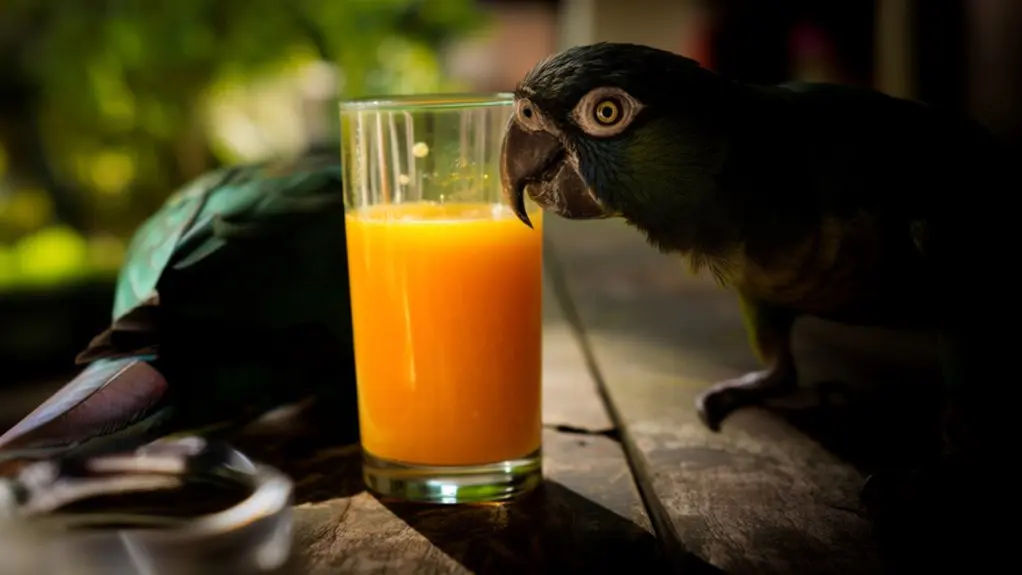
You can give your bird fresh, natural juice in small, diluted amounts, but only select juices are safe. Avoid added sugars and artificial sweeteners like xylitol. Citrus juices are best avoided because their high acidity can cause digestive upset and even toxicity.
Always wash and prepare fruits properly by removing seeds and pits to get rid of toxins. Remember, juice should never replace water. It’s best used only occasionally to support your bird’s health.
Knowing these precautions helps keep your bird safe and feeling good. So, while a little juice can be a nice treat, always be careful with what and how much you offer.
Is Juice Safe for Birds?
A key consideration for offering juice to birds is ensuring it’s freshly prepared without added sugars, artificial sweeteners, or preservatives. When you provide small amounts of natural fruit or vegetable juice, you supply beneficial nutrients and hydration that can support your parrot’s health.
Avoid concentrated or store-bought juices, as they typically contain high sugar levels and artificial ingredients harmful to birds.
If you decide to offer juices with high acidity, like citrus, dilute them adequately and limit the quantity to prevent digestive disturbances.
Always remove seeds and pits before juicing, because these parts can release cyanide compounds, posing serious poisoning risks.
What Juices Are Safe for Birds to Drink?
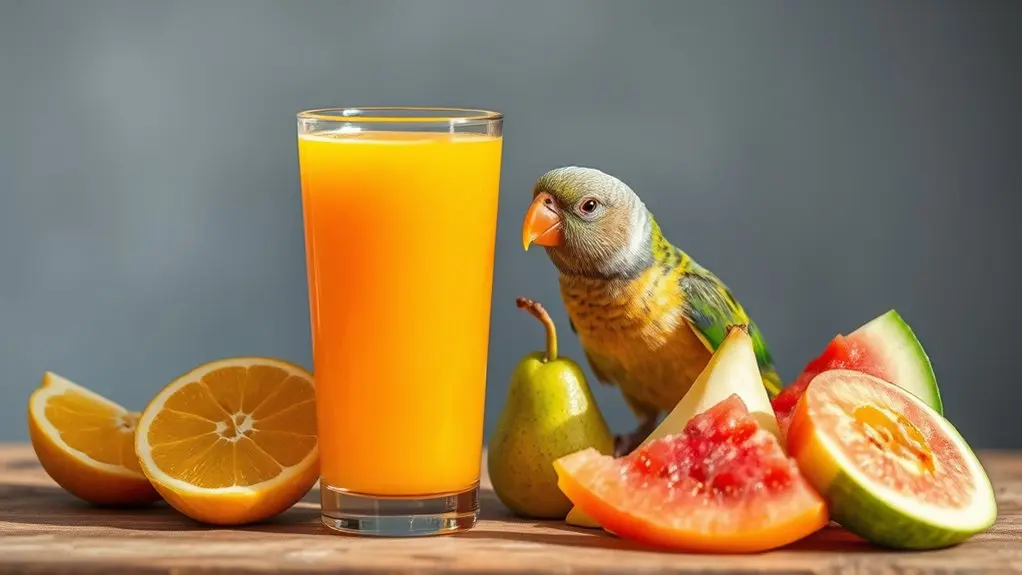
You should offer birds juices made from fresh fruits like berries and apples, as well as vegetables such as carrots and cucumber.
Just make sure they don’t have any added sugars or artificial ingredients.
It’s a good idea to dilute these juices with water to lower the acidity and sugar levels, which is important for their digestive health.
Also, avoid any juices that contain artificial sweeteners, colorings, or preservatives because these can be harmful to birds.
Safe Fruit Choices
Which fruit juices can you safely offer to birds without risking their health? You should choose freshly prepared juices from apples, berries, grapes, and citrus fruits. Just make sure there are no added sugars or artificial ingredients.
Tropical fruit juices like papaya and mango are okay too, as long as you thoroughly wash the fruit, remove the skins, and confirm they’re pesticide-free. Always remove seeds and pits, especially from fruits like cherries, apricots, and peaches. This helps prevent cyanide poisoning.
It’s best to go for freshly squeezed or cold-pressed juices instead of commercial processed options. Those often contain preservatives and extra sugars.
Also, diluting juices with water lowers the sugar concentration and acidity. This reduces health risks and helps keep your birds hydrated.
Being careful with what you offer supports safe juice consumption for your feathered friends.
Vegetable Juice Benefits
Although fruit juices often get more attention, vegetable juices actually offer valuable nutrients and hydration that are great for your birds’ health. Safe vegetable juices like carrot, cucumber, celery, and spinach provide essential vitamins without the harmful sugars or additives found in some fruit juices.
You should always serve these juices fresh, diluted, and free from salts or preservatives.
Carrot juice supports vision health because it’s high in beta carotene. Cucumber juice hydrates and cools your bird efficiently. Celery juice delivers potassium and magnesium, which help overall health and stress relief.
Spinach juice offers iron and calcium, but you should limit it since oxalates can affect calcium absorption.
Fresh preparation and dilution help keep things safe and make sure nutrients stay intact.
Avoid Toxic Ingredients
How do you guarantee the juices you offer your birds are safe and free from toxic ingredients? First, choose fresh, organic fruits and vegetables without added sugars, artificial flavors, or preservatives. Avoid or heavily dilute citrus juices because they have high acidity.
Make sure to remove pits and seeds from fruits like cherries and apricots to prevent cyanide poisoning. Also, be sure the juices don’t contain artificial sweeteners such as xylitol.
| Juice Type | Safety Consideration | Recommendation |
|---|---|---|
| Citrus Juices | High acidity | Avoid or dilute heavily |
| Grape/Berry Juices | Possible artificial sweeteners | Use in moderation, no xylitol |
| Fruit with Pits | Cyanide risk | Remove pits/seeds before use |
| Added Sugars | Health risk | Avoid |
| Artificial Additives | Toxicity potential | Exclude |
Stay vigilant to protect your bird’s health. It’s worth the extra care to keep them safe and happy!
Which Fruit Juices Are Too Sugary or Acidic for Birds?
You should steer clear of fruit juices that have a lot of sugar, like grape and cranberry. These can raise the chances of your bird becoming obese or developing diabetes.
On the other hand, juices that are acidic, like orange and lemon, might upset your bird’s stomach or even harm their digestive system.
Knowing these risks is really important because it helps you keep your bird healthy when you’re giving them juice.
High Sugar Content
Which fruit juices pose risks due to their high sugar or acid content? Juices like grape and apple contain elevated natural sugars that, if given frequently, may cause obesity and insulin resistance in birds. You should be cautious with commercial juices, as they often include added sugars and preservatives harmful to avian health.
Even natural juices require dilution and sparing use to avoid metabolic disturbances.
Consider these points:
- Grape and apple juices have high sugar levels leading to metabolic issues.
- Commercial juices may contain artificial sweeteners and preservatives.
- Concentrated or vinegar-based juices increase acidity dangerously.
- Excess sugar can trigger hyperactivity and insulin resistance.
- Dilution and limited quantities help mitigate health risks.
Monitoring juice types and quantities is essential to protect your bird’s health.
Acidic Effects Risks
Beyond the concerns about sugar content, the acidity of certain fruit juices presents additional risks to avian health. Juices from citrus fruits like orange, lemon, and lime are especially acidic and can cause digestive irritation or upset in birds. Excessive acidity may disrupt a bird’s pH balance, increasing the risk of crop stasis or esophageal inflammation.
Additionally, juices high in sugar, such as grape and cranberry, can contribute to obesity, diabetes, or liver complications, particularly in parrots.
You should also consider pesticide residues on juice fruits, which can be harmful if not properly washed or organic.
To minimize risks, dilute concentrated or store-bought juices and offer them sparingly. This approach helps protect your bird’s digestive system and overall health from sugar and acid-related complications.
What Are the Risks of Artificial Sweeteners and Added Vitamins?
Although artificial sweeteners and added vitamins might seem harmless or even beneficial in beverages, they pose significant risks to birds. You should avoid offering any drinks containing these substances, as they can cause serious health complications.
Artificial sweeteners like xylitol are highly toxic, potentially inducing hypoglycemia, liver failure, or death.
Excessive vitamin fortification disrupts the delicate nutrient balance, leading to toxicity. Additionally, commercial flavored drinks often contain preservatives and additives that irritate avian respiratory and digestive systems.
Artificial sweeteners are metabolically disruptive and unsafe for birds. Xylitol exposure can cause fatal hypoglycemia and liver damage.
Excess vitamins may lead to imbalances or toxic effects. Additives and preservatives commonly irritate sensitive tissues.
Avoid all beverages with artificial sweeteners or unnecessary vitamins to prevent poisoning and health risks.
Why Fresh Water Beats Juice as Your Bird’s Main Drink
When you provide fresh, clean water as your bird’s primary drink, you guarantee ideal hydration and support essential physiological functions such as kidney performance and electrolyte balance.
Water’s neutrality assures it doesn’t introduce acids or toxins that could disrupt your bird’s delicate digestive system.
In contrast, juices, especially those with added sugars or artificial ingredients, pose risks like obesity, diabetes, and digestive upset.
High sugar levels in juice can interfere with kidney function and electrolyte stability, potentially leading to nutritional imbalances.
Plus, offering water encourages natural drinking behavior and maintains overall health, making it the safest hydration source.
How to Safely Offer Juice as an Occasional Treat
When you’re giving juice to your bird, make sure to always dilute it with water. Also, check that the juice doesn’t have any added sugars or artificial ingredients—those aren’t good for your feathered friend.
It’s best to prepare the juice yourself using fresh, organic fruits. Just remember to carefully remove any seeds or pits because they can be toxic.
Keep the servings small and don’t offer juice too often.
And, of course, keep an eye on how your bird reacts so you can make sure it stays healthy and happy.
Juice Preparation Tips
Since birds have sensitive digestive systems, you’ll need to prepare juice with care to guarantee it remains a safe, occasional treat. Start with organic produce, thoroughly washing and peeling when needed to reduce pesticide exposure. Always remove seeds, pits, and skins, as these can be toxic or cause digestive issues.
To enhance acceptance, blend leafy greens with naturally sweet juices like carrot or apple. Store any leftover juice briefly in the refrigerator or freeze in ice cube trays for convenience. When offering, serve juice in small portions or soak dry foods to incorporate nutrients gradually.
Use organic, well-washed, peeled fruits and vegetables. Eliminate all seeds, pits, and skins before juicing. Combine leafy greens with palatable juices for better taste.
Refrigerate leftovers or freeze in ice cube trays promptly. Serve in small cups or soak dry foods to prevent overconsumption.
Serving Juice Safely
How can you safely offer juice to your bird without risking its health? First, always serve freshly made juice diluted with water. Make sure there are no added sugars, artificial sweeteners, or flavorings.
Use small portions in a cup or on a spoon to avoid digestive upset. Before juicing, remove seeds and pits from fruits like cherries, apricots, and peaches. These contain cyanide toxins that are harmful to birds.
Offer juice only as an occasional treat. Remember, water must remain your bird’s primary fluid source.
After serving juice, watch your bird closely for any signs of discomfort or adverse reactions.
How to Spot If Juice Isn’t Agreeing With Your Bird
If your bird experiences digestive upset or behavioral changes after consuming juice, it’s important to recognize these signs promptly. Early detection allows you to adjust their diet and prevent further health complications.
Keep a close eye on your bird for any changes in behavior or physical condition that might indicate intolerance or a bad reaction.
Look out for these key indicators:
- Diarrhea or bloating, which can signal digestive distress
- Decreased activity levels or loss of appetite, suggesting discomfort
- Changes in droppings, like altered color or consistency
- Signs of dehydration, including lethargy or sunken eyes
- Behavioral shifts such as increased irritability or feather plucking
Noticing these symptoms early helps you step in quickly and keep your bird healthy and happy.
Homemade Juices That Support Parrot Nutrition
Recognizing when juice doesn’t agree with your bird is only part of managing their diet effectively. You can support parrot nutrition by preparing homemade juices from fresh, organic fruits and vegetables. Removing seeds, pits, and skins is essential to eliminate toxins and pesticides, ensuring safety.
Combining ingredients like carrots, apples, and leafy greens creates palatable juices that encourage parrots to drink while providing crucial vitamins, minerals, and enzymes. Use a high-quality juicer or blender with straining to produce smooth juice free of pulp or solids, reducing choking risks.
Incorporating natural, unsweetened juices can aid detoxification, enhance immune function, and improve feather and eye health. This all contributes to your parrot’s overall well-being and energy.
It’s a simple way to keep your feathered friend happy and healthy!
When Juice Can Help With Specific Bird Health Conditions
When managing specific health conditions in birds, incorporating carefully selected juices can provide targeted nutritional support. Certain juices offer therapeutic benefits by addressing particular physiological needs without compromising safety when properly diluted.
Carrot and leafy green extracts support liver detoxification and enhance digestive efficiency. Berry and citrus liquids, rich in bioflavonoids and vitamin C, bolster immune function during illness. Potato extract may aid in chelation of heavy metals, facilitating detoxification.
Ginger infusion can alleviate motion sickness and reduce gastrointestinal discomfort, especially in parrots. Diluted natural fruit or vegetable beverages ensure nutrient delivery without disrupting electrolyte balance. These options make sure your bird gets what it needs without any fuss.
How to Introduce Juice Without Disrupting Your Bird’s Diet
Providing your bird with nutrient-rich juices can complement its health regimen, but you need to introduce them carefully to keep the diet balanced. Start by offering small amounts of fresh, unsweetened, preservative-free juice diluted with plain water. This helps reduce the sugar concentration.
Serve the juice in a separate container so you can monitor how much your bird drinks and prevent overfeeding. Introduce the juice gradually, and keep an eye out for any digestive upset or changes in behavior.
If your bird shows any adverse reactions, stop giving the juice right away.
Remember, juice should supplement your bird’s main diet of whole fruits, vegetables, and clean water. It’s not meant to replace those essentials.
Frequently Asked Questions
Can Baby Birds Safely Drink Diluted Fruit Juice?
Yes, you can safely give baby birds diluted fruit juice in small amounts. Just make sure it’s freshly prepared without any additives.
Always dilute it at least 1:1 with water. And remember, keep it as an occasional treat only. This helps avoid any health risks.
How Often Can Juice Be Offered Without Health Risks?
You might think daily juice is harmless, but you shouldn’t offer it more than once a week.
Dilute it 50% to reduce sugar and acidity. This helps prevent obesity, diabetes, and other health issues in your bird.
Keeping juice occasional and watered down is the best way to keep your feathered friend healthy and happy.
Are There Specific Bird Species That Tolerate Juice Better?
You’ll find parrots, cockatiels, budgerigars, toucans, and other frugivorous or omnivorous birds tolerate fresh, diluted juice better due to their natural diets.
Avoid juice for raptors and strictly seed-eating species to prevent digestive issues. It’s all about what their bodies are used to. So, stick to what works best for each type!
Can Juice Cause Behavioral Changes in Birds?
Yes, juice can cause behavioral changes in birds. You might notice hyperactivity, restlessness, or lethargy because of blood sugar fluctuations.
There could also be agitation or mood shifts. This can happen due to gastrointestinal discomfort or changes in hydration and dietary preferences.
What Signs Indicate Juice Allergies in Birds?
You’ll notice redness around your bird’s beak and face, feather plucking, or wheezing. Swelling near the eyes, sneezing, vomiting, diarrhea, or sudden weakness signals juice allergies requiring prompt veterinary care to prevent severe reactions.
If you see any of these signs, it’s best to act quickly. Birds can react strongly to allergens, so don’t wait it out. Taking your bird to the vet right away can make all the difference.
Conclusion
Think of fresh water as the clear sky your bird needs. It’s pure, essential, and invigorating. While juice can be a colorful fruit sunset offering occasional nutrients, its sugars and acids can cloud your bird’s health if overused.
By choosing wisely and monitoring reactions, you make sure juice stays a rare, beneficial treat rather than a storm. Prioritize water as the foundation. Use juice sparingly to support your bird’s well-being without disrupting their natural balance.