
Yes, birds can be scared of heights due to evolutionary survival instincts and varying flight abilities. Species like ground-dwellers or juvenile raptors often show anxiety at elevated spots, displaying behaviors like trembling or rapid wing flapping. These fears help reduce dangerous falls and balance access to food and safety.
You can observe signs like freezing or alarm calls when they feel uneasy up high. If you want to understand how to support and build your bird’s confidence safely, there’s more to explore.
Understanding What It Means When Birds Fear Heights
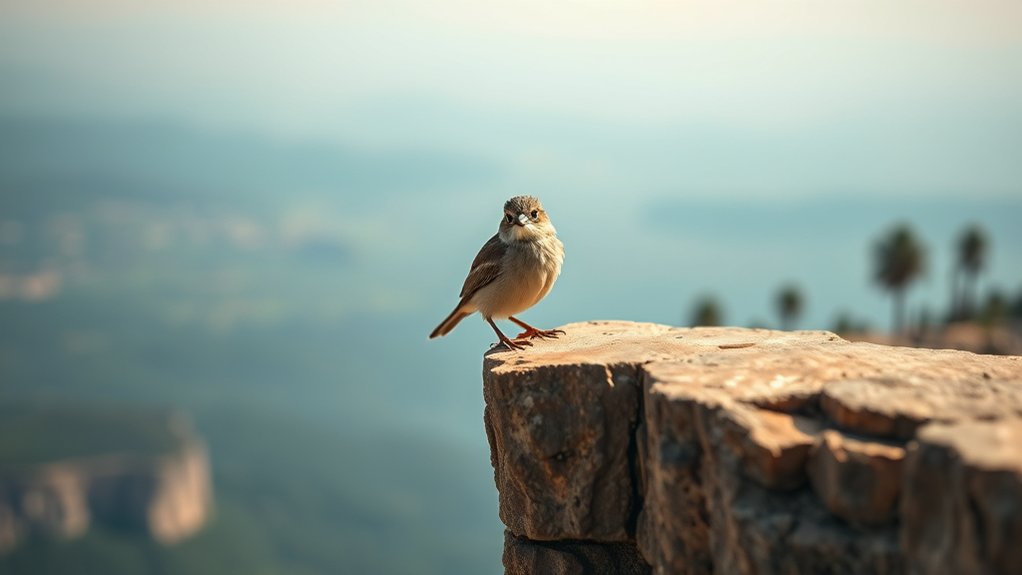
Although many people assume birds naturally thrive at great heights, several species actually exhibit a clear fear of heights. This fear serves as a critical survival mechanism. You’ll notice that many birds instinctively avoid precarious ledges or tall trees when feeling insecure or threatened. This helps reduce their risk of dangerous falls.
This caution varies among species. For example, raptors comfortably soar at high altitudes, while others prefer staying closer to the ground.
When birds suddenly encounter unfamiliar heights or unstable surfaces, they often show signs of anxiety or disorientation. It’s their natural wariness kicking in.
Understanding this behavior helps you appreciate how birds balance risk and safety. It’s essential for protecting their well-being in both wild habitats and captive environments.
Knowing this can change how we approach bird care and conservation.
Which Bird Species Are Most Likely to Fear Heights?
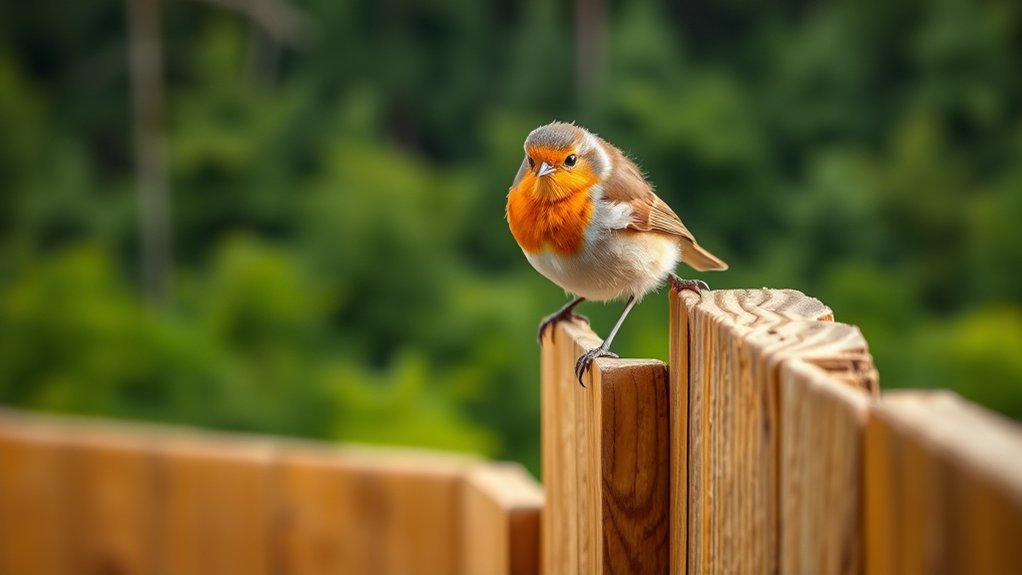
You’ll notice that ground-dwelling birds like ostriches and emus often act cautious around heights because they aren’t really built for being up high.
Then there are species that nest or forage close to the ground, like quails and pheasants—they usually avoid high perches to stay safer from predators.
When you look at these patterns, it’s easier to figure out which birds are more sensitive to heights and why they behave that way.
Species Sensitive To Heights
When you observe bird species in various habitats, you’ll notice that smaller songbirds like sparrows and finches often avoid high perches. They tend to display a cautious approach to heights.
Species sensitive to heights usually share traits related to their ecology and flight ability.
You should consider these categories:
- Ground-dwelling birds such as quails and pheasants prefer low nesting sites. They show greater fear of heights because they don’t fly much.
- Birds with restricted flight capabilities, including some ground parrots, tend to be more sensitive to vertical spaces. They struggle to navigate these areas.
- Juvenile raptors, while adults handle heights confidently, may show fear of unfamiliar altitudes when they’re young.
These patterns reflect adaptations that influence height sensitivity across bird species in different environments. It’s pretty interesting how their behavior connects to their lifestyle.
Height Fear In Birds
Because many bird species have evolved specific habitat preferences and flight capabilities, their reactions to heights vary considerably. If you observe ground-dwelling birds like quails and pheasants, you’ll notice they avoid high perches, favoring low, sheltered areas.
Similarly, smaller birds such as sparrows and finches may show caution or fear when exposed to unfamiliar elevated spaces. They rely on instinct to minimize risk.
In contrast, raptors like hawks and eagles embrace heights, using them strategically for hunting and navigation. So, they rarely display height fear.
Domesticated species like chickens and turkeys tend to fear heights if they lack exposure or experience sudden falls. Overall, species with limited flight and ground-foraging habits exhibit the most pronounced fear of heights. They prefer to remain close to the ground where they feel safest.
Why Do Some Birds Feel Unsafe at High Altitudes?
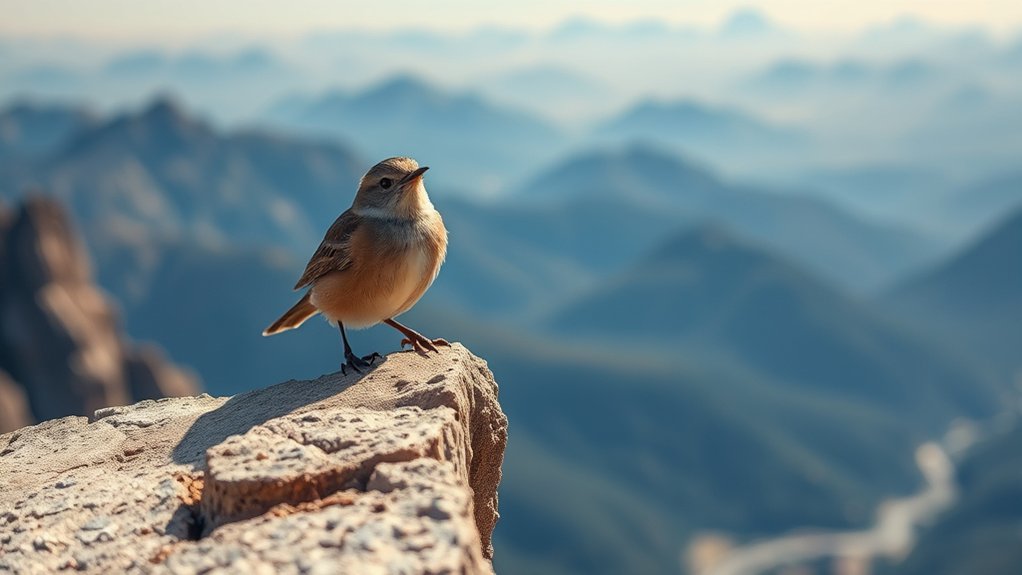
Although many birds are skilled fliers, some feel unsafe at high altitudes because of increased exposure to strong winds and unpredictable weather. When you watch these birds, you’ll notice their caution comes from several physiological and environmental factors.
Here are three key reasons why some birds avoid flying too high:
First, thinner air means less oxygen, which makes breathing harder for species not adapted to those conditions.
Thinner air holds less oxygen, making it tough for birds not suited to high altitudes to breathe easily.
Second, the risk of losing control or falling goes up, so birds naturally get cautious at great heights.
Third, some birds don’t have the wing strength or stamina to keep flying in such tough environments, which limits how high they can go.
All these things come together to make high altitudes risky, so many birds steer clear unless they really have to, like during migration or other survival tasks.
Why Birds Feel Safer at Certain Heights
Even though flying at great heights can be risky, many birds feel safer at elevated levels since these positions reduce their vulnerability to ground predators. When you watch birds, you’ll notice they often pick nesting and foraging spots at certain heights that balance safety with getting to food.
Elevated perches like tall trees give birds a clear view, so they can spot threats early. But the preferred height changes depending on the species and where they live.
Some birds avoid heights beyond their usual flying or nesting zones to keep stress and exposure low.
By choosing the right heights, birds boost their chances of survival. They use their surroundings to cut down on danger while still having access to food and shelter.
Noticing these habits shows just how smart birds are when it comes to staying safe by using height.
How to Tell If Your Bird Is Scared of Heights
You can tell if your bird is scared of heights by paying close attention to its body language. For example, it might tremble, flap its wings nervously, or even freeze when it’s up high.
You might also notice changes in behavior, like quickly flying down or sticking to lower perches because it feels more comfortable there.
Observing Bird Body Language
When a bird perceives a height as threatening, it displays specific body language cues that signal fear or discomfort. You can identify this by closely observing its posture and movements.
Typically, a scared bird will crouch or hunch its body, avoiding exposure to open spaces or high perches.
It might also exhibit rapid breathing and dilated pupils, which are physiological signs of stress. You may notice restless behaviors like flapping wings, trembling, or darting glances downward. These actions usually indicate anxiety about the altitude.
Additionally, listen for distress vocalizations like alarm chattering, which often come along with these physical signs.
Signs Of Height Anxiety
Although birds are naturally adapted to heights, some show clear signs of anxiety when placed on elevated or exposed perches. You might notice your bird crouching low, fluttering nervously, or clinging tightly to the perch. These behaviors usually mean your bird is feeling uncomfortable.
Rapid wing flapping or trying to escape from higher surfaces are also common signs of height anxiety. If your bird hesitates or outright refuses to step onto tall or exposed perches, it’s a strong sign of fear.
You’ll often hear vocalizations like loud calls or distress noises when your bird is anxious. Pay attention to physical tension too—ruffled feathers and a stiff, tense stance can reveal unease.
Behavioral Changes At Altitude
Observing a bird’s behavior at various heights reveals important clues about its comfort level with elevation. When your bird encounters heights, you might notice specific behavioral changes that signal fear or anxiety.
To determine if your bird is scared of heights, look for these key signs:
- Avoidance or hesitation to ascend to higher perches, indicating reluctance to face elevation.
- Physical signs such as trembling, increased vocalizations, or agitation near edges or high places.
- Reduced flight activity or freezing behavior when approaching or at elevated spots.
These behaviors reflect stress responses, showing that your bird perceives height as a potential threat. Monitoring these cues helps you assess and manage your bird’s comfort and safety regarding altitude.
Paying attention to these signs can make a big difference in how you care for your bird. It’s all about making sure they feel safe and comfortable, no matter how high they go.
How to Help Birds Scared of Heights
If birds have experienced traumatic falls or injuries, they can develop a fear of heights that makes them avoid elevated perches or ledges. To help, provide stable, secure perches at various heights. Make sure the surfaces are free of hazards like sharp edges or instability.
This encourages your bird to explore and practice climbing without risking injury. Watch your bird’s body language closely. Signs of tension or hesitation usually mean they’re genuinely scared. That way, you can offer reassurance that fits their needs.
Creating safe, accessible perching options lets anxious birds regain confidence little by little. By addressing environmental risks and supporting cautious exploration, you help reduce height-related anxiety.
This promotes behavioral adaptation and helps your bird feel safer and more comfortable with elevated spaces.
Gradual Desensitization to Help Birds Overcome Height Fear
When you gradually expose a bird to increasing heights in carefully controlled steps, you help reduce its fear through systematic desensitization. Start by introducing the bird to low elevations, then slowly raise the height as it shows comfort.
Gradually exposing a bird to higher perches eases its fear through gentle, controlled steps.
Keep a close eye on its body language. Look for signs like fluffed feathers or rapid breathing that show the bird is uncomfortable. If you see these, adjust your approach to keep things safe.
To effectively desensitize your bird:
- Begin at a height where the bird feels secure.
- Increase height incrementally only when the bird seems calm.
- Repeat exposures consistently over days or weeks to build tolerance.
This methodical process, paired with patience, helps your bird adapt gradually. It’s a great way to minimize the stress linked to heights.
Building Your Bird’s Confidence at Heights With Positive Reinforcement
Although gradual exposure to heights reduces fear, combining this approach with positive reinforcement really boosts your bird’s confidence. You can start by placing treats and familiar objects on low perches. This encourages your bird to approach and stay at these elevated spots.
When your bird responds positively, immediately offer praise and rewards. This helps create a strong link between heights and good experiences.
Gradually increase perch height while keeping a close eye on your bird’s body language for any signs of stress or discomfort.
If your bird seems uneasy, slow down the pace to keep things stress-free. You can also use visual aids or familiar items placed at higher levels to provide extra comfort. These little touches make new heights seem less scary.
Safety Tips for Managing Birds in Elevated Environments
Building your bird’s confidence at heights lays the groundwork for safe interactions in elevated environments. But managing these spaces requires careful attention to safety measures.
Building your bird’s confidence at heights is essential for safe and secure elevated interactions.
Birds often avoid unstable heights, so your role is to create secure, reassuring settings. Focus on these three key actions:
- Provide stable perches and install barriers to prevent accidental falls, especially for young or inexperienced birds.
- Use protective screens or netting on windows, balconies, and rooftops to minimize injury risks or escapes.
- Observe your bird’s body language closely to gauge comfort levels and reduce stress, adjusting the environment as needed.
Frequently Asked Questions
Can a Bird’s Fear of Heights Affect Its Ability to Fly?
Yes, a bird’s fear of heights can affect its flight by causing hesitation or avoidance of high altitudes. This can reduce flight efficiency and limit access to food.
It can also impair essential behaviors like migration and predator evasion. So, when a bird is scared of heights, it might struggle more than you’d think.
Do Baby Birds Inherit Height Fear From Their Parents?
Do you think baby birds are born fearing heights? They don’t inherit this fear genetically. Instead, their comfort around heights develops through observing parents and early experiences, shaping their responses more than any inherited instinct does.
It’s more about learning than something they’re born with. Watching their parents and getting used to their environment plays a big role in how they handle heights later on. So, it’s really about experience, not genetics.
Is Height Fear Common in Pet Parrots Compared to Wild Ones?
You’ll find height fear more common in pet parrots because they lack natural exposure to elevated environments during development.
Wild parrots, on the other hand, get plenty of climbing and flying practice, which helps reduce height-related anxieties considerably.
Can Medication Help Reduce a Bird’s Fear of Heights?
Yes, medication can help reduce your bird’s fear of heights, but only under veterinary supervision. It works best when combined with behavioral therapy. This approach aids gradual desensitization while minimizing anxiety.
Plus, it ensures your bird’s safety throughout the process. So, always consult a vet before starting any treatment. Together, you can find the best way to help your bird feel more comfortable.
Does a Bird’s Height Fear Change With Age?
You’d think birds master heights instantly, but their fear actually shifts with age. Juveniles hesitate, while adults gain confidence.
If injury strikes, even experienced birds might avoid heights. It shows how experience and caution intertwine scientifically.
Conclusion
Understanding your bird’s fear of heights helps you provide a safer environment and build their confidence. Remember, “slow and steady wins the race.” Gradual desensitization paired with positive reinforcement can ease their anxiety effectively.
By observing their behavior closely and offering consistent support, you’ll help your feathered friend feel secure at various altitudes. This approach not only promotes safety but also fosters a stronger bond between you and your bird.