
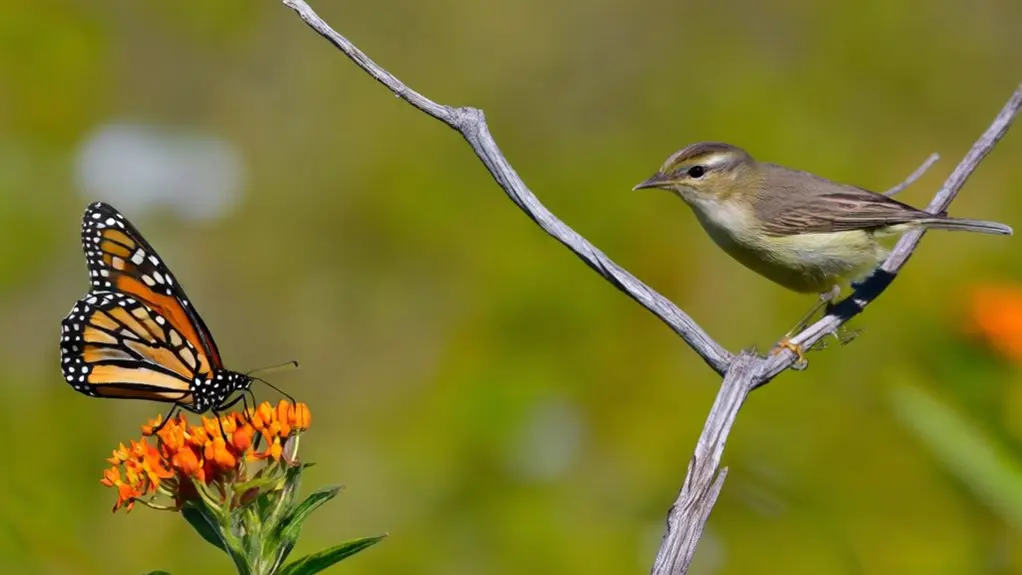
You can’t rely on most birds to eat Monarch butterflies because their tissues contain toxic cardenolides from milkweed. These chemicals cause nausea, vomiting, and heart issues in predators. Because of this, Monarchs are distasteful and harmful, so most birds avoid them after a bad experience.
That said, a few bird species have developed a tolerance or have learned ways to prey on Monarchs occasionally. It’s pretty interesting how these interactions show us the role of Monarch toxicity. Basically, it shapes how birds hunt and how Monarchs survive in the wild.
Why Are Monarch Butterflies Toxic to Birds?
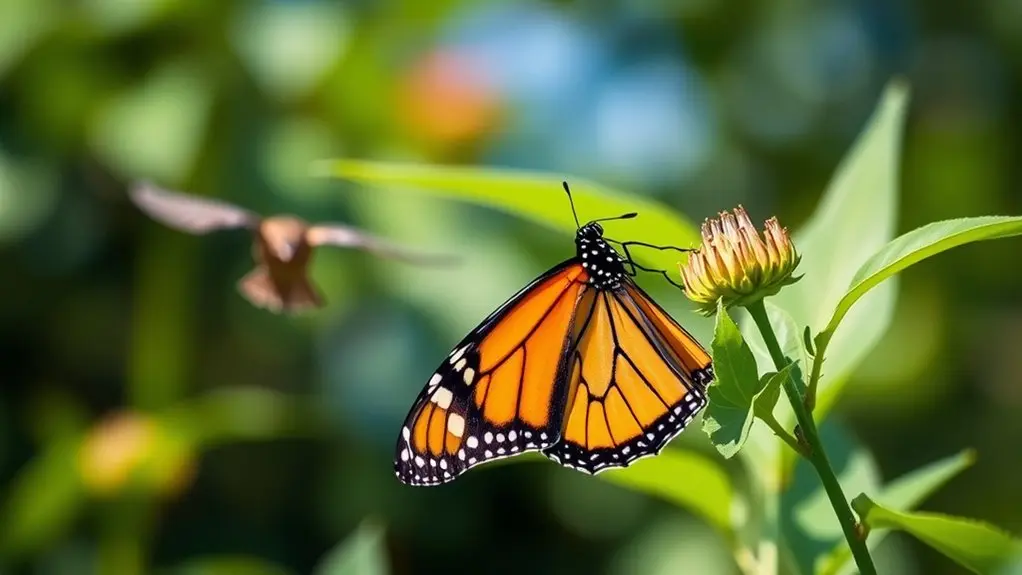
Although Monarch butterflies appear delicate, they carry potent toxins that protect them from bird predators. You should know that these toxins, called cardenolides, accumulate in Monarch tissues after they ingest milkweed during their caterpillar stage.
This chemical defense makes the butterflies unpalatable and harmful to most birds.
When birds eat Monarchs, they often suffer nausea, vomiting, or even heart problems due to the cardenolides’ effects on cardiac muscle. The butterflies’ bright orange and black coloration acts as an aposematic signal, warning birds of their toxicity before an attack. It’s like a natural warning sign telling birds to stay away.
However, some specialized predators have evolved resistance to these toxins, allowing them to consume Monarchs without ill effects.
Understanding this toxicity explains why most birds avoid Monarch butterflies in the wild. So, next time you see a Monarch, remember it’s not just pretty—it’s well protected too!
How Do Monarch Caterpillars Use Milkweed to Stay Safe?
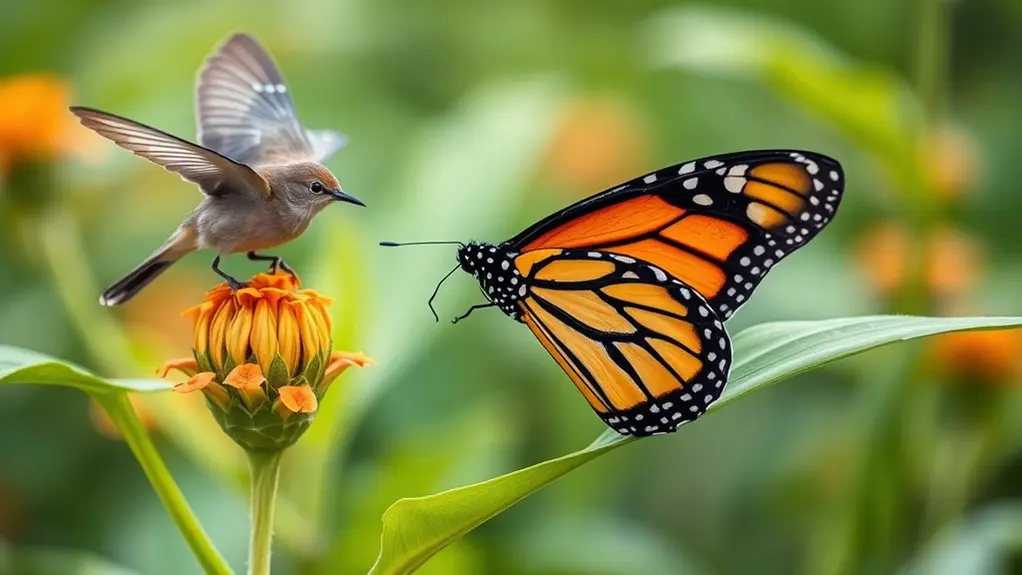
You know, Monarch caterpillars really count on milkweed to keep them safe. The milkweed contains toxic chemicals called cardenolides, which build up inside the caterpillars as they munch on the plant.
Because of these chemicals, the caterpillars taste nasty to predators, acting like a natural chemical defense.
Plus, their bright colors are like a warning sign, letting other animals know they’re not a tasty snack. This way, they’re less likely to get eaten.
Milkweed Toxicity Defense
How do monarch caterpillars use milkweed to protect themselves from predators? Monarch caterpillars feed exclusively on milkweed, ingesting toxic compounds called cardenolides. These toxins build up in their bodies, making them distasteful and harmful to predators.
When a predator tries to eat a monarch, the milkweed toxins can cause vomiting, disrupt heart function, or even lead to death. This chemical defense stays with the caterpillar throughout its metamorphosis and is still present in the adult butterfly.
Monarchs’ bright colors act as a warning sign, letting predators know they’re toxic. By storing milkweed toxins, monarch caterpillars develop a strong survival strategy. This reduces the chance of being eaten and boosts their odds of reaching adulthood.
This milkweed toxicity defense is an important evolutionary adaptation that helps monarchs survive.
Caterpillar Chemical Ingestion
Why do monarch caterpillars exclusively consume milkweed plants? You’ll find that milkweed contains toxic cardenolides, which monarch caterpillars ingest and store in their tissues. This chemical ingestion serves as a crucial defense mechanism.
Here’s how it works:
- Monarch caterpillars accumulate cardenolides from milkweed, making them distasteful to predators.
- These toxins are retained through metamorphosis, protecting the butterfly stage as well.
- Predators, especially birds, learn to associate the monarch’s bright coloration with toxicity and avoid them.
Which Birds Can Safely Eat Monarch Butterflies?
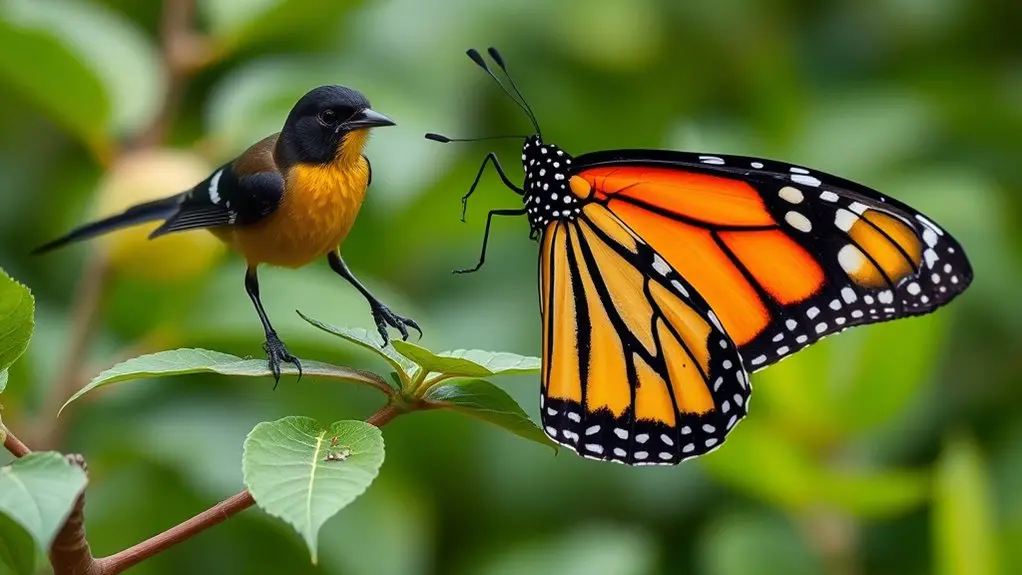
Although Monarch butterflies are toxic to most predators because of their cardenolides, some bird species like the Black-backed Oriole and the Black-headed Grosbeak have evolved ways to tolerate these toxins and safely eat them. These birds have physiological adaptations that help neutralize or withstand the cardenolides. This means they can consume Monarchs without any harmful effects.
When you watch different bird species, you’ll notice many avoid Monarch butterflies due to their bitter taste and toxic compounds from milkweed. But some birds have developed the ability to safely eat Monarchs, which shows an interesting evolutionary response to the butterflies’ chemical defenses.
What Happens When Birds Try to Eat Monarch Butterflies?
While some bird species have adapted to safely consume Monarch butterflies, most birds face significant challenges when they attempt to eat these insects. The Monarch’s toxic cardenolides cause adverse effects that discourage predation.
When you observe a bird trying to eat a Monarch, several outcomes may occur:
The bird experiences nausea or vomiting due to the toxins ingested, impairing digestion. Bright orange and black coloration signals toxicity, warning the bird before consumption. Birds often regurgitate the butterfly, an aversive reaction that reduces the likelihood of future attacks.
These physiological and behavioral responses demonstrate the Monarch’s effective defense. As a result, most birds either avoid or quickly learn to reject Monarch butterflies to prevent illness or potential mortality. It’s pretty clear that the Monarch has a good strategy for keeping birds at bay.
How Do Birds Learn to Avoid Monarch Butterflies?
Because birds often experience unpleasant effects after tasting Monarch butterflies, they quickly learn to associate the bright orange and black coloration with toxicity. The cardenolides in Monarchs cause nausea or sickness, which reinforces avoidance behavior. Juvenile birds pick up this knowledge either through their own experiences or by watching adults.
This learned aversion is really important for survival and shows up in species like black-backed orioles and jays. The vivid coloration acts as a clear aposematic signal, making it easier for birds to recognize and avoid these toxic butterflies.
| Step | Description | Result |
|---|---|---|
| Initial Encounter | Bird tastes Monarch’s toxic flesh | Unpleasant reaction |
| Visual Association | Bright colors linked to toxicity | Avoidance of similar prey |
| Social Learning | Juveniles observe adults’ behavior | Rapid transmission of knowledge |
| Reinforced Aversion | Repeated negative experiences | Long-term avoidance |
Are There Birds That Sometimes Eat Monarch Butterflies?
You’ll find that some bird species, like certain woodpeckers and orioles, do sometimes eat Monarch butterflies, even though these butterflies are toxic.
Monarchs have chemicals from milkweed that usually keep most birds away. But, interestingly, some birds have figured out how to tolerate these toxins.
Bird Species That Prey
Although many bird species avoid Monarch butterflies due to their toxic cardenolides, some, like black-backed orioles and certain thrushes, have been observed preying on them. These birds have developed varying tolerances or strategies to handle the butterflies’ chemical defenses.
When you study these predators, you’ll notice: Black-backed orioles often consume Monarchs despite their toxins, suggesting some physiological adaptation.
Certain thrush species occasionally prey on Monarchs, possibly targeting less toxic individuals.
Inexperienced or less cautious birds might attempt to eat Monarchs but risk toxicity effects.
Understanding which birds prey on Monarchs helps you appreciate the ecological interactions and evolutionary pressures shaping predator-prey dynamics.
It’s important not to assume all birds universally reject these butterflies.
Monarch Toxicity Effects
While most birds steer clear of Monarch butterflies because of their potent cardiac glycosides, some species occasionally eat them despite the risks. These toxins come from milkweed plants during the caterpillar stage and make Monarchs distasteful and potentially harmful.
The butterflies’ bright orange and black colors serve as a clear warning to predators about their toxicity.
When birds eat Monarchs, they might feel symptoms ranging from mild illness to fatal poisoning, depending on how well their bodies can handle the toxins.
Interestingly, species like the Black-backed Oriole have been seen preying on Monarchs, which suggests some resistance to these cardiac glycosides. But these cases are pretty rare, so toxicity usually works well to keep predators away.
Understanding these toxicity effects helps explain why Monarch butterflies are mostly safe from being eaten by birds.
It’s kind of amazing how nature uses bright colors and poison to protect these butterflies from harm.
Predation Exceptions Explained
Despite the strong chemical defenses Monarch butterflies possess, some bird species have developed ways to bypass or tolerate these toxins. While most birds avoid Monarchs because of the milkweed-derived cardiac glycosides, a few exceptions exist.
For example, the Black-backed Oriole has been documented consuming Monarchs despite their toxicity.
You should note three key points about these predation exceptions. First, certain birds can physiologically tolerate or behaviorally learn to ignore Monarch toxins. Second, predation typically occurs during vulnerable Monarch stages, such as pupae or newly emerged adults. Third, these events are rare and often opportunistic rather than regular feeding behavior.
Understanding these exceptions helps clarify that although Monarchs generally deter predation, some specialized or opportunistic birds can and do consume them under specific conditions. So, it’s not a common thing, but it does happen.
How Does Monarch Butterfly Toxicity Influence Bird Predation?
Because Monarch butterflies sequester toxic cardenolides from milkweed during their larval stage, they become distasteful and harmful to many bird species. You’ll notice most birds learn to avoid Monarchs due to their bright orange warning colors, which signal toxicity. Birds that try consuming them often experience adverse effects like vomiting, reinforcing avoidance behavior.
However, some species, such as black-backed orioles, have evolved tolerance and prey on Monarchs despite the toxins.
| Aspect | Bird Response | Outcome |
|---|---|---|
| Toxicity | Causes sickness | Avoidance of Monarchs |
| Warning coloration | Bright orange signal | Learned predator aversion |
| Specialist predators | Tolerance to toxins | Predation despite toxicity |
| Behavioral adaptation | Associative learning | Reduced Monarch predation |
This toxicity considerably shapes avian predation patterns on Monarch butterflies.
How You Can Support Monarch and Bird Habitats
If you want to support both Monarch butterflies and bird populations, establishing habitats with native milkweed and flowering plants is essential. These plants provide critical resources for Monarchs and attract insectivorous and nectar-feeding birds.
To effectively contribute, focus on these actions:
- Plant native milkweed species to supply Monarch caterpillars with food and facilitate butterfly reproduction.
- Incorporate diverse pollinator-friendly flowering plants to offer nectar sources for adult Monarchs and other insects birds consume.
- Preserve and restore wildflower fields and natural habitats to maintain ecosystem balance, promoting biodiversity beneficial to both Monarchs and bird species.
It’s really about creating a welcoming space for these creatures. When you do, you’re helping support the whole environment around them.
Frequently Asked Questions
Do Monarch Butterflies Lose Toxicity After Metamorphosis?
No, Monarch butterflies don’t lose toxicity after metamorphosis. You’ll find they retain toxic cardenolides from their caterpillar stage, which continue to protect them chemically throughout adulthood.
These toxins help deter predators through ongoing chemical defense. So, even as adults, Monarchs stay protected thanks to what they stored earlier. It’s pretty fascinating how their defense carries over, right?
Can Monarch Butterfly Toxicity Vary by Geographic Location?
You know what they say: “Variety is the spice of life.” Monarch butterfly toxicity does vary geographically because different milkweed species contain varying cardenolide levels.
This directly affects the butterfly’s chemical defense strength across regions. So, depending on where they live, monarchs can be more or less toxic. It all comes down to the type of milkweed they feed on.
How Long Does Monarch Toxicity Last in the Butterfly Stage?
You’ll find monarch toxicity lasts throughout their adult butterfly stage, typically 4 to 5 weeks. This toxicity is strongest early on and gradually lessens but remains present due to retained cardenolides from their larval milkweed diet.
It’s pretty interesting how those toxins stick around, right? Even as the butterfly ages, the cardenolides keep them protected to some extent. So, their defense doesn’t just disappear overnight.
Are There Non-Bird Predators Affected by Monarch Toxicity?
You won’t find non-bird predators affected by monarch toxicity because they avoid ingesting the butterflies’ toxic tissues.
Wasps and parasitic species bypass these toxins, making monarch chemical defenses ineffective against such predators.
Do Monarch Butterflies’ Colors Signal Toxicity to Other Animals?
You’ll notice monarch butterflies’ vibrant colors discreetly communicate their unwelcoming nature to many animals. This serves as an evolutionary strategy that effectively signals the presence of chemical defenses.
It helps deter potential predators through visual caution. Pretty clever, right?
Conclusion
You’ve seen that monarch butterflies carry a toxic shield, making them a risky meal for most birds. While some species have adapted to nibble safely, many learn quickly that monarchs are a bitter bite not worth the trouble.
This dynamic creates a natural balance, where toxicity acts like a biological stop sign. By supporting both monarchs and birds, you help maintain this delicate dance of survival in the wild.