
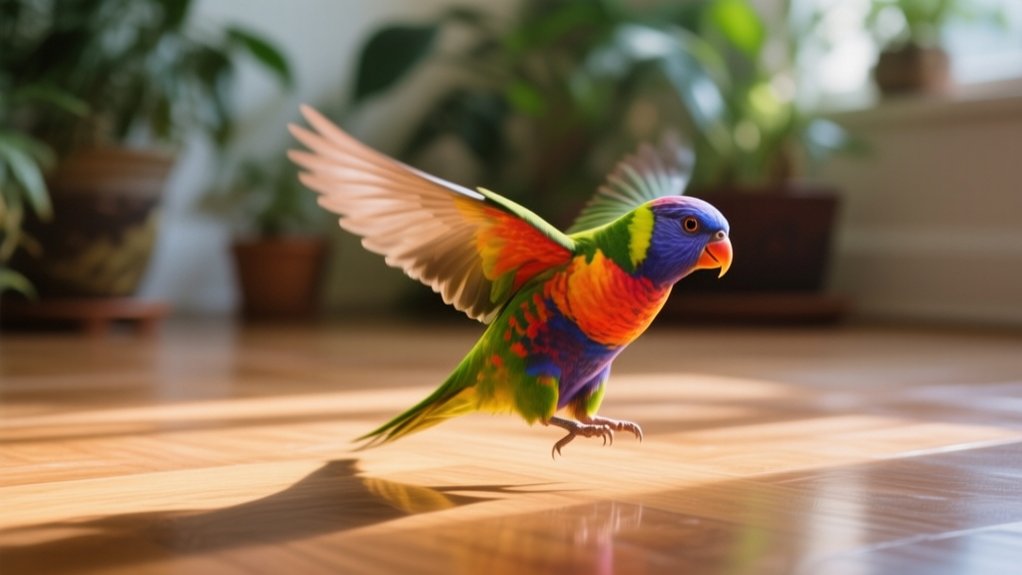
Yes, birds like parrots and cockatoos can dance to music by synchronizing movements such as head bobbing and wing flapping to rhythms. This behavior supports social bonding and expresses emotions. But you need to pay close attention to the volume because loud music can cause hearing damage and stress.
You should keep sessions short and use gentle tunes. Also, watch for any signs that your bird is uncomfortable. Understanding these facts helps make sure your bird enjoys dancing safely and happily.
How Do Birds Dance to Music?
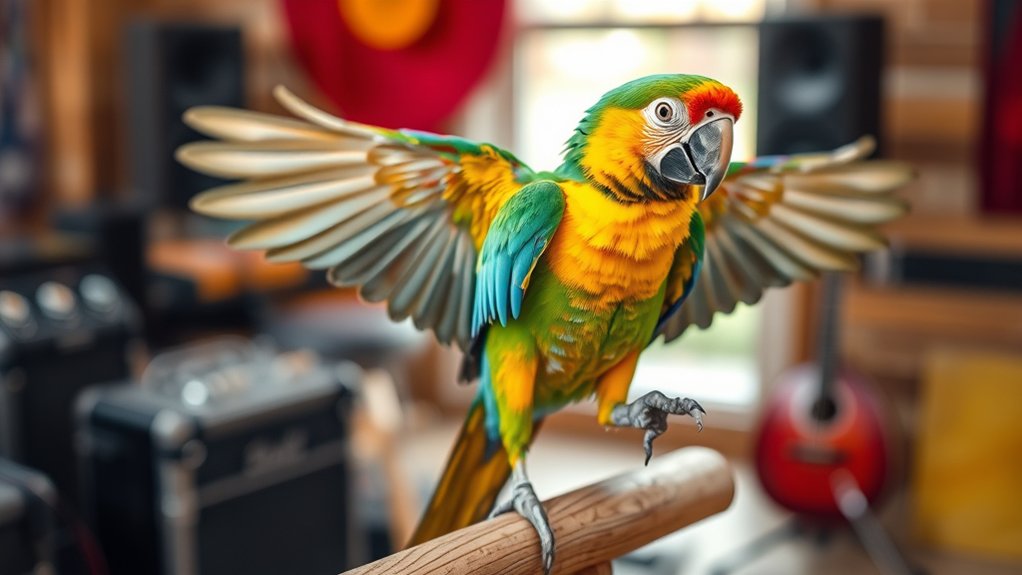
Although it may seem surprising, many bird species actively move in sync with musical rhythms by bobbing, head-shaking, or performing rhythmic motions. You’ll notice that birds like parrots and cockatoos can spontaneously adjust their dance movements to match tempo changes, demonstrating flexibility in rhythmic entrainment.
Neural studies reveal that birds with vocal mimicry skills are more likely to synchronize their movements with music, suggesting a neurological basis for this behavior. When you observe these rhythmic motions, they often serve communicative functions such as courtship or social bonding within species.
Experimental evidence confirms that certain birds genuinely keep time with music, indicating that their dancing isn’t random but a precise response to auditory stimuli. It’s pretty fascinating because it highlights an intriguing intersection of neurobiology and behavior.
Which Bird Species Are Known for Dancing?
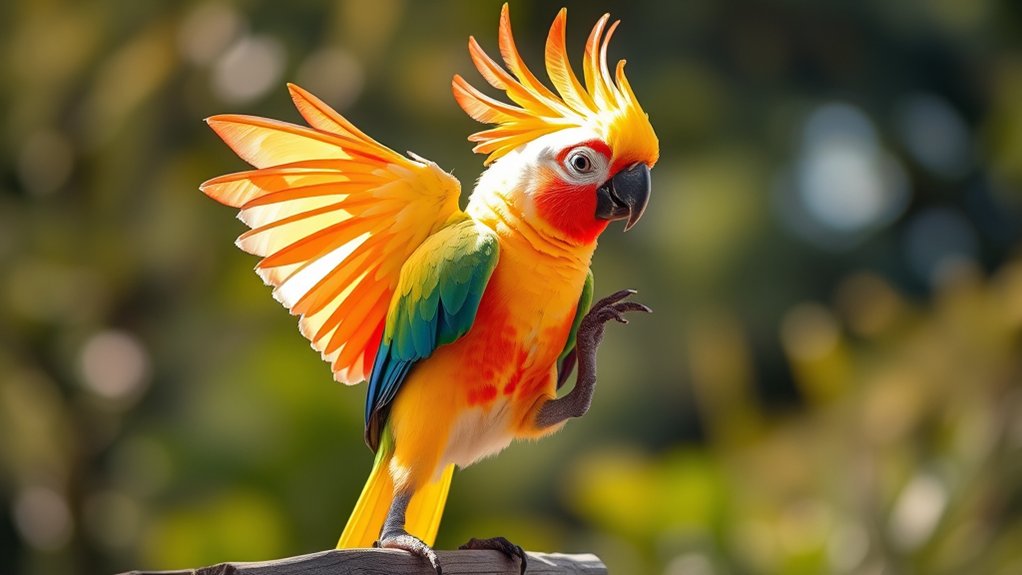
Understanding how birds synchronize their movements with music naturally raises the question of which species display this behavior most prominently. You’ll find that several parrot species, including cockatoos, macaws, and budgerigars, are well-known for their ability to dance rhythmically.
The sulphur-crested cockatoo named Snowball exemplifies this, as it’s one of the most studied birds capable of synchronizing with a beat.
African grey parrots and other vocal-learning species also show rhythmic responses to music, suggesting a link between vocal mimicry and dancing ability.
Additionally, observations of starlings and jackdaws indicate that rhythmic movement may be more widespread among birds than once believed.
However, parrots remain the most notable for complex, synchronized dancing behaviors.
How Do Birds Move When They Dance?
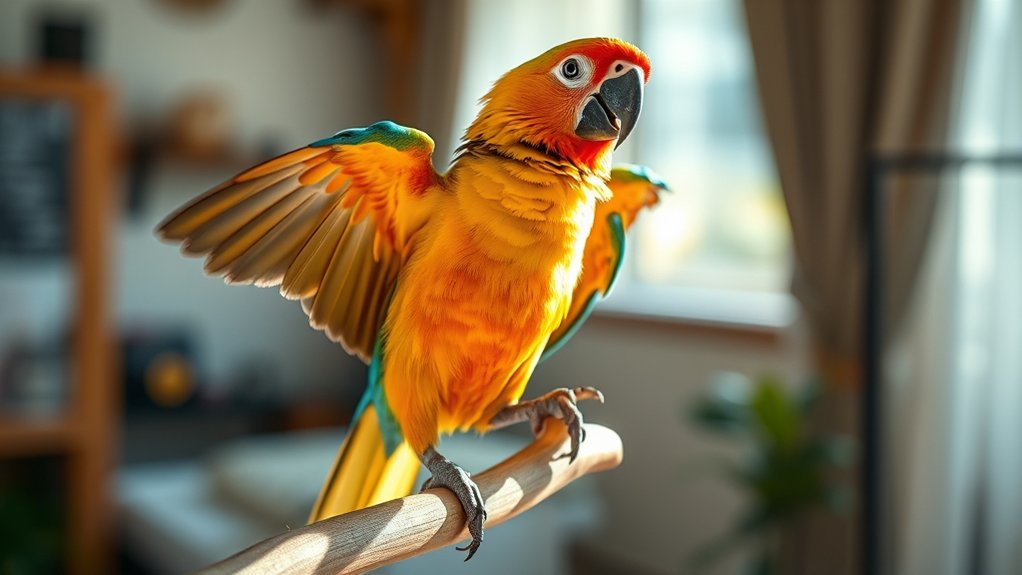
When birds dance, they often move in precise, rhythmic patterns that align closely with the beat of the music. You’ll notice them bobbing their heads, swaying their bodies, or hopping in time with the rhythm. Some species, like parrots, adjust their movements to match tempo changes, showing remarkable coordination.
As you observe, birds may lift their feet, tilt their heads, or flap their wings as part of their dance. Scientific studies have documented species such as cockatoos and parrots synchronizing these movements precisely with musical beats.
These rhythmic actions serve as a form of social signaling or communication and reflect birds’ emotional responses to music without any random or uncoordinated motions.
Why Do Birds Dance to Music?
When you see birds dancing to music, it’s pretty fascinating. What you’re actually watching are behaviors connected to social bonding, communication, and expressing emotions.
A lot of bird species can sync their movements to rhythms—this is called rhythmic entrainment. It shows how they can respond to what they hear.
Usually, when birds dance, it means they’re excited or stimulated by certain sounds or beats. It’s like their way of reacting to music.
Social Bonding And Communication
Although birds might seem to dance simply for enjoyment, their rhythmic movements to music often serve important social functions. When you observe birds like parrots dancing, you’re witnessing behaviors that parallel natural courtship displays or group rituals.
These movements act as communication signals, conveying excitement, happiness, or social bonds within flocks or between birds and humans.
By synchronizing their dances to music, birds can reinforce social cohesion, helping maintain group structure or strengthen pair bonds.
Additionally, during breeding seasons, dancing serves to attract mates or assert dominance, reflecting their natural communication methods.
Understanding this helps you appreciate that dancing isn’t just entertainment for birds but a complex social behavior deeply rooted in their interactions and survival strategies.
Rhythmic Entrainment And Movement
How do birds manage to move in time with music? Birds, especially vocal learners like parrots, demonstrate rhythmic entrainment. They unconsciously synchronize their movements to external beats.
This ability links auditory perception with motor response. It shows a neurological basis rather than random motion or mimicry. When you observe a bird dancing, it’s responding to musical cues with precise timing. This highlights an innate connection between sound and movement.
| Bird Species | Movement Type | Reason for Dancing |
|---|---|---|
| Parrots | Head bobbing | Rhythmic entrainment |
| Cockatoos | Foot tapping | Reaction to auditory cues |
| Snowball | Full body dancing | Neurological motor link |
| Mynah Birds | Wing flapping | Vocal learning response |
| Budgerigars | Body swaying | Synchronization with beat |
Emotional Expression And Excitement
Beyond their ability to synchronize movements with musical rhythms, birds use dancing as a clear form of emotional expression and excitement. When you observe a bird dancing, you’re witnessing more than just movement. It’s an outward display of emotional arousal.
Research indicates that parrots and other species respond positively to preferred music genres, such as classical or pop, by engaging in behaviors like head bobbing, wing flapping, and tail flicking. These rhythmic actions signify excitement or happiness.
By dancing and chirping enthusiastically, birds communicate joy not only to you but also to other birds. This suggests that their emotional experience during music exposure parallels human emotional responses.
It highlights dance as an important way for birds to express and share positive emotional states.
How Do Parrots Dance to Different Music Genres?
When exposed to different musical genres, parrots show distinct dancing behaviors that reflect their sensory preferences and mood. You’ll notice that calmer genres like classical and pop often bring out rhythmic movements. Parrots tend to sync their dance to the tempo and beat, which is pretty fascinating.
On the other hand, electronic dance music with its intense bass can sometimes cause aversion or disinterest. Individual parrots respond differently, influenced by what they’ve learned and their sensory sensitivity. So, you might see a range of reactions depending on the bird.
| Music Genre | Parrot Reaction | Typical Dance Behavior |
|---|---|---|
| Classical | Positive | Swaying, head bobbing |
| Pop | Positive | Foot tapping, wing flapping |
| Electronic Dance | Negative or indifferent | Avoidance, reduced movement |
| Other (varies) | Variable | Mixed responses based on bird |
This variety really shows how parrots can discriminate and adapt to different music genres. It’s pretty cool to see how they respond in their own unique ways.
How to Tell If Your Bird Likes or Dislikes Music
Although birds can’t verbally communicate their feelings about music, you can still get a good idea of what they like by watching their behavior during playback.
Positive signs like dancing, chirping, and preening usually mean they’re enjoying the music. On the other hand, if you notice head-shaking, growling, or your bird moving away from the sound, it mightn’t be their favorite.
Pay attention to how your bird reacts when the music changes or stops too. These changes can give you extra clues about their preferences.
Look for these indicators to assess your bird’s music preference:
- Enthusiastic movements or singing along indicate enjoyment
- Excessive preening or silent refusal signals discomfort
- Physical withdrawal from the sound source suggests aversion
- Behavioral shifts when music stops reveal interest levels
How to Train Your Bird to Dance
If you want to teach your bird to dance, start by playing rhythmic music and encouraging simple movements like head bobbing or foot tapping. Reward these behaviors with treats or praise. Use consistent cues and positive reinforcement to link music, commands, and dancing.
Keep your sessions short and frequent. Gradually increase complexity as your bird adapts. It helps to model moves yourself, maintaining eye contact and enthusiasm to motivate imitation.
Watch for signs of stress and prioritize safety by avoiding loud or sudden sounds. That way, your bird stays comfortable and willing to learn.
| Step | Description |
|---|---|
| Play Rhythmic Music | Encourage simple movements like head bobbing |
| Use Positive Reinforcement | Reward desired behaviors with treats or praise |
| Model Dance Moves | Demonstrate moves enthusiastically for imitation |
| Monitor Behavior | Observe for stress, adjust training accordingly |
Risks of Playing Loud Music for Birds
Encouraging your bird to dance by playing music means you need to watch the sound levels carefully to keep it healthy. Birds hear way better than we do, so loud music can actually hurt them.
Playing music for your bird means keeping volume low to protect their sensitive hearing and well-being.
When they’re exposed to really loud sounds, it can cause stress, make them feel disoriented, and lead to behavioral problems.
If loud noise keeps happening, it might even cause permanent hearing loss or damage to their ears. And sudden loud noises aren’t just upsetting — they can startle your bird. When that happens, your bird might panic and move around frantically, which increases the chance of getting hurt.
So, to keep your feathered friend safe, try not to play music louder than 85 decibels.
- Birds’ hearing is more sensitive and vulnerable than humans’
- Loud music can cause stress and behavior problems
- Long-term exposure might lead to permanent hearing damage
- Sudden loud noises can cause panic and injury
Encouraging Safe Dancing for Your Bird
When you introduce music to your bird, keeping the volume moderate is really important to protect its sensitive hearing. Pick gentle, easy-going rhythms and try to avoid sudden loud noises that might startle or stress your bird.
Keep music sessions short—about 10 to 15 minutes—to prevent your bird from getting overstimulated or tired.
Watch your bird closely for signs it might be uncomfortable, like head-shaking, growling, or excessive preening. These are clues that your bird could be feeling stressed.
Make sure the environment is safe and free of distractions so your bird can focus and feel secure while dancing.
By managing the volume, rhythm, session length, and setting, you help encourage safe dancing and reduce any risks.
This way, your bird stays happy and healthy, enjoying music naturally and comfortably.
Frequently Asked Questions
Can Birds Recognize Different Musical Instruments?
Yes, you’ll find birds can recognize different musical instruments by their unique sounds. Their neural pathways help them distinguish tonal qualities, leading to varied responses like curiosity or excitement depending on the instrument played.
It’s pretty fascinating how they pick up on these subtle differences. Birds don’t just hear sounds; they actually process and react to them in distinct ways. So next time you play some music around them, watch closely—they might surprise you!
Do Wild Birds Dance or Only Pet Birds?
You’ll find that wild birds don’t typically dance to music. Only pet birds exposed to human sounds show rhythmic movement.
Wild birds perform ritualistic displays, but these aren’t responses to musical rhythms like pet birds exhibit. So, it’s really just the pet birds that get down to a beat.
How Does Dancing Affect a Bird’s Physical Health?
You see a bird moving gracefully yet exerting effort. Dancing boosts its cardiovascular health and muscle strength. But excessive frantic motion signals stress.
You have to balance activity to maintain a healthy weight and neurological function. This helps ensure overall physical well-being. It’s all about keeping things just right.
Are Certain Times of Day Better for Bird Dancing Sessions?
Yes, you should schedule bird dancing sessions during their natural active periods, like morning or early evening, to enhance engagement and avoid stress.
Keeping a consistent timing helps your bird get used to the routine. This way, you can prevent overstimulation or disinterest. It really makes a difference in how much your bird enjoys dancing.
Can Birds Dance in Groups or Only Individually?
Imagine a synchronized symphony of feathers. Birds don’t just dance solo; they often move in groups, coordinating rhythms during social or mating rituals.
This shows complex communication and bonding through collective, precisely timed movements. It’s like a living chorus, all working together.
Conclusion
You might be amazed to discover that birds can dance to music, showing moves more complex than a thousand human dancers combined. Understanding how and why birds respond to music helps you create a safe environment that encourages natural behavior.
By observing your bird’s preferences and training gently, you can foster enjoyable interaction without risking their hearing or stress levels. Always keep volume moderate and watch for signs of discomfort to make certain your feathered friend dances safely and happily.