
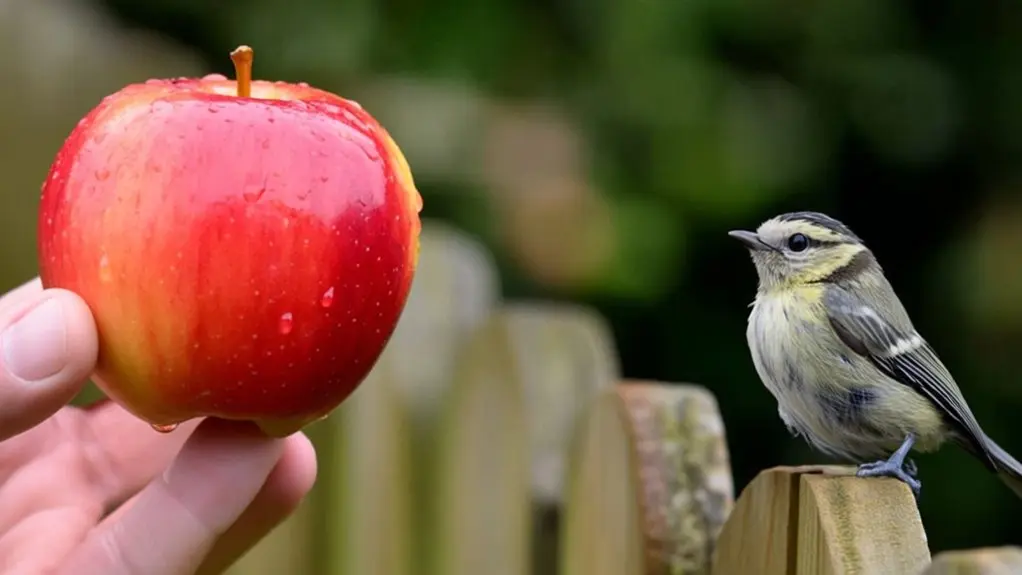
You can safely feed birds apple skins if you wash or peel them thoroughly to remove pesticides, wax coatings, and chemical residues that may be toxic. Many birds, like blackbirds and waxwings, enjoy apple skins, which offer fiber, antioxidants, and vitamins.
Just make sure to avoid offering cores or seeds, as seeds can release cyanide if crushed or chewed. Properly prepared apple skins promote bird health and natural foraging behaviors.
There are further details that explain species preferences, risks, and ideal feeding methods. It’s always good to know what works best for the birds you want to attract!
Can Birds Eat Apple Skin Safely?
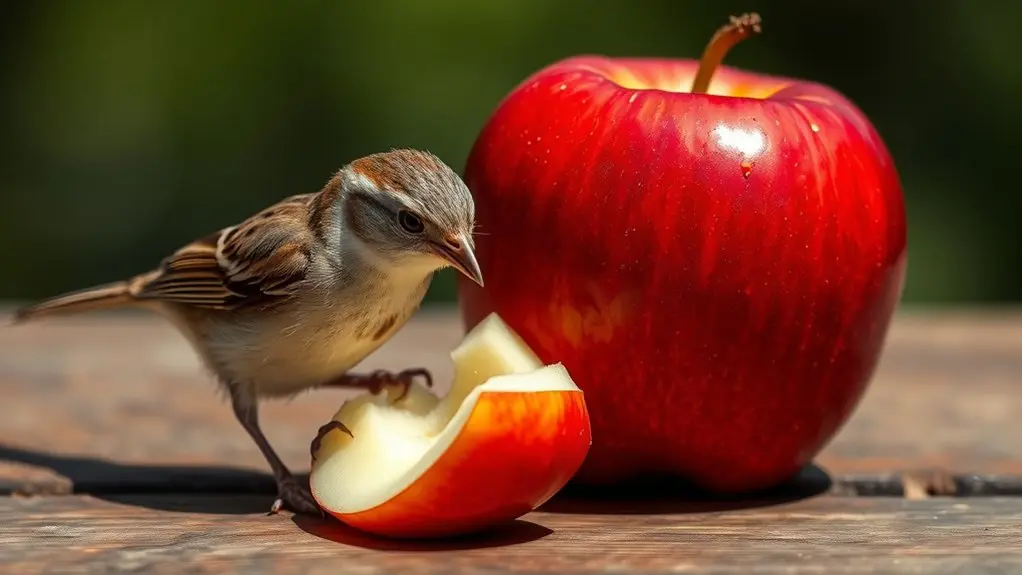
Although apple skins can provide beneficial nutrients and enrichment for birds, you should make sure they’re thoroughly washed to eliminate pesticides and chemical residues before offering them.
Apple skins often carry concentrated compounds, including farm-applied chemicals and wax coatings, which could be toxic if ingested in significant amounts. Removing these residues reduces potential health risks.
When cleaned properly, apple skins serve as a valuable source of dietary fiber and stimulate natural foraging behaviors in birds.
While many species consume apple skins without issue, their safety depends on careful preparation. You should avoid giving birds skins with visible wax or pesticide layers, as these substances may accumulate and cause harm.
So, thorough washing is essential to ensure apple skins are a safe, nutritious supplement in birds’ diets.
Taking that extra step makes all the difference in keeping your feathered friends healthy and happy.
Which Bird Species Enjoy Apple Skin Most?
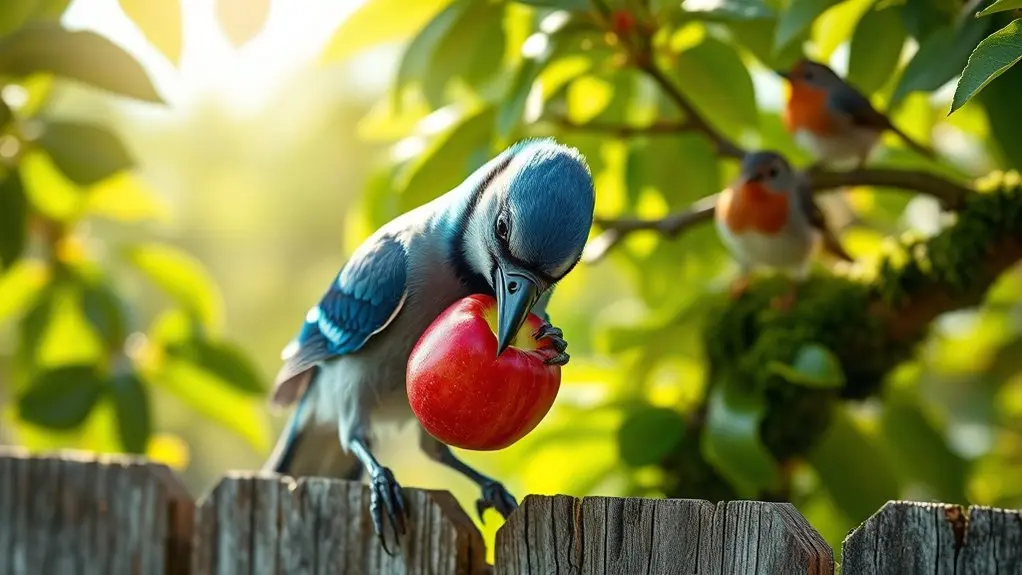
You’ll notice that blackbirds and starlings are some of the species most likely to munch on apple skins when they find them. It’s interesting because regional differences also come into play.
For example, European robins and waxwings are often seen enjoying apple skins right off bird tables. Knowing which birds prefer apple skins gives us a clearer picture of their omnivorous and fruit-eating habits.
Common Apple-Skin Eaters
Which bird species show a preference for apple skins when foraging? Blackbirds and robins are among the primary consumers. They often peck at fallen fruit on the ground to access the skin for its nutrients.
Starlings and waxwings also consume apple skins, especially when the fruit is overripe or softened. While many birds favor the flesh of apples, these species actively include skins in their diet.
Frugivorous birds like thrushes and certain songbirds commonly incorporate apple skins when available. This suggests a dietary adaptation to utilize all parts of the fruit.
Although some waterfowl, such as swans and ducks, have been observed eating other fruit skins like banana, documented evidence of their apple skin consumption remains limited. This selective behavior highlights species-specific feeding strategies.
Regional Bird Preferences
When food sources become limited, blackbirds and starlings in Europe tend to favor apple skins, particularly during the winter months. These species peck at the tougher skin as a supplementary food source when softer options are scarce.
In contrast, American robins and cedar waxwings primarily consume apple flesh and rarely show interest in the skins. You’ll find that fruit-eating birds generally prefer the softer, nutrient-rich flesh over the tougher or wax-coated apple skin.
However, omnivorous birds like thrushes and some waterfowl may occasionally peck at apple skins if they’re accessible and uncoated.
Understanding these regional preferences helps you anticipate which species might use apple skins as a food resource, especially in colder seasons or habitats with limited alternative forage.
How Does Apple Skin Benefit Birds Nutritionally?
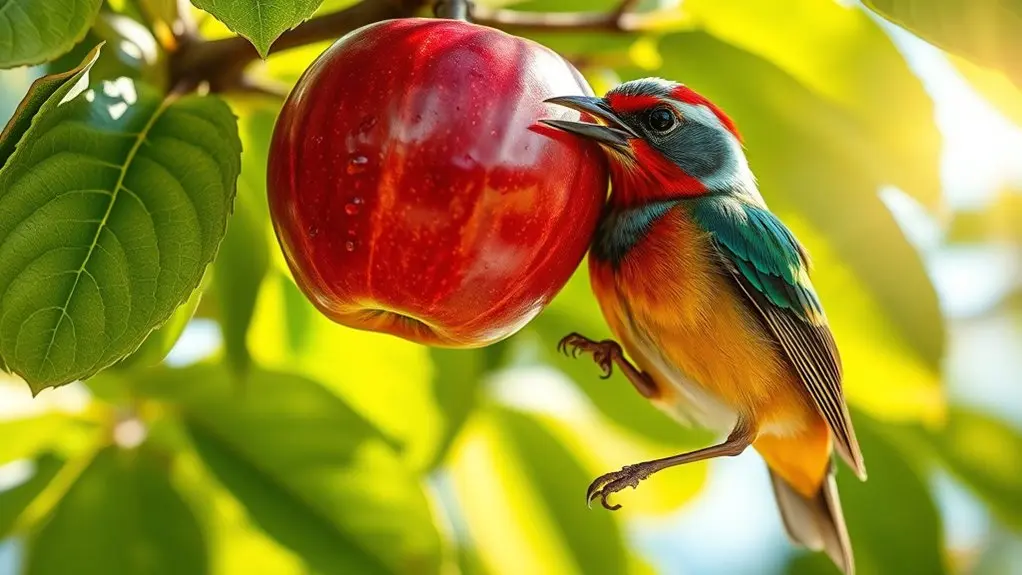
You’ll find that apple skin offers birds essential dietary fiber, which supports their digestion. It also contains vitamins like C and A, plus antioxidants that help strengthen their immune systems.
While it’s low in calories, apple skin provides valuable nutrients. Just remember, it should be part of a varied diet for complete nutrition.
Nutritional Value Overview
How does apple skin contribute to a bird’s nutritional needs? Apple skin offers concentrated dietary fiber that supports efficient digestion, aiding nutrient absorption. It contains antioxidants like quercetin, which help maintain immune system health by reducing oxidative stress.
Plus, the skin provides small but important amounts of vitamins C and A. These vitamins are essential for various metabolic functions and overall nutrition. This natural, nutrient-dense layer delivers energy in an accessible form, which can nicely complement a bird’s diet.
One thing to keep in mind is the protective wax coating on apple skin. It may trap pesticide residues, so it’s a good idea to wash the skin thoroughly before feeding it to your bird.
Knowing these nutritional components helps you appreciate how apple skin fits into a balanced avian diet without overestimating its contribution.
Benefits Of Apple Skin
Understanding the nutritional components of apple skin sets the stage for exploring its specific benefits to birds. Apple skin contains dietary fiber, which aids digestion and supports gut health, essential for nutrient absorption.
It’s rich in antioxidants and vitamins like Vitamin C and A, which enhance the immune system by combating oxidative stress. The simple carbohydrates in the skin offer quick energy, especially useful during cold months when birds expend more calories.
Additionally, the thin layer promotes natural foraging behavior by encouraging biting and tearing activity. However, since apple skin can contain trace pesticides or chemicals, you should thoroughly wash it before feeding it to birds.
This precaution guarantees that you provide a safe, nutritious supplement that benefits their overall health effectively.
What Are the Risks of Feeding Apple Skin to Birds?
Although apple skins might seem like a healthy treat, they can pose several risks to birds. Apple skins often carry pesticides or agricultural chemicals that may be toxic if ingested, especially when unwashed. These residues increase the likelihood of adverse health effects.
Also, thick or wax-coated skins can be difficult for some bird species to digest and may present choking hazards. Birds might even reject the bitter taste or unfamiliar compounds in chemically treated skins, which can lead to reduced food intake.
Should You Wash or Peel Apples for Birds?
Since apple skins can contain pesticides, waxes, and other residues, you should always wash apples thoroughly before offering them to birds. Thorough washing removes harmful substances that could pose health risks.
Always wash apples thoroughly to remove pesticides and residues before feeding them to birds.
Peeling apples is another option that eliminates any remaining chemical residues on the skin’s surface and can make the fruit easier for birds to consume, especially smaller species.
However, leaving the skin on after proper washing provides additional fiber and nutrients beneficial to birds.
To guarantee safety and maximize nutritional value, choose apples without coatings or chemicals whenever possible.
How Can You Offer Apple Skin to Attract More Birds?
Properly prepared apple skins can serve as an effective attractant for various bird species like blackbirds and starlings. You should thoroughly wash the skins to remove pesticides, and consider organic ones for safety. Offering soft, accessible skins increases feeding likelihood.
Place skins on the ground near bushes or hang slices with skins on branches or feeders to provide both food and enrichment. This way, you’re helping birds find a safe and natural spot to feed, while also encouraging their natural foraging behavior.
| Offering Method | Placement | Benefits |
|---|---|---|
| Washed apple skins | Ground near cover | Safe, natural feeding spot |
| Apple skin slices | Hanging on branches | Encourages natural foraging |
| Mixed with other food | Bird feeders | Variety attracts more species |
| Softened skins | Ground or feeders | Easier for smaller birds |
| Organic skins | Any location | Minimizes pesticide exposure |
Why Do Birds Ignore Apple Cores and Seeds?
When you observe birds feeding on apples, you’ll notice they largely ignore the cores and seeds. This behavior comes from a few biological and ecological reasons that influence what they like to eat.
Birds prefer the apple’s flesh because it’s softer, sweeter, and gives them more energy. The cores and seeds just aren’t as appealing to them.
Birds favor the soft, sweet flesh of apples for its energy, avoiding the less appealing cores and seeds.
Apple seeds contain cyanogenic compounds, which can release toxins if chewed. So, birds avoid chewing them.
Usually, seeds get swallowed whole, which means less toxin exposure but not much nutrition.
The core is another story. Its tough texture and bitter taste make birds steer clear of it.
That’s why you’ll mostly see them enjoying just the juicy parts of the apple.
What Should You Do If Birds Accidentally Eat Apple Seeds?
Although birds typically avoid chewing apple seeds, accidental ingestion can still happen. Apple seeds contain cyanogenic compounds that release cyanide if crushed, posing a potential risk. However, swallowing whole seeds usually limits cyanide release due to the protective seed coat, reducing immediate danger.
If your bird eats a few seeds, it’s unlikely to cause harm, but consuming many or chewed seeds increases health risks. You should monitor the bird closely for symptoms such as lethargy or respiratory distress. If you notice any signs of illness, consulting an avian veterinarian promptly is essential.
To prevent risks, always remove seeds before offering apples. This simple step effectively eliminates cyanide exposure and helps guarantee your bird’s safety while enjoying apple skin or flesh.
Frequently Asked Questions
Can Birds Eat Dried Apple Skin Safely?
Yes, you can safely offer birds dried apple skin in small amounts. Just make sure it’s free from sugars, preservatives, or mold.
Avoid overfeeding to prevent digestive issues and obesity. And always check for any harmful residues first.
Do Wild Birds Prefer Apple Skin Over Other Fruit Skins?
You won’t find wild birds preferring apple skin over other fruit skins because they typically favor the softer, more nutritious flesh.
Apple skins are safe but less attractive due to texture and wax coatings compared to other fruits. Birds usually go for what’s easier to eat and more rewarding in terms of nutrients. So, while they might nibble on apple skin occasionally, it’s not their top choice.
How Often Should I Offer Apple Skin to Birds?
You should offer apple skin to birds sparingly, ideally a few times weekly, to avoid pesticide exposure and overfeeding. Always wash the apples thoroughly or choose organic ones.
It’s a good idea to rotate apple skin with other fruits to keep their diet balanced. That way, the birds get a variety of nutrients without any one thing becoming too much.
Can Apple Skin Cause Allergies in Birds?
Yes, apple skin can cause allergies in some birds, though it’s pretty rare. You should watch for itching, swelling, or respiratory issues.
This is especially important if the skins aren’t organic or haven’t been thoroughly washed to remove pesticides and wax residues. So, it’s always a good idea to clean the apple well before offering it to your bird. Just to be safe!
Is Apple Skin Good for Baby Birds or Only Adults?
You’ll find apple skin beneficial for baby birds, providing essential fiber and vitamins like adults.
Since young birds’ digestive systems are delicate, offer small, pesticide-free pieces gradually.
Keep an eye on their response to avoid any digestive complications effectively.
Conclusion
You can confidently offer apple skin to many birds, as it provides beneficial nutrients and is generally safe. Just remember to wash it thoroughly and avoid seeds, which carry mild concerns.
While not every bird may be drawn to apple skin, incorporating it thoughtfully can enhance your feeding routine. If birds inadvertently consume seeds, monitor them calmly, as adverse effects are rare.
With mindful preparation, apple skin becomes a subtle yet valuable addition to their diet. It’s a simple way to add variety and nutrition to what you’re already feeding them.