
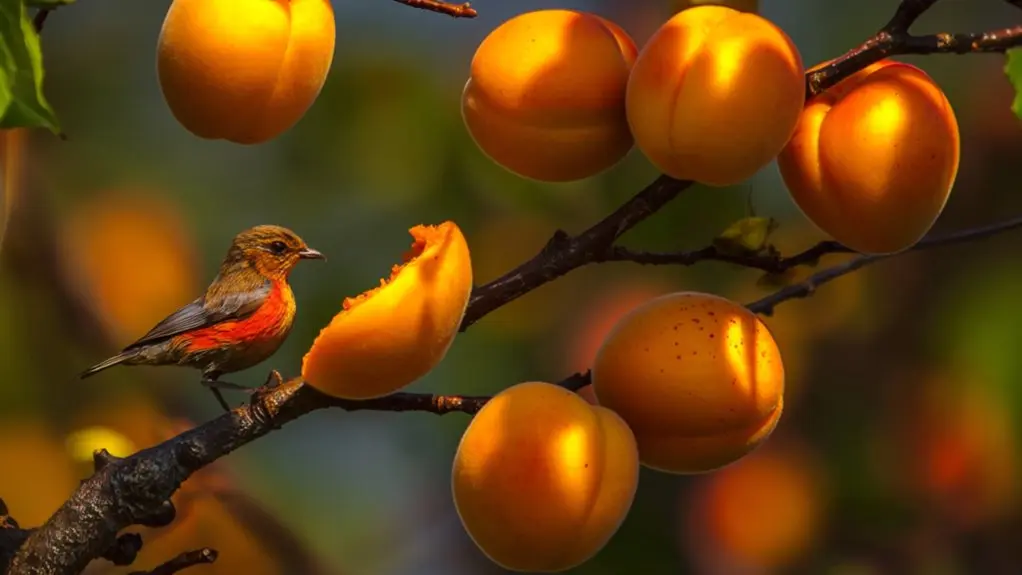
Yes, you can safely feed your bird apricot flesh, but you must always remove the pits first. The pits contain toxic cyanide compounds, so they’re a big no-no.
Offer apricots in small, washed, and sliced portions to prevent choking. Keep an eye on your bird’s reaction closely when you introduce apricots.
Avoid overfeeding to limit sugar intake and potential health issues. It’s really important to recognize signs of poisoning like difficulty breathing or weakness so you can get prompt care.
Understanding proper preparation and knowing alternatives will help keep your bird’s diet both safe and nutritious. Just a little care goes a long way!
Are Apricots Safe for Birds?
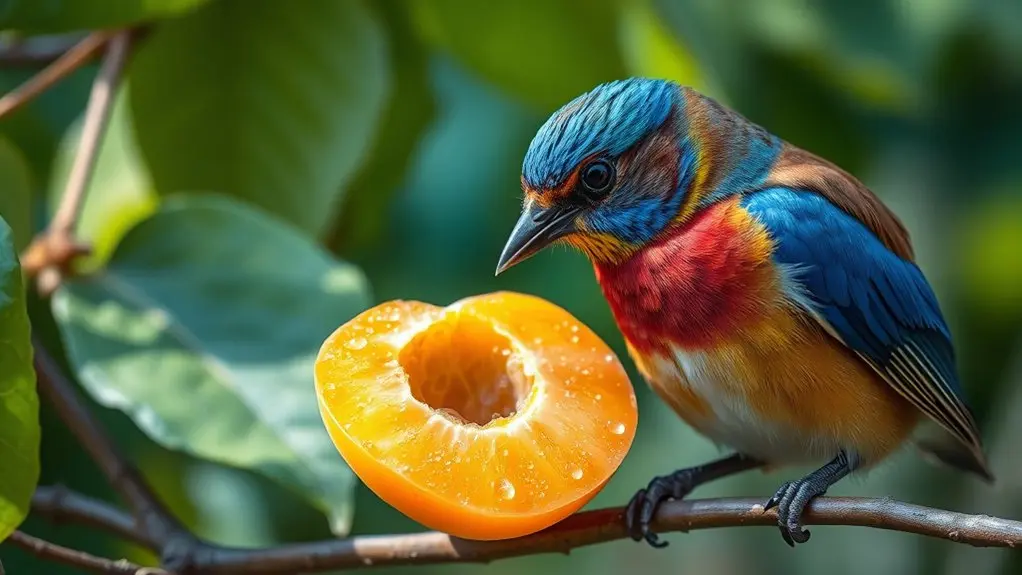
Although apricots can be a healthy treat for birds, you must always remove the seeds or pits before feeding them. These contain cyanide compounds that are toxic to birds. So, never offer the seeds.
Always remove apricot seeds before feeding birds, as they contain toxic cyanide compounds.
The flesh of apricots provides essential nutrients, including vitamins A and C. These vitamins help boost immune function and overall avian health.
Before offering apricots, wash them thoroughly to get rid of any pesticides or contaminants. This keeps your bird safe from potential health risks.
Serve the fruit in small, manageable pieces like slices or chunks. This helps minimize choking hazards and makes it easier for your bird to eat.
Avoid dried apricots with added sugars or preservatives. Those additives can be harmful to birds.
How to Prepare Apricots for Birds (Remove Pits!)
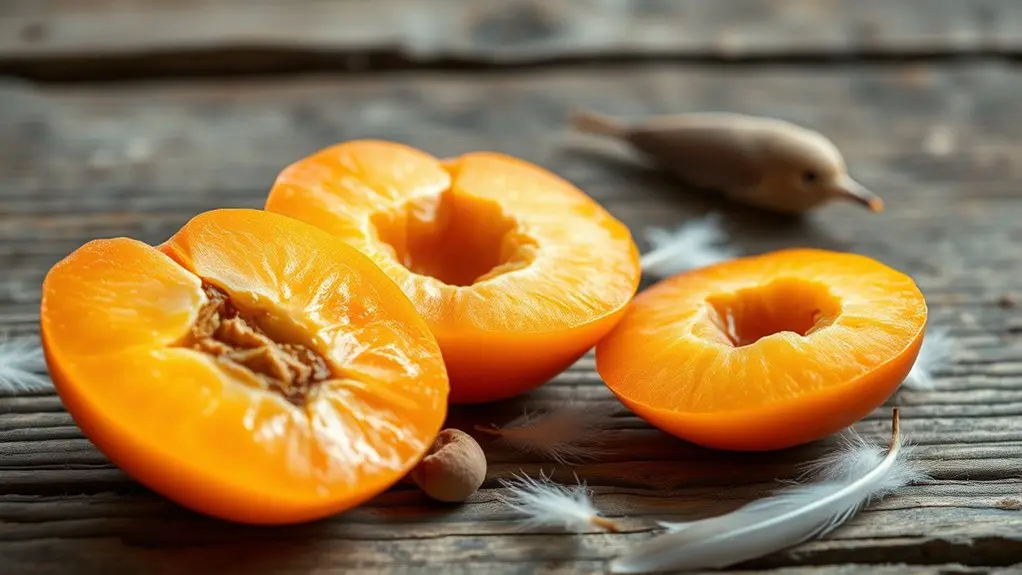
When preparing apricots for your birds, you must first remove the pits, as they contain cyanide compounds that pose serious health risks. Thoroughly rinse the apricots to eliminate pesticides and contaminants before cutting.
Always select fresh, undamaged fruit, avoiding overly ripe or spoiled apricots to reduce the risk of bacterial contamination.
Slice the apricots into small, manageable pieces to make it easier and safer for your birds to eat. This also helps prevent choking hazards.
You can make things more fun for your bird by hiding these pieces in foraging toys or scattering them on the cage floor.
Doing this encourages natural foraging behavior and keeps your bird entertained.
How Much Apricot Can You Feed Your Bird?
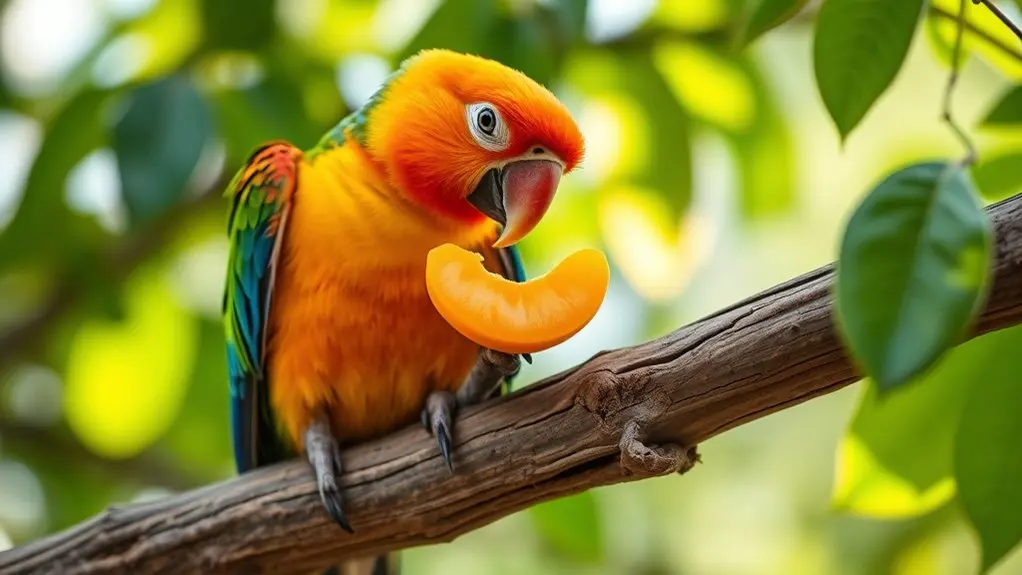
After properly removing pits and preparing apricots, the next consideration is how much fruit you should offer your bird. Apricots contain natural sugars, so you should feed them only as an occasional treat to avoid health issues.
For small birds, provide one to two bite-sized pieces or a thin slice per serving. Larger birds may have slightly more, but keep portions limited to prevent digestive upset or weight gain caused by the fruit’s sugar and water content.
Always wash the apricot thoroughly before feeding to guarantee cleanliness.
How to Introduce Apricots Gradually to Birds
To safely introduce apricots to your bird, start with small, manageable pieces. This way, you can keep an eye on how your bird reacts. Try offering just a tiny portion, like a small slice or a few grated bits. It lowers the risk of choking and helps you see if your bird likes it.
Watch your bird closely for 24 hours after the first taste. This helps you spot any allergic reactions or tummy troubles early on.
At first, give apricots only once or twice a week. This keeps the sugar intake from getting too high.
If your bird seems interested and doesn’t have any problems, you can slowly increase the amount. Just remember, apricots should stay an occasional treat, not a regular part of the diet.
Taking it slow like this makes sure apricots are introduced safely and keeps your bird healthy.
Signs of Apricot Poisoning in Birds
You should watch for symptoms like difficulty breathing, weakness, and drooping wings—these are signs that your bird might be suffering from apricot poisoning.
The toxic cyanogenic compounds found in apricot pits can cause sudden paralysis and respiratory distress.
Symptoms To Watch
Although apricots are generally safe in small amounts, you should closely monitor your bird for specific symptoms if it consumes any part of the fruit, particularly the seeds or pits.
Watch for vomiting, diarrhea, lethargy, and loss of appetite as early indicators of distress.
Abnormal behaviors such as tremors or difficulty breathing may also occur, signaling a more serious reaction.
You might notice a rapid heart rate or weakness, which require immediate attention.
Unusual vocalizations and signs of digestive upset can further indicate toxicity.
If you observe any of these symptoms after apricot ingestion, seek prompt veterinary care.
Early detection and treatment are vital to prevent severe complications and guarantee your bird’s safety.
Toxic Seed Effects
Watching for general symptoms after apricot ingestion is important, but special attention must be given to the effects caused by the fruit’s seeds. Apricot seeds contain amygdalin, which releases cyanide when digested. This causes rapid toxicity in birds.
Even small amounts can induce severe symptoms within minutes to hours. You might notice difficulty breathing, weakness, drooping wings, vomiting, diarrhea, or lethargy. Sudden death can occur if untreated.
| Symptom | Onset Time | Severity |
|---|---|---|
| Difficulty Breathing | Minutes to Hours | High |
| Vomiting/Diarrhea | Minutes to Hours | Moderate |
| Weakness/Drooping Wings | Minutes to Hours | High |
If you see these signs, cyanide poisoning from apricot seeds is likely. Getting urgent veterinary care is critical.
Immediate Response Actions
How should you respond immediately if you suspect apricot poisoning in a bird? First, observe for signs such as vomiting, diarrhea, weakness, difficulty breathing, or neurological symptoms like tremors and uncoordinated movements. A sudden drop in activity or lethargy also signals distress.
Check for pale or bluish coloration of the comb or wattles, which can mean the bird isn’t getting enough oxygen. If you notice any of these symptoms, promptly seek veterinary care.
Time is really critical here, especially if the bird is having trouble breathing or looks very weak.
Avoid giving any treatments on your own without professional advice. Early veterinary help can stop serious problems caused by toxins in apricot pits or seeds.
Acting quickly and wisely can make all the difference for your bird’s health and chances of recovery.
Safe Fruit Alternatives to Apricots for Birds
You can safely swap out apricots for some tasty, nutrient-rich berries like blueberries, blackberries, and raspberries. These little fruits are packed with antioxidants and essential vitamins that your bird will love.
If you’re looking for something a bit different, tropical fruits like various melons are a great choice too. They’re hydrating and have low acidity, which makes them gentle on your bird’s tummy.
Just a quick tip—always make sure to remove any seeds and cores from fruits like apples and pears. Those parts can be toxic, so it’s best to keep your feathered friend safe while still giving them a balanced, healthy diet.
Nutrient-Rich Berry Options
Why should you consider berries as safe fruit alternatives to apricots for birds? Berries like blueberries, blackberries, and raspberries offer antioxidants, vitamins, and fiber without harmful pits. That makes them ideal for avian diets. Their high water content also helps keep birds hydrated.
Plus, the small seeds in some berries can support digestion, which is a nice bonus.
| Berry | Nutrients | Bird Safety Notes |
|---|---|---|
| Blueberry | Antioxidants, Vitamin C | Safe whole, no harmful pits |
| Blackberry | Fiber, Vitamin K | Small seeds aid digestion |
| Raspberry | Vitamins B, E | Seed consumption safe |
| Strawberry | Vitamin C, manganese | Seeds safe, serve ripe and washed |
| Cranberry | Antioxidants, fiber | Serve fresh, moderate portions |
Just remember to serve fresh, ripe, and washed berries in moderation for balanced bird nutrition.
Safe Tropical Fruit Choices
Beyond berries, tropical fruits such as mango, papaya, and pineapple offer valuable nutritional benefits for birds as safe alternatives to apricots. These fruits provide essential vitamins and enzymes that support avian health when prepared properly.
You should always wash and peel these fruits if needed, cutting them into small, manageable pieces for your bird.
Consider these safe tropical fruit options:
- Mango: Rich in vitamin A; remove pit and skin before serving small chunks.
- Papaya: Contains digestive enzymes and vitamin C; serve in bite-sized pieces.
- Pineapple: Offers bromelain and vitamin C; provide in moderation due to acidity and sugar.
All fruits should be thoroughly washed and peeled if necessary to avoid contaminants.
Also, portion control is key. Prevent overfeeding by limiting fruit quantity to appropriate sizes.
This approach guarantees your bird benefits nutritionally without risk. It’s a simple way to keep your feathered friend happy and healthy!
Using Apricots to Enrich Your Bird’s Diet
How can apricots contribute to your bird’s nutritional and behavioral enrichment? Apricots provide essential vitamins A and C, which support immune function and overall health. To guarantee safety, always remove pits before serving, as they contain toxic cyanide compounds.
Use apricots as treats rather than staples because of their high natural sugar content. This helps prevent obesity risks. You can enhance behavioral enrichment by offering apricots in small pieces, halves, or threaded on foraging toys. This promotes your bird’s natural foraging instincts.
| Nutritional Benefit | Behavioral Use | Safety Note |
|---|---|---|
| Vitamins A & C | Small pieces or halves | Remove pits to avoid toxicity |
| Immune support | Foraging toy threading | Serve ripe and fresh only |
| Moderate sugar treat | Encourages natural behavior | Limit quantity to prevent obesity |
Frequently Asked Questions
Can Apricot Leaves or Stems Harm Birds?
Yes, apricot leaves or stems can harm birds because they contain cyanogenic compounds. If your bird ingests these parts, it may experience digestive upset or severe toxicity.
Are Dried Apricots Safe for Birds to Eat?
Yes, you can safely offer birds dried apricots if they’re natural and unsweetened. Always remove the pits and avoid any preservatives. It’s a good idea to soak them first to soften them up.
Serve dried apricots sparingly though, because they have a high sugar content. So, they’re really best as occasional treats rather than a regular part of their diet. Just a little goes a long way!
Can Baby Birds Eat Apricots?
You can think of apricots as tiny nutritional gems for baby birds, but only if you remove pits and seeds.
Offer small pieces and introduce them gradually to avoid toxicity or digestive upset. This way, you help ensure safe, healthy growth.
How Often Can Birds Have Apricot Treats Weekly?
You should offer apricot treats to birds 2-3 times weekly, making sure to keep it moderate. This helps avoid giving them too much sugar, which isn’t good for their health.
Always remove the pits and seeds before feeding apricots. Those parts can be toxic to birds, so it’s really important to be careful.
Keep an eye on your bird after giving apricot treats. Watch out for any digestive issues or allergic reactions, just to be safe.
Do Apricots Affect Different Bird Species Differently?
You’ll find that over 70% of small birds like finches react more sensitively to apricot acidity than larger species. So, you must adjust feeding amounts based on species-specific digestive tolerance to avoid health issues effectively.
It’s all about knowing your bird’s limits. Smaller birds tend to be more delicate when it comes to what they eat, especially acidic fruits like apricots. Larger birds usually handle it better, but it’s still good to keep an eye on them.
Conclusion
You can safely feed apricots to your bird, but always remove the pits first. They contain harmful cyanide compounds that are dangerous for birds. Studies show even small amounts of cyanide can be toxic, so it’s really important to be careful.
Introduce apricots gradually and offer only a small portion, about 5% of their diet. This helps avoid any digestive issues. Keep an eye on your bird for signs of poisoning like lethargy or difficulty breathing.
Doing this will help your bird stay healthy while enjoying this nutritious fruit. It’s a great treat when given properly!