
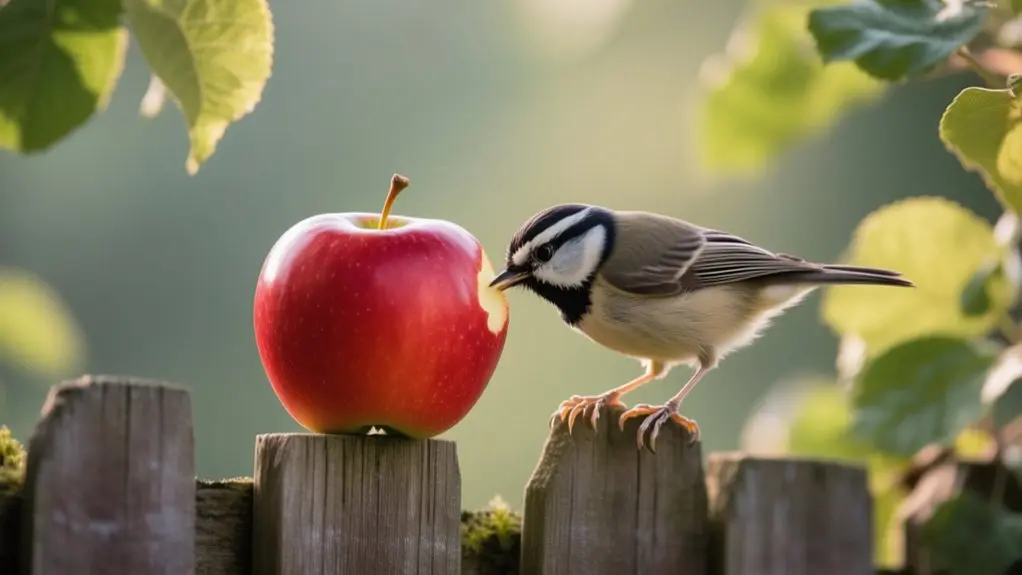
Yes, you can safely feed apples to birds if you prepare them properly. Always wash the fruit thoroughly and remove all seeds to prevent cyanide exposure. Offer apple flesh and skin in manageable chunks to provide nutrients like vitamins and fiber.
Avoid giving seeds or cores, and monitor the feeding area to guarantee safety. Taking these steps supports healthy, enjoyable bird feeding.
Keep exploring to understand the best practices and benefits of feeding apples to wild birds. It’s a great way to help them stay healthy and happy!
Are Apples Safe for Birds to Eat?
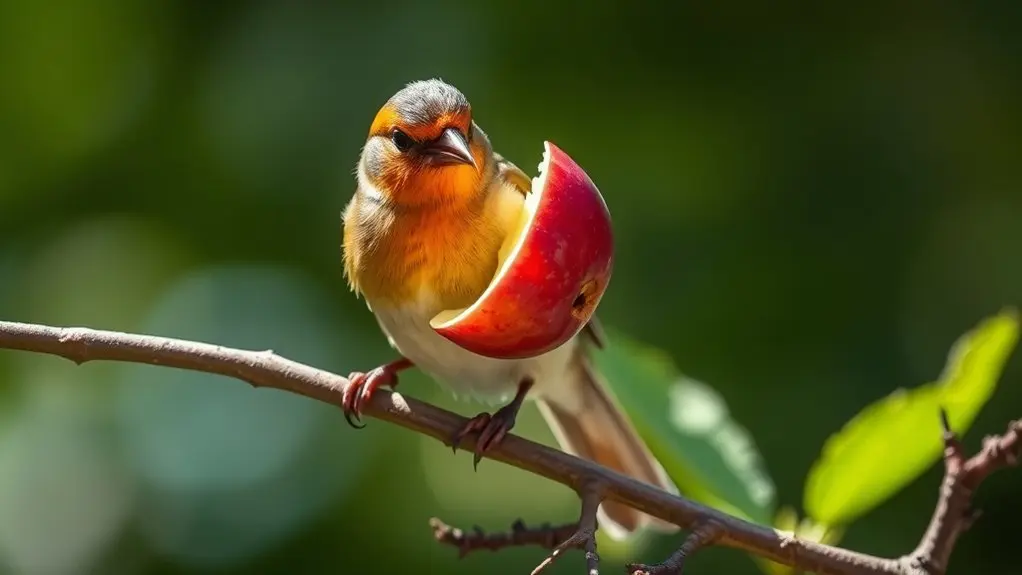
How safe are apples for birds to eat? Apples are generally safe when you wash them thoroughly and prepare them properly. The flesh and skin provide valuable nutrients like vitamins, fiber, and hydration, making them a healthy treat for your feathered friends.
However, you should be cautious with apple seeds, as they contain small amounts of cyanogenic compounds that could be harmful if ingested in large quantities or chewed. While the risk is low from accidental seed consumption, it’s wise to remove seeds before feeding apples to birds to avoid any potential toxicity.
By offering only the flesh and skin, you guarantee that your birds enjoy a nutritious, safe snack without exposure to harmful substances found in the seeds.
Why You Should Remove Apple Seeds Before Feeding
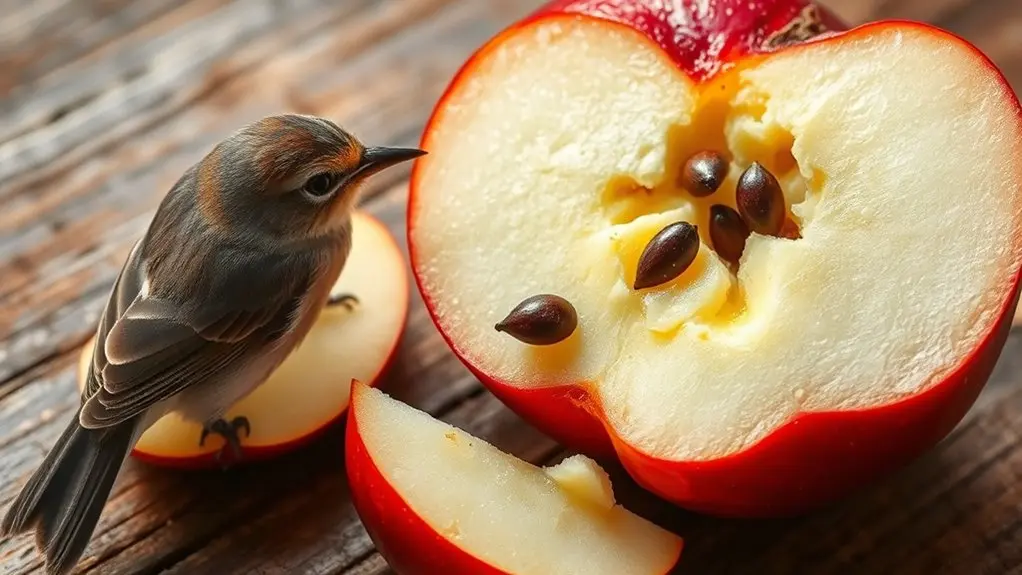
You should remove apple seeds before feeding birds because they contain compounds that can release toxic cyanide when crushed or chewed.
Now, swallowing whole seeds isn’t as risky, but once those seeds get broken, they can become a real health hazard.
So, by just taking this simple step, you’re making sure the birds stay safe and avoid any potential poisoning.
It’s a small effort that goes a long way in protecting our feathered friends!
Toxicity Of Apple Seeds
Several apple seeds contain cyanogenic compounds that can release hydrogen cyanide when broken or chewed. This toxic substance poses a risk primarily if the seeds are crushed or damaged before ingestion.
If swallowed whole, the seeds’ tough outer shell prevents cyanide release during digestion, making poisoning unlikely.
However, you should regularly remove apple seeds before feeding apples to birds to minimize any potential danger from accidentally ingested crushed seeds.
While the cyanide amount produced by a few seeds is generally too low to cause harm, exercising caution is important. Removing seeds ensures you’re not exposing birds to unnecessary risk, maintaining their safety while allowing them to enjoy apples as a nutritious treat.
Safe Feeding Practices
Understanding the potential dangers of apple seeds highlights why removing them before offering apples to birds is a wise practice. Apple seeds contain cyanogenic compounds that release hydrogen cyanide when chewed or crushed, posing a poisoning risk.
Although swallowing whole seeds is less harmful, birds might accidentally chew them, increasing toxin exposure.
To guarantee safe feeding, follow these steps:
- Always remove apple seeds before feeding birds.
- Cut apples into small, manageable pieces to prevent seed chewing.
- Regularly inspect fruit for any remaining seeds.
- Offer a variety of bird-safe fruits to reduce reliance on apples alone.
Are Apple Seeds Dangerous for Birds?
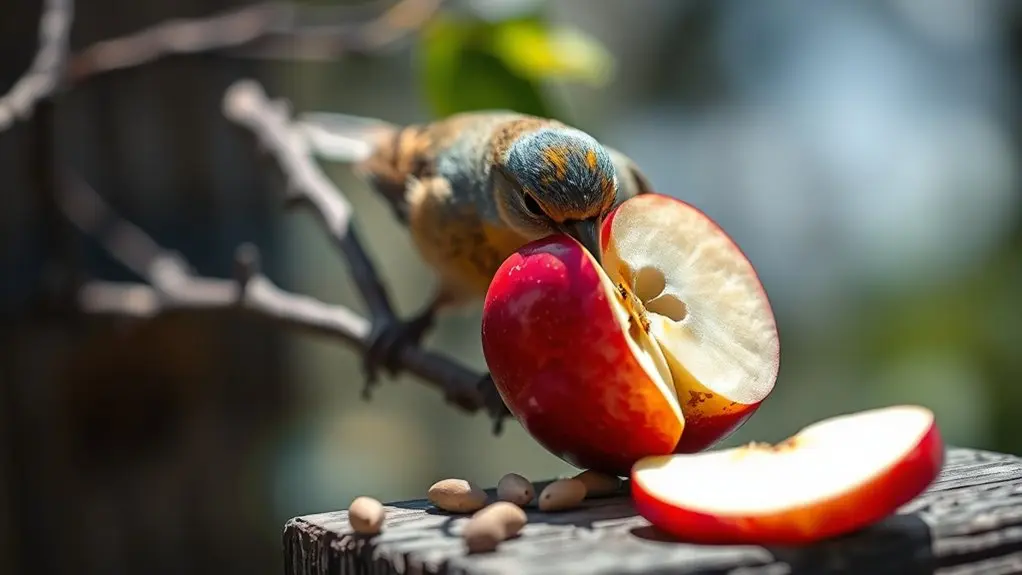
You should know that apple seeds contain cyanogenic compounds, which can release hydrogen cyanide when they’re crushed or chewed. But don’t worry too much—if a bird swallows whole seeds, it usually isn’t harmful.
Still, it’s a smart idea to remove the seeds just to be on the safe side. Taking this simple step can help protect birds from any potential exposure to cyanide.
Cyanide Risk In Seeds
One key concern when feeding apples to birds is the presence of amygdalin in the seeds. This compound can release cyanide when the seeds are chewed or crushed. The risk really depends on whether the seeds get broken down.
Here’s the deal: cyanide only releases if the seeds are chewed or crushed — not if they’re swallowed whole. Birds are at higher risk if they chew on multiple seeds often. But intact seeds usually pose minimal danger because they pass through the digestive system unbroken.
To keep things safe, just remove the seeds before feeding apples to your birds. It’s a simple and effective way to avoid any problems.
Seed Removal Importance
Although apple seeds contain compounds that can release cyanide when crushed, removing them before feeding apples to birds considerably reduces the risk of poisoning.
The cyanogenic compounds inside the seeds release hydrogen cyanide primarily when the seeds are chewed or broken, so swallowing whole seeds is generally less harmful.
To protect your birds, it’s best to regularly remove all apple seeds before offering fruit. Chewed or damaged seeds pose a higher risk because they can release toxic cyanide in sufficient amounts to be dangerous.
If you notice any signs of poisoning in your bird after it has consumed apple seeds, contact an avian veterinarian immediately.
Taking these precautions ensures you can safely provide apples as a nutritious treat without risking your bird’s health.
Is Apple Skin and Flesh Safe for Birds?
When offering apples to birds, it’s important to make sure the skin and flesh are thoroughly washed to get rid of any pesticides or dirt. Both the skin and flesh are usually safe and nutritious for birds when they’re clean.
The skin gives fiber and nutrients, while the flesh provides sugars, water, and vitamins that are important for their health.
Just be sure these parts don’t have any chemical residues or damage before feeding them.
Here are some key points to remember:
- Wash apples thoroughly before feeding.
- The skin is beneficial if it’s pesticide-free.
- Flesh supplies hydration and energy.
- Avoid feeding seeds and cores because they can be toxic.
How to Prepare Apples for Wild Birds
Ensuring apples are safe and appealing to wild birds involves careful preparation beyond just washing. First, rinse the apples thoroughly to remove any pesticides or dirt that could harm birds.
Next, core the apple to remove all seeds, as these contain cyanide compounds that pose health risks.
Remove all seeds by coring the apple to prevent exposure to harmful cyanide compounds.
After coring, slice or chop the apple into small, manageable pieces to make feeding easier and reduce browning. Leave the skin on, as it provides extra texture and nutrients, enhancing the fruit’s attractiveness.
By following these steps, you ensure the apples you offer are both safe and inviting. This supports wild birds’ health and encourages them to enjoy this nutritious treat.
Proper preparation is key to a positive feeding experience.
Which Bird Species Eat Apples and When?
If you want to attract birds with apples, it helps to know which species are most likely to eat them and during which seasons. Thrushes, especially Blackbirds, are keen apple eaters in gardens, mainly during winter.
Robins and other thrushes like Fieldfares and Redwings also seek fruit in colder months.
Smaller birds such as Blue Tits and Long-tailed Tits may visit apple piles but prefer seeds and nuts instead.
Keep in mind, Blackbirds often defend apple sources but mightn’t consume the fruit directly.
Here are key points to remember:
- Thrushes (Blackbirds, Fieldfares, Redwings) favor apples in winter.
- Robins enjoy apples primarily in cold seasons.
- Blue Tits and Long-tailed Tits visit but rarely eat apples.
- Apple ripeness and accessibility influence bird interest.
Best Tips for Feeding Apples to Wild Birds
Knowing which bird species prefer apples and when they feed on them helps you create effective feeding strategies. Place chopped or sliced apples on elevated feeders or branches to improve visibility and accessibility.
Always remove apple seeds before offering, as they contain cyanide that can harm birds if chewed.
Use separate piles or containers for apples and other foods to reduce competition and encourage more birds to feed. Regularly replace any rotting or moldy apple pieces to maintain freshness and promote healthy feeding habits.
Additionally, hiding apple chunks under shrubs or in clear ground areas can minimize theft and attract different bird species.
Frequently Asked Questions
Can Birds Eat Cooked or Baked Apples Safely?
Yes, you can safely feed birds cooked or baked apples. Just make sure they’re plain, without added sugars or spices.
Cut them into small pieces and let them cool completely. This helps avoid any harm or choking risks.
It’s an easy treat that birds usually enjoy! Just keep it simple and safe for your feathered friends.
Do Birds Prefer Apples Over Other Fruits?
You’ll find that some birds prefer apples over other fruits, especially sweeter varieties, during winter. However, their preference depends on availability. They often choose apples when other food sources are scarce or less accessible to them.
It really comes down to what’s around. If other fruits are hard to find, apples become a go-to snack for many birds. So, it’s not that they always prefer apples, but they make a great option when options are limited.
How Often Can Birds Eat Apples Without Health Issues?
You can safely feed birds apples a few times a week, just make sure to remove the seeds first.
Try not to give them apples every day because it could throw off their nutrition. Keep an eye on how they react to the fruit.
Also, be sure to take away any uneaten apple quickly to keep things fresh and healthy for the birds.
Can Apple Allergies Affect Certain Bird Species?
Yes, apple allergies can rarely affect certain bird species, but it’s pretty uncommon. You should watch for signs like vomiting or lethargy.
This is especially important if you introduce apples suddenly or in large amounts. Keeping an eye on your bird helps keep them safe.
What Signs Show a Bird Has Eaten Too Much Apple?
If your bird’s energy flickers like a fading candle, or its droppings look unusual, it’s eaten too much apple. Watch for weakness, bloating, or disorientation. These are signs signaling digestive upset or possible poisoning from seeds.
Keep an eye on your feathered friend, and if you notice these symptoms, it might be time to cut back on the apple treats. Better safe than sorry when it comes to their health!
Conclusion
So, yes, birds can eat apples. Just don’t hand them the seeds like a risky gift. It’s ironic how something as harmless as a crunchy apple can hide tiny dangers in its core.
Peel or slice the fruit carefully, and you’re offering a safe treat rather than a potential hazard. With a little caution, you’ll watch birds enthusiastically enjoy their apple snack. It’s proof that even nature’s simplest gifts need a thoughtful touch.