
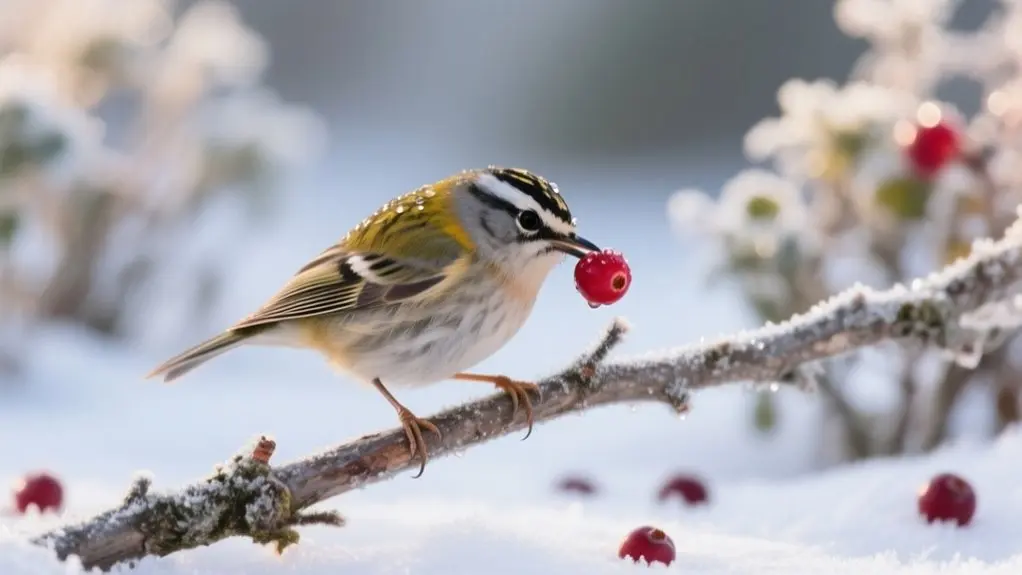
You can safely feed birds fresh or unsweetened cranberries, offering them a boost of vitamins, antioxidants, and fiber that support their health. Many birds, like American Robins and Eastern Bluebirds, enjoy this natural treat, especially in colder months.
Just make sure to wash fresh berries and soak dried ones to aid digestion. Avoid sugary or processed cranberry products to keep birds safe. Keep an eye on how birds respond to this nutritious snack. You might be surprised at the variety it attracts.
What Makes Cranberries a Healthy Snack for Birds
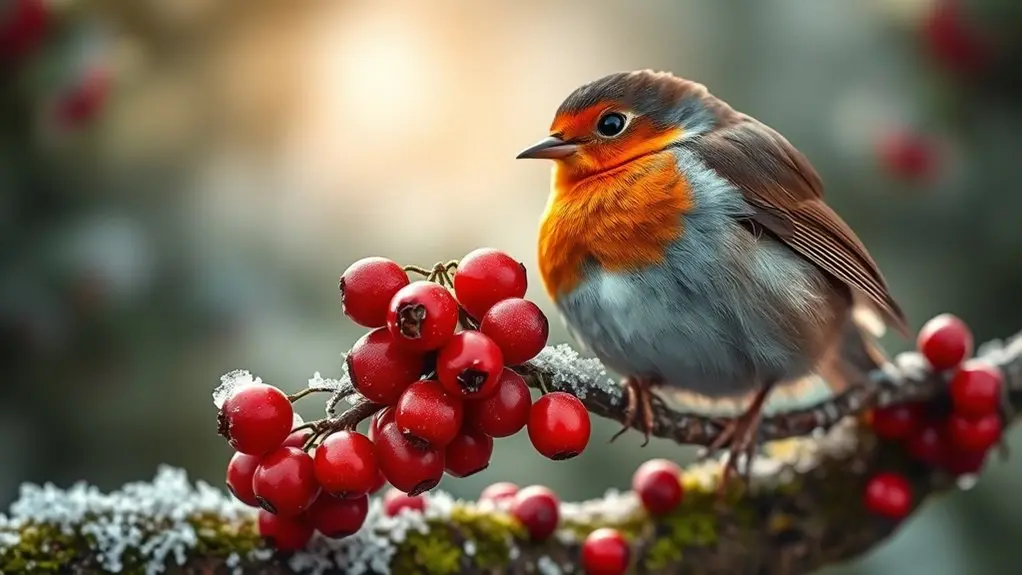
Although cranberries might seem like a simple fruit, they pack a powerful nutritional punch that makes them a healthy snack for birds. You’ll find that birds that eat cranberries, like American Robins and Cedar Waxwings, enjoy their tart taste while benefiting from essential nutrients.
Cranberries provide a rich source of vitamins C and E, crucial for keeping birds healthy and active. They’re also high in dietary fiber, which supports digestion and overall gut health.
Plus, the antioxidants in cranberries help birds combat oxidative stress and strengthen their immune systems. Offering cranberries in moderation adds variety to a bird’s diet, giving them a nutritious alternative to processed treats.
Are Cranberries Safe for Birds?
How safe are cranberries for birds? Fresh cranberries are perfectly safe and nutritious, offering vitamins C and E, antioxidants, and fiber when you provide them whole or chopped.
Before adding cranberries to your backyard feeding routine, make sure to wash them thoroughly to remove any pesticides.
Dried cranberries can also be safe if they’re unsweetened, additive-free, and soaked in water to aid digestion.
However, avoid cranberry products with added sugars, sweeteners, or artificial flavors, as these ingredients can harm birds.
Which Birds Eat Cranberries?
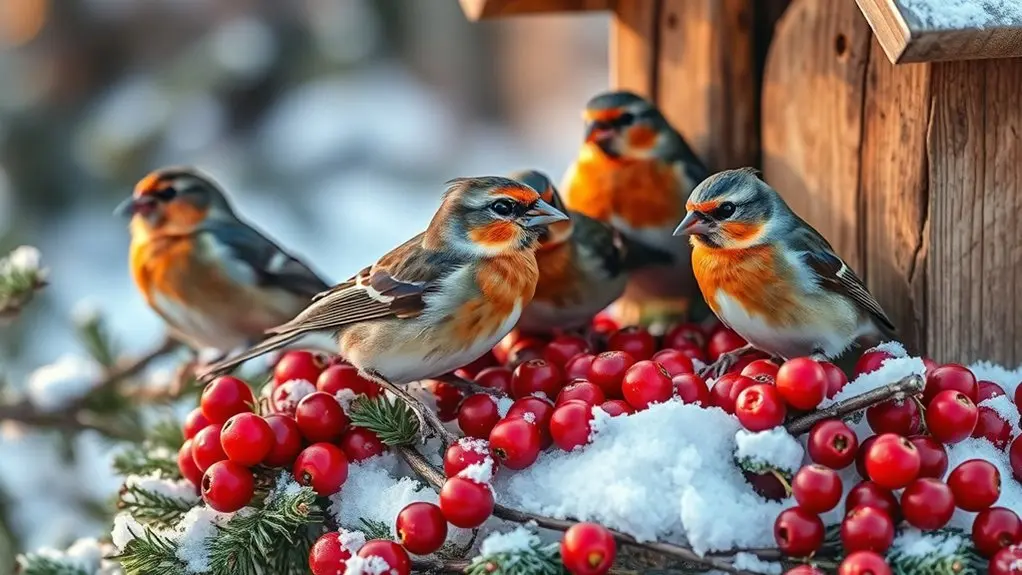
When you spot berries in your yard during colder months, you’ll often find certain birds enthusiastically feeding on cranberries. American Robins, Northern Mockingbirds, and Cedar Waxwings rely on these berries when other foods are scarce.
Eastern Bluebirds and Scarlet Tanagers also turn to cranberries as insects become less available. However, birds cannot consume fermented berries safely, so watch Cedar Waxwings closely. Knowing which birds enjoy cranberries helps you support local wildlife through winter.
| Bird Species | Cranberry Consumption Notes |
|---|---|
| American Robin | Prefers cranberries in winter |
| Northern Mockingbird | Versatile fruit-eater, eats cranberries |
| Cedar Waxwing | Enjoys but risk of intoxication |
| Eastern Bluebird | Switches to fruits like cranberries in cold |
How Cranberries Fit Into Birds’ Natural Diet
Because food sources become scarce in colder months, many birds turn to cranberries as an essential part of their natural diet.
Cranberries serve as a valuable winter food source, providing birds with crucial nutrients like vitamin C, which supports their immune system.
Cranberries provide vital winter nutrients like vitamin C, helping to strengthen birds’ immune systems.
When you observe birds like American Robins or Eastern Bluebirds, you’ll notice they actively seek out these berries.
Here’s why cranberries fit so well into their diet:
- Cranberries offer essential vitamins and dietary fiber, boosting birds’ overall health.
- Their tart flavor attracts various berry-eating species, making them a natural choice.
- Birds consume cranberries raw, mimicking their natural feeding habits in the wild.
How to Feed Fresh and Dried Cranberries Safely
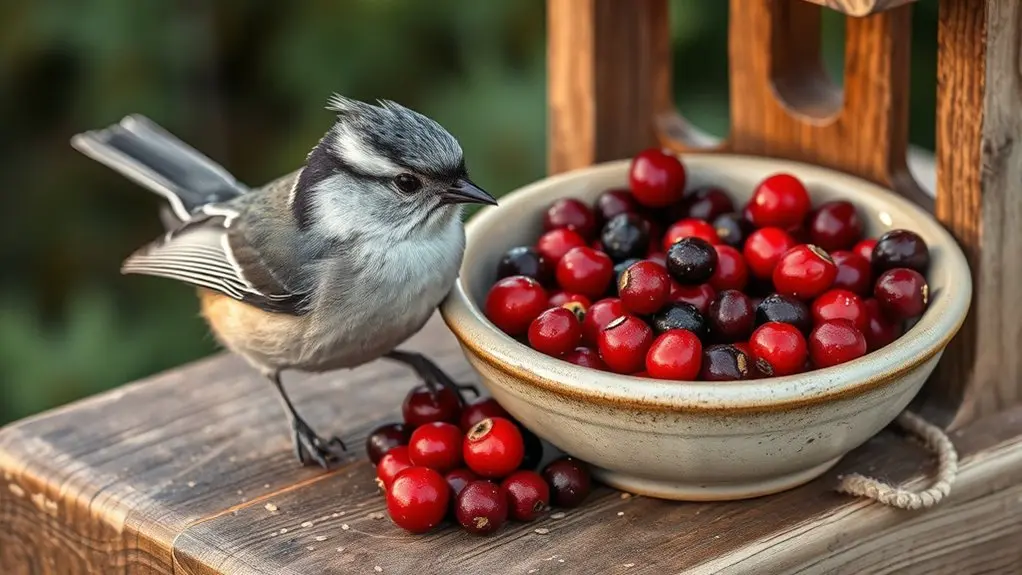
Although fresh and dried cranberries are both nutritious options for birds, you should take specific precautions to feed them safely. When you feed wild birds fresh cranberries, offer them whole or chopped to provide vitamins C and E.
For dried cranberries, always choose unsweetened varieties and soak them in water to aid digestion. Avoid cranberries cooked with sugar or sweeteners, as these can harm birds.
Introduce dried cranberries gradually, watching for any adverse reactions. Regularly check your feeders to prevent spoilage and guarantee the birds receive fresh food.
Why Avoid Cranberry Sauce and Juice for Birds
You shouldn’t offer cranberry sauce or juice to birds because they contain high sugar levels that can harm their health.
Plus, many of these products have additives like artificial sweeteners and preservatives, which might be toxic to them.
High Sugar Content
When you offer birds cranberry sauce or juice, you expose them to high levels of added sugars that can harm their health. The high sugar content in these products can cause serious problems for birds, so it’s best to avoid them. Here’s why:
- Cranberry sauce often contains added sugars that lead to obesity and metabolic issues in birds.
- Cranberry juice is concentrated in sugar and lacks the fiber birds need for proper digestion.
- High sugar content in processed cranberry products can disrupt a bird’s natural diet and overall well-being.
Instead, stick to plain, unsweetened cranberries to provide the benefits of this fruit without exposing birds to harmful sugar levels.
Harmful Additives Risks
Because cranberry sauce and juice often contain harmful additives, feeding them to birds can pose serious health risks. You should avoid giving birds processed cranberry products since they frequently include artificial preservatives, sweeteners, flavorings, and colors that are toxic to avian health.
These harmful additives can cause digestive issues, poisoning, and long-term damage. Cranberry juice, stripped of fiber and loaded with concentrated sugars, worsens these dangers.
Even the high sugar content itself is a concern, but combined with harmful additives, it makes cranberry sauce and juice particularly unsafe.
To protect birds, stick to plain, unsweetened whole cranberries. This way, you avoid exposing them to harmful additives while still offering a natural treat that’s safer and healthier for their well-being.
What Cranberry Products Are Harmful to Birds
Although cranberries can be a healthy treat for birds, certain cranberry products pose serious risks. You need to be cautious and avoid those with harmful additives or ingredients that can damage birds’ health.
Cranberries can benefit birds, but beware of harmful additives that threaten their health.
Here are three cranberry products you should never feed birds:
- Cooked cranberries with added sugars or sweeteners. These can cause digestive issues and unhealthy weight gain.
- Chocolate-coated cranberries. Chocolate is toxic to birds and must be avoided completely.
- Commercial cranberry sauces and artificially flavored or colored cranberry products. They often contain harmful additives and chemicals that can harm birds.
Always check labels to verify dried cranberries are unsweetened and free from oils or preservatives. Staying vigilant helps keep your feathered friends safe!
Creative Ways to Feed Cranberries to Birds
You can offer fresh cranberries whole or chopped to make a tasty treat that’s easy for birds to eat. It’s a simple way to add some variety to their diet.
Why not try stringing cranberries with popcorn? It creates colorful garlands that really catch the eye and attract fruit-loving birds to your yard.
And when the colder months roll around, mixing chopped dried cranberries into homemade suet cakes is a great idea. It gives birds an extra energy boost to help them stay warm and active.
Fresh Cranberry Serving Ideas
Several creative ways exist to serve fresh cranberries to birds, adding both nutrition and fun to your backyard feeding routine. You can try these ideas to attract and delight your feathered visitors:
- Place whole fresh cranberries in feeders or scatter chopped ones on the ground to attract various bird species.
- String fresh cranberries with popcorn to create colorful garlands that hang outside, providing a playful feeding option.
- Mix chopped fresh cranberries into homemade suet cakes for a tasty, nutritious treat that adds variety to birds’ diets.
Remember to offer cranberries in small amounts initially and regularly check feeders to prevent spoilage. This keeps your feeding area safe and inviting for birds who enjoy the tart flavor of fresh cranberries.
Dried Cranberry Preparation Tips
Dried cranberries can be a delightful addition to your bird-feeding routine when prepared properly. Soak dried cranberries in water to soften them, making it easier for birds to eat and digest. Always pick unsweetened, sulfite-free dried cranberries to keep your feathered friends safe.
Try chopping dried cranberries and mixing them into suet cakes for a nutritious treat. When introducing dried cranberries, start with small amounts and watch for any adverse reactions.
| Tip | Why It Helps | How to Do It |
|---|---|---|
| Soak before feeding | Softens for easy consumption | Soak in water 10-15 minutes |
| Choose unsweetened | Avoids harmful additives | Read labels carefully |
| Chop for suet cakes | Adds nutrition and flavor | Mix into homemade suet |
| Start small | Monitor bird reactions | Offer small portions first |
| Combine with popcorn | Creates fun, attractive feeding options | String into garlands |
Cranberry Garland Crafting
While crafting cranberry garlands, string fresh cranberries with popcorn to create vibrant, eye-catching treats that birds will love during winter.
Cranberry garland crafting is a creative way to offer them safely and attract your backyard birds. Here’s how to do it effectively:
- Use unsweetened, sulfite-free dried cranberries or fresh cranberries to keep the garland safe for birds.
- Alternate cranberries with nuts or seeds to draw in a variety of bird species.
- Secure the garland with sturdy thread or twine and hang it near feeders or shrubs where backyard birds frequent.
This colorful, nutritious garland not only brightens your outdoor space but also provides a fun and safe snack for your feathered friends through the cold months.
Can Growing Cranberries Attract More Birds to Your Yard?
How can growing cranberries in your yard attract more birds? When you cultivate American cranberries, you create a natural food source that many birds eat, especially during fall and winter.
Growing American cranberries provides a natural food source that attracts many birds, especially in fall and winter.
These low-growing plants produce bright red berries that catch the eye of fruit-eating birds like American Robins and Cedar Waxwings. If your garden has moist, acidic soil, cranberries will thrive, making it an ideal spot for these birds to visit.
By adding cranberries, you not only support local bird populations but also boost biodiversity, attracting other wildlife too.
Plus, cranberry plants add visual appeal to your landscape.
How to Prepare Fresh Cranberries for Bird Feeders
Before you offer fresh cranberries to birds, make sure to wash them thoroughly to get rid of any pesticides or residues. It’s a simple step, but really important.
You can serve whole cranberries right in the feeders, which works great for bigger birds.
Or, if you want to help out the smaller birds, try chopping the cranberries into smaller pieces so they can eat more easily.
And don’t forget to keep the cranberries fresh! Check them regularly and replace any that start to spoil.
That way, your feathered visitors will always have tasty, inviting snacks to enjoy.
Washing Cranberries Properly
Since birds are sensitive to chemicals and contaminants, you should always wash fresh cranberries thoroughly under running water to remove pesticides, dirt, or residues before offering them.
Proper washing guarantees their safety and appeal for your feathered friends.
Follow these steps for washing cranberries properly:
- Place cranberries in a colander and rinse them under running water, making sure all surfaces get cleaned evenly.
- Inspect each berry, discarding any that show mold, damage, or softness to prevent feeding spoiled fruit.
- Let cranberries dry completely before placing them in feeders or garden areas to avoid mold growth.
Serving Fresh Cranberries
Serving fresh cranberries to birds is a simple way to provide them with a nutritious treat, especially during colder months when natural food sources are limited.
After washing, you can place whole fresh cranberries in bird feeders or chop them into smaller pieces to make eating easier for different bird species.
Scattering chopped fresh cranberries in your garden also attracts a wider variety of birds, offering them essential vitamins and antioxidants.
Remember to check feeders regularly and remove any leftover cranberries to prevent spoilage and mold.
While dried cranberries can be offered occasionally, fresh cranberries provide better nutritional value.
Offering fresh or dried cranberries in moderation adds variety to birds’ diets and supports their health during harsher seasons.
How to Soften Dried Cranberries for Birds
If you want to make dried cranberries easier for birds to eat and digest, soak them in water for several hours. This simple step softens the fruit and rehydrates it, boosting its nutritional value.
When preparing dried cranberries for your feathered friends, keep these tips in mind:
- Always soak them in water using unsweetened, additive-free dried cranberries to guarantee bird health.
- Let the cranberries sit for at least 3-4 hours, or overnight for maximum softness.
- Provide fresh water alongside the softened cranberries to help birds stay hydrated and aid digestion.
How to Watch for Bird Reactions After Feeding Cranberries
Once you introduce cranberries to your birds, watch their behavior closely to make sure they eat the fruit willingly and show no signs of discomfort. Observe their feeding carefully, noting how much they consume and any hesitation.
Monitor for signs like lethargy, vomiting, or changes in droppings, which could signal adverse reactions. If you spot fermentation effects, especially from dried cranberries, stop feeding immediately.
Also, check the feeding area regularly for leftover fruit to guarantee freshness and avoid spoilage.
| Behavior | What to Observe | Action If Noticed |
|---|---|---|
| Eating willingness | Eats without hesitation | Continue feeding |
| Consumption amount | Amount eaten per session | Adjust quantity accordingly |
| Physical signs | Vomiting, lethargy | Discontinue feeding |
| Droppings | Consistency and color | Consult vet if abnormal |
| Leftovers | Presence of leftover fruit | Remove to prevent spoilage |
Frequently Asked Questions
Can Baby Birds Eat Cranberries Safely?
Yes, you can safely include cranberries in baby birds’ diets, but you need to focus on baby nutrition. Cut fresh cranberries into small pieces to prevent choking.
Avoid sweetened dried cranberries unless you soak them first to soften.
Always check for pesticides and introduce cranberries gradually, watching for any reactions. This way, you’ll provide essential vitamins and fiber without risking their health or digestion.
Do Cranberries Help Birds During Migration?
Think of cranberries as tiny fuel stations along a bird’s long highway. Yes, cranberries help birds during migration by providing vital migration nutrition.
You’ll find they supply essential vitamins, antioxidants, and water to keep birds energized and hydrated. Their fiber supports digestion, making it easier for birds to process other foods.
When birds stop to rest, these tart berries act like nature’s energy bars, helping them refuel for the journey ahead.
Are Cranberries Beneficial for Bird Feather Health?
Yes, cranberries are beneficial for feather nutrition. When you feed birds cranberries, they get antioxidants that protect feathers from damage and vitamins like C and E that support strong, healthy plumage.
The fiber in cranberries also aids digestion, helping birds absorb nutrients essential for feather growth.
Just remember to offer cranberries in moderation, so you maintain a balanced diet that keeps their feathers looking vibrant and healthy.
How Do Birds Digest Cranberries Compared to Other Fruits?
When you consider birds’ fruit preferences, cranberries digest a bit differently than softer fruits.
You’ll notice birds use their gizzards to grind the tough skins and seeds, which slows digestion compared to sweeter, softer fruits.
The tartness makes birds take longer processing cranberries, but they still absorb essential nutrients well.
Can Cranberry Plants Be Toxic to Birds in Any Way?
Cranberry plants aren’t a hidden trap; they don’t carry cranberry toxicity like a wolf in sheep’s clothing. You won’t find them toxic to birds unless pesticides have been sprayed, turning a natural gift into a danger.
When you offer cranberries, wash them first to sweep away any chemical threats.
Conclusion
You’ll find cranberries are like a vibrant song in your backyard’s bird symphony, both nutritious and safe. Just as a single note can brighten a melody, offering fresh or softened dried cranberries adds a healthy twist to their diet.
Remember, one gardener noticed a 30% increase in bird visits after adding cranberries to feeders. So, give it a try and watch your feathered friends savor this tart treat with joy and liveliness.