
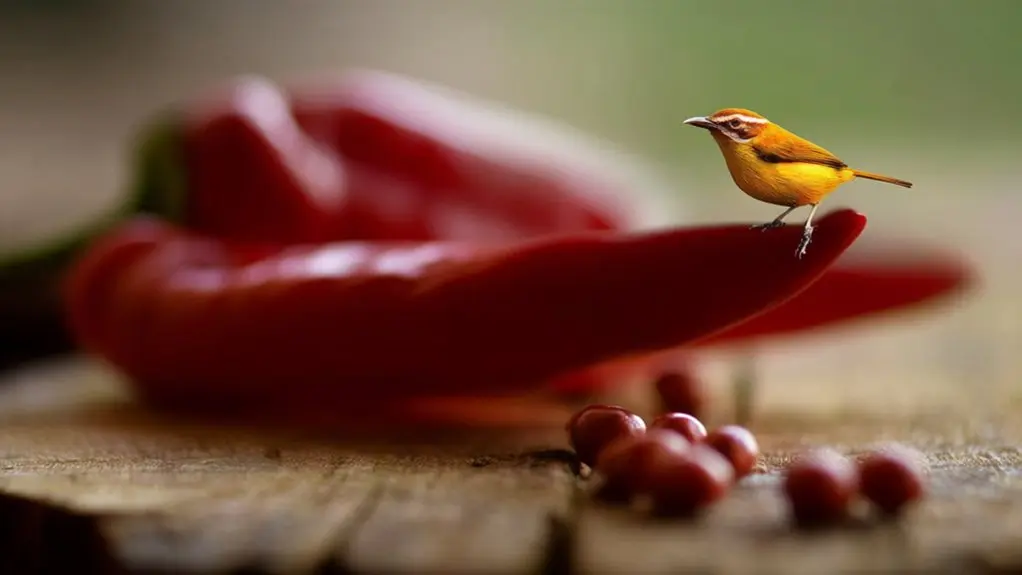
You can safely feed birds chili seeds because their unique biology prevents capsaicin from causing irritation. Birds lack TRPV1 receptors that trigger the burning sensation in mammals. So, they don’t feel the heat like we do.
Species like cardinals and thrushes naturally consume chili fruits without any harm and actually help spread the seeds. Interestingly, squirrels find chili seeds irritating and tend to avoid them, but birds remain totally unaffected.
Just a heads up, handling spicy seeds yourself requires some care to avoid skin irritation. It’s worth exploring the bigger ecological role of these seeds and some management tips to get a better understanding of how they’re used.
Why Birds Can Safely Eat Chilli Seeds
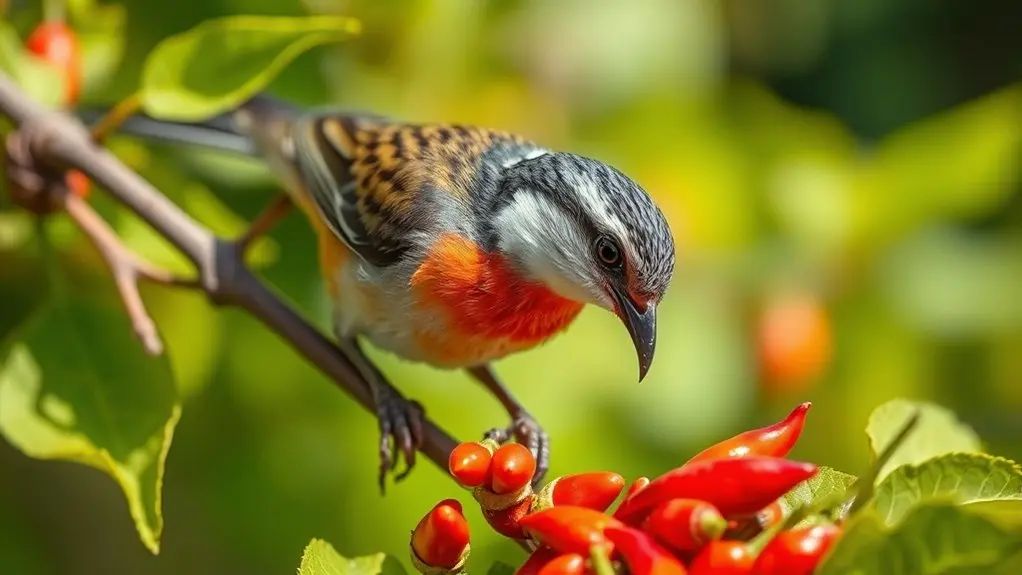
One key reason birds can safely eat chili seeds lies in their lack of TRPV1 receptors. These receptors in mammals trigger the burning sensation caused by capsaicin. Since birds don’t have these receptors, capsaicin doesn’t irritate or harm their tissues or digestive systems.
Their sensory biology is quite different from mammals. Birds’ taste receptors don’t detect capsaicin as a spicy or harmful substance. Because of this, many wild bird species, like cardinals and thrashers, can eat chili peppers naturally without any problems.
How Capsaicin in Chilli Seeds Affects Birds and Squirrels
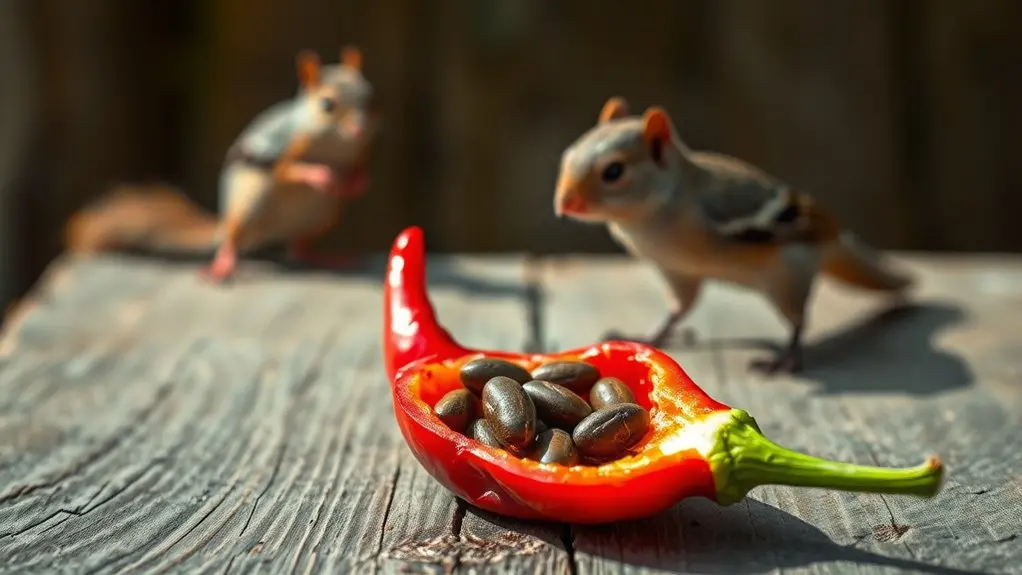
Although capsaicin triggers a strong burning sensation in mammals by activating TRPV1 receptors, birds remain unaffected because they don’t have these receptors. So, when you see birds eating chili seeds, they don’t feel any irritation or discomfort.
The lack of TRPV1 receptors lets birds safely eat capsaicin-rich seeds and benefit from their nutrients.
On the other hand, mammals like squirrels do have these receptors. That’s why they find capsaicin super irritating and unpleasant. This natural aversion helps protect chili seeds from being eaten by mammals.
From an evolutionary perspective, capsaicin does double duty. It keeps seed predators like squirrels away while encouraging birds to spread the seeds around.
This way, chili plants get a better chance to grow and spread. Knowing about this selective sensory system helps explain why birds and squirrels react so differently to chili seeds.
Do Wild Birds Naturally Eat Chilli Seeds?
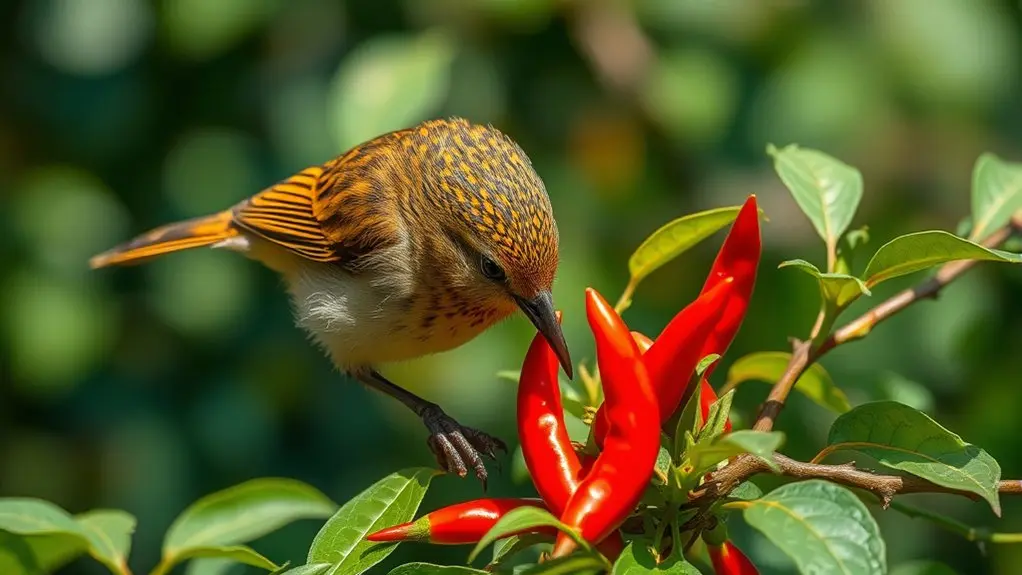
You’ll find that many wild birds, like thrushes and flycatchers, naturally eat chili seeds and peppers as part of their diet.
Interestingly, birds don’t have the TRPV1 receptors that make capsaicin feel hot to mammals. So, they can munch on these seeds without any discomfort.
This behavior is pretty important because it helps spread the seeds and grow more Capsicum plants in their native tropical areas.
Wild Birds And Peppers
While many mammals avoid chili peppers because of their spicy capsaicin content, wild birds regularly consume chili seeds and fruits without any discomfort. This happens because birds lack the TRPV1 receptors that cause the burning sensation in mammals.
Species like thrushes and flycatchers naturally include wild peppers, especially Capsicum species, in their diets across tropical and subtropical regions. It’s pretty fascinating how these birds can handle the spice without any trouble.
The table below sums up some key points about wild birds and their interaction with chili peppers:
| Bird Species | Pepper Type Consumed | Capsaicin Tolerance Reason |
|---|---|---|
| Thrush | Wild Capsicum | Absence of TRPV1 receptor |
| Flycatcher | Various spicy fruits | Evolutionary adaptation |
| Tropical passerine | Chili peppers | No pain receptor activation |
| Subtropical frugivore | Capsicum spp. | Natural dietary inclusion |
This natural ability shows an evolutionary adaptation. It allows birds to enjoy a food source that many mammals simply can’t access.
Seed Dispersal By Birds
Birds not only tolerate the capsaicin in chili peppers but also play a significant role in spreading these plants through seed dispersal. Unlike mammals, birds lack TRPV1 receptors, so they don’t experience the burning sensation from capsaicin. This adaptation allows species like thrushes and flycatchers to consume chili fruits and swallow seeds whole without damage.
Upon digestion, birds excrete intact seeds at different locations, facilitating chili plant propagation. Additionally, some chili plants produce capsaicin-rich fruits specifically to attract birds while deterring mammals that might destroy seeds.
Empirical studies indicate wild birds have evolved to prefer spicy fruits, making them natural dispersal agents. So, when you observe birds feeding on chili peppers, you’re witnessing an essential ecological interaction supporting both bird nutrition and chili plant reproduction.
Can Chilli Seeds Help Deter Squirrels at Feeders?
Although squirrels are notorious for raiding bird feeders, incorporating chilli seeds can effectively reduce their visits. Chilli seeds contain capsaicin, a compound that triggers a burning sensation in mammals but leaves birds unaffected because they don’t have capsaicin receptors.
When you mix chilli seeds with regular birdseed, squirrels might sample the seeds at first but quickly avoid them after feeling the discomfort. This learned aversion means they visit your feeder less often.
Using chilli seeds is a natural, non-toxic way to limit squirrel feeding without harming birds. Birds can safely eat the seeds without any irritation.
Could Chilli Seeds Harm Birds?
You don’t need to worry about capsaicin affecting birds because they don’t have the receptors that cause that burning sensation in mammals.
Their digestive systems can handle chili seeds just fine, and there’s no evidence showing any toxicity or internal harm.
That said, if birds eat large amounts or if the seeds are mixed with something contaminated, it might cause some physical irritation.
Capsaicin Impact On Birds
Since chili seeds contain capsaicin, you might wonder if they pose a risk to birds that consume them. However, birds lack the TRPV1 receptors responsible for the burning sensation capsaicin causes in mammals, making chili seeds safe for avian species.
Scientific studies and observations show that birds like cardinals and thrashers eat chili peppers regularly without adverse effects.
Capsaicin doesn’t damage birds’ oral, ocular, or digestive tissues, indicating its non-toxicity in these animals.
Evolutionarily, capsaicin deters mammals that destroy seeds while attracting birds that aid in seed dispersal.
Because of their unique sensory receptor makeup, birds can consume chili seeds without experiencing pain or harm.
This allows them to play an essential role in spreading chili plants naturally and efficiently.
So, while capsaicin might be spicy for us, for birds, it’s just another tasty snack.
They help chili plants thrive by carrying the seeds far and wide.
Birds’ Digestive Safety
Birds’ ability to consume chili seeds without experiencing the burning sensation caused by capsaicin raises questions about the seeds’ effects on their internal systems. You should know that birds lack TRPV1 receptors, which mammals use to detect capsaicin’s heat. This absence means capsaicin doesn’t trigger discomfort or tissue damage in birds.
Research and observations confirm species like thrashers, cardinals, and flycatchers regularly eat hot peppers and disperse their seeds without digestive harm. No scientific studies have documented adverse health effects from chili seed consumption in birds.
Potential Physical Irritation
Although chili seeds contain trace amounts of capsaicin, their potential to cause physical irritation in birds remains minimal. This is due to both the low capsaicin concentration and birds’ lack of receptors for detecting its burning effect.
Unlike the pepper’s flesh, chili seeds have negligible capsaicin, which reduces the irritation risk.
Birds don’t perceive the characteristic burning sensation because they lack the relevant TRPV1 receptors. There’s no documented evidence that chili seeds physically harm a bird’s oral cavity, digestive tract, or eyes.
When handling or feeding seeds, you should still exercise caution to prevent dust inhalation or accidental eye contact. These could cause irritation in humans but not in birds.
How to Use Spicy Bird Seed Safely
When handling spicy bird seed, you should always wear gloves to protect your skin from capsaicin irritation.
Use pre-mixed, commercially available hot pepper seed products to guarantee consistent capsaicin concentrations and reduce risk variability.
Place spicy seed feeders away from areas accessible to children or pets to prevent accidental ingestion or contact.
Regularly clean feeders with soap and water to remove residual capsaicin, minimizing buildup that could harm birds or humans.
Store spicy bird seed in sealed containers, away from direct sunlight, to maintain freshness and prevent accidental spills.
Following these precautions helps you safely incorporate spicy bird seed into your bird feeding routine while minimizing potential hazards related to capsaicin exposure for both wildlife and household members.
Better Alternatives to Hot Pepper Bird Seed for Squirrel Control
While spicy bird seed offers a method to deter squirrels, it often presents challenges such as capsaicin residue buildup and inconsistent effectiveness. Instead, you can deploy physical barriers like squirrel baffles and specially designed feeders that reliably prevent squirrel access without mess.
Strategic feeder placement far from trees and habitat modification reduce squirrel attraction effectively. Pretreated seed cylinders or suet cakes with embedded repellents offer safer, consistent deterrence.
| Method | Effectiveness | Maintenance |
|---|---|---|
| Physical Barriers | High | Low |
| Habitat Modification | Moderate | Moderate |
| Pretreated Repellents | Consistent | Low |
Combining these approaches provides a cost-effective, environmentally friendly solution that’s better than hot pepper seed.
Frequently Asked Questions
Can Chili Seeds Affect the Taste of Bird Droppings?
No, chili seeds don’t affect bird droppings’ taste. You’ll find no evidence that capsaicin passes through digestion to alter flavor. Birds process seeds without discomfort or changing their waste’s neutral, earthy profile.
Do Chili Seeds Impact the Nutritional Value of Bird Diets?
You won’t see chili seeds markedly impact your birds’ nutritional value, as they contain minimal nutrients beyond capsaicin. Their inclusion doesn’t alter diet balance or calories but may offer mild antimicrobial effects supporting gut health.
Are There Specific Bird Species That Prefer Chili Seeds?
Wondering which bird species prefer chili seeds? You’ll find thrashers, cardinals, and certain tropical birds actively seek them out.
These birds have evolved a tolerance to chili compounds, which helps them enjoy the seeds without any trouble. It’s pretty cool how this works both as nutrition for the birds and a way to spread the seeds around effectively.
Can Chili Seeds Be Used in Homemade Bird Food Recipes?
Yes, you can use chili seeds in homemade bird food recipes by grinding them finely to guarantee even distribution. This helps deter mammals without harming birds. Just be careful not to use too much, as it might irritate sensitive species.
It’s a handy trick if you want to keep squirrels or other critters away. And since birds aren’t affected by the chili, they can enjoy the food safely. Just remember, moderation is key!
How Do Chili Seeds Affect Bird Migration Patterns?
Imagine a Victorian clockwork bird. It won’t change course from chili seeds. You won’t see migration shifts because birds lack capsaicin receptors.
Environmental cues like photoperiod and temperature guide their precise seasonal travels instead. So, chili seeds just don’t factor into their migration plans. It’s all about the natural signals they follow.
Conclusion
Think of chilli seeds as a guarded garden. Birds stroll freely, unaffected by the spicy gatekeeper, while squirrels find the heat a firm deterrent. You can safely offer these seeds, knowing capsaicin doesn’t harm birds but discourages unwanted visitors.
Just use them thoughtfully, balancing deterrence and bird safety. Like a well-tended ecosystem, your feeder thrives when you understand the nuanced dance between spice and wildlife behavior.