
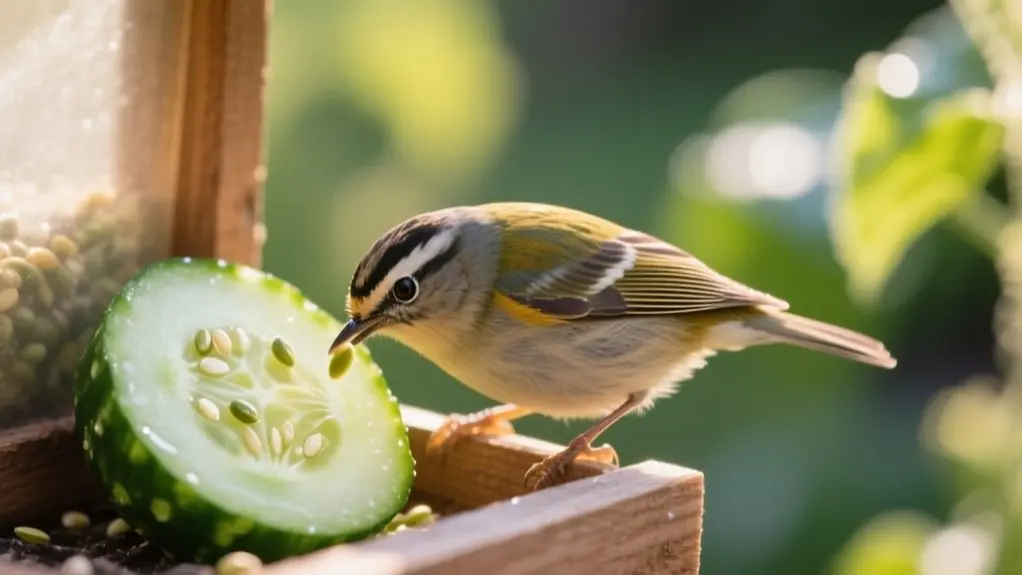
You can safely feed cucumber seeds to most birds since they’re nutritious, offering vitamins, minerals, and healthy fats that support energy and feather health. Many small birds and parrots enjoy them, and their soft nature helps easy digestion.
Just start with small amounts and avoid overfeeding to prevent digestive issues. Be sure to use fresh, mold-free, organic seeds to keep birds safe. Keep exploring to discover how to prepare and serve them best.
Are Cucumber Seeds Safe for Birds to Eat?
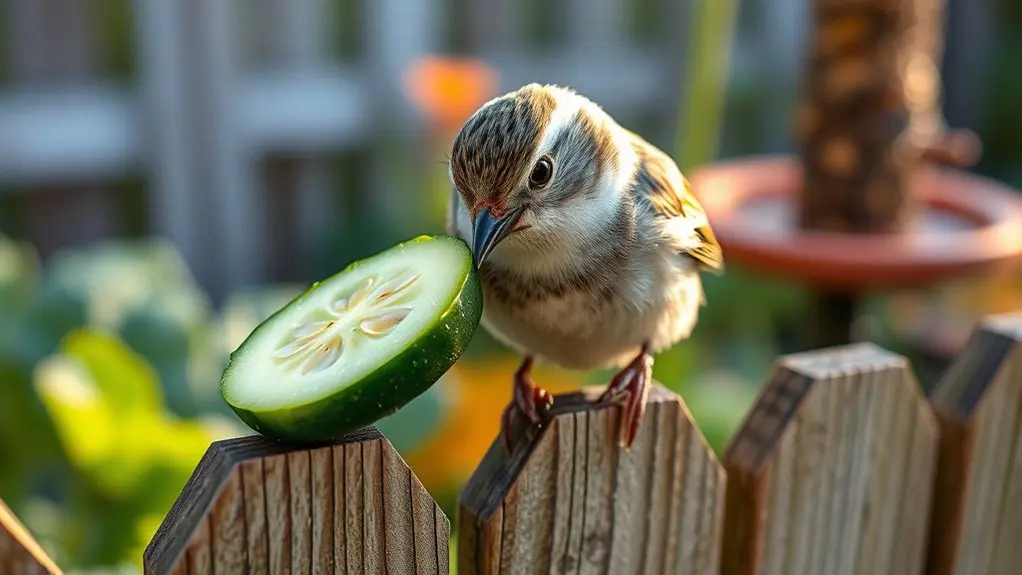
Although you might worry about giving birds cucumber seeds, they’re actually safe and nutritious for most species, including budgies and geese. You don’t need to remove cucumber seeds before offering cucumbers since birds can digest them easily.
These seeds provide healthy fats and proteins, which help support a balanced diet for your feathered friends. Just make sure the cucumbers are fresh and free from mold or rot, as spoiled produce can cause health issues.
Remember, moderation is key. Cucumber seeds shouldn’t be the main food source but part of a varied diet. By including them responsibly, you can safely enrich your birds’ meals without compromising their well-being.
What Nutrients Are in Cucumber Seeds for Birds?
When you offer cucumber seeds to birds, you’re providing them with a variety of essential nutrients that support their health.
These seeds contain vitamins B complex and E, which promote overall wellness, much like the benefits birds get from leafy greens.
They also supply minerals such as magnesium, potassium, and calcium, essential for strong bones and healthy muscle function.
Cucumber seeds are low in calories, so they won’t cause weight gain, and their healthy fats help maintain feathers and boost energy.
Plus, their high water content aids hydration.
Make sure to include cucumber seeds as part of a balanced diet for your feathered friends.
If you want more tips or have questions, email address sources or experts can provide tailored advice.
Which Birds Like to Eat Cucumber Seeds?
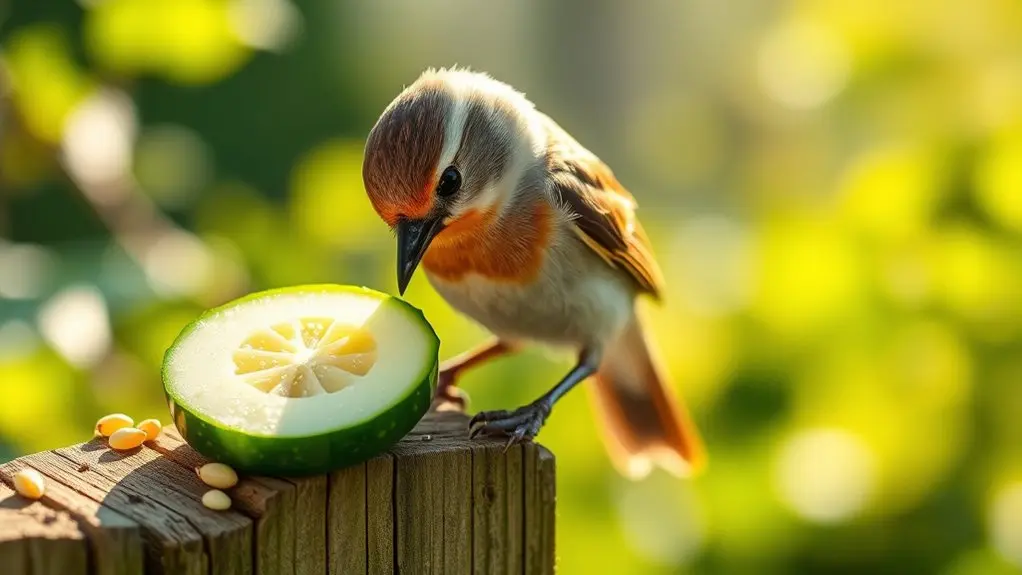
Which birds are most likely to enjoy cucumber seeds? Small birds like budgies and finches often show a strong preference for these seeds, drawn by their mild seed flavors and nutritional benefits.
Parrots, including lovebirds and conures, also appreciate cucumber seeds because of their healthy fat content, aligning with their varied bird preferences.
In the wild, sparrows and doves are attracted to cucumber seeds scattered on the ground, fitting their natural foraging habits.
Offering cucumber seeds can encourage these behaviors in pet birds, especially when placed in foraging toys.
Understanding these preferences helps you provide a balanced diet that suits different species’ tastes and natural instincts, making cucumber seeds a versatile snack option for many birds.
How Do Birds Eat Cucumber Seeds?
When you watch birds eating cucumber seeds, you’ll notice they use different methods. Some birds crack the seeds open, while others just swallow them whole.
Their digestive systems are pretty amazing—they handle the seeds carefully to extract nutrients without causing any harm.
It’s also good to think about the size of the seeds and their safety. That way, you can make sure the birds enjoy these treats without any problems.
Seed Consumption Methods
Birds like budgies and geese eat cucumber seeds whole, relying on their digestive systems to process them safely.
When feeding birds cucumber seeds, understanding seed variety benefits helps you offer a nutritious treat rich in vitamins and minerals.
Preparation methods matter; always make sure the cucumber and seeds are fresh and free from mold or rot before serving.
You can serve seeds alongside cucumber flesh to make the meal more appealing, encouraging birds to consume both parts.
Follow feeding frequency guidelines by offering seeds as a supplement, not a main diet component, to maintain balanced nutrition.
Digestive Handling Of Seeds
Understanding how birds process cucumber seeds can help you provide them with a safer and more enjoyable feeding experience. Birds, like budgies and geese, handle cucumber seeds well because their digestive systems efficiently break down small seeds.
The seed texture effects play a role in digestion speed; cucumber seeds are soft enough to be processed quickly when eaten with the cucumber flesh, which contains natural fiber aiding digestion.
Including cucumber seeds as part of a seed variety impact within a balanced diet guarantees your bird receives diverse nutrients and avoids digestive upset.
Offering seeds in moderation is key, as too many can affect digestion due to moisture content.
Seed Size And Safety
Cucumber seeds come in a small size that makes them easy for many bird species to eat safely. Their manageable size supports various seed handling techniques, allowing birds like budgies and geese to consume them without choking risks.
Different cucumber seed varieties provide nutrients and fiber, complementing bird feeding preferences. Remember to offer seeds in moderation and make sure they’re fresh and pesticide-free to avoid digestive issues.
| Bird Species | Seed Handling Techniques |
|---|---|
| Budgies | Pecking and swallowing |
| Geese | Scooping and swallowing |
| Finches | Picking and cracking |
| Parrots | Manipulating and eating |
| Sparrows | Pecking and swallowing |
What Health Risks Come From Feeding Cucumber Seeds to Birds?
Although feeding cucumber seeds to birds is generally safe, you should be cautious about how much you offer. Overfeeding can cause digestive concerns like diarrhea due to the seeds’ high moisture content.
The health implications of too many cucumber seeds include upset stomachs and potential nutrient imbalance.
The importance of moderation can’t be overstated; seeds should complement a varied diet to guarantee your birds get balanced nutrition.
Also, watch for individual reactions since some birds may struggle to digest seeds properly.
To keep feeding safe, remember this:
- Limit cucumber seeds to small amounts.
- Monitor your bird’s digestion and behavior.
- Avoid over-reliance on cucumber seeds alone.
- Confirm seeds are fresh and mold-free.
- Provide a diverse range of foods for balanced nutrition.
Should You Remove Cucumber Seeds Before Feeding Birds?
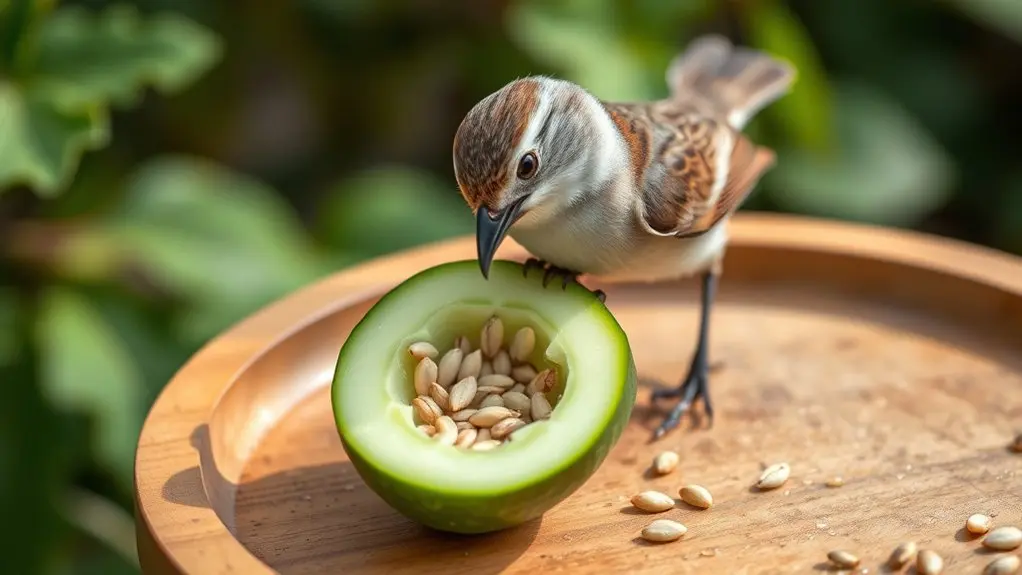
You might be wondering if you need to remove cucumber seeds before feeding them to birds.
Well, the good news is that cucumber seeds actually provide valuable nutrients and generally don’t pose any risk. So, most of the time, you can just leave them in.
Now, let’s talk about how to feed cucumbers safely while making mealtime enjoyable for your feathered friends.
Nutritional Value Of Seeds
When feeding birds, you don’t need to remove cucumber seeds since many species, like budgies and geese, can safely eat them.
These seeds offer health benefits by providing essential vitamins B complex, C, and K, along with minerals like calcium and potassium. Their hydration effects help keep birds hydrated, especially in warmer months.
Including cucumber seeds also promotes variety, encouraging birds to explore more fruits and veggies.
However, feed them in moderation to avoid digestive issues due to excess moisture.
- Low-calorie nutrient source
- Supports overall hydration
- Rich in essential vitamins and minerals
- Adds dietary variety for picky eaters
- Safe for many common bird species
Potential Risks For Birds
While cucumber seeds offer valuable nutrients and hydration benefits, it’s important to evaluate any potential risks before including them regularly in your bird’s diet.
The good news is that cucumber seed benefits usually outweigh risks, as they’re safe and digestible for most birds.
You don’t need to remove seeds before feeding, since birds can handle them well, aligning with their natural seed preferences.
However, moderation matters. A diet too heavy in any seeds can cause digestive issues, so balance is key for a healthier diet.
Also, always pick fresh cucumbers free from mold or rot to avoid contamination risks.
Feeding Practices And Tips
Although some bird owners wonder if cucumber seeds should be removed before feeding, there’s no need to do so since birds can safely enjoy both the flesh and seeds.
These seeds offer valuable nutrients and align well with bird behavior and feeding preferences, making cucumbers a great treat. Their seasonal availability also means you can provide fresh, hydrating snacks during warmer months.
To make the most of feeding cucumbers to your birds, keep these tips in mind:
- Offer cucumbers with seeds intact to encourage natural foraging.
- Verify cucumbers are fresh and free from mold to prevent health issues.
- Introduce cucumbers gradually to observe your bird’s response.
- Use cucumbers as a hydrating treat, especially in hot weather.
- Monitor feeding preferences and adjust portions accordingly.
How Can You Introduce Cucumber Seeds Into a Bird’s Diet?
Since cucumber seeds offer essential nutrients and hydration, you can introduce them gradually into your bird’s diet by starting with just a few seeds. Use seed introduction strategies and observe your bird’s dietary preferences carefully. Apply gradual feeding techniques to avoid digestive upset.
Mixing seeds with other fresh foods encourages acceptance and variety. Always choose seeds from organic cucumbers to keep harmful chemicals away and guarantee they’re fresh and mold-free.
| Step | Action | Tip |
|---|---|---|
| 1 | Start with 2-3 seeds | Watch for reactions |
| 2 | Mix with familiar fresh foods | Boost acceptance |
| 3 | Use organic cucumber seeds | Avoid pesticides |
| 4 | Increase gradually over 1-2 weeks | Monitor bird’s response |
What Are the Best Ways to Offer Cucumber Seeds to Birds?
After introducing cucumber seeds gradually into your bird’s diet, you’ll want to focus on the best ways to offer them to keep your feathered friends interested and healthy. Proper cucumber seed preparation matters. Serve seeds whole or in small pieces mixed with fresh cucumber to guarantee safe consumption.
Introduce cucumber seeds gradually, serving them whole or chopped with fresh cucumber for safe, healthy enjoyment.
You can also encourage natural bird feeding behavior by mixing seeds into foraging enrichment activities. This keeps your birds engaged and mentally stimulated. Remember to rotate cucumber seeds with other seeds for a balanced diet and to prevent boredom.
- Offer cucumber seeds within mixed seed dishes
- Present seeds alongside fresh cucumber cut into small pieces
- Use foraging toys to promote exploration and engagement
- Observe birds for any adverse reactions
- Rotate seeds with other varieties for nutritional balance
How Often Can Birds Eat Cucumber Seeds Safely?
You can give your birds cucumber seeds a few times a week, but just in small amounts.
It’s best to think of them more like a little treat than a regular part of their diet.
That way, you’re helping to keep their meals balanced while still letting them enjoy a tasty, healthy snack.
Recommended Feeding Frequency
Although birds like budgies and geese can safely enjoy cucumber seeds, you should offer them only a few times a week to prevent digestive issues.
These seeds bring cucumber seed benefits such as added nutrients but must be part of a balanced diet.
Remember the seed variety importance to guarantee your bird gets a range of nutrients from different seeds and foods.
Use gradual introduction strategies when adding cucumber seeds to your bird’s diet, so you can monitor tolerance and avoid upset stomachs.
- Feed cucumber seeds 2-3 times weekly
- Combine with fresh fruits and veggies
- Start with small amounts
- Watch for allergic reactions or digestive problems
- Rotate seeds to maintain nutritional balance
Portion Size Guidelines
Offering cucumber seeds a few times a week fits well within safe feeding practices, but knowing the right portion size helps keep your bird healthy.
Use portion control strategies by limiting each serving to just a few seeds, which prevents digestive issues and maintains balance in their diet.
Serving size recommendations suggest making cucumber seeds a small part of your bird’s overall food intake rather than a staple.
Moderation practices are key—don’t overfeed, and always observe your bird’s response to new foods.
Incorporate cucumber seeds alongside a variety of other nutritious options to guarantee a well-rounded diet.
Can Baby Birds or Nestlings Eat Cucumber Seeds?
Wondering if baby birds or nestlings can safely eat cucumber seeds? Yes, they can, but you need to follow baby bird nutrition and feeding safety guidelines carefully.
Baby birds can eat cucumber seeds safely when fed carefully following proper nutrition and safety guidelines.
Cucumber seeds offer beneficial nutrients, but you should introduce them gradually using proper seed introduction techniques to avoid choking or digestive discomfort.
Always check that seeds are fresh and uncontaminated before feeding. Remember, seeds should be a supplementary treat, not a main part of their diet.
Here’s what to keep in mind:
- Offer cucumber seeds in small, manageable amounts
- Monitor for any adverse reactions or digestive issues
- Confirm seeds are clean, fresh, and mold-free
- Combine seeds with a balanced diet focused on essential nutrients
- Introduce seeds slowly to help nestlings adjust safely
Are There Risks in Feeding Birds Store-Bought Cucumber Seeds?
Why should you be cautious about feeding birds store-bought cucumber seeds? The main issues lie in seed origin concerns and pesticide exposure risks. Many store-bought seeds are treated with chemicals to preserve shelf life or enhance growth, making them unsafe for birds.
Furthermore, improper storage can lead to mold contamination issues, which pose serious health threats to birds if ingested. Some seeds may also contain high salt levels, causing digestive problems or sodium poisoning.
Because of these risks, it’s best to avoid processed or chemically treated seeds. Instead, opt for organic or untreated cucumber seeds to guarantee the safety and well-being of the birds you’re feeding.
Being selective helps protect them from potential harm linked to commercial seed products.
How Should You Store and Prepare Cucumber Seeds for Feeding?
Although feeding birds cucumber seeds can be rewarding, you need to store and prepare them properly to keep the seeds fresh and safe. Using effective seed storage techniques and seed preparation methods guarantees your feathered friends get nutritious treats without health risks.
Start by washing the seeds thoroughly to follow contamination prevention tips. Then, dry them fully if you plan to store them for a while. Keep seeds in a cool, dry place to prevent mold. You don’t need to peel them since raw seeds are safe for birds.
To make feeding more appealing, mix cucumber seeds with other bird-safe foods.
Here are some key points to remember:
- Wash seeds well to remove pesticides
- Dry seeds completely before storing
- Store in a cool, dry place
- Feed raw seeds without peeling
- Combine with other bird-friendly foods
Frequently Asked Questions
Can Cucumber Seeds Help With a Bird’s Digestion?
Yes, cucumber seeds can help with a bird’s digestion. Their high fiber content offers digestive benefits by promoting regular bowel movements.
When you include cucumber seeds in your bird’s diet, you provide valuable nutritional value, including beneficial fatty acids that support gut health.
Seed consumption also adds moisture, which helps prevent dehydration.
Do Birds Prefer Cucumber Seeds Over Other Fruit Seeds?
Imagine offering your bird a buffet of fruit seeds, like setting out a colorful palette.
You’ll notice seed preferences vary widely; many birds favor berry or melon seeds over cucumber seeds.
Their feeding behavior reflects a natural attraction to richer flavors and nutrients found in diverse fruit varieties.
So, while some birds might nibble on cucumber seeds, they usually don’t prefer them over other fruit seeds.
Keep offering variety to keep them interested and healthy.
Can Wild Birds Recognize Cucumber Seeds as Food?
Yes, wild birds can recognize cucumber seeds as food because their seed recognition skills help them spot nutritious options.
When you offer cucumber seeds, you’re providing benefits that fit well into a wild bird diet, especially for seed-eating species like finches and sparrows.
These birds use their sight and experience to identify seeds that offer valuable energy, so including cucumber seeds in your feeder can attract more visitors to your garden.
How Do Seasonal Changes Affect Birds’ Interest in Cucumber Seeds?
As seasons dance their endless waltz, you’ll see birds’ migratory patterns shift with food availability.
In spring and summer, their seasonal preferences lean toward invigorating cucumber seeds, quenching thirst and hunger.
When fall’s golden curtain falls, they forage more enthusiastically, eyeing seeds to fuel winter’s chill.
But in cold months, their cravings wane, favoring calorie-rich fare over cucumber seeds.
You’ll notice how nature’s clock guides their tastes with grace.
Are There Any Signs of Allergies to Cucumber Seeds in Birds?
You might notice allergic reactions in your bird if it shows unusual behavior, feather plucking, or digestive issues after eating cucumber seeds.
While seed toxicity is rare with cucumber seeds, you should watch for vomiting, diarrhea, or lethargy as signs something’s wrong.
To protect your bird’s health, introduce seeds gradually and guarantee they’re fresh and mold-free.
If symptoms persist, consult a vet to rule out allergies or other health problems.
Conclusion
You might wonder if feeding cucumber seeds to birds is truly safe, and the truth is reassuring. While cucumber seeds offer some nutrients, they’re best given in moderation to avoid any health risks.
Remember, baby birds shouldn’t eat them, and you should always prepare seeds carefully. By doing this, you’re not just feeding birds, you’re protecting their health and helping them thrive.
So go ahead and share those seeds, but do it wisely.